Hello There!

Lorem ipsum dolor sit amet, consectetur adipiscing elit,

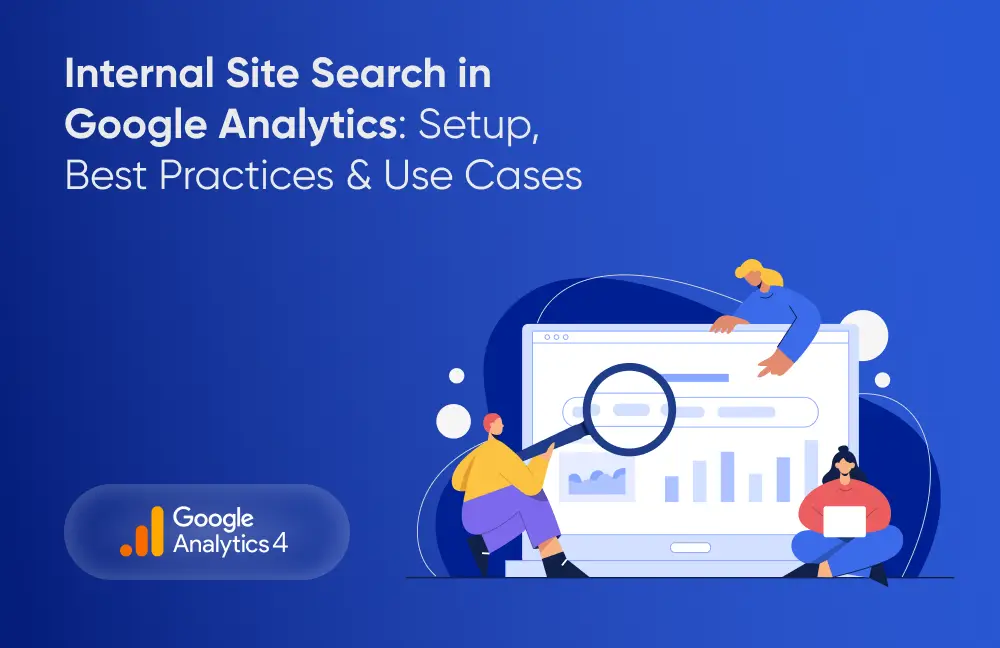
Internal Site Search in Google Analytics (GA4): Setup, Best Practices & Use Cases [2025 Guide]

Internal Site Search in Google Analytics Setup, Best Practices & Use Cases - Tatvic

TL;DR

Internal site search is one of the most underutilized yet high-impact features in digital analytics. In Google Analytics 4 (GA4), it can be tracked through URL query parameters, Google Tag Manager (GTM), or custom events for SPAs, mobile apps, and JavaScript-driven forms.

By 2025, this isn’t optional, privacy-first analytics, mobile-first browsing, and the rise of voice and AI-powered searches make internal site search a strategic growth lever.

It helps improve UX by reducing no-results frustration, uncover content gaps that strengthen SEO, and power personalization and CRO by aligning site design with real user intent. If you’re not analyzing what users type in your search bar, you’re leaving conversions and opportunities on the table.

Introduction: Why Internal Site Search is a Competitive Necessity in 2025

When a visitor lands on your website, they have two choices: browse through your navigation menus or head straight to the search bar. That tiny box is far more powerful than most businesses realize-it’s a live feed of customer intent. Every keyword typed into your internal site search reveals what users want, how well your site is meeting those needs, and where it’s falling short.

What Is Internal Site Search?

It’s the built-in search functionality on your website or app that helps users quickly find specific content, products, or services. Unlike external search engines, internal search captures intent inside your digital ecosystem. This makes it a goldmine for marketers, UX designers, and growth teams alike.

  • Content Gaps: If people search for something you don’t currently offer, it’s not just a missed opportunity-it’s a roadmap for future content or product development.

  • Navigation Failures: If users search for “Pricing,” “Contact,” or “Login,” it’s a clear sign your menus and CTAs aren’t intuitive enough.

  • Conversion Leaks: If visitors search, find nothing, and exit, that’s lost revenue-and worse, a signal of unmet demand.

Fast forward to 2025, and the stakes are even higher. With GA4 now the global analytics standard, privacy-first tracking baked into regulations, and voice + AI-powered search shaping user behavior, internal site search has evolved from a “nice-to-have” into a strategic necessity. Ignoring it means ignoring the clearest signals your customers are giving you-in real time and in their own words.

Why Internal Site Search Matters in 2025

In 2025, competition for digital attention is fierce-and relying solely on external SEO or navigation structures isn’t enough. Internal site search has emerged as one of the most direct and actionable signals of customer intent. Unlike traditional analytics, which infer behavior, search queries reflect exactly what users want-typed (or spoken) in their own words.

1. It Reveals User Intent in Real-Time

Search queries are unfiltered customer feedback. Instead of guessing through heatmaps or funnel drop-offs, internal site search tells you what people expect to find right now. Whether it’s “case studies,” “pricing,” or “AI tools,” this intent data can transform how you prioritize marketing, UX, and content.

2. It Fixes Content Gaps Before They Cost Conversions

If hundreds of users are searching for a feature, guide, or product you don’t yet offer, that’s a signal to expand your content or product roadmap. Internal search data functions as a demand forecast, showing you where your content strategy is lagging.

3. It Fuels SEO and Conversion Rate Optimization (CRO)

Internal search doesn’t just improve on-site navigation-it directly impacts Google SEO rankings and conversion metrics.

  • Use high-volume internal queries as keyword research for external SEO.

  • Reduce bounce rates by improving search relevance.

  • Align CTAs, pricing pages, or product categories with what people are actively seeking.

4. It Syncs With Future Trends

The digital search experience has changed dramatically:

  • Voice Search: More users are speaking queries like “show me the pricing page” instead of typing single keywords.

  • AI-Powered Recommendations: Predictive, context-aware search is now standard in e-commerce and SaaS.

  • Mobile-First UX: With 70%+ of traffic coming from mobile devices, users expect fast, intuitive, and predictive search.

👉 Ignoring internal site search in 2025 means ignoring what your customers are literally asking for-and leaving conversions, SEO opportunities, and UX improvements on the table.

What Internal Site Search Tracking Provides

When properly implemented in Google Analytics 4 (GA4), internal site search unlocks a range of metrics that reveal where users struggle, succeed, or abandon:

  • Search Terms → Exact words or phrases users type (a direct window into intent).

  • No-Result Searches → Terms that yield nothing-your biggest opportunities for fixes or new content.

  • Search Start Pages → The page where a user initiated the search, often signaling navigation or content discoverability issues.

  • Destination Pages → Where the search journey ends, showing you whether search results are guiding people to conversion paths.

From Metrics to Insights

These GA4 signals are more than numbers-they’re business intelligence:

  • Popular Topics & Keywords: Identify recurring themes to shape blogs, product updates, or FAQs.

  • Navigation Weaknesses: If users search “Contact” from the homepage, your CTA is buried.

  • Content Opportunities: Fill gaps by creating pages, tutorials, or resources around recurring searches.

  • User Journey Optimization: Map how searches flow into conversions (or exits) to refine CRO strategies.

Setting Up Internal Site Search in Google Analytics 4 (GA4) [2025 Guide]

Tracking internal site search in GA4 is no longer optional, it’s a growth multiplier. Whether your website runs on query parameters, Single Page Applications (SPAs), or JavaScript-powered search, GA4 gives you multiple ways to capture and analyze search behavior.

Step-by-Step Guide On How To Set Up & Validate Internal Site Search in GA4:

1. Enable Internal Site Search via Enhanced Measurement (For Query Parameter URLs)

For websites where searches generate a query string (?q=, ?search=, ?s=), GA4 makes setup simple:

Steps:
  1. Navigate to Admin → Data Streams → Web → Enhanced Measurement.

  2. Toggle Site Search ON.

  3. GA4 automatically tracks common parameters like:

    • q

    • s

    • search

    • keyword

👉 Example URL:
https://example.com/search?q=analytics
  1. If your site uses custom parameters (e.g., ?query= or ?term=), go to:
    Configure Tag Settings → Site Search Parameters and add them manually.

Best Practice (2025 Update):
Use lowercase parameter naming conventions to ensure clean, unified reporting. Mixed-case query parameters (?Q= vs ?q=) can fragment your analytics.

2. Implement Internal Search Tracking Without Query Parameters

Many modern websites, SPAs, Progressive Web Apps (PWAs), and JS-heavy platforms don’t use query strings. Instead, searches are embedded in URLs or handled client-side. Here are your options:

a) Using Google Tag Manager (GTM)

When a search input doesn’t update the URL, GTM can capture user input directly.

Steps:

  1. Create a DOM Variable in GTM to extract search box values.

  2. Set up a Custom Event Trigger that fires when the search form is submitted.

  3. Send the value into GA4 using the view_search_results event.

👉 Example Push:

dataLayer.push({
event: 'view_search_results',
search_term: document.querySelector('#search-box').value
});
 

b) Regex for Embedded Search URLs

If searches appear within the URL path instead of query strings:

👉 Example:

https://example.com/search/analytics

Solution:

  • Use GTM’s Regex Variable to extract the term (“analytics”).

  • Map it to GA4 as search_term in the view_search_results event.

c) Custom GA4 Events for SPAs or JavaScript Searches

For SPA frameworks (React, Angular, Vue) or headless CMS setups where no URL changes occur:

Developers need to push events manually.

👉 Example GA4 Event:

gtag('event', 'view_search_results', {
search_term: 'analytics'
});

2025 Tip: With AI-powered site search (voice & predictive search), ensure you also capture no-results searches. This data often reveals content gaps or UX issues.

3. Testing & Validation

Once implemented, validate tracking to ensure clean data flow.

Quick Checks in GA4:

  1. Go to Realtime Reports.

  2. Perform a test search.

  3. Look for the view_search_results event firing.

  4. Confirm that search_term is being recorded.

Advanced Debugging Tools:

  • GA4 DebugView (via Google Tag Assistant).

  • GTM Preview Mode for trigger validation.

  • BigQuery Export (for enterprise setups) to analyze large-scale search behavior.

Pro Tip: Tag and capture no results searches via a custom event (e.g., no_results_search). These terms directly fuel content strategy & SEO optimization.

4. Analyzing Internal Site Search Data in GA4

Once setup is live, GA4 provides multiple ways to analyze search queries.

Where to Find Site Search Data:
  • Events Report → Track view_search_results volume and frequency.

  • Explorations (Custom Reports) → Build free-form tables with:

      • Search Term (most popular queries)
      • Page Where Search Started (navigation gaps)
      • Device Type (mobile vs. desktop intent)
      • Conversions Post-Search (high-value insights)

2025 Pro Tips for Search Analysis

  1. Segment Searchers vs. Non-Searchers

      • Typically, searchers show 2x higher conversion intent.

      • Use Audiences in GA4 to retarget them via Google Ads.

  2. Analyze “Zero Results” Searches

      • A goldmine for content gaps.

      • Add missing product pages, blogs, or FAQs.

  3. Voice + AI Search Tracking

      • With 2025’s surge in voice and AI-driven site search, track natural language queries (“best CRM for startups”) vs. short-tail searches (“CRM”).

  4. Personalization & CRO

      • Use insights to redesign navigation menus.

      • Surface popular queries as quick links or dynamic suggestions.

Internal site search is more than just a navigation feature, it’s a real-time window into customer intent. Whether users type, tap, or speak their queries, GA4 enables you to capture, analyze, and act on this data.

Practical Use Cases for Businesses

Internal site search is more than a utility; it’s a growth lever. In 2025, as users increasingly rely on AI-assisted browsing, voice search, and predictive search suggestions, analyzing what people type into your search bar provides unparalleled insights into user intent. Businesses can turn these insights into SEO wins, UX enhancements, and revenue growth strategies.

Let’s break down the most actionable use cases for internal site search in GA4.

1. Power Your Content Strategy with Real User Queries

Your search bar is a direct feedback loop. Instead of guessing what your audience wants, analyze actual search terms.

  • If users frequently search “pricing” → Build a clear, easy-to-find pricing page and link it from your top navigation.

  • If “tutorials” or “how-to” searches are trending → Create educational content such as video walkthroughs, product guides, or blog articles.

  • If product-specific searches dominate → Improve product landing pages and ensure they’re optimized for both site search and SEO.

👉 2025 Pro Tip:
With the rise of conversational queries (e.g., “how does this tool compare to HubSpot?”), don’t just focus on short-tail terms. Capture natural language questions and feed them into your content and FAQ strategy.

2. Fix Navigation Gaps & Reduce Friction

When visitors use search for basic navigation, it’s a red flag.

  • High search volume for “Contact” or “Support” → Your menus or CTAs aren’t intuitive enough.

  • Users searching “Login” → Place a visible login button on your homepage and header.

  • Search terms for existing categories → Consider restructuring your navigation to surface these sections upfront.

👉 2025 UX Tip:
Heatmaps + search term analysis = unbeatable combo. Use both to identify frustration points and streamline navigation.

3. Elevate UX with Smart Search Enhancements

A seamless search experience keeps users engaged longer.

  • Optimize placement: The search bar should be visible, especially on mobile.

  • Auto-suggestions & predictive text: Show related terms as users type (e.g., “analytics → GA4 analytics”).

  • Filters & facets: Add category, price, or date filters to help users refine results quickly.

  • AI-powered site search: By 2025, many businesses leverage AI-driven, semantic search that understands intent, not just keywords.

👉 Example: A visitor types “best plan for startups.” Instead of no results, your AI search suggests “Startup Pricing Plan” + related case studies.

4. Minimize “No Results” Dead-Ends

A no-results page is a conversion killer. Every failed search is a lost opportunity.

  • Provide alternatives: Offer “Did you mean…?” suggestions using fuzzy matching or AI search models.

  • Redirect smartly: If someone searches “jobs,” redirect them to your Careers page.

  • Leverage related content: If “coupon” has no direct match, suggest ongoing promotions or newsletter signup.

👉 2025 CRO Tip:
Track “no results searches” as a custom event in GA4. These terms often expose content gaps that can boost both SEO rankings and product adoption.

5. Conversion Optimization Through Search Intent

Search terms often reveal buying signals. Ignoring them means leaving revenue on the table.

  • If users search “coupon,” “discount,” or “promo code” → Build promo strategies, loyalty programs, or limited-time offers.

  • If they search “demo” or “trial” → Surface CTAs for free trials, demo booking, or case studies.

  • If B2B visitors search “case studies” → Create a gated case study hub to capture leads.

👉 2025 Insight:
Internal site search is one of the strongest first-party intent signals. With cookies fading out, this data becomes critical for retargeting, personalization, and CRO strategies.

Common Pitfalls to Avoid in Internal Site Search Tracking

While the benefits are huge, many businesses undercut their analytics by making avoidable mistakes.

Not configuring custom query parameters

  • If your site uses non-standard parameters (?term= instead of ?q=), GA4 won’t capture data until you configure it.

High cardinality issues

  • Messy URL parameters (like session IDs or tracking codes) pollute your reports. Always clean and normalize search terms in GTM before sending them to GA4.

Ignoring SPAs and app-based searches

  • If you’re on React, Angular, or Vue, searches may never hit GA4 unless you implement custom events.

Capturing personal information (PII)

  • Storing emails, phone numbers, or names in search terms violates GDPR, CCPA, and other privacy regulations. Always filter PII before logging.

Compliance Tip: Use regex filters in GTM to block or anonymize sensitive terms before they reach GA4.

Advanced & Future Considerations for Internal Site Search (2025 and Beyond)

Internal site search is no longer just about helping users “find stuff.” In 2025, it’s becoming the central engine for personalization, predictive analytics, and real-time content delivery. Businesses that treat internal site search as a static feature are falling behind, those that embrace AI, voice, and personalization are turning it into a competitive differentiator.

1. Voice Search & Conversational Queries

With the explosion of voice assistants and LLMs powering natural language search, users no longer type just “reset password.” Instead, they ask full questions like:

  • “How do I reset my password quickly?”

  • “Where can I find your enterprise pricing for 2025?”

  • “Show me tutorials for integrating with GA4.”

Why it matters:
  • Voice queries are longer, more conversational, and often intent-rich.

  • Tracking these inside GA4 allows you to align on-site search UX with SEO strategies for long-tail and voice search.

  • Optimizing your internal search to recognize and process natural language improves both customer satisfaction and ranking in AI-powered snippets.

2. AI & Machine Learning for Site Search

Modern site search is shifting from keyword matching to AI-powered semantic understanding. By 2025, AI/ML-driven search systems can:

  • Cluster queries → Group similar search terms (e.g., “GA4 setup,” “GA4 implementation,” “set up Google Analytics 4”) into one theme.

  • Detect intent → Distinguish between navigational (“pricing”), informational (“what is GA4”), and transactional (“buy plan”) searches.

  • Auto-suggest intelligently → Recommend trending products, FAQs, or personalized results before users finish typing.

Business Advantage: Companies that deploy AI-driven internal search see higher engagement and conversions because users feel like the site “understands them.”

3. Personalization Through Site Search

Internal site search is now tightly integrated with personalization engines. Instead of delivering the same results to everyone, businesses tailor search outcomes based on:

  • Past behavior → A returning customer searching “plans” sees the tier they previously viewed.

  • User segments → Enterprise clients searching “support” may see premium SLA options, while SMBs see self-service FAQs.

  • Geo-location & device → Search results can be optimized for mobile users, local queries, or region-specific offerings.

Pro Tip: Feed GA4 site search data into personalization platforms or CDPs (Customer Data Platforms). This creates dynamic, intent-based experiences that drive loyalty and repeat business.

4. CMS & Automation Integration

In 2025, advanced businesses don’t just analyze search data-they act on it in real time. By connecting GA4 and internal site search with your CMS (Content Management System):

  • Dynamic FAQs → If users repeatedly search “refund policy,” your CMS can auto-surface it on relevant pages.

  • Adaptive menus → Popular searches update your navigation menus automatically.

  • Featured content refresh → Trending queries feed into homepage banners or featured blog posts.

👉 This closes the loop: search intent → analytics → content optimization → better UX.

Implementation Checklist for Internal Site Search in GA4 (2025)

To ensure your internal search tracking is set up correctly, follow this updated 2025 checklist:

Enable Enhanced Measurement in GA4

  • Turn on Site Search in Enhanced Measurement settings.

Add query parameters

  • GA4 detects common ones (q, s, search, keyword).

  • Add custom ones like ?term=, ?query= manually.

Use GTM or Custom Events if no parameters

  • For SPAs (React, Vue, Angular) or JS-based searches, capture terms via DOM variables and send using view_search_results events.

Test in Realtime + DebugView

  • Search on your site and confirm search_term is logged.

  • Validate “no results” searches with custom tracking.

Validate search_term dimension

  • Ensure your search queries appear in Explorations and Reports.

Build custom reports in GA4

  • Segment by device, user type, location, and behavior.

  • Compare “Searchers vs. Non-Searchers” for conversion insights.

Act on insights

  • Fix broken navigation.

  • Create new content for trending queries.

  • Personalize UX based on high-intent searches.

The companies that succeed in 2025 will treat internal site search as a growth strategy, not just a feature.

Conclusion: Turning Internal Site Search into a Growth Engine

Internal site search is no longer just a utility feature, it’s the clearest, most unfiltered voice of your customer. Every query typed into that search bar reflects real intent, frustrations, and opportunities. In Google Analytics 4 (GA4), tracking internal site search allows businesses to:

  • Discover exactly what users want in their own words.

  • Identify navigation and UX gaps that may be costing conversions.

  • Fuel SEO and content strategy with demand-driven insights.

  • Boost conversions and personalization by aligning results with user behavior.

By 2025, companies that thrive are the ones that listen to these intent signals and act fast. With voice search, AI-powered recommendations, and mobile-first behavior shaping digital journeys, internal site search has become a strategic growth lever, not an afterthought.

At Tatvic, we help enterprises unlock the full power of internal site search. Backed by advanced analytics expertise and end-to-end GA4 implementation, our experts specialize in setting up, validating, and scaling site search tracking to transform raw queries into actionable growth strategies. From reducing “no results” frustrations to powering personalization engines, we ensure your search data works as hard as you do.
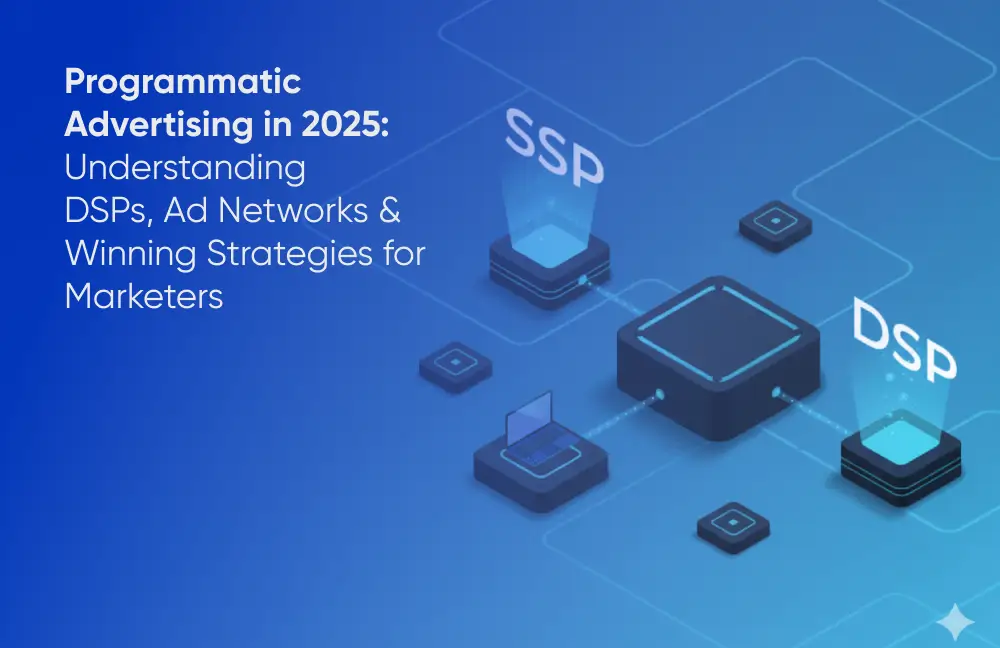
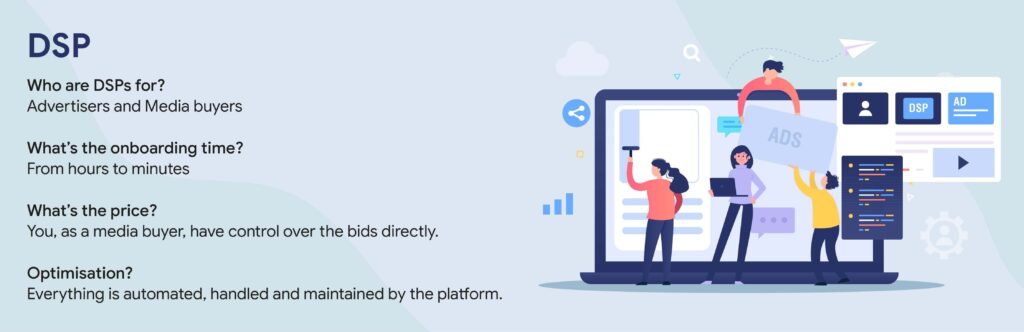
Understanding Programmatic Advertising: Role of DSPs, Ad Networks & Best Practices for Marketers

Understanding Programmatic Advertising Role of DSPs, Ad Networks & Best Practices for Marketers - Tatvic

TL;DR:

Programmatic advertising in 2025 has become the backbone of digital media buying, powered by AI, DSPs, and cookieless identity-first targeting. While leading DSPs like DV360, The Trade Desk, and Amazon DSP deliver scale, transparency, and real-time optimization, ad networks still serve SMBs and niche audiences but with limited control.

The key to success lies in choosing the right platform, ensuring fraud prevention, privacy compliance, and continuous testing for performance. With trends like AI-led autonomous optimization, connected TV, retail media, and contextual targeting shaping the future, programmatic is now the operating system of modern marketing. Tatvic helps brands maximize ROI by combining expert DSP management, CRO, and analytics-driven programmatic strategies.

Introduction

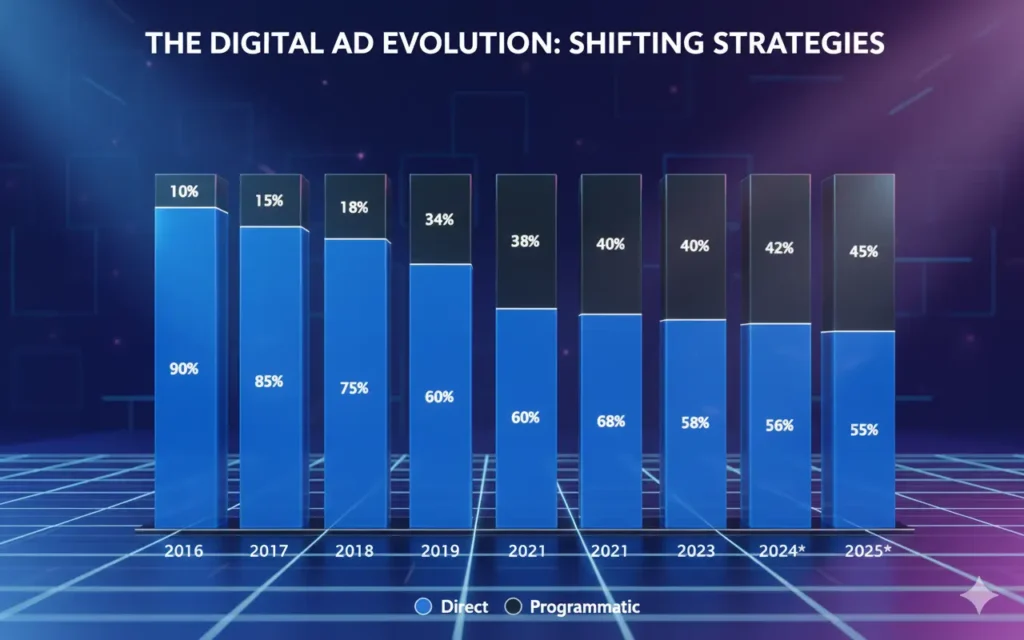
In 2025, programmatic advertising isn’t just another digital marketing channel, it has become the operating system of media buying. With more than 80% of global digital ad spend now flowing through programmatic platforms (eMarketer, 2025), it is the single most powerful way for brands to connect with audiences at scale, with precision, and in real time.

But as the ecosystem has evolved, so has its complexity. Between DSPs (Demand-Side Platforms), SSPs (Supply-Side Platforms), ad exchanges, ad networks, and cookieless identity solutions, marketers face an overwhelming number of choices.

This often leads to critical questions such as:

  • What’s the real difference between a DSP and an ad network?

  • Which programmatic platforms deliver the best ROI in 2025?

  • How can I safeguard my spend against fraud while staying compliant with privacy-first regulations?

This guide breaks it all down. You’ll discover:

  • What programmatic advertising really means today and why it matters more than ever.

  • The evolving roles of DSPs and ad networks in a cookieless, AI-driven ecosystem.

  • The top programmatic players of 2025, from enterprise DSPs like DV360 and The Trade Desk to niche ad networks.

  • A practical framework for choosing the right partner based on budget, scale, and compliance.

  • Actionable best practices for campaign setup, optimization, and fraud prevention.

  • Common pitfalls to avoid like over-reliance on algorithms without human oversight.

  • A forward look at the future of programmatic advertising, where Agentic AI and autonomous optimization reshape the landscape.

By the end, you’ll have a clear, step-by-step roadmap to run smarter, safer, and more profitable programmatic campaigns-whether you’re a CMO of a global enterprise or a performance marketer at a growth-stage brand.

What is Programmatic Advertising?

Programmatic advertising in 2025 is the automated buying and selling of digital ad inventory powered by AI, real-time bidding (RTB), and data-driven decisioning. Unlike the old manual days of negotiating directly with publishers, today’s advertisers let advanced algorithms decide in a matter of milliseconds which ad should appear on which website, app, or connected TV screen.

In practice, this means that every time a user opens a webpage, scrolls through an app, or streams content, programmatic platforms instantly analyze thousands of data points-like demographics, browsing behavior, device type, and even contextual signals-to determine if that impression is worth bidding on. If yes, a DSP (Demand-Side Platform) bids automatically, and the winning ad is served almost instantly.

The Evolution of Programmatic Advertising

The journey of programmatic has been nothing short of transformative:

  • 2000sManual ad buying dominated, with direct deals and insertion orders.

  • 2010-2015RTB (Real-Time Bidding) and early DSPs emerged, opening the door to automation.

  • 2016-2020 → Rise of private marketplaces (PMPs), header bidding, and brand-safety concerns.

  • 2021-2025 → The era of AI-driven optimization, cookieless identity solutions (Unified IDs, identity graphs), CTV growth, and retail media networks becoming the new battleground for advertisers.

Why Marketers Rely on Programmatic Advertising in 2025

Programmatic advertising is more than efficiency, it’s the engine of precision, personalization, and profitability in digital marketing.

Here’s why it remains the go-to channel:

  1. Efficiency at Scale → AI handles bidding, placement, targeting, and budget allocation in real time.

  2. Hyper-Targeting Capabilities → Beyond demographics, DSPs enable targeting by behavioral patterns, contextual relevance, location, and even household data.

  3. Omnichannel Reach → Access billions of impressions across display, mobile, video, CTV, audio, DOOH (Digital Out-of-Home), and retail media.

  4. Cost Optimization → Competitive bidding and AI-driven decisioning minimize wasted spend and improve ROI.

  5. Real-Time Measurement & Transparency → Marketers track impressions, clicks, viewability, conversions, and even incrementality in near real time.

  6. AI + Human Synergy → While automation powers efficiency, human marketers set the strategy, oversee brand safety, and refine messaging.

Programmatic advertising in 2025 delivers the holy grail of digital marketing:
👉 the right ad, shown to the right person, at the right time, in the right context, at the right price.

It’s not just a channel, it’s the infrastructure behind modern advertising, shaping how brands engage audiences in a privacy-first, AI-driven, omnichannel world.

👉 Take Control, Drive Results: DV360 programmatic Self-Serve Account at Your Fingertips


Core Components of the Programmatic Ecosystem

To truly understand the difference between a DSP (Demand-Side Platform) and an ad network, it’s important to zoom out and look at the broader programmatic advertising ecosystem. Think of it as a real-time digital marketplace where buyers (advertisers) and sellers (publishers) connect through automation and AI.

Here Are The Key Building Blocks of Programmatic Advertising Ecosystem

  • Ad Exchanges → Neutral marketplaces where digital ad inventory is traded between buyers and sellers in real time.

  • SSPs (Supply-Side Platforms) → Tools that help publishers manage, price, and sell their ad inventory programmatically, ensuring maximum yield.

  • DSPs (Demand-Side Platforms) → Platforms advertisers use to buy ad inventory across multiple exchanges, with advanced targeting, bidding, and reporting capabilities.

  • DMPs (Data Management Platforms) → Systems that collect, unify, and activate first-party and third-party audience data to fuel targeting decisions.

  • CDPs (Customer Data Platforms) [2025 Update] → Now widely integrated into programmatic stacks, CDPs unify cross-channel customer data for privacy-first audience activation.

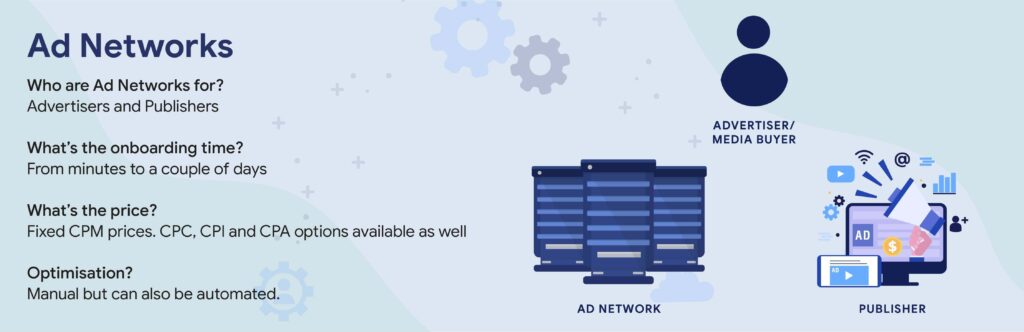
  • Ad Networks → Aggregators of publisher inventory, often bundling impressions by category (e.g., lifestyle, finance, tech) and reselling them to advertisers.

Together, these players create a real-time, AI-powered trading ecosystem that fuels programmatic advertising across display, video, connected TV (CTV), digital audio, retail media, and even digital out-of-home (DOOH).

DSPs vs Ad Networks: Key Differences for Marketers

While both DSPs and ad networks allow advertisers to purchase digital ad space, they serve different purposes and cater to different levels of advertising maturity.

Demand-Side Platforms (DSPs)

Demand-Side Platforms (DSPs)

DSPs are the powerhouses of programmatic advertising.

  • Real-Time Access → Tap into billions of impressions across ad exchanges, SSPs, and private marketplaces.

  • Granular Targeting → Go beyond basic demographics with behavioral, contextual, location, device, and even AI-driven predictive targeting.

  • Transparency & Control → Full visibility into bidding costs, placements, viewability, and fraud prevention.

  • Omnichannel Reach → Manage campaigns across display, video, CTV, DOOH, audio, and retail media from one interface.

  • Best For → Enterprises, advanced marketers, and agencies managing large-scale budgets who need precision, efficiency, and scalability.

Ad Networks

Ad Networks

Ad networks are simpler, curated solutions that still hold value in 2025.

  • Bundled Inventory → Package ad space from multiple publishers into categories like “tech,” “lifestyle,” or “news.”

  • Ease of Use → Require less technical setup than DSPs, often appealing to SMBs.

  • Limited Transparency → Advertisers may not always know the exact placements or auction dynamics.

  • Good for Reach → Provide straightforward access to audiences without deep programmatic expertise.

  • Best For → Smaller advertisers or those focused on niche verticals who want curated access without the complexity of full programmatic stacks.

In 2025, the line between DSPs and ad networks is increasingly blurred. Many ad networks now integrate DSP-like features (such as automated bidding and audience targeting), while leading DSPs offer curated inventory packages similar to networks.

👉 Smart advertisers are adopting a hybrid strategy:

  • Use DSPs for scale, precision, and transparency.

  • Leverage ad networks for niche, curated inventory that delivers strong contextual relevance.

This dual approach ensures brands can balance reach + relevance, while also staying ahead in a privacy-first, cookieless, AI-driven ecosystem.

Key Players & Technologies in Programmatic Advertising (2025)

The programmatic advertising landscape in 2025 has matured into a highly competitive, AI-driven ecosystem. With global ad spend through programmatic channels exceeding $800 billion annually (source: eMarketer 2025), the platforms and technologies that dominate today are shaping how brands reach audiences across every screen.

Leading DSPs (Demand-Side Platforms) in 2025

These platforms are at the forefront of programmatic media buying, offering advertisers precision, scale, and automation:

  • DV360 (Google Display & Video 360)

    Still the most widely used DSP globally, DV360 integrates deeply with GA4, YouTube, Google Ads, and the broader Google ecosystem. In 2025, it continues to be the go-to for cross-channel attribution, audience targeting, and brand-safe inventory.

  • The Trade Desk

    The leading independent DSP, known for its Unified ID 2.0 identity framework and superior AI optimization. Its strength lies in cookieless targeting, omnichannel reach (CTV, DOOH, audio), and privacy-first audience activation.

  • Amazon DSP

    A retail media powerhouse, leveraging exclusive Amazon shopper and purchase data. It’s the fastest-growing DSP in 2025, particularly for eCommerce, CPG, and retail advertisers tapping into first-party retail insights.

  • Xandr (Microsoft Advertising)

    Now fully integrated into Microsoft’s ad stack, Xandr leads in connected TV (CTV) and cross-device targeting, making it a top choice for brands investing heavily in streaming audiences.

  • MediaMath

    Known for open architecture and flexible APIs, MediaMath focuses on AI-driven campaign optimization, advanced custom bidding algorithms, and data interoperability with CDPs and analytics platforms.

Top Ad Networks in 2025

While DSPs dominate large-scale media buying, ad networks remain critical for niche targeting and simplified access:

  • Google AdSense & AdMob

    Still the most widely used ad networks globally, ideal for small-to-mid-sized advertisers looking for scale with minimal setup.

  • Taboola & Outbrain

    Global leaders in native advertising, powering content discovery campaigns across news, lifestyle, and entertainment publishers.

  • Retail Media Networks

    2025 has seen retail media explode, with platforms like Walmart Connect, Instacart Ads, and Target Roundel becoming essential for brands wanting to reach high-intent shoppers at the point of purchase.

  • Vertical & Niche Networks

    Healthcare, finance, travel, and B2B-focused ad networks provide specialized targeting and compliance-driven advertising environments that DSPs may not always guarantee.

Emerging Technologies Defining Programmatic in 2025

Programmatic success in 2025 is no longer just about access to inventory-it’s about efficiency, privacy, and innovation. Here are the biggest trends shaping the ecosystem:

  • Header Bidding 3.0

    Publishers now leverage server-side header bidding and AI-powered yield optimization, ensuring maximum revenue while reducing latency.

  • Private Marketplaces (PMPs)

    PMPs have become the preferred route for premium inventory. They combine brand safety, transparency, and direct publisher relationships, especially for industries like finance and healthcare.

  • AI-Driven Contextual Targeting

    With third-party cookies nearly obsolete, contextual targeting has evolved. Advanced AI algorithms analyze page content, user intent, and environmental signals to deliver highly relevant ads without violating privacy.

  • Identity & Privacy Solutions

      • Unified ID 2.0 has emerged as the de facto open-source identity framework for cookieless targeting.

      • Data Clean Rooms (offered by Google, Amazon, and independent providers) enable privacy-safe audience matching between advertisers and publishers.

      • Identity Graphs & Cohort Targeting ensure continuity in personalization while complying with GDPR, CCPA, and new 2025 data laws.

How Programmatic Advertising Works (Step by Step in 2025)

Programmatic advertising may feel like a black box to many marketers, but at its core, it’s a high-speed, AI-powered auction system that connects advertisers to their ideal audiences across digital channels. The process takes place in under 100 milliseconds-faster than a human blink.

Here’s how it works today:

1. Advertiser Defines Goals & Audience

The journey begins when a brand or agency sets campaign objectives (awareness, lead generation, sales), defines audience parameters (demographics, behaviors, intent signals), and allocates a budget. This is all configured inside a Demand-Side Platform (DSP).

2. DSP Enters the Auction

The DSP uses AI and algorithms to evaluate available impressions across multiple ad exchanges and supply-side platforms (SSPs). It decides in real time whether to bid on an impression based on audience match, predicted engagement, and campaign goals.

3. SSP Makes Publisher Inventory Available

On the publisher side, an SSP manages available ad inventory (websites, apps, connected TV slots, retail media placements) and opens it up for bidding to potential advertisers.

4. Real-Time Auction Occurs

When a user loads a webpage or app, an auction begins instantly. Multiple DSPs bid for that impression. The highest bidder wins, but thanks to second-price auctions and AI-based cost optimization, advertisers typically pay just enough to beat the competition-not their full bid.

5. Winning Ad Is Delivered to the User

Within milliseconds, the winning creative (banner, video, native ad, or CTV spot) is served to the user. Importantly, AI ensures relevance-for example, showing a product ad right after the user searched for related items.

6. Tracking, Measurement & Optimization

Every impression and click is logged. Advertisers monitor KPIs like CTR, CPA, ROAS, and viewability through their DSP dashboards. AI then fine-tunes targeting, bidding, and creative rotation for continuous optimization.

Why This Matters in 2025

The process hasn’t just become faster, it’s become smarter:

  • AI-driven bidding strategies predict the likelihood of conversions with remarkable accuracy.

  • Cookieless identity solutions (Unified ID 2.0, clean rooms) enable compliant targeting in a privacy-first world.

  • Retail media & CTV auctions are expanding programmatic beyond traditional web and mobile.

  • Multi-agent AI systems within DSPs now automate not just bidding, but creative optimization and budget pacing.

In short, programmatic advertising in 2025 gives marketers the holy grail: the right ad, to the right person, on the right device, at the right moment-at scale.

How to Choose the Right DSP or Ad Network

Not every platform fits every advertiser. With dozens of DSPs (Demand-Side Platforms) and ad networks available, businesses must evaluate carefully to avoid wasted spend and maximize ROI.

Here are the key decision factors in 2025:

1. Budget & Scale

  • Enterprise-grade DSPs like DV360 and The Trade Desk are ideal for large brands with significant budgets, global reach, and multi-channel strategies.

  • Amazon DSP is a must for retail and eCommerce players leveraging first-party shopper data.

  • SMBs and mid-market advertisers may benefit from simpler ad networks or hybrid platforms like HubSpot Ads or Criteo, which balance automation with ease of use.

2. Targeting Needs

  • Behavioral & interest-based targeting: For businesses focused on precision audience reach.

  • Contextual targeting: A strong option in a cookieless world, ensuring relevance without relying on third-party cookies.

  • Cross-device & omnichannel: Critical in 2025, where users shift between mobile, CTV, web, and retail media.

3. Privacy & Compliance

With stricter laws such as GDPR (Europe), CCPA/CPRA (California), India’s DPDP Act 2023, and the EU AI Act, compliance is non-negotiable. Look for platforms that support:

  • Privacy-first identity solutions (Unified ID 2.0, clean rooms, Google Privacy Sandbox).

  • Built-in data minimization and audit trails for safe usage of personal data.

4. Transparency & Control

  • Avoid “black box” networks that hide fees or placements.

  • Prioritize DSPs offering log-level data, real-time reporting, and clear fee structures.

5. Integration with Your MarTech Stack

  • Ensure compatibility with GA4, CDPs, CRM platforms, attribution tools, and creative management systems.

  • Check API flexibility enterprise DSPs like MediaMath and Xandr are highly extensible.

Implementation Guide & Best Practices for Programmatic Advertising

Even the best DSP or ad network won’t deliver results without the right setup and optimization.

Here’s a proven step-by-step playbook for 2025:

Step-by-Step Campaign Setup

  1. Define SMART goals - Awareness, lead generation, conversions, or ROAS.

  2. Select the right platform - Match your DSP/ad network to budget, audience, and compliance needs.

  3. Develop creatives - Mix display, video, native, and emerging formats like CTV and retail media ads.

  4. Set bidding strategies - Use AI-powered bidding models (tCPA, tROAS, or attention-based metrics).

  5. Launch with safeguards - Implement brand safety filters, contextual controls, and inventory whitelists/blacklists.

Optimization Best Practices (2025 Updates)

  • Frequency capping: Prevent ad fatigue by limiting exposures per user.

  • Prioritize viewability & attention metrics: Go beyond impressions-ensure ads are seen and capture attention.

  • Fraud prevention: Use AI-powered fraud detection to counter bots and invalid traffic.

  • Creative rotation & testing: Run A/B and multivariate tests to identify top-performing creatives.

  • AI-driven bid optimization: Leverage DSP machine learning to automatically adjust bids in real time.

  • Leverage cookieless targeting: Combine contextual intelligence with first-party data activation for precision in a privacy-first world.

Choosing the right DSP or ad network isn’t about chasing the biggest name-it’s about finding a platform that aligns with your budget, targeting needs, compliance obligations, and existing MarTech stack. With AI now powering autonomous bidding, predictive analytics, and real-time optimization, marketers who make strategic choices can reduce wasted spend, boost ROI, and future-proof their campaigns in an increasingly complex advertising ecosystem.

Common Mistakes to Avoid in Programmatic Advertising

Despite its efficiency, programmatic advertising can easily drain budgets if not executed strategically. Marketers-whether using DSPs (Demand-Side Platforms) or ad networks often fall into predictable traps:

  1. Buying Low-Quality Inventory

    Chasing cheap impressions often leads to placements on irrelevant or fraudulent sites. This not only wastes ad spend but also damages brand reputation. In 2025, DSPs with built-in fraud prevention (like The Trade Desk, DV360, or MediaMath) are critical to ensure traffic quality.

  2. Ignoring the “Tech Tax”

    Programmatic comes with hidden fees across exchanges, data providers, and intermediaries. These fees-sometimes 15-35% of spend-can quietly erode ROI. Always demand transparent reporting from your DSP or ad network to see exactly where your dollars are going.

  3. Over-Reliance on Automation

    AI-powered bidding and optimization are powerful, but programmatic campaigns still need human oversight. Without monitoring, algorithms may chase the wrong KPIs or over-prioritize low-value clicks. The best advertisers combine machine efficiency with human judgment.

  4. Failing to Prepare for a Cookieless Future

    Third-party cookies are almost fully deprecated by 2025. Brands that don’t adopt identity solutions (Unified ID 2.0, clean rooms, Google’s Privacy Sandbox, or first-party data strategies) risk losing accurate targeting and attribution.

  5. Running Campaigns Without Clear KPIs

    Launching ads without predefined success metrics (CTR, ROAS, conversions, or brand lift) makes optimization impossible. Every DSP setup should start with measurable objectives tied directly to the business funnel.

Key Challenges in Programmatic Advertising (2025)

While programmatic continues to dominate digital media buying, several challenges remain persistent in 2025:

  1. Ad Fraud

    Even with advancements in AI fraud detection, ad fraud still costs advertisers tens of billions annually worldwide. Fake impressions, bot traffic, and spoofed domains remain major risks. Partnering with fraud-combatting vendors like IAS (Integral Ad Science), DoubleVerify, or HUMAN Security is no longer optional.

  2. Data Privacy & Compliance

    Global laws like GDPR (Europe), CCPA (California), DPDP Act 2023 (India), and China’s PIPL demand strict data governance. By 2025, advertisers must adopt privacy-first targeting models, focusing on contextual relevance and consent-based audience building.

  3. Complexity & Learning Curve

    Enterprise DSPs such as DV360 or The Trade Desk offer powerful features, but the setup, integrations, and reporting dashboards can overwhelm marketing teams. Without skilled operators or agency partners, campaign efficiency drops.

  4. Rising Media Costs

    The boom in CTV (Connected TV) and retail media networks has driven up CPMs. Premium placements on platforms like Netflix Ads, Disney+, Amazon DSP, and Walmart Connect are highly effective but come at a premium. Smaller brands must balance reach with efficiency.

Future of Programmatic Advertising (2025 & Beyond)

Future of Programmatic Advertising (2025 & Beyond)

The future of programmatic advertising is AI-first, autonomous, and privacy-resilient. By 2025 and beyond, several trends are reshaping the landscape:

  1. AI-Driven Multi-Agent Systems

    Campaign orchestration is shifting from manual setups to autonomous AI agents that manage end-to-end media planning, bidding, creative testing, and optimization in real time. This means fewer silos and smarter decision-making at scale.

  2. CTV & Retail Media Dominate Spend

    Connected TV (Netflix, Disney+, Prime Video) and retail media (Amazon, Walmart Connect, Instacart) are absorbing the lion’s share of digital ad dollars. Brands are moving budgets here because of rich audience data and premium, brand-safe inventory.

  3. Autonomous Experimentation Replaces A/B Testing

    Traditional A/B testing is giving way to self-learning systems that continuously run multivariate experiments and adapt instantly-delivering creative, audience, and bidding optimizations without human delays.

  4. Privacy-First, Identity-Resilient Targeting

    As third-party cookies disappear, contextual AI, clean rooms, and solutions like Unified ID 2.0 and Google’s Privacy Sandbox will anchor targeting and measurement. Brands that fail to adapt risk losing performance visibility.

  5. Self-Optimizing MarTech Stacks

    Future-ready DSPs and programmatic ecosystems will integrate with CDPs, analytics, and creative platforms to create self-correcting feedback loops-continuously improving performance without manual intervention.

In short, programmatic advertising is evolving into the “operating system” of digital marketing-a central hub where AI, data, and automation converge to deliver unmatched efficiency, personalization, and ROI.

Conclusion & Next Steps

Programmatic advertising in 2025 isn’t just about buying impressions-it’s about precision, automation, and measurable outcomes. DSPs and ad networks remain the backbone of this ecosystem, but success depends on making the right platform choices, safeguarding against fraud, and staying compliant with global data privacy laws.

If your business wants to:

  • Scale campaigns across CTV, display, native, and retail media channels.

  • Minimize wasted spend from fraudulent traffic or poor inventory.

  • Unlock AI-powered optimization and hyper-personalized customer experiences

👉 It’s time to partner with programmatic experts.

At Tatvic, we specialize in helping brands harness programmatic advertising with the right mix of:

  • DSP expertise (DV360, The Trade Desk, Amazon DSP).

  • Fraud prevention and transparency-first reporting.

  • CRO and analytics-driven campaign optimization.

  • Privacy-first audience strategies built for a cookieless world.

👉  Book a consultation today and discover how Tatvic can help you transform programmatic advertising into your next competitive advantage.

Optimize Your Website With Heatmap Integration & Analysis

Mastering Heatmaps in 2025 Visualize User Behavior to Drive Conversions - Tatvic

TL;DR:

Heatmaps convert raw data into visual storytelling that anyone can understand. By showing where users click, scroll, and focus attention, they uncover hidden UX friction points and highlight conversion opportunities. In 2025, AI-powered heatmaps go beyond simple observation-they now predict user behavior, detect anomalies, and recommend real-time optimizations at scale.

When combined with Google Analytics 4 (GA4), session replays, and CRO frameworks, heatmaps evolve into a strategic growth engine. They not only tell you what happened on your website or app but also guide what to do next to increase conversions, reduce churn, and maximize ROI.

Introduction: What Heatmaps Are & Why They Matter in 2025

Every marketer, product owner, or UX designer knows that data is critical but endless spreadsheets, complex dashboards, and disconnected metrics often lead to analysis paralysis rather than clear answers.

This is where heatmaps come in.

A heatmap is a visual representation of user behavior that turns thousands of clicks, taps, scrolls, and cursor movements into color-coded insights. Hot zones glow red where engagement is strongest, while cold zones fade blue where users disengage or ignore content. In seconds, you can see what’s working and what’s being overlooked.

But in 2025, heatmaps have entered a new era. With AI-assisted analytics, predictive modeling, and cross-device intelligence, heatmaps are no longer just static snapshots.

They’re living systems that:

  • Analyze behavior in real time

  • Compare user journeys across devices, demographics, and traffic sources

  • Forecast outcomes of design changes before you launch them

  • Suggest optimizations automatically, powered by machine learning

This makes heatmaps a must-have tool for anyone looking to:

  • Understand why visitors abandon a checkout flow

  • Identify which content truly captures attention

  • Optimize CTA placement for higher conversions

  • Compare mobile vs. desktop engagement patterns

  • Discover friction points that traditional analytics miss

In short, heatmaps humanize data. Instead of guessing from numbers, you get a visual story of how real people interact with your digital experience.

By the end of this guide, you’ll learn how to:

  • Implement heatmaps on websites, apps, and even voice-first platforms

  • Interpret heatmap data with confidence

  • Combine heatmaps with analytics, CRO, and AI for maximum impact

  • Turn behavioral insights into measurable growth opportunities

👉 In 2025, heatmaps aren’t just nice-to-have analytics tools, they’re your digital crystal ball for customer behavior.

Types of Heatmaps & Their Use Cases

Heatmaps have evolved far beyond simple color-coded overlays. In 2025, businesses can choose from a variety of specialized heatmap types, each serving unique purposes for UX design, CRO (Conversion Rate Optimization), and digital strategy. Let’s break down the most common (and most powerful) ones:

1. Click Heatmaps

What they show:

Click heatmaps visualize where users tap or click on a webpage. They highlight intended interactions-like CTA buttons, navigation links, and forms-as well as unintended clicks, such as images or text elements that look interactive but aren’t.

Why they matter in 2025:

Modern click heatmaps now integrate with GA4 events and AI anomaly detection, so you can spot “dead clicks” in real time and instantly see how they impact conversions.

Use cases:

  • Optimize CTA button placement and size for higher engagement

  • Reduce false or wasted clicks by redesigning misleading elements

  • Validate whether navigation menus and in-content links are intuitive

2. Scroll Heatmaps

What they show:

Scroll heatmaps reveal how far down users scroll on a page. Warm (red/orange) zones signal content that gets seen frequently, while cold (blue) zones highlight areas users abandon.

Why they matter in 2025:

With mobile-first browsing now dominating, scroll maps are critical to ensure your most important content appears above the mobile fold-not just on desktop. AI enhancements also let you predict scroll depth on new layouts before publishing.

Use cases:

  • Place key CTAs, forms, and trust signals above the average fold

  • Restructure long pages or blogs into digestible sections for higher retention

  • Identify content blocks that go unseen and unengaged

3. Mouse Movement / Hover Heatmaps

What they show:

Movement heatmaps track cursor movement and hover activity, often serving as a proxy for user attention and reading patterns.

Why they matter in 2025:

AI-trained hover heatmaps now integrate with eye-tracking prediction models, offering near-accurate insights into where users visually focus, even without physical eye-tracking devices.

Use cases:

  • Confirm whether critical elements (CTAs, offers, forms) actually get noticed

  • Optimize above-the-fold layouts for attention flow

  • Detect distraction points that pull users away from the conversion path

4. Rage Click & Error Heatmaps

What they show:

These advanced heatmaps detect rage clicks (when users repeatedly click an unresponsive or confusing element) and highlight error-prone zones where users frequently encounter broken elements.

Why they matter in 2025:

Rage-click tracking is now powered by real-time UX alerts-meaning product teams can be notified the moment frustration events spike on a live site or app.

Use cases:

  • Identify UX pain points before they cause mass drop-offs

  • Prioritize quick-fix issues like broken buttons, forms, or misleading links

  • Improve retention and satisfaction by reducing friction in critical flows

5. AI-Generated Attention Heatmaps

What they show:

Unlike traditional heatmaps that require live user data, AI attention maps use predictive algorithms to forecast where users are most likely to focus-even before your page or app goes live.

Why they matter in 2025:

Design teams can now run predictive heatmap tests on wireframes and prototypes to validate designs before launch. This saves time, reduces rework, and ensures high-performing layouts from day one.

Use cases:

  • Validate new page designs or ad creatives pre-launch

  • Test multiple variations quickly without waiting for traffic

  • Reduce design costs by catching usability issues early

6. Geo Heatmaps

What they show:

Geo heatmaps don’t track on-page activity but rather visualize user engagement, traffic, or conversions by physical location.

Why they matter in 2025:

With localization and hyper-personalized campaigns becoming key to digital growth, geo heatmaps are essential to identify regional differences in buying behavior.

Use cases:

  • Optimize location-specific campaigns and landing pages

  • Refine ad targeting by region, city, or demographic cluster

  • Spot geographic trends in product adoption or churn

Pro Tip: The most effective businesses don’t rely on a single type of heatmap. Instead, they combine click + scroll + AI attention maps to get a full-funnel behavioral picture: what users try to do, what they actually see, and what they’re likely to notice in future designs.

Why Heatmaps Are Still Essential?

Some argue that AI analytics, advanced machine learning, and hyper-personalization have made visualization tools like heatmaps obsolete.

The reality? heatmaps are more powerful and relevant than ever they’ve simply evolved into smarter, AI-augmented systems.

Here’s why heatmaps remain a cornerstone of modern digital analytics:

  • They humanize complex data

    Spreadsheets and dashboards can overwhelm even seasoned analysts. Heatmaps translate clicks, scrolls, and gestures into intuitive visuals-making behavior patterns instantly clear to marketers, designers, and executives alike.

  • They uncover friction at scale

    When paired with session replays and funnel tracking, heatmaps reveal exactly where and why users drop off-whether it’s an unresponsive CTA, confusing navigation, or checkout friction.

  • They fuel AI-driven optimization

    Today’s AI-powered heatmaps don’t just record behavior; they predict user focus, highlight anomalies, and even suggest layout or design changes for higher conversion.

  • They complement CRO frameworks

    In A/B testing, personalization, and UX optimization, heatmaps provide the “why” behind performance differences-something raw analytics alone can’t explain.

  • They are mobile- and voice-first ready

    With most traffic now mobile, and interfaces expanding to voice, AR, and mixed reality, modern heatmaps adapt seamlessly-capturing taps, gestures, and even AI-predicted gaze paths.

👉 In a digital ecosystem drowning in data, heatmaps remain the fastest way to see behavior patterns at a glance-while AI transforms them into engines of predictive, proactive optimization.

Best Practices for Using Heatmaps in 2025

Heatmaps are only as valuable as the strategy behind them. To unlock their full ROI, companies must go beyond surface-level visualization.

Follow these best practices for heatmaps in 2025:

  • Pair with other analytics tools

    Heatmaps should never be used in isolation. Combine them with session recordings, conversion funnels, and survey feedback to connect what users do with why they do it.

  • Run across all devices

    User behavior on desktop, mobile, and tablets differs significantly. Always compare cross-device heatmaps to ensure consistency and catch hidden friction points.

  • Prioritize high-impact pages

    Focus heatmap analysis on landing pages, product pages, pricing sections, and checkout flows-the areas that most directly influence conversions and revenue.

  • Leverage AI summarization

    Instead of manually interpreting visuals, use AI-powered heatmap insights to get automated summaries of attention hotspots, friction points, and suggested improvements.

  • Use time-based comparisons

    Always run heatmaps before and after design changes to validate whether new layouts, CTAs, or flows actually improve engagement and conversions.

  • Respect user privacy

    In 2025, GDPR, CCPA, and global privacy laws are stricter than ever. Ensure your heatmap setup anonymizes sensitive data, avoids input fields, and respects user consent.

Pro Tip: The most successful digital teams treat heatmaps as part of a continuous optimization loop-capturing insights, running experiments, measuring impact, and repeating.

Tools & Tech Stack for Heatmap Analysis

Heatmaps have come a long way from being “basic click maps.” In 2025, modern CRO and analytics teams treat heatmaps as an integral part of the digital experience (DX) stack, tightly integrated with AI, automation, and customer data platforms. The right tools don’t just show where users click or scroll-they explain why friction occurs, predict outcomes, and even trigger real-time optimization.

Let’s break down the tools and technologies you need for heatmap analysis:

1. Heatmap & Behavior Platforms

Not all heatmap tools are created equal. Today’s landscape offers options tailored to different business stages:

  • All-in-one CRO platforms: Platforms like Hotjar, Microsoft Clarity, Crazy Egg, and Contentsquare now bundle heatmaps with session replays, funnel analysis, surveys, and A/B testing. These help teams connect the “what” (clicks, scrolls, rage taps) with the “why” (user motivation).

  • Lightweight solutions for startups & SMBs: Tools such as Smartlook or Mouseflow offer affordable packages with essentials like scroll depth and movement tracking-perfect for fast-growing teams with lean budgets.

  • Enterprise-grade platforms: For larger organizations, vendors like Contentsquare or FullStory integrate heatmaps directly with enterprise analytics, experimentation suites, and CDPs (Customer Data Platforms). These allow advanced segmentation (e.g., see how loyal customers vs. new visitors interact with checkout flows).

👉 Pro tip: When evaluating a heatmap tool, check for cross-device compatibility (desktop, mobile, tablet, app) and AI-driven summaries that save time on manual interpretation.

2. AI-Enhanced Heatmap Tools

Artificial Intelligence has redefined how teams interpret behavioral data. Instead of manually reading color blobs, AI now predicts and prescribes actions:

  • Predictive heatmaps for prototypes: Before a page even goes live, AI tools like EyeQuant and Attention Insight generate AI-based heatmaps for Figma/Sketch designs, helping UX teams validate layouts early.

  • NLP-powered behavior clustering: Advanced systems use Natural Language Processing (NLP) to group user behaviors into themes like “checkout hesitancy” or “navigation confusion.” This provides context that raw clicks cannot.

  • Automated recommendations: Modern tools not only show rage clicks but also suggest fixes (e.g., “Consider making the ‘Add to Cart’ button sticky on mobile”). This closes the loop from data → insight → action.

👉  Reality: AI-powered heatmaps are no longer just “nice to have.” They’re becoming the default expectation in CRO tech stacks.

3. Analytics & Dashboard Integrations

Heatmaps by themselves are powerful, but they truly shine when integrated with your analytics stack:

  • Google Analytics 4 (GA4): Pair heatmap cohorts with GA4 events to see how scroll depth, clicks, and interactions correlate with conversions, bounce rates, and revenue.

  • Looker Studio (Google Data Studio rebranded): Create interactive dashboards where stakeholders can see heatmap visualizations next to KPIs like revenue, ROAS, or retention.

  • BigQuery: For enterprises, BigQuery allows joining heatmap datasets with CRM, ads, and product data. Example: linking rage click patterns with churn rates or customer LTV.

4. Orchestration & Automation

The most exciting evolution of heatmaps in 2025 is how they trigger real-time actions:

  • Personalized campaigns: Imagine a user repeatedly rage-clicking on a pricing toggle. Automation platforms (HubSpot, Segment, or CDP-linked systems) can instantly trigger a personalized chatbot message, discount offer, or help article.

  • Proactive alerts: Tools now send Slack or email alerts when unusual patterns appear-like a sudden spike in rage clicks on mobile checkout after a new release.

  • AI-driven experimentation loops: Some advanced platforms feed heatmap insights directly into A/B testing systems. Instead of waiting weeks, marketers can deploy AI-suggested variations in near real-time.

👉 Benchmark: If your heatmaps are static reports, you’re behind. Modern CRO leaders use heatmap automation as a growth engine.

Final Word: Building a Future-Proof Heatmap Stack

In 2025, heatmap analysis isn’t about isolated visuals-it’s about orchestration, automation, and AI-powered storytelling.

  • Start with the right platform (SMB vs. enterprise vs. all-in-one CRO).

  • Layer in AI enhancements for predictive and automated insights.

  • Connect with GA4, Looker Studio, and BigQuery to link behavior to outcomes.

  • Automate alerts and campaigns to act on user frustration in real time.

By embracing this ecosystem, heatmaps evolve from “nice-to-see” visuals into real-time optimization engines that drive conversion, retention, and revenue.

Real-World Use Cases & Business Impact of Heatmaps

Heatmaps in 2025 are no longer “nice-to-have visuals.” They’re decision accelerators showing exactly where users struggle, where they engage most, and where hidden opportunities lie.

Businesses across industries use them to boost conversions, reduce churn, and optimize user experience at scale. Here are some practical examples.

1. Ecommerce: Product & Checkout Optimization

  • Challenge: A leading online fashion retailer noticed high cart abandonment despite heavy traffic.
  • Heatmap Insight: Click heatmaps revealed customers repeatedly engaging with the size chart icon, yet drop-offs remained high. Scroll maps further showed that return policy information was buried below the fold, creating uncertainty.
  • Action: By redesigning product pages with a sticky size guide, visible return policies, and a simplified checkout flow, the retailer removed hesitation.
  • Impact: Conversion rates increased 18% within six weeks, while returns dropped by 9% due to better pre-purchase clarity.

👉 Takeaway: Heatmaps uncover friction points hidden in plain sight. In ecommerce, every misplaced element can cost sales.

2. SaaS: Feature Adoption & Onboarding

  • Challenge: A SaaS platform offering analytics dashboards struggled with low feature adoption and higher-than-expected churn.
  • Heatmap Insight: Engagement heatmaps showed that power users (NPS promoters) frequently explored advanced dashboards, while detractors ignored them entirely.
  • Action: The team implemented guided tours, tooltips, and contextual nudges around underutilized features.
  • Impact: Feature adoption rose by 22%, onboarding friction reduced significantly, and churn declined by 15% over a quarter.

👉 Takeaway: Heatmaps combined with NPS segmentation help SaaS companies map how promoters vs. detractors behave-turning data into targeted retention strategies.

3. Media & Publishing: Content Engagement

  • Challenge: A global news portal noticed declining average session durations.
  • Heatmap Insight: Scroll depth heatmaps revealed that readers abandoned articles halfway through, especially on long-form investigative pieces.
  • Action: Editors restructured content with clear subheadings, shorter paragraphs, visual breaks, and inline CTAs (e.g., “Read Next”).
  • Impact: Average scroll depth increased by 34%, time-on-page rose 27%, and ad impressions per session improved.

👉 Takeaway: Heatmaps don’t just boost design-they shape editorial strategy by showing how real audiences consume content.

4. Service & Support: Operational Efficiency

  • Challenge: A B2B SaaS customer support portal was overwhelmed by repetitive tickets.
  • Heatmap Insight: Rage click heatmaps showed users furiously clicking broken FAQ links, which prevented self-service.
  • Action: The company fixed broken links, updated outdated articles, and introduced AI-powered search within FAQs.
  • Impact: Support ticket deflection increased, leading to a 12% drop in overall ticket volume, saving the support team hundreds of hours.

👉 Takeaway: Heatmaps surface hidden operational inefficiencies that directly reduce support costs.

Pitfalls to Avoid When Using Heatmaps

While heatmaps are powerful, misuse can lead to misleading conclusions.

Avoid these common mistakes in 2025:

  1. Over-reliance on visuals - Heatmaps show the what, not the why. Always validate with qualitative research (session replays, surveys, interviews).

  2. Over-surveying users - Constant prompts for feedback create fatigue, skewing results. Use event-triggered surveys instead.

  3. Ignoring device context - Mobile vs. desktop heatmaps differ drastically. Always compare across form factors, especially with app-based traffic surging in 2025.

  4. Keeping data siloed - Heatmap insights must flow into GA4, CRM, and CRO dashboards. Siloed data loses strategic value.

  5. Relying on static snapshots - User behavior evolves rapidly after campaigns or redesigns. Always re-run heatmaps post-launch.

👉 Golden Rule: Treat heatmaps as living diagnostics, not one-time reports.

Actionable Checklist: Quick Wins with Heatmaps

If you want to drive ROI fast with heatmaps in 2025, start here:

✅ Deploy click, scroll, and movement heatmaps on critical funnels (homepage → product → checkout).
✅ Compare desktop, mobile, and app heatmaps-and optimize for each separately.
✅ Track rage clicks to prioritize high-friction fixes.
✅ Use AI summaries to instantly spot anomalies and prioritize CRO opportunities.
✅ Validate heatmap insights with session replays, surveys, and A/B tests.
✅ Integrate heatmap data into your CRO dashboard alongside GA4 and revenue metrics.
✅ Monitor before/after snapshots post-design updates to measure true impact.

Heatmaps in 2025 have matured into strategic growth accelerators. Whether you’re optimizing ecommerce product pages, onboarding SaaS users, boosting media engagement, or reducing support tickets heatmaps provide the fastest, most human-friendly way to understand user behavior.

Combined with AI, automation, and cross-platform insights, heatmaps no longer just visualize clicks, they unlock revenue.

Conclusion & Next Steps: Turning Heatmap Insights Into Measurable Growth

Heatmaps are no longer just colorful overlays showing clicks and scrolls they’ve evolved into AI-powered growth engines. In 2025, the real power of heatmaps lies in how they integrate with advanced analytics, CRO frameworks, and AI automation to deliver measurable improvements in conversion rates, retention, and customer satisfaction.

Forward-thinking businesses are already using heatmaps not just to observe behavior but to predict intent, uncover hidden friction, and recommend design improvements in real time. The difference between brands that thrive and those that lag is how effectively they act on these behavioral insights.

If your organization is serious about scaling digital performance, now is the time to adopt an AI-first heatmap strategy.

Why Partner with Tatvic?

At Tatvic, we don’t stop at visualization-we turn heatmap data into business impact. As a pioneer in Conversion Rate Optimization (CRO) services, we specialize in:

  • Integrating heatmaps with GA4, Looker Studio, and BigQuery for a unified analytics view.

  • Applying CRO frameworks to test, validate, and scale insights from click, scroll, and rage click heatmaps.

  • Leveraging AI-powered heatmaps to predict user behavior on prototypes and live designs.

  • Driving measurable ROI by aligning behavioral insights with revenue goals.

Our clients across ecommerce, SaaS, media, and enterprise applications have already seen double-digit improvements in conversion rates, engagement, and retention by embedding heatmap-driven CRO into their digital strategy.

👉 Book a Call with our CRO Expert Today

Feedback Designs: A Strategic Guide to Building High-Impact Feedback Loops in 2025

Feedback Designs A Strategic Guide to Building High-Impact Feedback Loops - Tatvic


TL;DR: What Are Feedback Designs?


Feedback designs are strategic, intentional frameworks used to collect, analyze, and act on user feedback across digital products, marketing channels, and business workflows. A well-crafted feedback design ensures that feedback is easy to give, actionable, and continuously improves the user experience and business performance.

Introduction: Why Feedback Designs Matter in 2025

In 2025, feedback is no longer just a post-interaction formality, it’s the engine of modern, intelligent business growth.

As AI-driven tools become the norm and customer expectations soar, Feedback Design has emerged as a strategic discipline that separates reactive brands from adaptive, insight-driven leaders. In this hyper-competitive, experience-first landscape, the brands that win are those that design feedback loops intentionally not just to collect opinions, but to fuel innovation, deepen trust, and personalize at scale.

But here’s the problem:
Most companies still treat feedback as an afterthought a generic survey, a buried NPS score, or a pop-up that disappears into data silos.

That’s not just ineffective. In 2025, it’s dangerous.

Today’s top-performing teams  from product managers and UX researchers to growth marketers and CX leaders are embedding feedback into every step of the user journey. They use real-time signals, behavioral insights, predictive intent data, and closed-loop feedback systems to continuously adapt.

This shift toward strategic Feedback Design transforms unstructured input into actionable intelligence. It informs everything from product roadmaps to marketing strategies, conversion optimization, and customer retention.

So, if your feedback system still feels like a checkbox, it’s time to rethink it.

This guide will show you how to approach Feedback Design in 2025 with clarity, intentionality and impact whether you’re optimizing onboarding flows, testing product-market fit, refining UX, or scaling customer experience initiatives.

Let’s dive in.

What Are Feedback Designs? (Simple Definition)

Feedback design refers to the intentional and systemized approach used to collect, analyze, and act upon user input, whether it’s direct (like surveys or reviews) or indirect (like behavioral data or drop-off signals). In today’s AI-first, user-centric world, feedback design isn’t just about gathering opinions. It’s about engineering continuous understanding.

Rather than relying on fragmented tools like periodic polls or generic feedback forms, modern feedback design is:

  • Purpose-Driven: Built with a clear objective - whether it’s improving user experience, validating a feature, or refining marketing messaging.
  • Deeply Embedded: Feedback touchpoints are seamlessly woven into the customer journey, not just slapped onto a “thank you” screen.
  • Operationally Actionable: Feedback is directly routed into product, marketing, UX, and customer service workflows - enabling timely and relevant responses.
  • AI-Augmented & Real-Time: In 2025, advanced feedback systems leverage NLP, sentiment analysis, and machine learning to interpret user signals (including voice, clicks, and tone) in real-time.
  • Evolving & Contextual: As user behavior shifts, the feedback loops evolve too - adapting to new channels, interaction models, and use cases.

In simple terms, feedback design is the connective tissue between user perception and business action. When crafted thoughtfully, it doesn’t just collect data, it drives decisions, fosters loyalty, and future-proofs your product or service.

Why Feedback Designs Are Strategic, Not Just Tactical

In 2025, simply collecting feedback isn’t enough. Most businesses already ask for feedback through surveys, ratings, chat prompts, or emails. But what separates high-growth companies from the rest is how, when, and where they design feedback experiences within the user journey.

This is where strategic feedback design comes into play.

When thoughtfully designed, feedback becomes more than just a data collection exercise, it becomes a value exchange.

Here’s why feedback design is strategic, not just tactical:

  • It shapes response rates: Users are far more likely to engage when feedback requests are context-aware, timely, and low-friction.
  • It enhances data quality: Asking the right questions at the right moments reduces bias and increases relevance - leading to richer, cleaner insights.
  • It influences customer sentiment: A well-placed feedback nudge feels like empathy; a poorly timed one feels like annoyance.
  • It impacts conversion and retention: Smart feedback prompts can deflect churn, validate product-market fit, and even unlock upsell signals.

Rather than being an afterthought, feedback design must be embedded into product strategy, UX architecture, and growth loops. When done right, it becomes a two-way system, users feel heard, and businesses gain direction.

Think of it this way:
“Tactical feedback design asks for input. Strategic feedback design unlocks loyalty, learning, and lifetime value.”

Difference Between Tactical vs Strategic Feedback Design

Aspect

Tactical Feedback Design

Strategic Feedback Design

Purpose To collect data or check a box To drive continuous product and experience improvement
Timing Generic and fixed (e.g., after purchase) Contextual and adaptive (based on user behavior or journey stage)
Placement Added as an afterthought Embedded seamlessly within key touchpoints
User Experience Often interruptive or annoying Natural, timely, and value-driven
Data Quality Inconsistent or low-signal High-quality, relevant, and actionable
Feedback Loop One-way (collected but rarely acted on) Two-way (collected, analyzed, and responded to in real-time or near-real-time)
Technology Involvement Manual or basic survey tools AI-enhanced systems, sentiment analysis, behavioral triggers
Team Ownership Isolated to one team (e.g., CX or Support) Cross-functional (Product, UX, Marketing, Support, etc.)
Impact on Business Metrics Minimal or unclear Tangible influence on NPS, retention, conversion, LTV, and product roadmap prioritization
Evolution Over Time Static - rarely revisited Dynamic - evolves with user needs, product updates, and market changes


Core Components of a Good Feedback Design in 2025

An effective feedback design today is no longer just a survey form, it’s an integrated, intelligent system that drives customer insights at every interaction. In 2025, successful brands approach feedback design as a structured architecture built to collect, route, and respond in real-time.

Here Are The 7 Non-negotiable Components Of A Modern Feedback Design:

1. Trigger Points

When and where should feedback be requested?

The timing of feedback is just as important as the question itself. Smart feedback systems use journey analytics and AI-driven signals to identify high-emotion or high-friction moments such as checkout abandonment, feature drop-off, or customer service interactions and trigger contextually relevant requests.

Best practice: Trigger feedback after key micro-conversions, or at perceived pain points, rather than on arbitrary timers.

2. Feedback Channels

Which channels are best for capturing feedback across the user journey?

A modern feedback design is multi-modal and omnichannel by default. Depending on the touchpoint, users may engage through:

  • In-app modals (web/mobile)
  • Embedded web widgets
  • Email surveys
  • Chatbot interactions (website, app)
  • SMS or WhatsApp surveys
  • Voice surveys (IVR or smart assistants)

Multi-channel feedback ensures higher participation and richer, more contextual insights across user segments and platforms.

3. Feedback Types

What kind of data should you collect?

An intelligent system balances both explicit and implicit signals:

  • Explicit feedback: Star ratings, NPS (Net Promoter Score), structured forms, open-ended responses.
  • Implicit feedback: Behavioral patterns such as rage clicks, scroll depth, form abandonment, exit intent, and dwell time.

Incorporating both helps teams capture both stated and unstated user sentiments.

4. Interface Design

How should feedback collection appear to users?

In 2025, users demand interfaces that are:

  • Clean, minimal, and distraction-free
  • Mobile-first and responsive
  • Intuitive with clear microcopy
  • Designed to match the tone and style of the product

Visual fatigue is real. Overcomplicated designs lower response rates. The key is to embed feedback seamlessly into the user’s flow.

5. Feedback Routing

Who gets to see the feedback and how is it categorized?

Data without direction leads to dead ends. A strategic design ensures feedback is:

  • Tagged by user persona, funnel stage, geography, device, and behavior
  • Routed to the appropriate team: product, support, marketing, UX, etc.
  • Prioritized based on urgency, frequency, and sentiment

Intelligent routing allows faster decisions and closes the loop between collection and action.

6. Response & Resolution Workflows

Are you closing the feedback loop?

One of the most overlooked areas is post-feedback communication. Users want to feel heard. Ask yourself:

  • Is someone responding to critical feedback?
  • Are users being informed when changes are made based on their input?
  • Are auto-responses or thank-you messages personalized and timely?

Closing the loop is no longer optional, it’s a loyalty driver.

7. Analytics & Insights Layer

Are you extracting value from the feedback?
Feedback without analysis is noise.

In 2025, leading teams use advanced analytics dashboards and LLM-powered summarization to:

  • Detect trends across cohorts and time
  • Correlate feedback with business KPIs (retention, conversion, churn)
  • Feed into product roadmaps, UX sprints, and campaign optimization

The best systems aren’t just reactive, they are predictive.

Types of Feedback Designs (As per 2025)

Modern customer-centric companies use different feedback design architectures for different contexts.

Here Are The Most Widely Adopted Feedback Designs Formats:

1. UX Feedback Designs

  • Purpose: Improve micro-interactions and overall usability.
  • How it works: Triggered at moments of friction, these designs often appear as contextual popups asking for quick input on an action or experience.
  • Example: “Was this page helpful?” or “How easy was it to complete this task?”
  • Used by: Product teams, UX researchers, DesignOps

2. Product Feedback Designs

  • Purpose: Validate roadmap decisions and feature performance.
  • How it works: These involve structured collection methods like feature request boards, user voting systems and closed beta feedback mechanisms.
  • Tools used: Canny, UserVoice, Upvoty, Productboard
  • Use case: Capturing feedback on a new AI assistant feature rollout

3. Marketing Feedback Designs

  • Purpose: Measure sentiment and performance across campaigns.
  • How it works: Integrated into landing pages, emails, video ads, and blog content - often using emotion sliders, 5-second delay surveys, or embedded CTAs.
  • Example: “Did this video answer your question?” post-watch
  • Outcome: Higher content relevance, better ad creative iterations

4. Customer Support Feedback Designs

  • Purpose: Optimize service experiences and agent effectiveness.
  • How it works: These designs include CSAT (Customer Satisfaction) or CES (Customer Effort Score) surveys post-resolution, embedded directly into chat threads or email closures.
  • Smart trigger: Sent only if the issue was resolved or marked as closed

5. Onboarding Feedback Designs

  • Purpose: Improve early-stage product adoption and reduce churn.
  • How it works: Time-based or milestone-based check-ins e.g., surveys sent on Day 3, Week 1, and Day 14 of onboarding.
  • Benefit: Helps identify friction points early and personalize onboarding flows

6. Voice & Conversational Feedback Designs

  • Purpose: Capture voice-led or chat-based user sentiment in real-time.
  • How it works:
    • Voice feedback: Alexa or Google Assistant-based NPS collection
    • Conversational feedback: WhatsApp, Messenger, or chatbot-triggered feedback loops
  • Example: “How satisfied are you with your delivery experience today?” via WhatsApp
  • Ideal for: Mobile-first or emerging markets, voice-activated ecosystems

Feedback design in 2025 is not about adding more surveys, it’s about engineering smarter, context-aware, and human-first experiences that make users feel heard, valued, and understood. Whether you’re optimizing a product, refining a journey, or building a brand; your feedback architecture will be your invisible competitive edge.

Feedback Design Examples with Real-Life Scenarios

Effective feedback designs aren’t just theoretical, they show up in real products, shaping better experiences.

From a travel app asking, “Was it easy to book your ticket?” right after checkout, to a SaaS platform triggering a short NPS survey after a user’s first major task, these moments are intentionally crafted. They feel native, not intrusive because they’re timed, placed, and worded with purpose.

Scenario

Feedback Design Example

Impact

E-commerce checkout abandonment Exit-intent popup: “Was something missing?” Recovered 8% of lost checkouts
SaaS onboarding In-app prompt after first feature use: “How helpful was this?” Improved onboarding NPS by 23%
Webinar or Content Experience Post-video slider: “Rate the usefulness of this session” Identified low-engagement sections for rework
Customer Service Interaction SMS link to CSAT right after ticket closure Real-time sentiment capture & agent rating
Feature Rollout In-app smiley scale + “Tell us more” textbox Prioritized roadmap changes using real feedback


Best Practices for High-Performance Feedback Designs in 2025

Designing high-impact feedback systems in 2025 isn’t just about collecting responses, it’s about embedding intelligence, empathy, and intent into every interaction.

Below are the most critical best practices that brands should follow to ensure their feedback design delivers both value and velocity.

1. Integrate Feedback Into the Journey - Not as an Add-On

Modern users expect seamless digital experiences. Injecting feedback requests at irrelevant touchpoints can disrupt flow and reduce response quality. Instead, align feedback prompts with natural user behaviors and emotional triggers-such as after a successful transaction or feature use.

Pro Tip: Use journey mapping tools and behavioral analytics to pinpoint optimal feedback insertion points.

2. Favor Micro-feedback Over Long Surveys

In 2025, user attention spans are shorter than ever. Micro-feedback-short, contextual inputs like “thumbs up/down,” 1-click CSAT, or yes/no prompts generate far higher response rates than 10-question surveys. These small moments create continuous loops of insight without fatiguing the user.

3. Use Progressive Disclosure for Deeper Insights

Rather than overwhelming users upfront, start with a lightweight interaction. If they engage, then gradually request additional input. This stepwise approach respects the user’s cognitive load and builds trust.

Example: Ask “Was this helpful?” → If yes/no is clicked, follow up with “Can you tell us why?”

4. Communicate the ‘Why’ and the ‘What Happens Next’

Transparency builds trust. Tell users how their feedback is used and what it helps improve. Whether it’s optimizing a feature, prioritizing bug fixes, or reshaping the onboarding flow-share outcomes to close the feedback loop.

Display messages like “Thanks! Your feedback helps shape our roadmap.”

5. Automate the Feedback-to-Action Workflow

Feedback isn’t valuable unless it drives action. In high-performing systems, every feedback type triggers an outcome-be it an alert to support, a Jira ticket, or a content update. Automating this ensures speed, consistency, and accountability across teams.

Use AI-based tagging and routing to instantly classify feedback by priority, sentiment, or intent.

6. Respect Timing, Context, and Cognitive Load

Avoid asking for feedback when users are mid-task, under stress, or haven’t yet experienced enough value. Well-timed feedback respects the user’s intent and increases both response rates and sincerity.

Ideal moments: After task completion, feature exploration, or product exits not during form filling or checkout.

By following these feedback design best practices, businesses can not only collect richer data but also enhance user trust, reduce churn, and drive faster iteration cycles. In 2025, the most successful digital brands will treat feedback not as a formality, but as a product feature in itself-designed, optimized, and continuously evolved.

Tools & Technologies Powering Feedback Designs (As per 2025)

Here are some popular categories of tools modern teams use to design and scale feedback loops:

Category

Tools in 2025

Use Case

In-App Feedback Hotjar, Pendo, Usabilla, Survicate UI-level insights, quick microfeedback
Survey Automation Typeform, Qualtrics, Google Forms Structured surveys
Conversational Feedback Tidio, Intercom, WhatsApp Business API Real-time chat-based feedback
Voice & Audio Feedback Amazon Polly, Google Dialogflow CX Smart speaker feedback workflows
CX Platforms Medallia, Qualtrics, GetFeedback by SurveyMonkey Enterprise feedback ops
Sentiment Analysis & AI MonkeyLearn, GPT-powered LLMs, Chattermill Feedback classification & themes


Common Mistakes in Feedback Designs (To Avoid in 2025)

Even with the best tools, feedback systems can fail if designed poorly. Avoid these common pitfalls in feedback design.

In 2025, users are more aware, time-constrained, and experience-driven than ever before. Poorly designed feedback systems not only lead to survey fatigue but also damage brand perception and trust. The cost of ineffective feedback isn’t just missed insights, it’s lost loyalty and revenue.

Let’s See Common Mistakes in Feedback Designs:

  • Overloading users with too many questions

    Lengthy surveys often lead to drop-offs. Users today expect quick, frictionless interactions. Limit initial asks and use logic-based sequencing.

  • Failing to act on collected feedback

    Feedback without follow-through leads to frustration. In 2025, users expect their voices to result in visible changes. If nothing changes, engagement drops.

  • Neglecting mobile-first responsiveness

    Over 70% of feedback is now collected via mobile or in-app experiences. If your design isn’t optimized for touch, speed, and mobile readability, it breaks trust.

  • Relying on a single channel, like email

    Modern feedback design requires multi-touch, omnichannel architecture. Email-only feedback strategies miss real-time and contextual insights from apps, web, chat, and voice.

  • Treating all users the same

    Segmenting by user type, behavior, geography, and funnel stage ensures feedback is relevant and not intrusive. Generic prompts lead to generic insights.

  • No routing or prioritization of feedback

    Collecting feedback is step one. If it’s not routed to the right teams - product, marketing, support - or prioritized by impact, it gets buried in dashboards no one checks.

How Feedback Designs Drive Business Outcomes in 2025

Feedback design is no longer a peripheral UX task, it’s a strategic business lever.

Here’s how strong design translates to real results:

  • Improved Customer Retention

    Customers who feel heard are 3x more likely to stay. Timely and contextual feedback loops reduce churn across onboarding, support, and product touchpoints.

  • Better Product-Market Fit

    Insight-led iteration helps teams prioritize what users actually want, not just what internal stakeholders assume. This drives alignment and resource efficiency.

  • Increased Revenue and Conversion

    By addressing UX friction points flagged in real-time feedback, businesses improve conversion rates across landing pages, checkout flows, and funnels.

  • Higher Customer Advocacy and Referrals

    When users see their input lead to change, it builds trust. This closed feedback loop enhances NPS, CSAT, and likelihood to refer.

  • Accelerated, Data-Backed Decision-Making

    Well-designed systems elevate high-priority feedback into product roadmaps, marketing experiments, and executive decision dashboards. Gut instinct gets replaced with data-backed action.

Final Thoughts: Designing Feedback for the Future

As we move through 2025, feedback design isn’t a tactical afterthought; it’s a strategic imperative.

It’s not just about collecting opinions.

It’s about engineering systems that:

  • Listen contextually
  • Respond in real-time
  • Close the loop with action
  • Drive measurable business impact

Done right, feedback improves every layer of your business from product to marketing to operations.

And here’s the hard truth:

Feedback that isn’t acknowledged or acted upon becomes noise.

In the age of AI, real-time analytics, and hyper-personalization, your feedback design must evolve.

Make it seamless. Make it intentional. Make it matter.

Need help designing user-first feedback systems that actually convert?

👉 Book a free feedback UX audit with Tatvic’s CRO Specialists today!


AI Powered Lead Scoring System to Maximize Marketing ROI: Complete Guide

In 2025, generating leads is just the first step. The real challenge and opportunity lies in identifying which leads are most likely to convert and doing so in real time. This is where an AI-powered lead scoring system becomes indispensable.

Unlike outdated, rule-based scoring models, AI-powered systems leverage behavioral data, first-party and third-party intent signals, and predictive analytics to dynamically evaluate lead quality. These systems continuously learn and adapt, enabling marketing and sales teams to prioritize high-intent prospects with greater precision and speed.

Fueled by privacy-first regulations (GDPR, CCPA 2.0) and the global shift toward data-driven decision-making, AI-driven lead scoring has become a strategic necessity. It not only enhances accuracy but also ensures compliance and scalability across markets.

Whether you’re a SaaS company in India, a B2B enterprise in the US, or a FinTech startup in Europe, adopting an AI-powered lead scoring framework gives you a significant competitive edge. These systems are geo-aware, regulatory-compliant, and highly customizable to local market behaviors ensuring relevant, real-time engagement across diverse customer journeys.

According to a 2024 Deloitte Insights report, organizations using AI for lead scoring and targeting saw a 20-30% increase in conversion rates and up to 35% improvement in marketing ROI, highlighting its impact on both performance and efficiency.

With AI now embedded in every aspect of the martech stack from CRM to content delivery lead scoring has evolved from a manual guesswork process into a scalable engine for revenue growth.

Why Traditional Lead Scoring No Longer Works (2025 Context)

Conventional lead scoring models, though once helpful, have become obsolete in the face of today’s complex customer journeys and real-time expectations.

These models often rely on static, rule-based logic like assigning fixed scores to form submissions or email opens without accounting for behavioral nuance, recency  or multichannel interactions.

Key Limitations of Traditional Lead Scoring:

  • Static Rules: Inflexible frameworks cannot adapt to changing buyer behavior or external triggers.
  • Bias and Subjectivity: Rely heavily on assumptions, leading to inaccurate prioritization.
  • Lag in Responsiveness: Manual scoring models fail to reflect real-time changes in user engagement.
  • Lack of Personalization: Ignores contextual factors like buyer stage, channel preference, and engagement recency.

In 2025, marketing and sales leaders require AI-powered lead scoring systems that are:

  • Real-time and Adaptive: React to behavioral and intent signals instantly.
  • Multichannel-Aware: Consolidate actions from email, web, chat, and social.
  • Privacy-Compliant: Align with GDPR, CCPA 2.0, and evolving regional standards.

Modern AI-driven systems merge diverse data sources, including:

  • First-party behavioral data from web analytics and CRM.
  • Firmographic and intent signals from platforms like G2, Acceligize, and LinkedIn.
  • Contextual insights from unstructured sources like Wikipedia, industry databases, and job listings.

A recent report by Capgemini (2024) found that 64% of organizations using traditional scoring methods experienced misalignment between MQLs and actual sales outcomes fueling the urgency to transition to AI-based systems.

What Is an AI‑Powered Lead Scoring System?

An AI-powered lead scoring system uses advanced algorithms such as machine learning (ML), natural language processing (NLP), and predictive analytics to assign conversion likelihood scores to each lead. This approach goes beyond static logic-it continuously evolves based on real-time behavioral data, contextual signals, and historical patterns.

Unlike traditional scoring models that assign fixed points for surface-level interactions, AI-driven systems analyze deeper signals from both structured and unstructured data formats. This enables sales and marketing teams to target leads with higher intent and better timing.

In 2025, AI-powered lead scoring systems are critical for real-time lead prioritization, improving sales productivity, and maximizing ROI across B2B and B2C funnels. By leveraging predictive lead scoring, businesses gain a competitive edge with data-driven accuracy and automation.

Core Data Sources in 2025 Include in Lead Scoring System:

  • CRM data: Contact history, lead source, opportunity stage
  • Website behavior: Page visits, time on site, funnel exits, return frequency
  • Conversational inputs: Chatbot conversations, live support, voice and email interactions (analyzed using NLP)
  • Third-party intent signals: Sourced from platforms like Brixon Group, Acceligize, and G2
  • Unstructured insights: Social media engagement, webinar interactions, and job postings

Cutting-edge solutions such as SuperAGI and LangChain-based frameworks, combine sentiment analysis, persona recognition and predictive behavior mapping to generate scoring models that are not only precise but also explainable.

For example, if a VP of Marketing from a target account downloads a high-intent whitepaper and engages in a product demo chat, the AI system can score that lead significantly higher than one who only opens a generic email while adjusting its models in real time based on similar patterns across your CRM.

Key Benefits of AI-Powered Lead Scoring Systems:

  • More accurate lead prioritization
  • Higher alignment with buyer intent and stage
  • Automated feedback loops for continuous model improvement

Traditional Lead Scoring vs AI-Powered Lead Scoring

In the evolving world of B2B marketing, traditional lead scoring methods based on static rules like form fills, email opens, or manual point assignment are rapidly becoming obsolete.

These models rely on limited data inputs and fixed thresholds, which often fail to adapt to shifting customer behaviors or evolving buyer journeys.

By contrast, an AI-powered lead scoring system uses machine learning, behavioral analytics, and real-time data streams to dynamically predict a lead’s conversion potential.

These systems assess both explicit data (e.g., demographics, firmographics) and implicit signals (e.g., engagement velocity, content interaction, CRM patterns) to deliver far more accurate, scalable, and adaptive scoring.

Key Differences Between Traditional Lead Scoring vs AI-Powered Lead Scoring:

Aspect

Traditional Lead Scoring

AI-Powered Lead Scoring System

Data Inputs Limited (form fills, email opens) Multivariate (CRM, behavioral, intent data)
Scoring Rules Manually assigned, static Dynamic, algorithmically optimized
Adaptability Low - requires frequent manual updates High - self-learning and real-time updates
Accuracy & Precision Prone to human bias & assumptions Predictive, contextual, and personalized
Scalability Challenging at scale Easily scalable across segments and geos
Outcome Alignment Often misaligned with actual pipeline Directly tied to closed-won opportunities

Adopting an AI-powered lead scoring system in 2025 is not just a tech upgrade-it’s a strategic transformation that ensures your marketing and sales teams prioritize high-intent leads with precision, speed, and confidence.

How AI‑Powered Lead Scoring Works?

An AI-powered lead scoring system is more than just predictive, it’s an adaptive, multi-layered intelligence engine built to evaluate lead potential in real-time.

Unlike traditional scoring, it incorporates dynamic data ingestion, deep feature engineering, and constantly evolving models.

It self-learns from every touchpoint: website interactions, CRM updates, and third-party insights, fine-tuning the score with each new data point.

These systems don’t just react; they anticipate intent, prioritize leads based on revenue potential, and personalize outputs by geography, device, and buyer stage.

Here’s How AI‑Powered Lead Scoring Actually Works In 2025

Let’s deep dive how AI‑Powered Lead Scoring actually works in sync:

1. Data Ingestion: Unified & Multisource

AI systems now pull from a broader spectrum of structured and unstructured data, including:

  • Behavioral Signals: Page visits, scroll depth, downloads, click patterns, and time on site.
  • Demographic & Firmographic Data: Name, email domain, job title, seniority, industry classification (NAICS), company revenue, employee count.
  • Intent Signals: Third-party sources like Acceligize, Brixon Group, G2, and Bombora deliver topic-level surges and keyword triggers.
  • Conversational Data: Analyzed via NLP from tools like Gong.io, Chorus.ai, Drift, and Intercom.
  • Device & Channel Context: Whether the lead originated from mobile, voice assistants, or connected TV (CTV) platforms.

2. Feature Engineering: Creating Predictive Intelligence

Using advanced ML pipelines, the system:

  • Clusters similar users/leads based on behavior and firmographics.
  • Detects buying stage and urgency via sentiment analysis and conversation tonality.
  • Enriches inputs with micro-signals like CTA hover time, email open patterns, or LinkedIn content interactions.
  • Applies persona recognition to assign behavioral profiles (e.g., “Solution Seeker”, “Budget Gatekeeper”).

3. Model Design & Scoring Logic

The intelligence engine then:

  • Leverages classification and regression models (e.g., Gradient Boosted Trees, XGBoost, and custom transformers) to assign lead scores from 0-100.
  • Utilizes reinforcement learning to improve over time, guided by CRM outcomes and closed-loop feedback.
  • Incorporates dynamic weights that adjust in real time based on geo, channel, or campaign intent.

According to a 2025 Capgemini AI Report, companies that use adaptive AI scoring models witness a 32% increase in qualified pipeline velocity compared to those using traditional scoring methods.

4. Real-Time Integration & Activation

Scores are:

  • Pushed in real time into leading CRMs such as Salesforce, Zoho CRM, HubSpot, and Freshsales.
  • Triggered for workflow automations like routing to sales, MQL flagging, nurture track assignment, or alert generation.
  • Integrated into marketing clouds and CDPs (like Adobe, Segment, or Treasure Data) for hyper-personalized retargeting and content delivery.

This modern lead scoring system is not just predictive, it’s prescriptive.

It empowers marketing and sales teams with actionable intelligence tailored to ever-evolving digital behavior, industry-specific intent signals, and privacy-first data practices.

You may also like to read 👉 Predictive Lead Scoring in 2025: The AI Revolution Redefining Sales Strategy


Benefits & ROI of an AI‑Powered Lead Scoring System

An AI-powered lead scoring system is no longer a futuristic concept, it’s a real-time growth enabler that drives measurable impact across the marketing and sales funnel.

By fusing behavioral intelligence, predictive analytics, and CRM feedback loops, AI-based systems offer significant business advantages.

These systems continuously learn from every customer interaction, adapting scoring models to reflect evolving buyer behaviors. Unlike static rule-based approaches, AI-powered lead scoring ensures every lead is evaluated with context, intent, and precision maximizing pipeline quality and conversion potential.

Let’s Deep Dive into the Benefits & ROI of an AI‑Powered Lead Scoring System

1. Higher Accuracy & Conversion Rates

Advanced AI and machine learning models boost the accuracy of lead qualification by 30-40%, as highlighted in SuperAGI’s 2025 Intelligence Index. This reduces time wasted on unqualified leads and channels attention toward high-intent prospects that are more likely to convert.

2. Accelerated Sales Cycles

AI prioritizes leads based on real-time engagement and intent signals. According to Deloitte’s AI in Sales Playbook (2025), this shortens the sales cycle by up to 27%, allowing teams to close deals faster and with less effort.

3. Sales and Marketing Alignment

By aligning marketing-qualified leads (MQLs) and sales-qualified leads (SQLs) through dynamic, automated scoring thresholds, teams reduce friction and improve pipeline handovers. This fosters mutual accountability and ensures consistent lead nurturing across the funnel.

4. Pipeline Predictability

When lead scores are mapped to deal velocity and win probability, sales forecasts become more data-driven. Capgemini’s 2025 CXO AI Adoption Report shows that businesses using AI-based lead scoring achieved a 22% improvement in forecast accuracy-vital for quarterly planning and growth modeling.

5. Cost Efficiency & Resource Optimization

With better lead targeting and prioritization, companies report 20-35% lower customer acquisition costs. AI reduces ad budget wastage and optimizes SDR bandwidth by automating the qualification process (McKinsey Martech Outlook, 2025).

6. Geo-Aware Personalization

AI-powered lead scoring systems are regionally adaptive. They recognize cultural, behavioral, and industry-specific differences-whether it’s the longer decision-making cycles in Southeast Asia or faster turnarounds in the U.S. Northeast enabling localized marketing strategies that perform better in global markets.

Summary ROI Impact:

  • 30-40% improvement in lead qualification accuracy
  • 27% faster deal closures
  • 22% better revenue forecasting
  • 20-35% lower CAC
  • Increased team productivity and pipeline visibility

In a competitive B2B landscape, AI-powered lead scoring systems offer a scalable and intelligent path to revenue growth, cross-team alignment and strategic foresight.

For global enterprises navigating complex buying journeys, adopting AI-driven lead scoring isn’t just a smart move, it’s a market imperative.

Real‑World Use Cases & Case Studies of AI-Powered Lead Scoring (2025)

The adoption of AI-powered lead scoring systems has transformed how modern enterprises qualify, prioritize, and convert leads across regions and industries.

Here are compelling real-world examples demonstrating the measurable ROI and operational impact of intelligent lead scoring:

1. Druva (Cloud Data Protection, Global):

By deploying a behavior-based AI lead scoring system trained on website engagement, content consumption, and sales interactions, Druva cut its average sales cycle by 25%. According to Agile Growth Labs (2025), this also contributed to a 33% increase in pipeline velocity and a 19% lift in closed-won deals within a single fiscal year.

2. U.S. Bank + Salesforce Einstein (Banking, North America):

Faced with the challenge of processing thousands of inbound leads daily, U.S. Bank integrated Salesforce Einstein AI Scoring to automate qualification workflows. This resulted in a 260% increase in lead-to-conversion rates, driven by real-time prioritization and intent-based engagement scoring. The system reduced manual screening by over 60%, freeing sales advisors to focus on high-quality prospects.

3. B2B SaaS Brands in India, US, and UK (Multi-Geo Tech Firms):

High-growth SaaS providers partnered with SuperAGI’s AI Scoring Engine integrated into HubSpot and Salesforce CRMs. This solution enabled region-specific lead evaluation based on behavioral and firmographic data. These companies reported a 2X boost in MQL-to-SQL conversion rates and a 30-40% drop in Customer Acquisition Cost (CAC) within six months.

4. Mid-Market Tech Startups (Southeast Asia & Europe):

Emerging startups using open-source AI lead scoring systems (like LangChain + Segment) observed a significant improvement in lead quality. Adaptive learning models tailored to local languages and buyer personas helped improve demo booking rates by 3X and reduced churn from early-stage conversations.

These success stories validate the critical business value of implementing an AI-powered lead scoring system-not only in improving conversion metrics but also in aligning teams, optimizing costs, and enhancing customer journey personalization. Whether you’re scaling globally or operating in niche B2B segments, intelligent lead qualification is a proven lever for high-velocity growth.

Implementation Roadmap & Best Practices for AI-Powered Lead Scoring Systems (2025 Edition)

Successfully deploying an AI-powered lead scoring system in today’s fast-paced marketing environment requires a structured, data-driven, and collaborative approach. Below is a proven four-phase roadmap enriched with practical best practices that align with enterprise needs and modern MarTech stacks in 2025:

1. Audit & Data Readiness: Laying the Foundation

Before implementing any AI-driven lead scoring solution, it’s essential to ensure your data infrastructure is clean, complete, and actionable. This step involves:

  • CRM Hygiene & Standardization:
    Clean duplicate records, validate contact data, and standardize lead source tagging across Salesforce, HubSpot, Zoho, or your preferred CRM.
  • Define Your ICPs & Buyer Personas:
    Collaborate across sales, marketing, and product teams to define Ideal Customer Profiles based on high-LTV accounts, past win patterns, and vertical-specific traits.
  • Audit Intent & Engagement Signals:
    Ensure you have access to high-quality first-party and third-party data, such as website behavior, email interactions, technographic data, firmographics, and buyer intent signals (from sources like Bombora or 6sense).

Pro Tip: Without high-quality data inputs, even the most advanced AI scoring models will yield poor results. Think “Garbage in, garbage out.”

2. Pilot Phase: Test & Validate Before Scaling

Avoid rolling out a full system without testing assumptions. Instead, start small with a sandbox environment or a controlled lead segment:

  • Deploy a Sample Model:
    Use platforms like SuperAGI, MadKudu, or Salesforce Einstein to score a subset of incoming leads using AI-based classification (based on behavior, fit, and engagement).
  • Sales Feedback Loop:
    Involve SDRs and account executives to validate the lead quality. Use sales feedback to fine-tune scoring logic, threshold settings, and intent weights.

Goal: Achieve a measurable uplift in lead prioritization accuracy and reduce sales friction before wider adoption.

3. Full Rollout: Automation, Integration & Enablement

Once your model proves effective in the pilot phase, it’s time to scale the AI-powered lead scoring system across your CRM and marketing workflows:

  • CRM Integration:
    Connect the scoring system with Salesforce, HubSpot, Marketo, Zoho, or other platforms using native APIs or iPaaS tools like Zapier and Workato.
  • Workflow Automation:
    Automate lead routing, email cadences, nurture streams, and SDR assignments based on score thresholds (e.g., >80 gets routed to sales within 2 hours).
  • Cross-Channel Enablement:
    Ensure lead scores sync across paid media, retargeting, and email platforms to optimize remarketing and personalization.

Enablement Tip: Train your teams on how to interpret scores and take contextual actions. AI should assist decision-making-not replace human judgment entirely.

4. Monitor, Optimize, and Retrain: Continuous Improvement Loop

Even the best AI lead scoring system requires ongoing evaluation and fine-tuning to stay aligned with evolving buyer behaviors and go-to-market strategies:

  • Quarterly Model Retraining:
    Update your scoring algorithms using recent sales outcomes, feedback loops, and new behavior patterns. Many platforms now offer self-learning capabilities that improve over time.
  • Score-to-Close Ratio Analysis:
    Regularly monitor whether high-scoring leads are indeed converting into closed-won deals. If discrepancies arise, revisit your feature weighting and data sources.
  • A/B Testing:
    Run experiments with different scoring models or ICP variations to optimize conversion and lower CAC further.

Key Metric: Track lift in MQL-to-SQL conversion rate, time-to-first-touch, and reduction in manual triage by SDRs.

Implementing an AI-powered lead scoring system isn’t just about deploying another tech tool-it’s about enabling smarter, faster, and more precise decision-making across the entire revenue funnel. With the right roadmap and best practices, you can unlock higher lead quality, reduce acquisition costs, and scale predictable revenue in 2025 and beyond.


Trends, Compliance & Ethical Governance in AI-Powered Lead Scoring Systems (2025)

Emerging Trends in AI-Powered Lead Scoring (2025):

  • First-Party & Zero-Party Data Domination:

    With the phasing out of third-party cookies, AI-powered lead scoring systems in 2025 are increasingly relying on first-party and zero-party data (directly shared by users), ensuring higher data accuracy and compliance. This shift supports better personalization and deeper behavioral scoring based on declared preferences and real-time interactions.

  • Rise of Multi-Modal AI Models:

    Enterprises are deploying multi-modal AI that combines text, voice, engagement history, and customer behavior patterns across channels-allowing a more contextual, unified lead score. These models dramatically outperform traditional scoring by interpreting signals in real-time from CRMs, emails, chats, and ads.

  • Increased Integration with CDPs:

    AI-based lead scoring is being embedded directly into Customer Data Platforms (CDPs) like Segment, Bloomreach, and Salesforce Genie to create unified customer views that feed scoring models with cleaner, real-time insights.

  • Hyper-Personalization at Scale:

    AI scoring models are increasingly being used to trigger real-time content or offer personalization based on micro-segments and predictive lead journey stages.

AI Compliance, Transparency & Ethical Governance:

  • Explainable AI (XAI) for Transparency:

    As AI becomes a central decision-maker in sales funnels, organizations are adopting Explainable AI frameworks to ensure transparency behind every score. Platforms now offer visual score justifications to both marketers and end-users, improving trust and accountability.

  • Bias Detection & Mitigation Protocols:

    To ensure fairness in scoring models, modern lead scoring systems include bias auditing mechanisms. These help detect demographic, geographic, or channel-based biases, aligned with ISO/IEC 42001:2025 AI governance standards.

  • Governance Dashboards & Score Audit Trails:

    AI lead scoring platforms now offer governance dashboards with version-controlled scoring logic, score evolution tracking, and model override logs-meeting the growing regulatory demands in markets like the US (FTC AI Guidelines), EU (AI Act), and India (DPDP 2023).

  • Consent-first Architecture:

    Lead scoring now prioritizes data privacy compliance with global frameworks such as GDPR, CCPA, and India’s DPDP Act by implementing double opt-in mechanisms, automated PII redaction, and consent-based data activation pipelines.

Advanced Applications & Future Outlook of AI-Powered Lead Scoring Systems

The AI-powered lead scoring system is evolving far beyond static predictive models.

As we enter a new era of customer-centric marketing automation, advanced applications are redefining how brands identify, prioritize, and engage high-intent leads.

Here’s what the future looks like:

Emerging Innovations Transforming Lead Scoring in 2025:

1. Unstructured Data as a Scoring Asset

AI algorithms now process unstructured data such as audio from sales calls, video transcripts from demos, and user sentiment on social platforms like LinkedIn and X (formerly Twitter). This expands the traditional data set, allowing lead scores to reflect tone, urgency, emotion, and engagement depth-enabling next-gen contextual intelligence.

Example: AI can now assess excitement levels in a prospect’s voice during a product demo call to adjust lead priority in real-time.

2. Cross-Channel Predictive Workflows

Modern lead scoring systems are tightly integrated across touchpoints email, WhatsApp, web chat, webinars, and virtual events-to deliver unified lead scores based on aggregated cross-channel engagement. This ensures better alignment between marketing and sales on which leads are “hot” based on behavioral velocity and depth.

3. Buyer-Stage-Based Content Recommendations

AI-powered systems dynamically suggest predictive content pathways based on the buyer’s journey stage and sentiment. For instance, early-stage leads receive educational blogs, while decision-ready leads are offered ROI calculators, demo videos, or case studies boosting conversion rates and reducing sales cycles.

4. Federated Learning for Enterprise-Scale Training

Federated learning is enabling multi-brand enterprises or conglomerates to train decentralized AI models without compromising individual brand data privacy. This means different business units can benefit from shared intelligence across ecosystems while remaining compliant with data protection regulations like GDPR and DPDP.

Future Outlook: Where AI-Powered Lead Scoring Is Heading Next

  • AI Agents for Dynamic Lead Qualification:

    Autonomous marketing agents will soon interact with leads in real time, updating lead scores minute-by-minute based on conversational cues, content engagement, and sales rep feedback.

  • Intent + Value Prediction:

    Future lead scoring models won’t just predict conversion probability, but also deal value forecasting, enabling revenue-centric lead prioritization.

  • Self-Evolving Scoring Models:

    With continuous learning capabilities, models will adapt to market conditions, campaign performance, and product changes autonomously-without manual retraining.

  • Industry-Specific Scoring Blueprints:

    From SaaS to BFSI, vertical-specific AI scoring frameworks are emerging, fine-tuned with industry benchmarks and lifecycle patterns for hyper-relevant scoring.

Why This Matters in 2025

In today’s real-time, privacy-first, multi-channel world, businesses that adopt AI-powered lead scoring systems are seeing up to 3X improvement in MQL-to-SQL conversions and 40-60% reduction in lead leakage, according to Gartner’s AI in Marketing 2025 Report.

You may also like to read👉 How AI Is Reshaping Marketing in 2025: Trends, Tools & Tactics


Final Thoughts: Why AI-Powered Lead Scoring Is Now a Revenue Imperative in 2025

In 2025, an AI-Powered Lead Scoring System is not just a nice-to-have, it’s a critical growth engine for modern B2B and enterprise brands. As buyers become more discerning and sales cycles grow increasingly complex, organizations that rely on outdated rule-based models are falling behind.

Modern AI-based lead scoring leverages predictive analytics, real-time behavioral signals, and multi-touch attribution to rank leads with precision ensuring that sales teams spend their time where it counts.

According to a 2025 Salesforce Research Report, businesses using AI-enhanced lead scoring reported:

  • 29% reduction in lead qualification time
  • 34% increase in sales pipeline velocity
  • 2.3X higher lead-to-deal conversion rates

Why It Matters More Now in 2025 & Beyond

By embracing advanced lead scoring systems, your business can:

  • Accelerate sales cycles through better prioritization and personalization
  • Increase marketing efficiency by focusing on leads that matter
  • Improve pipeline forecasting accuracy and reduce CAC
  • Drive predictable revenue growth across regions and teams

Unlock the Potential of AI-Powered Predictive Scoring

Whether you’re a scaling SaaS startup or a global enterprise, adopting an AI-Powered Lead Scoring System helps future-proof your marketing and sales strategy.

Let Tatvic help you get there.
Our AI experts will work with you to:

  • Audit your lead data for scoring readiness
  • Customize scoring models using your CRM and behavioral signals
  • Run pilot programs with Pipedrive, Salesforce, HubSpot, Zoho or your preferred stack
  • Deliver real-time insights through dashboards that sales and marketing can act on

Ready to Build a Predictive, Profitable Pipeline?

Schedule your free AI consultation with Tatvic today.

Discover how our scoring models can align with your buyer journeys, increase MQL-to-SQL velocity, and transform your revenue operations.

👉 Contact us now to get started with your custom pilot.


What Is Agentic AI? A Complete Guide to the Future of Marketing in 2025

What Is Agentic AI A Complete Guide to the Future of Marketing in 2025 - Tatvic

Introduction: Why Agentic AI Is the Future of Marketing

In 2025, Agentic AI is rapidly emerging as the defining force behind intelligent, scalable marketing transformation. Unlike traditional AI agents that execute singular, predefined tasks, Agentic AI systems operate with autonomy, memory, and long-term goal orientation planning, adapting, and coordinating entire marketing ecosystems in real-time.

Rather than merely responding to prompts, Agentic AI mimics human-like decision-making. It dynamically orchestrates multiple specialized AI agents-copywriters, media buyers, A/B testers, CRM automators, and analytics modules-into cohesive, self-optimizing workflows that deliver measurable business outcomes.

For marketers, this marks a seismic shift: from fragmented automation to truly intelligent, agent-led orchestration that evolves with changing business goals, audience signals, and data inputs.

If you’re exploring “What is Agentic AI?”, how it compares to traditional AI agents, or how it can drive automated, outcome-driven marketing-this complete guide breaks it all down. You’ll discover the architecture, core capabilities, use cases, and how Tatvic’s Agentic AI services are helping global brands stay ahead with autonomous marketing engines designed for performance, not just productivity.

What Is Agentic AI?

Agentic AI is a next-generation form of artificial intelligence that goes beyond reactive tasks to become a proactive, goal-driven orchestrator of complex operations. Unlike conventional AI agents that execute isolated commands or workflows, Agentic AI operates with agency, memory, and strategic reasoning-taking high-level goals and autonomously managing the steps to achieve them from start to finish.

For example, instead of waiting for human prompts like “create an ad copy” or “send a newsletter,” an Agentic AI system understands an overarching goal like “launch the holiday campaign.” From there, it independently:

  • Breaks down the goal into subtasks
  • Assigns those subtasks to specialized AI agents (e.g., content generation, media planning, email automation)
  • Sequences and supervises task execution
  • Monitors performance through real-time analytics
  • Continuously optimizes based on feedback loops and changing conditions

In essence, Agentic AI acts as the “executive brain” behind your marketing tech stack, dynamically orchestrating agents across tools like CRMs, ad platforms, analytics dashboards, and creative suites.

Agentic AI vs. Traditional AI Agents: What Sets Them Apart in 2025?

As businesses increasingly integrate artificial intelligence into core workflows, understanding the distinction between Agentic AI and traditional AI agents becomes mission-critical. While both leverage machine intelligence, their roles, architecture, and business impact differ significantly.

Feature

Traditional AI Agents (e.g., ChatGPT, Jasper)

Agentic AI Systems (e.g., AutoGPT, LangGraph)

Scope Task-specific and prompt-driven End-to-end goal-based automation across functions
Autonomy Reactive - requires manual prompts Proactive - initiates actions based on objectives and context
Coordination Executes in isolation Coordinates multiple agents, APIs, and platforms simultaneously
Memory Stateless or limited session memory Persistent memory with contextual understanding and long-term reasoning
Adaptability Limited adaptability to multi-step goals Dynamically adapts, reprioritizes, and self-corrects workflows in real-time
Examples (2025) Chatbots, image generators, content writing tools Multi-agent orchestrators, marketing AI platforms, autonomous campaign systems

AI agents are the specialized building blocks, great at executing single tasks like writing emails, analyzing sentiment or responding to questions. In contrast, Agentic AI acts as the strategic conductor: it connects these capabilities under a unified goal, enabling autonomous execution of entire workflows like “Launch a multi-channel campaign” or “Optimize our Q3 performance strategy.”

This shift marks a transformational leap from automation to intelligence.

With this, businesses unlock a new era of productivity, personalization, and speed powered by AI that thinks, coordinates, and delivers outcomes autonomously.

What Makes AI “Agentic”? Key Capabilities Explained

Unlike conventional AI tools that merely react to inputs, Agentic AI systems proactively pursue high-level business goals through coordinated, intelligent, and self-correcting actions.

Here’s a breakdown of what makes AI truly “agentic” in 2025:

  • Autonomy & Goal‑Driven Workflow Execution

    At the heart of Agentic AI is autonomy. Rather than waiting for human prompts, agentic systems understand overarching objectives-like “launch a B2B email campaign for Q3”-and autonomously translate them into a sequence of tasks. These tasks may include drafting emails, segmenting the audience, scheduling deliveries, allocating ad budgets, and analyzing real-time performance. The key difference? Agentic AI initiates, executes, and optimizes these tasks with little to no human intervention.

  • Long-Term Memory & Contextual Learning

    Traditional AI tools often operate in a stateless environment-forgetting the context once a session ends. In contrast, Agentic AI systems are designed with persistent memory and contextual awareness. They remember your brand guidelines, audience preferences, past campaign performance, and even which messaging resonated with which segment. This enables them to deliver consistent and ever-improving outputs over time.

  • Multi‑Agent Collaboration Under Central Orchestration

    Agentic AI doesn’t work alone-it functions like a marketing command center. A central orchestration layer coordinates multiple specialized agents, each skilled in different domains like content writing, ad targeting, A/B testing, CRM updates, or analytics. Together, they function as a synchronized digital team that works toward a common goal.

  • Self‑Correction & Continuous Feedback Loops

    A defining feature of Agentic AI is its ability to monitor, evaluate, and improve its own performance. Through real-time feedback loops, these systems identify bottlenecks, detect underperforming content or campaigns, and apply changes autonomously. This cycle of continuous learning and self-correction is what makes Agentic AI scalable and sustainable for long-term business impact.

  • Planning & Reasoning vs Predictive Output

    Most generative AI tools provide responses based on predictions-but lack intentionality. Agentic AI blends strategic planning with predictive intelligence. It can reason through multi-step dependencies, plan around constraints (budgets, timelines, targeting), and make trade-offs to maximize overall business value. This strategic orientation transforms AI from a reactive assistant into a proactive growth driver.

Agentic AI is not just intelligent, it’s intentional.

By combining autonomy, long-term memory, multi-agent orchestration, and continuous learning, it elevates AI from a tool to a full-fledged digital operator capable of executing complex, multi-channel marketing strategies without micromanagement.

How Agentic AI Works: Core Concepts

Understanding how Agentic AI works means grasping how it combines autonomy, orchestration, and adaptive intelligence to transform static automation into intelligent, goal-focused execution. While traditional AI tools rely on manual prompts or rigid rule-based flows, Agentic AI operates as a dynamic system that plans, acts, learns, and optimizes on its own.

Here’s a breakdown of the key components of Agentic AI that make this possible:

1. Orchestration Layer - The Strategic Conductor

At the heart of every Agentic AI system lies an orchestration layer-a centralized intelligence engine that coordinates multiple specialized AI agents, tools, and APIs. Think of it as the conductor of a symphony, ensuring that each agent (for tasks like writing, analytics, scheduling, or CRM updates) works in harmony toward a unified business goal.

2. Persistent Memory & Adaptive Learning Engine

Agentic AI systems leverage long-term memory and contextual intelligence-a sharp contrast to stateless AI agents. This enables them to recall past campaigns, brand preferences, customer journeys, and even historical mistakes to improve future actions. It’s like having an AI that learns your brand’s DNA over time.

Example: If your Black Friday campaign underperformed last year, Agentic AI will factor that in while planning this year’s strategy without being told.

3. Autonomous Workflow Initiation

Instead of waiting for human instructions or trigger-based logic, Agentic AI autonomously initiates workflows based on defined objectives and real-time context. You set the goal-like “boost conversions in Q3”-and the system designs, launches, and optimizes a multi-touch campaign across platforms.

4. Outcome-Focused Execution, Not Just Task Completion

What sets Agentic AI apart is its relentless focus on outcomes, not just task delivery. It constantly asks, “Is this moving us closer to the goal?” and reconfigures its approach if the answer is no.

  • Instead of just sending emails, it measures engagement and pivots to better-performing channels mid-campaign.
  • Instead of just generating ad creatives, it tests and iterates based on real-time performance.

5. Real-Time Feedback Loops & Self-Optimization

Agentic AI is inherently self-correcting. It doesn’t just execute and forget-it learns. By embedding real-time feedback loops, it evaluates the impact of every action, adjusts campaign elements, and fine-tunes strategies autonomously.

TL;DR: What Powers Agentic AI?

Component

Description

Orchestration Layer Aligns tasks and agents to achieve strategic goals
Memory & Learning Module Remembers, adapts, and improves over time
Autonomous Initiation Starts workflows based on context, not manual prompts
Outcome-Focused Logic Executes with a goal-first, impact-driven mindset
Self-Correcting Feedback Continuously learns and adjusts in real time

In 2025, Agentic AI represents the next evolution of enterprise intelligence-one that replaces human micromanagement with machine-led orchestration. From marketing automation to operations, it’s not just about doing tasks faster-it’s about achieving results smarter.

If you’re still prompting tools to act, you’re not leveraging Agentic AI. You’re just using AI agents.
The future is agentic and it’s already here.

Real‑World Use Cases: Agentic AI in Marketing (2025)

As Agentic AI systems evolve in sophistication, their impact on marketing workflows is nothing short of transformative. Unlike traditional AI tools that perform isolated tasks, it orchestrates entire strategies making marketing more autonomous, personalized, and results-driven.

Key real-world applications where Agentic AI is redefining how marketers operate in 2025:

1. Automated End-to-End Campaign Deployment

How it works:
Agentic AI platforms initiate and manage the entire lifecycle of a campaign starting from strategic planning to execution and performance tracking without constant human intervention.

  • Agent A analyzes historical campaign data and audience behavior to suggest high-performing content formats.
  • Agent B generates copy, visuals, and creative assets aligned with brand tone and audience preference.
  • Agent C schedules and deploys content across multiple platforms (Google Ads, Meta, LinkedIn, Email, etc.).
  • Agent D monitors real-time performance and suggests mid-flight optimizations (e.g., budget reallocation or audience tweaks).

Outcome: Reduced time-to-launch, consistent brand messaging, and smarter resource allocation-all executed autonomously.

2. Hyper-Personalization Engines That Learn & Evolve

How it works:
Agentic AI moves beyond static segmentation. It dynamically personalizes content and experiences for individual users based on evolving data signals.

  • Agents run continuous A/B/n testing of messaging, creatives, and CTAs.
  • Results are fed into the memory layer, which adapts targeting rules and personalization strategies for each user cohort.
  • Systems also respond in real-time to behavioral triggers (e.g., cart abandonment, repeat visits, etc.) with tailored interventions.

Outcome: Campaigns that feel human-crafted but are powered by machine-driven learning-leading to higher engagement and conversions.

3. AI-Driven Marketing Operations Automation

How it works:
Agentic AI doesn’t just execute; it thinks like a marketing manager, performing operational tasks and strategic analysis at scale.

  • Reallocates budgets based on ROAS or CPM trends.
  • Performs competitive benchmarking by scanning live ad libraries and market trends.
  • Updates dashboards and reports autonomously-complete with insights, alerts, and recommended next steps.

Outcome: Time-consuming manual operations become intelligent, real-time processes-empowering marketing teams to focus on creativity and strategy, not grunt work.

In the fast-paced, multi-channel world of digital marketing, Agentic AI is not just a productivity tool, it’s a strategic enabler. By embedding goal-directed autonomy, contextual awareness, and orchestration into every facet of marketing, it ensures brands can scale intelligently, respond faster, and optimize continually.

Whether you’re a CMO planning a global product launch or a performance marketer optimizing for ROAS, Agentic AI ensures your tech stack thinks, learns, and executes like a high-performing team without burning out.

Here is the fully enhanced, enriched, and optimized content for the section “Architecture: Multi‑Agent Ecosystems in 2025” - written for maximum impact across SEO, AEO, voice search, Google’s EEAT standards, and optimized for LLMs like ChatGPT, Gemini, Claude, and Perplexity.

Architecture: Multi‑Agent Ecosystems in 2025

As we move deeper into the era of intelligent automation, the true power of Agentic AI lies in its ability to operate within multi-agent ecosystems-collaborative environments where specialized AI agents work together autonomously to achieve complex marketing goals.

These ecosystems are now at the core of AI-powered marketing infrastructure in 2025.

What is a Multi-Agent Ecosystem in Agentic AI?

A multi-agent ecosystem refers to a coordinated system of autonomous AI agents each with specific roles and capabilities working in unison through a central controller. These agents communicate, delegate, and learn from each other using a shared context or memory, enabling dynamic decision-making and goal-based execution at scale.

This is not hypothetical, it’s how modern marketing operations are being run today.

Core Components of a Modern Agentic AI Architecture

Here’s what a typical Agentic AI-powered marketing stack looks like in 2025:

1. Agentic Controller (Central Brain)

The Agentic Controller is the command center that governs task orchestration, memory sharing, and agent coordination. It ensures each agent is aligned with the broader marketing objective whether it’s a campaign launch, budget optimization, or lead nurturing workflow.

  • Maintains shared memory across agents for context continuity
  • Tracks progress toward the end goal, not just task execution
  • Coordinates task routing and delegation based on agent availability and expertise
  • Integrates with human feedback loops for explainability and governance

2. Copywriting & Creative Agent

This agent is responsible for generating content including ad copy, email subject lines, blog posts, and even social captions. Unlike generic text generators, it pulls from brand style guides, past high-performing creatives, and audience segmentation data.

  • Optimizes for tone, brand voice, and channel-specific formatting
  • Performs auto-A/B content generation
  • Learns from historical content performance to improve future outputs

3. Deployment Agent

The Deployment Agent handles omnichannel publishing and campaign configuration.

It autonomously:

  • Publishes content to Google Ads, Meta, LinkedIn, X (Twitter), and email platforms
  • Selects ideal publishing time slots based on engagement history
  • Adapts content dynamically for platform-specific variations

It ensures campaigns are not just created but deployed with intelligence.

4. Performance Analytics & Optimization Agent

This agent continuously monitors KPIs like CTR, ROAS, conversion rate, and bounce rate. But more than just tracking, it acts:

  • Flags underperforming campaigns and recommends corrective actions
  • Reallocates budgets and channel investments based on real-time data
  • Runs attribution modeling and ROI forecasting autonomously

5. Tooling & Integration Layer: LangChain, CrewAI & Beyond

In 2025, frameworks like LangChain, CrewAI, and AutoGen Studio have become foundational for building Agentic AI architectures. These tools enable:

  • Modular agent design with specialized skillsets
  • Memory and context management across long workflows
  • Seamless integration with APIs, CRMs, ad platforms, and BI tools
  • Secure multi-agent communication and reasoning pipelines

In today’s marketing ecosystem where agility, personalization and data-driven decisions are non-negotiable, Agentic AI provides a competitive edge by replacing rigid automation with goal-seeking intelligence.

With multi-agent ecosystems:

  • Campaigns get deployed faster
  • Messaging becomes hyper-relevant
  • Decisions improve with every data point

And most importantly, marketers can focus on strategy, storytelling, and innovation-while the agents handle execution, optimization, and iteration in real time.

Key Benefits of Agentic AI in 2025

Agentic AI is redefining the future of marketing operations by enabling systems that don’t just assist, but autonomously execute high-level strategies with minimal human intervention.

Below are the Most Transformative Benefits of Adopting Agentic AI in 2025:

1. Unified, Cross-Channel Execution

Agentic AI seamlessly integrates across platforms-Google Ads, Meta, LinkedIn, email, CRMs, and analytics dashboards-ensuring consistent messaging, synchronized campaigns, and effortless multi-channel scaling.

2. Radically Reduced Manual Oversight

With its ability to understand goals and initiate tasks independently, Agentic AI slashes the need for micromanagement. It replaces step-by-step instructions with high-level directives like “Increase ROAS by 20% this quarter.”

3. Accelerated Go-To-Market Speed

Whether it’s launching a new product line or reacting to competitor moves, Agentic AI dramatically compresses the time from strategy to execution by automating content creation, targeting, and deployment in real time.

4. Scalable Hyper-Personalization

Every agent in the system contributes to personalization-crafting tailored messages, testing variations, and learning what works best for each micro-segment, all at enterprise scale.

5. Real-Time Optimization & Decision-Making

Agentic AI doesn’t wait for manual reviews, it tracks campaign performance continuously, learns from user behavior, and auto-adjusts everything from budgets to creative assets in real time.

6. Significant Uplift in Marketing ROI

By combining intelligent planning, zero-latency execution, and always-on optimization, Agentic AI systems deliver outsized improvements in return on ad spend (ROAS), cost per lead (CPL), and customer lifetime value (CLV).

7. Transparent Decision Trail & Auditability

Every action taken by an agent is recorded and explainable. Stakeholders can easily trace decisions, view rationales, and ensure alignment with compliance or brand guidelines.

With Agentic AI, businesses shift from spending 80% of their time on execution to dedicating that time to strategy, creative thinking, innovation and customer experience while the agents handle the rest.

Why Forward-Thinking Businesses Are Shifting to Agentic AI in 2025

In 2025, Agentic AI has become a pivotal force in driving intelligent marketing transformation. As businesses navigate the dual pressures of efficiency and innovation, agent-based systems are no longer optional, they’re essential.

Here’s why organizations across sectors are transitioning toward Agentic AI:

1. Accelerated ROI Through Goal-Driven Intelligence

Agentic AI systems are designed to operate with autonomy and intent. Instead of following static rules, they interpret high-level business objectives and proactively orchestrate the right mix of channels, audiences, creatives, and strategies to meet them. This approach enables faster, more precise decision-making-ultimately resulting in significantly improved return on investment.

Unlike traditional AI or rule-based automation, Agentic AI continuously optimizes for outcomes like lead generation, conversions, or customer retention-automatically reallocating budgets, adjusting messaging, and identifying underperforming assets in real time.

2. Workload Consolidation Across the Marketing Stack

Most marketing teams operate in tool-heavy environments, with CRMs, ad platforms, analytics dashboards, and automation tools functioning in isolated silos. Agentic AI brings them together into a unified, intelligent ecosystem.

By breaking these silos, businesses eliminate operational friction, reduce manual work, and improve cross-functional collaboration. Marketers can spend less time managing platforms and more time refining strategy, while the agent executes the underlying workflows autonomously.

3. Competitive Edge in Saturated and Fast-Moving Markets

In crowded markets where speed is critical, Agentic AI provides businesses with a distinct competitive advantage. These systems can respond to real-time market changes-like competitor campaigns, seasonal shifts, or sudden demand spikes-by adapting messaging, channels, and bids automatically.

This enables brands to move from slow, reactive execution cycles to rapid, proactive strategy deployment. Companies leveraging Agentic AI often outperform their peers on key metrics like time-to-market, share of voice, and customer engagement.

4. Seamless Integration Across Marketing, Data and Tech

Agentic AI acts as an intelligent layer that connects disparate systems-ranging from large language models and analytics platforms to budget planning tools and sales CRMs. It unifies data flows, decision layers, and execution channels into a single operating framework.

As a result, teams gain a more consistent, transparent, and accurate view of campaign performance. This interconnectedness enables smarter forecasting, clearer reporting, and seamless transitions from insight to action.

5. Proactive Strategy Execution and Predictive Agility

Agentic AI doesn’t just execute it plans, tests, and iterates autonomously. It can simulate different campaign paths, analyze historical trends, predict outcomes, and trigger preventive actions based on early signals of underperformance.

This allows businesses to shift from reactive marketing to proactive growth strategy. With predictive feedback loops and autonomous course correction, Agentic AI minimizes human bottlenecks and enables always-on optimization.

The shift to Agentic AI is not just about automation-it’s about creating a new standard for intelligence, adaptability, and scale in marketing. Businesses that adopt this early will benefit from faster growth, leaner operations, and deeper market insights.

Tatvic’s Agentic AI Services help organizations harness this new wave of intelligent automation. From agent design to orchestration and deployment, we enable marketing teams to build systems that think, act, and optimize like expert strategists at scale.

Explore how Tatvic is helping businesses lead the next era of marketing transformation with Agentic AI.


Agentic AI: Challenges and 2025 Trends You Should Know

While Agentic AI is redefining the future of intelligent automation and autonomous decision-making, its adoption isn’t without challenges. As organizations scale these systems in 2025, several critical hurdles and emerging trends have come to the forefront particularly around data integrity, explainability, and hybrid orchestration.

Key Challenges of Agentic AI in 2025

1. High Dependency on Strong Data Foundations

Agentic AI relies on clean, contextual, and well-structured data to reason, plan, and act autonomously. Inconsistent or incomplete datasets can lead to flawed decisions, incorrect optimizations, or inaccurate campaign execution.

Organizations must invest in robust data pipelines, real-time analytics infrastructure, and governance frameworks to ensure the agents are drawing from trustworthy sources. Without high-quality data inputs, even the most advanced agent models can underperform.

2. Risk of Hallucinations and Cognitive Bias in Agents

Large Language Models (LLMs) that power Agentic AI can sometimes generate hallucinated outputs-responses that sound confident but are factually incorrect. When agents use these outputs to trigger real-world actions, the implications can be serious, ranging from wasted ad spend to reputational damage.

Mitigating these risks requires integrating fact-checking layers, agent guardrails, and feedback loops that detect and correct inconsistencies in real time. Alert systems and human-in-the-loop checkpoints are becoming standard in enterprise-grade deployments.

3. The Need for Human Auditability and Accountability

As Agentic AI takes on more autonomous decisions, regulatory bodies, stakeholders, and even end users are demanding greater transparency. It’s critical to maintain detailed audit logs of agent actions, decision paths, and model reasoning-especially in regulated industries like finance, healthcare, and public policy.

Businesses must ensure agents are explainable, traceable, and compliant with AI ethics guidelines such as GDPR, India’s Digital Personal Data Protection Act (DPDPA), and the EU AI Act.

2025 Trends Shaping the Future of Agentic AI

1. Emergence of Hybrid AI Stacks

Leading enterprises are moving toward hybrid stacks that combine multiple AI components-such as LLMs for reasoning, structured agents for planning, and orchestration engines for execution.

These stacks are often layered with reinforcement learning, APIs, and control interfaces to balance flexibility with safety. This modular design approach ensures scalability, better task delegation, and granular governance of each agent’s capabilities.

2. Rise of Internal AgentOps Teams and Low-Code Marketplaces

Just as DevOps transformed software delivery, AgentOps is becoming a new function in AI-first organizations. These cross-functional teams are responsible for designing, deploying, monitoring, and retraining autonomous agents across marketing, sales, support, and operations.

Simultaneously, 2025 has seen the growth of low-code/no-code agent marketplaces, enabling marketers and business users to deploy pre-configured agents without writing complex code-dramatically lowering the barrier to intelligent automation.

3. Demand for Explainability and Transparent Decision Logs

With Agentic AI systems making high-impact decisions across customer journeys, there’s a growing need for explainable AI (XAI). Enterprises are now standardizing AI explainability dashboards and real-time decision logs to ensure stakeholders can understand why agents made specific recommendations or took particular actions.

Whether it’s a campaign budget adjustment, creative swap, or targeting shift-every move by the agent must be traceable, auditable, and compliant with business rules.

Here’s the enriched, SEO-, GEO-, and AEO-optimized version of your section, written to align with 2025 standards, Google’s EEAT principles, and current best practices for language models like ChatGPT, Gemini, Claude, and Perplexity:

The Future of Agentic AI and Intelligent AI Agents (2025 & Beyond)

As the AI ecosystem matures rapidly in 2025, the evolution of Agentic AI is paving the way for more modular, intelligent, and self-directed automation across industries. Unlike conventional AI systems that require constant triggering or supervision, Agentic AI architectures are becoming increasingly autonomous, strategic and composable a critical shift for organizations aiming to stay ahead in dynamic, data-intensive markets.

1. Composable Agent Architectures: Plug-and-Play for Enterprise Scale

In modern enterprise environments, businesses no longer want monolithic AI systems. Composable Agent Architectures allow companies to design workflows using interchangeable agents-like task-specific modules for performance analytics, email copywriting, budget pacing, or CRM updates.

By adopting a plug-and-play model, organizations can adapt AI functionality quickly, swap in best-in-class modules, and customize agent behavior without rewriting the whole system. This flexibility is especially useful in marketing, customer support, and supply chain optimization.

2. Self-Coordinating Agent Networks with Shared Context

The next-generation of Agentic AI systems features self-coordinating multi-agent networks powered by shared memory and contextual alignment.

These networks:

  • Share goals, learnings, and constraints in real-time
  • Minimize redundancy by delegating subtasks autonomously
  • Ensure alignment with dynamic business KPIs

This shared intelligence across agents creates a cohesive AI brain-ideal for orchestrating multi-touch marketing campaigns, cross-functional automation, or business intelligence synthesis.

3. Enterprise AI Marketplaces: Low-Code Deployment at Scale

In 2025, low-code agent marketplaces are transforming how businesses onboard and deploy AI. These platforms allow teams to select from a wide array of pre-trained, security-compliant AI agents and integrate them into workflows using minimal code.

Whether it’s a budget optimizer trained on historical ad spend or a multilingual customer service agent, the rise of enterprise-grade agent marketplaces ensures rapid deployment and interoperability across platforms like Salesforce, Google Ads, HubSpot, and beyond.

4. Long-Term Learning & Optimization Ecosystems

Traditional AI models often struggle with long-term strategy. Agentic AI changes this by enabling continuous learning ecosystems where agents evolve over weeks or months based on contextual data, behavioral feedback, and strategic shifts.

This long-horizon optimization is critical for:

  • Long-term brand performance tracking
  • Multi-quarter marketing investments
  • Seasonality-based customer behavior analysis

Agentic systems equipped with memory and reasoning can now learn, adapt, and strategize like a human marketing strategist but at machine scale.

5. Real-Time, Dynamic KPI Alignment

One of the most compelling benefits of Agentic AI is its ability to dynamically re-prioritize KPIs in real-time. For example, if a product’s inventory is low, the system can automatically reduce ad spend, shift focus to other SKUs, or pause promotions-without requiring manual intervention.

These goal-aware, self-adjusting systems ensure alignment between campaign performance, business constraints, and strategic outcomes-all while providing full visibility and audit trails.

Key Takeaway: Orchestration > Replacement

The future of Agentic AI isn’t about replacing individual AI agents. It’s about orchestrating them intelligently, connecting capabilities, memory, intent, and feedback loops into a unified system that maximizes impact with minimal input.

Organizations adopting Agentic AI in 2025 are not merely automating tasks they’re redefining how strategy, execution, and optimization flow across the enterprise.

If you’re exploring how to transform your marketing, sales, or customer engagement with goal-driven intelligence, explore

Tatvic’s Agentic AI Services for Marketing Transformation 

Getting Started: Is Your Brand Ready for Agentic AI?

The shift to Agentic AI in marketing is not just a trend-it’s a strategic transformation. But before diving in, brands must evaluate their current systems, data maturity, and operational readiness to truly benefit from intelligent agent-based automation.

1. Readiness Indicators: Is Your Organization Signaling the Need?

If your marketing and operations are grappling with the following, it’s a sign you’re ready for Agentic AI:

  • Fragmented Tools and Channels: Teams use disconnected platforms without centralized coordination.
  • Siloed Automation: Multiple automations exist, but they don’t “talk” to each other.
  • Scaling Pressure: Manual workflows are limiting your ability to grow across channels or markets.
  • Lack of Real-Time Responsiveness: Your systems aren’t adapting to changing customer behavior in real-time.
  • Low Strategy-to-Execution Velocity: There’s a lag between insights, decisions, and action.

2. Team & Tech Fit: Do You Have the Foundations?

Implementing Agentic AI requires more than just interest-it needs a supportive ecosystem:

  • Data Infrastructure Readiness: Clean, unified, and accessible first-party and third-party data sources.
  • Integration Capabilities: Ability to connect CRMs, ad platforms, analytics, and LLM APIs.
  • Governance Maturity: Security, auditability, and control mechanisms to ensure safe AI deployment.
  • Cross-Functional Collaboration: Alignment between marketing, data, tech, and leadership teams.

3. Pilot Launch Strategy: Start Small, Scale Smart

The most successful implementations begin with focused pilots:

  • Define Clear Objectives: Choose one to two business goals-e.g., lead qualification, campaign optimization, or content production.
  • Scope the Agent Design: Identify which workflows an AI agent can execute autonomously (or semi-autonomously).
  • Measure ROI Rapidly: Use clear KPIs to track agent effectiveness in real-time.
  • Review and Iterate: Analyze performance, feedback loops, and system learnings to improve continuously.

4. Your Next Step: Build a Custom Roadmap with Tatvic

Ready to explore how Agentic AI can transform your marketing operations?

Tatvic’s Agentic AI specialists can help you:

  • Assess your readiness across data, tech, and talent.
  • Design pilot programs that align with your strategic goals.
  • Build a long-term roadmap for intelligent automation and agent orchestration.

Get a tailored consultation today and move from experimentation to transformation with Agentic AI.

Why Tatvic Is the Best Customized Agentic AI Service Provider in 2025

When it comes to implementing Agentic AI for marketing and business automation, enterprises need more than just a plug-and-play solution. They require a trusted, experienced, and strategic partner who understands their business goals, data landscape, and operational realities. That’s where Tatvic stands out.

1. Proven Track Record of Enterprise Success

As of 2025, Tatvic has successfully deployed over 120 customized Agentic AI systems across industries like retail, BFSI, SaaS, e-commerce, travel, and healthcare-delivering measurable value and long-term ROI.

Whether it’s a hyper-growth D2C brand in New York or a multinational conglomerate headquartered in Mumbai, Tatvic’s solutions are designed to adapt to localized challenges and global scalability needs.

2. The 4A Framework: From Assessment to Adaptation

Tatvic’s proprietary 4A Framework (Assess - Align - Automate - Adapt) provides a structured pathway for brands to adopt Agentic AI with clarity and confidence:

  • Assess: In-depth audit of your current marketing stack, data readiness, and automation maturity.
  • Align: Define use cases, goals, and stakeholder alignment across departments.
  • Automate: Deploy intelligent AI agents that autonomously execute repetitive tasks or high-volume processes.
  • Adapt: Continuously refine, govern, and scale AI agents as your business and market evolves.

This structured, consultative approach ensures Agentic AI adoption isn’t a one-time project, but a strategic capability embedded into the business.

3. Real Results: Tangible Efficiency Gains

Clients adopting Tatvic’s Agentic AI services in 2025 have reported:

  • Up to 60% reduction in manual operations and human hours
  • 2x faster go-to-market execution for multi-channel campaigns
  • Improved lead qualification accuracy and predictive segmentation
  • Better attribution and faster decision-making cycles

4. Built-In Compliance, Governance & Scalability

Agentic AI adoption must be secure, ethical, and enterprise-ready.

Tatvic ensures:

  • Full data compliance with global standards (e.g., GDPR, CCPA, India DPDP)
  • Role-based access, observability logs, and AI audit trails
  • Seamless integration with CRMs, CDPs, ad platforms, GA4, and internal BI systems
  • Scalable AI agent orchestration across business units and geographies

5. Global Reach, Local Relevance

Tatvic’s global delivery capabilities with active clients across India, USA & APAC regions make it one of the few Agentic AI partners that can balance hyper-local insights with enterprise-grade execution.

Ready to Build Custom Agentic AI Agents That Work for You?

Whether you’re asking “What is Agentic AI?”, exploring ways to integrate it into your marketing workflows, or seeking an experienced partner to lead your transformation, Tatvic delivers tailored, measurable, and future-ready AI automation.

Book your Agentic AI strategy call with Tatvic today and discover how your business can scale faster, smarter, and more efficiently in 2025.

Final Thoughts: Agentic AI Isn’t Just the Future, It’s the New Standard

As of 2025, the debate between AI Agents vs. Agentic AI is no longer academic - it’s a decisive factor in business transformation and competitive edge.

While traditional AI agents automate isolated tasks and improve operational productivity, Agentic AI systems go several steps further. They bring true autonomy, contextual coordination, adaptive decision-making, and continuous optimization redefining how marketing, sales, and operations scale in real time.

In a landscape defined by hyper-personalization, real-time intelligence, and pressure to do more with less, Agentic AI isn’t a luxury - it’s a strategic imperative.

So if you’re still asking, “What is Agentic AI and how is it different from AI agents?” now is the time to move from exploration to execution.

Step into the future of intelligent marketing automation.

Let Tatvic help your brand lead, not lag.

👉 Explore Agentic AI services by Tatvic

👉 Discover Your Potential ROI with ROI Calculator

Agentic AI vs AI Agents: A Complete Guide for 2025 & Beyond

Agentic AI vs AI Agents A Complete Guide for 2025 & Beyond - Tatvic

What’s the real difference between Agentic AI and AI Agents and why does it matter for your marketing in 2025?
As automation takes center stage, understanding Agentic AI vs AI Agents isn’t just a technical distinction, it’s a strategic one.

While both promise efficiency, only one delivers end-to-end autonomy.

In this guide, we break down the differences, real-world use cases, and what businesses need to know to stay competitive.


TL;DR:

The rise of Agentic AI vs AI Agents debates in 2025 signals a critical evolution in how businesses especially marketers leverage automation. While AI agents perform isolated tasks using predefined logic, Agentic AI takes a step further. It drives autonomous, goal-driven execution across complex workflows using memory, decision-making, and orchestration logic. This guide unpacks everything marketers need to know to navigate this shift.

This article answers key questions like:

  • What’s the difference between Agentic AI and AI Agents?
  • When should you transition from AI Agents to Agentic AI?
  • How do these technologies compare in real-world marketing automation?
  • What does the future hold for intelligent automation?

What Are AI Agents?

AI Agents are intelligent, task-focused software programs built to execute specific functions autonomously. These agents operate within predefined parameters, relying on a combination of rules, machine learning, and triggers to perform actions often without real-time human intervention.

They are reactive systems: capable of completing tasks when prompted or activated, but limited in their ability to adapt, reason, or self-direct beyond their scope of instruction.

They excel at handling narrow, repetitive workflows, such as updating CRM records, generating weekly reports, or sending reminders. However, AI agents lack the goal orientation, decision-making autonomy, and cross-functional orchestration that Agentic AI systems provide.

How AI Agents Work in 2025

AI agents rely on a mix of:

  • Predefined logic (if-this-then-that workflows)
  • Narrow AI models (trained on limited task data)
  • Reactive mechanisms (triggered by events or prompts)

They’re excellent at handling repeatable, isolated functions across business systems.

Common Use Cases of AI Agents in Marketing (2025):

  • Content Generation: Creating email subject lines, blog outlines or social media posts
  • CRM Workflow Automation: Assigning leads, updating deal stages, triggering follow-ups
  • Campaign Reminders: Sending scheduled alerts or nudges based on user behavior
  • A/B Test Reporting: Automatically analyzing test variations and summarizing results

Despite their utility, AI agents work in silos. They excel at doing a task, not achieving a goal.

They don’t connect multiple actions across platforms unless integrated through human-led workflows or third-party automation tools.

Real-World Example of An AI Agent

Imagine a marketing AI agent integrated into a CRM system.

When a new lead fills out a form:

  • The agent automatically scores the lead based on predefined rules (e.g., company size, job title).
  • It routes the lead to the correct sales rep.
  • It sends a templated welcome email.

This sequence happens without human input but only within the logic it was trained or programmed for.

It won’t independently analyze lead quality trends, optimize email content based on open rates, or reassign leads based on rep performance.

That’s where Agentic AI steps in.

What Is Agentic AI?

Agentic AI is a next-generation form of artificial intelligence that shifts from isolated task execution to autonomous, goal-driven operations. Unlike traditional AI agents that require prompts or scripts to act, Agentic AI can independently interpret objectives, plan strategies, make decisions, and carry out end-to-end workflows across integrated systems.

Agentic AI doesn’t wait for step-by-step instructions it understands the end goal and charts the most efficient path to achieve it. This makes it particularly powerful for complex, dynamic marketing environments where decision-making, execution, and optimization need to happen simultaneously and at scale.

Definition (Tatvic, 2025)

Agentic AI is an intelligent, self-directed system capable of executing complex, multistep business workflows by leveraging reasoning, feedback loops and tool integration without continuous human intervention.
~Tatvic, 2025

This distinguishes Agentic AI from reactive AI agents by empowering the system to think, act, and improve on its own.

Modern Architecture of Agentic AI

Agentic AI systems are not monolithic they are modular, layered, and built for reasoning and adaptability.

Their key components include:

  • Core Foundation Model:

    At the heart of the system is a large language model like GPT-5, Claude 3.5, or a specialized domain model trained for marketing, finance  or operations.

  • Policy Engine:

    Determines strategic decision paths based on context and desired outcomes. Think of it as the “brain” that decides what happens next.

  • Memory & Context Store:

    Enables persistent learning from past executions. It recalls what worked, what didn’t, and applies that knowledge to improve future outcomes.

  • Tool Orchestration Layer:

    Allows seamless integration with third-party platforms-like CRMs (HubSpot, Salesforce), Ad Platforms (Google Ads, Meta), BI tools (Looker, Power BI)-to execute tasks autonomously.

  • Self-Monitoring & Feedback Loops:

    Constantly evaluates performance, detects errors or inefficiencies, and adapts strategy in real time without human correction.

This intelligent architecture is what makes Agentic AI goal-oriented, proactive and increasingly indispensable for modern enterprise automation.

Use Cases of Agentic AI in 2025

Agentic AI is transforming how businesses automate complex tasks across departments.

Key use cases of Agentic AI include:

  • Marketing Automation: Plan, launch, and optimize campaigns without manual input.
  • Ad Spend Optimization: Dynamically reallocate budgets across platforms based on real-time performance.
  • Sales Enablement: Trigger personalized outreach and follow-ups based on CRM behavior.
  • Customer Journey Orchestration: Manage multichannel lifecycle campaigns with precision.
  • Operational Workflows: Automate internal processes like report generation or ticket resolution.
  • Security Monitoring: Detect threats, trigger containment protocols, and escalate intelligently.

Real-World Example of Agentic AI: AI-Driven Campaign Management

A B2B SaaS company used an Agentic AI system to fully automate a product launch campaign:

  • The AI set campaign objectives, created email and ad content using an embedded LLM (like GPT-5), selected target segments from the CRM, and deployed assets across Google Ads, LinkedIn, and email.
  • Throughout the campaign, it monitored performance KPIs like CTR, conversions, and spend efficiency.
  • It paused underperforming ads, launched new creative variants, and shifted budgets across channels all without human intervention.
  • The result: a 28% higher ROI and 60+ hours saved in manual execution.

👉  Transform Your Marketing With Tatvic’s Agentic AI Services


Agentic AI vs AI Agents: Key Differences Explained

As organizations increasingly adopt intelligent automation, understanding the difference between Agentic AI and AI Agents is mission-critical. While both utilize artificial intelligence, their capabilities, scope, and business impact vary significantly.

In 2025, the choice between AI Agents and Agentic AI directly influences how efficiently businesses can scale, personalize, and optimize their operations. Grasping these differences helps teams move from isolated task automation to unified, outcome-driven intelligence.

Here’s a side-by-side comparison between Agentic AI vs AI Agents in 2025:

Feature

AI Agents

Agentic AI

Core Function Task automation based on predefined rules or scripts End-to-end, goal-driven execution with autonomous decision-making
Scope Narrow and limited to specific tasks Broad, cross-functional workflows involving multiple tools and actions
Initiation Triggered by user prompts or static workflows Initiates based on business objectives or contextual signals
Coordination Operates in isolation; minimal coordination Coordinates with multiple agents, tools, and platforms seamlessly
Learning & Feedback Basic pattern recognition; no long-term memory Continuous learning from past actions; adapts using persistent memory loops
Tool Integration Plugin-based or single-system integration Native orchestration across CRMs, ad platforms, analytics tools, and APIs
Adaptability Cannot deviate from scripted logic Dynamically adapts strategies and decisions in real-time
Ideal Use Case Drafting a report, generating content, or setting reminders Planning, launching, optimizing, and scaling multi-channel marketing campaigns

The primary difference between Agentic AI and AI Agents lies in autonomy and orchestration. AI agents are powerful assistants but they wait for instructions. Agentic AI, on the other hand, understands the goal, creates a plan, chooses tools, takes action, monitors outcomes and improves all without needing to be told every step.

In today’s high-velocity marketing landscape, where brands must react in real time and operate across fragmented platforms, Agentic AI is emerging as the core operating layer for performance marketing, revenue operations, and enterprise automation.

If AI agents are smart assistants, Agentic AI is your campaign strategist, media buyer, analyst, and optimizer all in one system.

You might also like to read👉 Agentic AI for Marketing: Driving Results with Intelligent Automation


Technical Architecture Comparison: Agentic AI vs AI Agents

A key difference between Agentic AI and AI Agents lies in how they are architected to think, decide and act.

In 2025, as businesses prioritize intelligent automation, the depth and flexibility of architecture becomes a deciding factor in what scales and what stalls.

Detailed architectural comparison between Agentic AI vs AI Agents

Component

AI Agents

Agentic AI

Core Architecture Rule-based logic or narrow AI models focused on single-use functions Modular, layered architecture combining foundation models, memory, and planning engines
Memory Stateless; no memory of past interactions or decisions Stateful; with embedded memory modules for contextual awareness and continuous learning
Tool Usage Limited use of APIs or basic script integration Full-scale tool orchestration with APIs, CRMs, ad platforms, analytics tools, and more
Decision Logic Hardcoded workflows or basic ML triggers Dynamic policy engine that adapts decisions based on changing inputs, priorities, and results
Scalability Requires manual setup and orchestration for each new task or workflow Built to scale; can run and optimize multiple marketing, sales, or ops workflows autonomously

AI Agents are still useful for singular, well-bounded tasks, but they lack flexibility when systems need to operate across multiple departments, platforms, and channels. Their architecture isn’t designed for evolution, it’s designed for execution.

Agentic AI, however, is built for adaptability. It uses feedback loops to self-correct, memory systems to retain context, and orchestration layers to manage everything from media buying to email sequencing. Think of it as the difference between a script and a strategist.

As enterprise workflows become increasingly nonlinear and data-driven, Agentic AI is positioned to become the autonomous nervous system of marketing, customer success, and business intelligence operations.

Why Move from AI Agents to Agentic AI?

While AI Agents have long been useful in automating individual tasks, they lack the depth, coordination, and adaptability required to run full-scale, outcome-driven operations.

As marketing and enterprise workflows grow more complex in 2025, businesses are shifting to Agentic AI to unify fragmented systems, reduce inefficiencies and deliver intelligent automation at scale.

This shift reflects a growing need for systems that not only perform tasks but understand goals, adapt in real-time, and drive continuous improvement.

Agentic AI fills this gap by acting as a strategic layer between data, decisions, and execution something AI agents alone cannot offer.

Key Reasons to Transition from AI Agents to Agentic AI:

  • Eliminate Workflow Fragmentation

    AI agents often operate in isolation managing specific functions like sending emails or processing leads but they don’t communicate or align with other systems. Agentic AI acts as the central decision-maker, orchestrating agents, APIs, and platforms around a common business goal.

  • Enable Real-Time Optimization

    AI agents execute based on predefined rules but typically lack feedback mechanisms. Agentic AI continuously learns from real-world results and user behavior, allowing it to refine its actions, adjust budgets, reallocate resources, and improve outcomes autonomously.

  • Reduce Manual Oversight

    Coordinating multiple AI agents still requires human input for supervision, sequencing, and troubleshooting. Agentic AI eliminates this overhead by independently managing multi-step workflows and making decisions based on policy engines and past performance.

  • Achieve Goal-Driven Automation

    AI agents respond to prompts; Agentic AI responds to objectives. You no longer need to tell it how to do something just what you want to achieve (e.g., maximize ROAS, increase sign-ups), and it handles the rest through strategic planning, execution, and iteration.

AI Agents automate actions.
Agentic AI automates outcomes.

For marketers, sales teams, and digital leaders in 2025, adopting Agentic AI is not just a technological shift, it’s a strategic evolution.

It allows organizations to move from task automation to intelligent orchestration that delivers measurable impact across the entire customer lifecycle.

Applications of AI Agents & Agentic AI in 2025

Applications of AI Agents

AI agents are widely used in 2025 to handle repetitive, narrow-scope tasks.

These tools are prompt-driven or workflow-based and typically support single-step automation.

  • Content generation including email drafts, ad copy, blogs, and social media captions
  • CRM task routing such as assigning leads, updating pipelines or sending follow-up reminders
  • Automated reporting and KPI summaries from campaign platforms like Meta, Google Ads or HubSpot

AI agents provide efficiency but often function in isolation. Their true impact depends on human oversight or integration within larger systems.

Applications of Agentic AI

Agentic AI systems, on the other hand, function as autonomous, goal-driven orchestrators.

They execute complex, multistep tasks across channels and platforms.

  • Managing full-funnel marketing campaigns from ideation to deployment and optimization
  • Dynamically reallocating budgets across platforms like Google, Meta, and LinkedIn based on real-time performance
  • Orchestrating customer lifecycle marketing across email, CRM, SMS, and paid media channels
  • Automating end-to-end event or webinar workflows, including asset creation, promotion, nurturing, and analytics

Agentic AI reduces manual intervention and delivers outcomes at scale by learning, adapting, and executing continuously.

AI Agents assist.
Agentic AI delivers.

2025 Real-World Use Cases: AI Agents vs Agentic AI

This side-by-side breakdown shows how businesses are using AI Agents and Agentic AI differently in real marketing environments:

Scenario

AI Agents

Agentic AI

Customer Support Responds to FAQs using predefined scripts Handles triage, escalation, and resolution with context-aware decision-making
Email Marketing Drafts email content or sends reminders Generates, schedules, tests, and optimizes full campaigns based on objectives
Reporting Creates scheduled dashboards or summaries Analyzes data trends, identifies anomalies, and triggers follow-up actions
Ad Campaigns Writes ad variants on request Manages campaign delivery, reallocates budgets, and optimizes creatives autonomously
Lead Nurturing Sends basic drip emails Executes personalized sequences based on CRM triggers and user behavior

These examples highlight the core difference between Agentic AI and AI Agents, task execution vs autonomous orchestration.

In 2025, leading marketing teams are increasingly integrating Agentic AI to unlock smarter, scalable and self-optimizing operations.

Limitations of Agentic AI & AI Agents

While both Agentic AI and AI Agents have brought significant advancements in marketing automation, each comes with its own set of limitations that businesses need to consider before scaling their adoption.

Limitations of AI Agents

AI agents, though highly effective for specific, repetitive tasks, remain constrained by their narrow design and lack of strategic intelligence.

  • Operate in Silos: AI agents often function independently, unable to coordinate with other systems or agents unless manually configured.
  • Rigid and Non-Adaptive: They rely on predefined logic or static prompts, making them ill-equipped to handle dynamic or evolving business needs.
  • Manual Orchestration Required: Most AI agents need human oversight or integration through external logic layers to tie tasks into business outcomes.

In essence, AI agents are reactive executors, not strategic thinkers. They can save time, but they don’t scale intelligence across workflows.

Limitations of Agentic AI

Agentic AI, while offering broader autonomy and smarter orchestration, comes with its own implementation and governance challenges, especially in complex or regulated environments.

  • High Setup Complexity: Deploying Agentic AI often requires strong architectural planning, custom tooling, and integration across multiple data sources.
  • Dependency on Data Quality: These systems learn and act based on available information. Poor-quality, siloed, or biased data can severely affect performance and decision accuracy.
  • Governance and Accountability: Without proper oversight, Agentic AI may drift from its intended goals posing reputational or compliance risks, especially in industries like healthcare, finance, or advertising.

Despite these challenges, Agentic AI remains a powerful solution when implemented responsibly, offering exponential gains in scalability and efficiency.

Takeaway: In the conversation around Agentic AI vs AI Agents, it’s not just about capabilities, it’s about trade-offs. AI agents are simple but limited. Agentic AI is powerful but demands thoughtful deployment, robust data pipelines, and ethical oversight to realize its full potential.

You might also like to read👉 Agentic AI vs Generative AI in 2025

When to Use When: Agentic AI vs AI Agents

Understanding when to deploy AI Agents vs Agentic AI is essential for building a high-performing marketing automation stack in 2025. While AI agents excel at tactical, single-step tasks, Agentic AI is built for strategic, multi-step execution.

Here’s a comparison to guide your decision-making:

Scenario

Use AI Agents

Use Agentic AI

Content writing ✅ Ideal for generating copy, subject lines, or first drafts ❌ Not built for isolated creative tasks
Campaign launch ⚠️ Can assist with content but needs manual orchestration ✅ Executes full campaign flows autonomously
Data summaries ✅ Great for pulling reports and surface-level insights ⚠️ Can do it, but overkill unless linked to action
Multichannel coordination ❌ Lacks capability to manage cross-platform logic ✅ Seamlessly orchestrates across email, ads, CRM, and more
Budget optimization ❌ Needs manual input or BI dashboards ✅ Dynamically reallocates spend based on performance in real-time
Lead nurturing ⚠️ Sends reminders or alerts ✅ Designs and executes entire sequences based on behavior and scoring

Use AI Agents for tactical, narrowly scoped jobs where speed and repetition matter and use Agentic AI when your goal is to scale intelligently across systems, channels, and performance metrics without constant human involvement.

In the debate of Agentic AI vs AI Agents, the choice isn’t binary, it’s strategic. Many high-performing organizations in 2025 are blending both: using AI agents for support roles and Agentic AI to lead execution.

Agentic AI with Multi-Agent Ecosystems

In 2025, Agentic AI has evolved beyond a standalone system. It now functions as the central intelligence layer within multi-agent ecosystems, where different AI agents specialize in discrete tasks. This model combines the precision of individual agents with the strategic oversight of Agentic AI, enabling seamless, end-to-end automation across marketing operations.

How It Works:

Imagine launching an email campaign:

  • One agent drafts the subject line and email body using a generative model like ChatGPT.
  • Another agent schedules and sends the email via your ESP (Email Service Provider).
  • A third agent tracks open rates, click-throughs, and engagement metrics in real time.
  • The Agentic AI layer acts as the orchestrator, coordinating the sequence, analyzing results, adjusting timing, and triggering follow-up actions based on performance insights.

This goal-driven coordination eliminates fragmented workflows and empowers marketing teams to:

  • Reduce manual handoffs
  • Accelerate campaign timelines
  • Drive smarter, data-backed decisions

As marketing ecosystems grow more complex, isolated AI agents quickly become inefficient and hard to manage at scale. Agentic AI provides the connective tissue, ensuring that all agents operate cohesively toward a shared business objective.

Whether it’s managing omnichannel campaigns, lead nurturing workflows, or performance optimization, Agentic AI with multi-agent orchestration represents the next evolution in enterprise automation.

Trends, Governance & Ethical Considerations (2025)

As the adoption of Agentic AI and AI Agents continues to surge in 2025, enterprises are moving beyond experimentation into full-scale deployment. But with rapid innovation comes an urgent need for clear governance, ethical alignment and risk mitigation.

Key Trends in 2025:

  • AI Orchestration Platforms Are Going Mainstream: Frameworks like LangChain, CrewAI and Autogen Studio are enabling plug-and-play coordination of specialized agents within agentic ecosystems.
  • In-House Agent Teams Are Emerging: Forward-looking marketing teams are building internal AI stacks complete with creative, ops, analytics, and optimization agents-coordinated by an Agentic AI layer.
  • Rise of Hybrid AI Stacks: Enterprises are combining large language models (LLMs) like ChatGPT or Claude with agent frameworks and Agentic controllers to build intelligent, autonomous marketing workflows.
  • Cross-Platform Interoperability: Multi-agent ecosystems are being designed to natively integrate with CRMs, analytics tools, ad platforms, and data lakes-removing silos across the tech stack.

You might also like to read👉 How AI Is Reshaping Marketing in 2025: Trends, Tools & Tactics


Governance & Risk Management:

  • Transparency & Auditability Are Non-Negotiable: Enterprises now demand that Agentic AI decisions like campaign budget shifts or content moderation be fully auditable and traceable to a logic path.
  • AI Accountability Regulations Are Taking Shape: Global regulatory bodies are introducing frameworks that mandate clear boundaries for decision-making, requiring human-in-the-loop checkpoints for critical workflows.
  • Agentic Security Measures in Focus:
      • Prompt Injection Defense: Safeguards are being implemented to prevent malicious manipulations of AI agents via inputs.
      • Drift Monitoring: AI controllers are now equipped with feedback and containment mechanisms to avoid agents straying from strategic goals.

Ethical Considerations:

  • Explainability and Consent: As Agentic AI increasingly automates user interactions (email, ads, chat), enterprises are prioritizing transparent user consent and explainable AI logic.
  • Bias Mitigation: Organizations are actively auditing agent behavior to minimize unintended biases in campaign decisions, content generation, and targeting strategies.
  • Sustainable AI Use: With growing concerns over energy consumption, many companies are shifting toward green AI strategies, optimizing agent execution cycles and model deployment environments.

The Future of Agentic AI and AI Agents for Automation

The next frontier of intelligent automation is not about choosing between Agentic AI and AI Agents-it’s about combining their strengths into dynamic, modular ecosystems that can adapt, learn, and scale.

What’s Coming in 2025 and Beyond:

  • Composable Agentic Architectures: Businesses are moving toward plug-and-play AI frameworks, where modular agents can be dynamically assembled to solve specific tasks. Agentic AI acts as the controller, delegating tasks to specialist agents (e.g., data analysis, content generation, campaign deployment) on demand.
  • Multi-Agent Collaboration via Shared Memory: Next-gen agent ecosystems will feature shared memory layers, allowing different AI agents to coordinate, share context, and learn from each other-drastically improving accuracy, personalization, and speed of execution.
  • Smarter, Persistent Memory Systems: Agents will go beyond short-term session data and instead retain historical knowledge, campaign outcomes, and brand-specific learning enabling them to refine strategies autonomously across time.
  • Low-Code AI Marketplaces: Companies will increasingly rely on pre-built, enterprise-grade AI agents available through secure marketplaces. With low-code interfaces, marketing and ops teams can launch advanced AI workflows without deep engineering support.

What This Means for Businesses

  • Agentic AI isn’t replacing AI Agents, it’s orchestrating them. In a hybrid model, AI agents perform specialized actions, while Agentic AI ensures these agents align with business goals, iterate based on feedback, and deliver measurable outcomes.
  • Enterprise Marketing Will Operate as a Cognitive System: The future points toward unified systems where Generative AI, analytical agents, predictive engines, and Agentic orchestrators work in tandem enabling real-time, end-to-end marketing automation.
  • From Automation to Autonomy: The shift is no longer about removing manual work. It’s about designing self-improving marketing engines that can act, adapt, and evolve like experienced strategists only faster.

Final Thoughts: Choosing the Right Intelligence for the Right Task

In the ongoing evolution of AI in marketing, the debate between Agentic AI vs AI Agents isn’t about one replacing the other, it’s about deploying the right level of intelligence for the right outcome.

AI agents are ideal for executing predefined, task-based functions quickly and efficiently. They’re the tactical engines behind productivity. But as modern marketing workflows become increasingly multi-channel, real-time, and outcome-driven, businesses need more than just automation-they need autonomy, orchestration, and adaptation.

That’s where Agentic AI leads the charge.

In 2025, forward-thinking organizations are adopting Agentic AI frameworks to unify siloed agents, optimize decision-making, and orchestrate marketing operations end-to-end without constant manual intervention. These systems aren’t just automating tasks they’re achieving goals.

From siloed effort to strategic orchestration, Agentic AI turns scattered execution into intelligent performance.

If your organization is ready to move beyond basic automation and into a future of goal-driven, autonomous marketing, Tatvic’s Agentic AI Services offer the perfect starting point. We help brands build, deploy and scale Agentic systems that drive measurable ROI, operational agility and full-funnel marketing transformation.

Agentic AI vs ChatGPT: What Marketers Need to Know in 2025

Agentic AI vs ChatGPT What Marketers Need to Know in 2025 - Tatvic Agentic AI Services in Marketing

In 2025, the marketing AI landscape is defined by two powerhouse technologies: Agentic AI and ChatGPT. While ChatGPT revolutionized content creation with its generative capabilities, Agentic AI is now transforming how campaigns are planned, executed, and optimized autonomously. As marketers face pressure to deliver more with less, understanding the core differences in Agentic AI vs ChatGPT is no longer optional, it’s strategic.

This blog breaks down how each works, where they shine, and how combining them unlocks next-level marketing performance.

TL;DR

The rise of Agentic AI vs ChatGPT debates in 2025 reflects a deeper shift in how marketers approach both strategy and execution. ChatGPT is your go-to for fast, prompt-based content generation. Agentic AI, on the other hand, doesn’t just support tasks, it owns them, autonomously driving campaigns, analyzing performance and acting on insights. These technologies are not in competition, they’re complementary powerhouses when used correctly.

This article answers key questions like:

  • What is the difference between Agentic AI and ChatGPT?
  • Which one is better for campaign automation in 2025?
  • How can marketers use both for maximum ROI?
  • What are the emerging specialized Agentic AI models beyond ChatGPT?

What is ChatGPT? (2025 Update)

ChatGPT is a multimodal Generative AI system developed by OpenAI, best known for its advanced conversational capabilities, creativity, and contextual reasoning.

In 2025, the release of ChatGPT-5 has positioned it as a core tool in marketing stacks serving as an intelligent assistant for writing, designing, coding, summarizing, and more.

Unlike its earlier versions, ChatGPT-5 is integrated across platforms and tools, offering seamless support for content teams, performance marketers, and customer support functions. It can generate campaign content on the fly, suggest data-backed optimizations, and even repurpose existing assets across formats like video scripts, image captions, and emails.

What makes ChatGPT powerful is its adaptability: it learns from prompt structure, adjusts tone and complexity based on context, and supports multiple output formats-enabling agile marketing teams to move from concept to execution at record speed.

What ChatGPT Can Do for Marketers in 2025

  • Write email sequences, ad copy, product descriptions, and landing pages tailored to specific audience segments or stages in the funnel
  • Generate hooks, headlines, and full campaign themes to support creative ideation for social media, paid campaigns, and blog content
  • Summarize analytics reports, dashboards, and performance data into actionable insights for faster decision-making
  • Assist with A/B and multivariate testing by drafting multiple creative variations with different tones, styles, and CTAs
  • Personalize messaging at scale using CRM data and behavioral insights-especially useful for account-based marketing (ABM) and retargeting
  • Accelerate documentation of strategies, content calendars, SOPs, and briefs by generating structured drafts
  • Repurpose long-form content into formats for other platforms (e.g., blog to LinkedIn post, webinar to newsletter) while maintaining voice and consistency

While ChatGPT is not an autonomous tool, its versatility, language fluency, and integration across platforms make it a core asset for marketers looking to boost content velocity and creative scale.

Key Limitations of ChatGPT

While ChatGPT is incredibly capable, especially for generating content and supporting creative ideation; it is fundamentally a reactive system.

It operates solely based on user prompts and does not possess autonomy, memory retention across sessions, or goal-driven behavior.

ChatGPT does not:

  • Make decisions or take proactive steps
  • Learn from its previous outputs across sessions
  • Orchestrate tools, platforms or workflows independently
  • Adapt dynamically based on campaign performance in real time

These constraints limit its usefulness in execution-heavy tasks such as campaign management, lead nurturing or performance optimization areas where Agentic AI shines.

In the broader debate of Agentic AI vs ChatGPT, ChatGPT functions as a valuable collaborator, a fast and fluent content generator but not as an autonomous system capable of managing complex workflows. It’s a creative co-pilot, not your full-stack marketing engine.

What is Agentic AI? (2025 Update)

Agentic AI represents a new paradigm in artificial intelligence-moving beyond reactive content generation to autonomous, goal-driven execution. Unlike traditional AI models that wait for instructions, Agentic AI is built to plan, decide, act, and learn without needing constant human input.

It operates with long-term memory, real-time decision-making, and the ability to orchestrate multiple tools and systems in a coordinated way. Agentic AI doesn’t just generate content-it takes ownership of outcomes, adapts to changing environments, and self-optimizes based on live feedback. This makes it a strategic enabler for marketing, operations, customer success, and beyond. In 2025, it’s not just assisting marketers-it’s transforming how marketing itself gets done.

Definition (Tatvic, 2025):

“Agentic AI is an autonomous system designed to execute complex, goal-driven workflows by reasoning, learning from feedback, and using APIs, tools, or other AI models without continuous human supervision.”

You might also like to read👉 Agentic AI for Marketing: Driving Results with Intelligent Automation

Modern Architecture of Agentic AI in 2025:

  • Core Model: Foundation LLMs like GPT-5, Claude 3.5, or enterprise-tuned models
  • Policy Engine: Determines strategic decisions and next-best actions based on goals and context
  • Memory System: Stores and recalls past task data to improve future performance
  • Tool Orchestration Layer: Integrates seamlessly with marketing CRMs, ad platforms, analytics dashboards, and design tools
  • Self-Monitoring & Feedback Loop: Evaluates outcomes, retries failed tasks, and self-corrects in real time

This architecture makes Agentic AI highly suitable for automating multi-step, cross-platform marketing operations with minimal human intervention.

Real-World Examples of Agentic AI in Action:

  • Autonomous Ad Campaign Management: AI agents optimizing Pmax or Meta campaigns based on ROAS and budget constraints
  • End-to-End Webinar Execution: From creative generation and promotion to registration tracking and post-event follow-up
  • Cybersecurity & Incident Response: Live detection and neutralization of threats across endpoints and cloud platforms
  • E-commerce Automation: Managing inventory alerts, auto-pricing, and personalized retargeting based on behavioral data

Features of Agentic AI vs ChatGPT

Understanding the core features of Agentic AI and ChatGPT helps clarify when to use each and how they complement each other in 2025’s marketing tech stack.

While ChatGPT enhances creativity, personalization, and rapid content generation, Agentic AI brings automation, orchestration, and decision-making into the mix.

Together, they form the foundation of intelligent, scalable, and efficient marketing operations, bridging the gap between content ideation and end-to-end campaign execution.

ChatGPT (Generative AI):

  • Prompt-based content generation: Relies on human-provided prompts to generate responses or creative content
  • Multimodal capabilities: Supports various formats such as text, images, code, and audio
  • Best suited for ideation and communication: Helps with brainstorming, drafting, and refining messaging
  • Requires human action for execution: While it can create, it doesn’t initiate or complete tasks on its own
  • Lacks memory across sessions: Doesn’t retain context or adapt unless integrated into a larger system

Agentic AI:

  • Autonomous task execution: Acts on high-level goals without waiting for prompts
  • Built-in reasoning, memory, and planning: Retains learning from past interactions and adjusts future actions accordingly
  • Tool orchestration at scale: Connects with CRMs, analytics platforms, ad systems, and third-party APIs to complete end-to-end tasks
  • Ideal for full-funnel marketing automation: From campaign ideation to deployment and optimization, all within a single intelligent workflow
  • Feedback-driven improvement: Uses self-monitoring and correction to optimize performance over time

In 2025, Agentic AI vs ChatGPT isn’t a competition-it’s a matter of choosing between execution and creation, or better yet, integrating both for maximum impact.

Agentic AI vs ChatGPT: Key Differences

While both Agentic AI and ChatGPT are built on advanced AI models, they serve very different roles within a marketing ecosystem.

Understanding their distinctions is crucial for marketers aiming to scale both strategy and execution in 2025.

ChatGPT excels at accelerating content ideation, copywriting, and personalization, while Agentic AI goes further taking responsibility for executing campaigns, optimizing performance, and learning from outcomes.

As AI becomes foundational to modern martech stacks, knowing when to use each is no longer optional, it’s a competitive necessity.

Detailed Difference Between Agentic AI vs ChatGPT

Feature

ChatGPT (Generative AI)

Agentic AI

Core Function Generates human-like content such as text, visuals, or code Executes multi-step goals through autonomous planning, decision-making, and action
Input Type Requires specific prompts or questions to function Operates based on high-level objectives or tasks without manual instructions
Output Delivers content: emails, blogs, captions, code, and more Produces outcomes: sends campaigns, adjusts budgets, updates CRM, triggers automations
Autonomy Reactive-only works when prompted by a user Proactive-can initiate, adapt, and complete workflows end-to-end
Tool Integration Limited to plugins or manual API connections Natively integrates with tools like CRMs, analytics dashboards, ad platforms, etc.
Learning & Feedback Context-limited, with session-based memory Persistent memory and feedback loops for ongoing optimization
Ideal Use Case Writing blog posts, social captions, headlines, or product copy Launching, managing, and optimizing a full-funnel marketing campaign
Decision-Making Lacks reasoning and policy layers-depends on human logic Includes logic engines and policy models to choose the next-best action
Scalability Scales creative output, but still needs human coordination Scales operations, freeing teams from repetitive execution tasks

In short, ChatGPT is ideal for ideation and content creation, but it’s limited in execution. Agentic AI, on the other hand, doesn’t just help with tasks, it completes them.

From generating campaign assets to launching, monitoring, and optimizing across platforms, Agentic AI operates as an autonomous marketing agent.

In 2025, the smartest marketing teams aren’t choosing between Agentic AI vs ChatGPT; they’re combining both to maximize creative velocity and operational efficiency.

Technical Foundations Comparison

Understanding the technical foundations of Agentic AI vs ChatGPT reveals why these tools function so differently, especially in how they handle autonomy, memory, and orchestration.

While ChatGPT is a generative engine designed to produce output based on prompts, Agentic AI is built as a decision-making system capable of executing tasks end-to-end.

The architectural differences also explain why Agentic AI excels in workflow automation, whereas ChatGPT shines in content creation and human-like conversation.

For marketers in 2025, knowing how these systems are engineered helps inform smarter AI integration strategies.

ChatGPT (Generative AI)

  • Built on Transformer Architecture: Uses the same neural network design that underpins most large language models (LLMs) today
  • Pretrained on Massive Corpora: Trained on datasets like Common Crawl, books, web articles, code repositories, and academic papers
  • Optimized for Prompt-Response Interactions: Generates content based on prompts but lacks persistent state or context across sessions
  • Limited Task Memory: Cannot recall past actions or decisions unless explicitly integrated into an agent-based wrapper
  • No Native Orchestration: Does not interact with APIs, platforms, or tools unless plugged into broader systems like Zapier or LangChain

Agentic AI

  • Layered, Modular Architecture: Combines LLMs with policy engines, task managers, and reasoning frameworks
  • Built-In Feedback and Memory Systems: Learns from past outcomes and uses stored memory to improve decision-making over time
  • Natively Multimodal and Multi-Agent: Can deploy multiple agents to handle content, operations, analytics, and optimization in parallel
  • Tool-Oriented Design: Uses orchestration frameworks like LangGraph, AutoGen, and CrewAI to interface with marketing stacks (CRMs, ad platforms, analytics tools)
  • Includes Generative Models Like ChatGPT: Often embeds LLMs for content generation, but wraps them in layers that support action, learning, and adaptation

In essence, ChatGPT is a highly skilled writer. Agentic AI is a full-stack operator with writing, thinking, acting, and learning all in one system.

Technical Foundations: Agentic AI vs ChatGPT

Aspect

ChatGPT (Generative AI)

Agentic AI

Architecture Built on Transformer architecture Layered, modular architecture with reasoning and planning components
Training Pretrained on massive corpora (web, books, code, etc.) Combines pretrained models with task-specific learning and feedback loops
Interaction Mode Optimized for prompt-response interactions Operates based on goals and autonomous task execution
Memory & Learning Limited task memory; session-bound context Persistent memory with self-learning through feedback
Tool Integration No native orchestration (requires plugins or wrappers) Tool-oriented by design; integrates with APIs, CRMs, ad platforms, analytics
Multimodal & Agent Support Primarily single-agent, text-based (with some multimodal capabilities) Natively supports multi-agent coordination and multimodal processing
Content Generation Generates text, image, audio, and code Often embeds generative models like ChatGPT for content creation

2025 Real-World Use Cases of Agentic AI vs ChatGPT

As AI adoption deepens, real-world implementations show clear distinctions in how ChatGPT and Agentic AI are used within marketing organizations.

ChatGPT excels in accelerating creative production helping teams generate content faster than ever. Meanwhile, Agentic AI is being deployed to autonomously manage and optimize entire marketing funnels, reducing manual effort and increasing campaign ROI.

This contrast reflects a broader shift from AI as a creative co-pilot to AI as a strategic executor in 2025.

ChatGPT (Generative AI)

  • Email Campaigns & Social Captions: Quickly drafts subject lines, CTAs, and creatives based on campaign goals
  • Product Descriptions & Landing Page Copy: Generates SEO-friendly, conversion-optimized content for web and eCommerce
  • Knowledge Base & Help Articles: Assists customer success teams in writing support documentation at scale
  • Ad Copy & Headlines: Provides multiple creative variants for testing across paid media platforms

Agentic AI

  • End-to-End Campaign Execution: Handles everything from campaign planning to deployment, monitoring, and iteration
  • Budget Optimization in Real Time: Reallocates ad spend dynamically across platforms based on performance data like ROAS or CPA
  • Autonomous Lead Management: Scores inbound leads, routes them to the right sales teams, and initiates follow-up actions
  • Marketing Ops Automation: Manages CRM workflows, suppresses inactive leads, sends nurture sequences, and updates contact statuses without human involvement

In 2025, ChatGPT helps marketing teams ideate and scale content, while Agentic AI helps them operate and grow autonomously.

You might also like to read👉 How AI Is Reshaping Marketing in 2025: Trends, Tools & Tactics


What to Use When: Agentic AI vs ChatGPT

Choosing between ChatGPT and Agentic AI depends on the nature of the task-whether it’s about generating content or driving outcomes.

Simplified decision guide to help marketers and business teams in 2025 make the right call:

Scenario

Use ChatGPT

Use Agentic AI

You need creative content ideas ✅ Ideal for brainstorming, writing, ideation ❌ Not designed for creativity-first tasks
You want to automate full workflows ❌ Requires manual orchestration or integration ✅ Built to execute multi-step workflows end-to-end
Reducing human hours on execution ⚠️ Each task still needs prompting or supervision ✅ Minimizes manual input; operates independently
Handling analytics + next steps ❌ Can summarize, but doesn’t act ✅ Analyzes data, draws conclusions, and executes next steps
Scaling one-time content (e.g., blogs) ✅ Rapid generation of one-off assets ❌ Better suited for recurring, goal-oriented workflows
Managing campaigns across platforms ⚠️ Needs external tools + manual scheduling ✅ Orchestrates CRM, ads, analytics, and lead management natively
Running experiments + learning from them ❌ Cannot self-adapt or iterate ✅ Uses feedback loops to continuously test and improve

Beyond ChatGPT: Specialized Agentic AI Models for Marketing

While ChatGPT continues to play a powerful role in creative ideation, 2025 marks a turning point where specialized Agentic AI models have become the operational backbone of high-performing marketing teams.

These agentic systems go far beyond content generation, offering end-to-end execution, real-time optimization, and autonomous decision-making.

What Sets These Agentic AI Models Apart?

Unlike general-purpose LLMs like ChatGPT, these models are task-specific, goal-oriented, and performance-driven. They are designed to think, act, and improve without constant human oversight.

They are built with modular architectures that integrate seamlessly with CRMs, ad platforms, analytics tools, and more enabling them to operate across the full marketing funnel.

These Agentic models continuously learn from real-time performance data, allowing for smarter decision-making with each campaign cycle. Unlike static generative tools, they adapt their strategies based on outcomes, KPIs, and audience behavior.

This makes them invaluable for brands seeking agility, precision, and scale in their marketing operations.

Real-World Examples of Agentic AI in Marketing (2025)

  • Conversion Optimization Agents

    Analyze web analytics to detect drop-offs, auto-adjust CTAs or page layouts, and run A/B tests-all autonomously.

  • Ad Spend & Creative Optimization Agents

    Monitor campaign data across Meta, Google, LinkedIn, etc., then pause low-performing creatives, redistribute budgets, and launch new variants in real time.

  • Lifecycle Marketing Agents

    Send hyper-personalized emails or WhatsApp drips based on CRM activity, lead scores, or customer behavior-improving retention and upsell opportunities.

  • B2B Lead Nurture Agents

    Integrate with Salesforce or HubSpot to qualify, score, and follow up with leads, without needing marketing ops or SDR input.

Why These Agentic Models Matter in 2025

  • Purpose-built for outcomes, not just responses
  • Save up to 70% of campaign planning and execution time
  • Leverage memory and learning loops to get smarter with each iteration
  • Deliver cross-platform orchestration without requiring marketers to jump between tools

Emerging Platforms Supporting Multi-Agent Workflows

Tools like LangGraph, AutoGen, and CrewAI now enable marketers to deploy modular agent stacks, such as:

  • One agent to generate creative (via ChatGPT or Claude)
  • A second to plan media mix based on goals and budget
  • A third to deploy, monitor, and optimize across channels

These agents operate in tandem communicating via shared memory or event triggers to ensure campaigns evolve dynamically based on live data.

In the evolving debate of Agentic AI vs ChatGPT, the reality is not competition-but coordination. ChatGPT is a vital tool in your stack, but for true marketing transformation, specialized Agentic AI agents are the next frontier. The future of marketing isn’t just AI-generated-it’s AI-operated.

Agentic + Generative Synergy: The Best of Both Worlds

In 2025, the most forward-thinking marketing teams aren’t choosing between Agentic AI vs ChatGPT; they’re using both in tandem.

This powerful synergy combines the creative strength of Generative AI with the autonomous execution capabilities of Agentic AI to drive performance at scale.

How the Hybrid Model Works:

  • Step 1: Goal Input

    The Agentic AI system is given a high-level marketing objective such as launching a product campaign or optimizing lead flow.

  • Step 2: Creative Generation

    It delegates the content creation component to a Generative AI model like ChatGPT or Claude 3.5, producing ad copy, email sequences, social posts, or landing page content.

  • Step 3: Execution & Deployment

    The Agentic system then pushes this content through integrated tools-CRMs (like HubSpot, Salesforce), ad platforms (Meta, Google Ads), and automation systems.

  • Step 4: Performance Monitoring

    It actively tracks KPIs like CTR, CPL, and engagement metrics-adjusting bids, creatives, and channel mix in real time without human intervention.

  • Step 5: Continuous Learning

    Through feedback loops and performance analytics, the system improves campaign strategies across future cycles.

Why This Matters in 2025?

This Agentic + Generative AI fusion allows marketers to go from idea to outcome-without bottlenecks. While Generative AI powers creativity, Agentic AI ensures that creative output is actioned, measured, and optimized. The result? Faster go-to-market cycles, higher ROI, and reduced manual workload across campaign lifecycles.

Bottom Line: In the evolving AI marketing landscape, it’s not Agentic AI versus ChatGPT-it’s Agentic AI with ChatGPT that creates the ultimate growth stack.

Key Trends and Ethical Considerations in 2025

As the lines between Agentic AI and ChatGPT blur within enterprise environments, 2025 has ushered in a new phase of scaled AI adoption, one that is both powerful and increasingly regulated. Organizations are no longer experimenting with AI; they are operationalizing it at every layer of the marketing stack.

Key Trends Shaping AI in 2025

  • Hybrid AI Architectures Become the Norm

    Enterprises are adopting blended approaches-combining the creative power of ChatGPT with the autonomous execution of Agentic AI systems.

  • AI Agent Teams Within Marketing Departments

    Just as companies once built SEO or CRM teams, many now have internal squads managing AI agents specialized in ads, content, and lifecycle automation.

  • Rise of Multi-Agent Coordination Platforms

    Platforms like LangGraph, LangChain, AutoGen, and CrewAI allow marketers to orchestrate multiple intelligent agents-each with distinct responsibilities-working toward shared objectives.

  • Outcome-Based AI Orchestration

    More organizations are aligning Agentic AI with performance goals such as CAC, LTV, MQLs, or campaign ROI-moving beyond vanity metrics.

Ethical & Governance Considerations

  • Mandated Transparency in AI Decision-Making

    Regulatory bodies in regions like the EU, U.S., and India now require explainable AI-especially when agents influence customer touchpoints or spending decisions.

  • Human-in-the-Loop for High-Stakes Use Cases

    For brand-sensitive or compliance-heavy campaigns, marketers are building human review checkpoints to validate outputs and override agentic actions if needed.

  • Preventing Agentic Drift and Misuse

    Organizations are layering in safety protocols, access controls, and role-based permissions to prevent unintended consequences from autonomous agents.

  • Audit Trails and Accountability

    Businesses are expected to maintain detailed logs of agent decisions, making AI governance an essential pillar of enterprise operations.

In the context of Agentic AI vs ChatGPT, ethical adoption is no longer optional, it’s a competitive differentiator. Marketers who embed governance from the start will scale faster, build trust, and stay ahead of tightening global regulations.

Final Thoughts on Agentic AI vs ChatGPT

In the evolving landscape of AI-driven marketing in 2025, recognizing the difference between Agentic AI and ChatGPT isn’t just helpful, it’s mission-critical. ChatGPT remains an invaluable tool for creative ideation, content generation, and fast-turnaround writing tasks. But when it comes to campaign execution, strategic optimization, and continuous performance tuning, Agentic AI leads the charge.

Where ChatGPT stops, Agentic AI begins-bridging the gap between inspiration and impact. It enables marketers to move from reactive content production to proactive, goal-driven automation that delivers measurable results.

The Smartest Move? Combine the Two.

  • Use Generative AI like ChatGPT for ideation, messaging, and content creation.
  • Deploy Agentic AI systems to plan, launch, optimize, and scale your campaigns autonomously.

Together, they empower modern marketing teams to do more with less while unlocking faster growth and higher ROI.

Need help transforming your marketing engine with Agentic AI?

Explore Tatvic’s Agentic AI Services built to automate your full-funnel strategy with human-in-the-loop intelligence.


Agentic AI vs Generative AI in 2025: Definitions, Use Cases and Key Differences

Agentic AI vs Generative AI in 2025: Definitions, Use Cases and Key Differences

In 2025, choosing between Agentic AI vs Generative AI isn’t just about capabilities, it’s a strategic decision that defines how businesses execute. While Generative AI excels at crafting content based on prompts, Agentic AI acts autonomously across systems to drive outcomes. Together, they offer a powerful combination: creativity plus execution.

As per Statista, the generative AI market is expected to grow to $62.72 billion by 2025, and the Agentic AI market (i.e., AI or machine learning that operate without human intervention) is expected to grow to $196.6 billion by 2034 at a stunning 43.8% compound annual growth rate.

This blog explores how these two powerful technologies differ, where they shine and how enterprises are now combining them to drive both creativity and execution at scale.

Agentic AI vs Generative AI (TL;DR)

Agentic AI is designed to autonomously plan, execute and adapt multi-step tasks using reasoning, memory and tool orchestration often without human intervention. It acts like a digital agent, capable of making decisions and taking action to achieve defined goals. In contrast, Generative AI focuses on producing original content such as text, images, audio or code based on user prompts.

While Generative AI supports creativity, content generation, and ideation, Agentic AI powers workflow automation, decision-making, and real-time business execution. In 2025, businesses are increasingly combining both: using Generative AI for content and Agentic AI for action.

This article answers key questions like:

  • What is the difference between Agentic AI and Generative AI in 2025?
  • Agentic AI vs Generative AI: Features & Trends in 2025
  • Agentic AI vs Generative AI: Know What Works Best & When?

What is Generative AI (GenAI) in 2025?

Generative AI (GenAI) refers to a class of artificial intelligence models designed to generate original content based on input prompts. It can produce text, images, audio, video, and code, making it one of the most widely adopted AI technologies in 2025. Unlike traditional automation tools, Generative AI uses deep learning and large language models (LLMs) to mimic human-like creativity, enabling rapid content creation across industries.

In contrast to Agentic AI, which focuses on autonomous decision-making and task execution, Generative AI is primarily used for creative assistance, content generation, and ideation workflows.

Popular Generative AI Tools (as of 2025)

The GenAI ecosystem has matured significantly, and several tools now dominate specific creative domains:

Domain

Leading Tools (2025)

Text & Reasoning ChatGPT-5, Gemini Ultra, Claude 3.5, Mistral Medium
Visual Generation Midjourney V6, Adobe Firefly 2, Ideogram, Leonardo AI
Audio & Voice Suno AI, Udio, ElevenLabs, Resemble AI
Code & DevOps GitHub Copilot X, Amazon Code Whisperer, Tabnine

These tools are being integrated into enterprise workflows, customer support, product design, and even legal document drafting at scale.

How Generative AI Works?

Generative AI is powered by transformer-based deep learning architectures, trained on large and diverse datasets. These models learn statistical patterns and relationships in data to predict and generate new content based on user input. In 2025, many GenAI systems are multimodal, meaning they can process and generate across multiple media types text, image, audio, and video simultaneously.

For Example: ChatGPT-5 can now analyze an uploaded image, generate a caption, write a blog based on it, and convert the blog into a narrated podcast all within a unified workflow.

Common Use Cases of Generative AI in 2025

Generative AI is helping companies and creators accelerate content production and innovation.

Some of the most impactful use cases of Generative AI include:

  • Marketing & Content: Drafting blogs, social media posts, ad copies, and email campaigns
  • Design & Branding: Creating visual concepts, product mockups, and personalized creatives
  • Software Development: Generating, reviewing, and optimizing code blocks or documentation
  • Customer Support: Powering AI chatbots, auto-replies, and response synthesis
  • Learning & Research: Summarizing academic papers, generating study materials, and transcribing interviews

Generative AI in 2025 is no longer just about clever text generation. It’s a foundational capability across industries, enabling scale, speed, and personalization in every content-related function. As enterprises begin combining Agentic AI and Generative AI, they’re unlocking entirely new workflows from content ideation to campaign execution, all powered by intelligent automation.

What is Agentic AI in 2025?

Agentic AI represents the next frontier in artificial intelligence systems designed not just to respond to prompts, but to autonomously plan, reason, execute and adapt based on defined goals. Unlike Generative AI, which primarily creates content, Agentic AI takes action, often across multi-step workflows, without requiring ongoing human input.

In 2025, Agentic AI is gaining widespread adoption across marketing automation, finance, cybersecurity, customer operations and supply chain optimization, as enterprises look beyond content creation toward AI-driven execution and decision-making.

Definition (Tatvic 2025): “Agentic AI is an intelligent, autonomous system that can set sub-goals, make context-aware decisions, and execute complex tasks by orchestrating tools, APIs and even other AI models without continuous human intervention.”

Where Generative AI stops at generating content, Agentic AI starts there and finishes the job often coordinating between multiple tools, datasets, and platforms to achieve results.

Modern Architecture of Agentic AI (2025)

Agentic systems are typically composed of multiple coordinated layers that mimic executive-level reasoning and action-taking capabilities.

Below is the core framework observed in most 2025-ready Agentic AI stacks:

Layer

Role & Description

Core Model A large foundational model (e.g., GPT-5, Claude 3.5) used for reasoning and dialogue
Policy Layer Determines what actions to take based on the current state and goal
Memory & Feedback Stores contextual and episodic memory to learn from past tasks and iterate smarter
Execution Layer Uses APIs, browser tools, CRM platforms, or spreadsheets to complete real-world tasks
Monitoring & Reasoning Continuously evaluates output quality, detects failures, and self-corrects

These components work together to allow Agentic AI to function like a digital team member not just offering suggestions, but completing tasks from start to finish.

Real-World Examples of Agentic AI (2025)

Agentic AI is already operational in many cutting-edge business environments.

Here are prominent use cases of Agentic AI live today:

  • Agentic Marketing Assistants:

    Agentic AI solution autonomously manages full-funnel campaigns planning strategy, generating creatives via GenAI, setting up ads, A/B testing, optimizing bids, and reporting performance.

  • Ad Optimization Bots (PMax):

    Agentic AI agents that dynamically manage Google Performance Max campaigns, reallocating budgets and testing creatives in real-time based on live performance data.

  • Security Operations Agents:

    Used in enterprise SOCs (Security Operations Centers) to detect, triage, and respond to threats-reducing time-to-remediation by over 70% without human intervention.

  • Customer Operations Agents:

    Handling incoming support tickets, retrieving data from internal systems, generating personalized replies (via GenAI), and escalating only when necessary

Features of Agentic AI and Generative AI

Understanding the key features of both Agentic AI and Generative AI is crucial for making informed decisions about where and how to apply each in business and technology. While they share a common foundation in advanced machine learning and large language models, their capabilities, design goals, and operational functions are significantly different.

Let’s explore how these two powerful technologies compare in terms of core functionality, intelligence, and real-world usability as of 2025.

Key Features of Generative AI (GenAI)

Generative AI excels at producing original content whether that’s long-form copy, visual designs, code snippets, or audio. Its features are tailored to scale creativity and ideation workflows across marketing, design, education, software, and more.

Feature

Description

Prompt-Based Content Generation Produces coherent text, code, visuals, or audio from a user-defined input
Multimodal Capabilities Supports text, image, video, audio, and code generation via unified models
Pattern Recognition at Scale Trained on vast datasets to mimic human language, style, and logic
Reactive Interaction Responds to instructions or prompts; does not act autonomously
Assistive & Creative Intelligence Ideal for content brainstorming, storyboarding, and speeding up ideation
Low Memory Dependency Typically limited context window or stateless across tasks
Best For Content creators, marketers, educators, developers, and designers

Example Use Cases of GenAI (2025):

  • Writing SEO-optimized blogs and ads in seconds
  • Auto-generating UI/UX design ideas
  • Creating brand voice-aligned social content at scale
  • Summarizing large PDFs, contracts, or research docs

Key Features of Agentic AI

Agentic AI is built for goal-directed behavior it can independently plan, execute, and improve multi-step processes using reasoning, memory, and tool integration. Unlike GenAI, which creates content, Agentic AI gets things done.

Feature

Description

Autonomous Goal Execution Operates with minimal human oversight to complete complex tasks
Task Planning & Self-Initiation Breaks large goals into subtasks and executes them in logical order
Memory & Learning Loops Remembers past actions, adjusts strategy based on results
Multi-Tool Orchestration Connects with APIs, databases, CRMs, ad platforms, etc.
Reasoning Engine Makes decisions based on logic, outcomes, and predefined policies
Human-in-the-Loop Optionality Can operate independently or with optional human approvals
Best For Enterprises needing execution-focused automation (marketing, ops, finance)

Example Use Cases of Agentic AI (2025):

  • End-to-end ad campaign automation (from setup to performance tuning)
  • Complete SEO Automation
  • Revenue operations: budget allocation, spend optimization, alert systems
  • AI-powered project managers or executive assistants
  • Cybersecurity agents monitoring and responding to threats autonomously

Agentic AI vs Generative AI: Key Differences

In 2025, Agentic AI and Generative AI represent two powerful but fundamentally different branches of artificial intelligence. While both are built on advanced machine learning architectures like large language models (LLMs), their purpose, outputs and strategic applications vary significantly.

  • Generative AI specializes in creating content like text, images, audio or code based on prompts.
  • Agentic AI is engineered for autonomous goal execution planning, acting and adapting to complete multi-step business tasks with minimal human input.

For business leaders, marketers and technology teams, understanding these differences is critical.

It helps answer a central question:

When should you use AI for creativity and ideation, and when should you deploy it for autonomous execution and results?

Agentic AI vs Generative AI: Key Functional & Strategic Differences (2025)

Feature

Generative AI

Agentic AI

Core Function Generates original content such as text, images, audio, and code Executes tasks, solves problems, and drives outcomes toward defined goals
Input Type Prompt-based input from a human user Goal/task-based input (can be user-defined or self-generated)
Primary Output Creative assets (e.g., blog posts, designs, scripts, ads) Executed workflows, decisions, action logs and measurable business results
Autonomy Level Reactive; relies on human prompting and direction Proactive; plans and acts autonomously with optional human-in-the-loop
Tool Orchestration Limited to content generation within a single model Deep integration with APIs, databases, CRMs, marketing platforms and more
Memory & Adaptation Minimal or stateless; limited memory context across prompts Persistent memory; learns from past executions and adapts in real-time
Optimization Ability Cannot self-optimize workflows or iterate on goals Uses feedback loops and evaluation layers to optimize outputs autonomously
Scalability Scales content creation and ideation Scales execution, decision-making, and operational efficiency
Example Use Case Write an email newsletter draft End-to-end campaign setup: write email, segment audience, schedule, track ROI
Business Impact Increases productivity and creativity for individuals and teams Drives efficiency, ROI, and performance by automating complex business logic

Real-World Analogy:

  • Generative AI is like your creative assistant: it helps you think, write, design, or code faster.
  • Agentic AI is your autonomous project manager: it understands objectives, builds a plan, executes across tools, and reports back.

Strategic Insight (2025):

In 2025, the shift from Generative AI to Agentic AI is not about replacement, it’s about graduating from creativity to capability. Smart enterprises are embedding Generative AI into Agentic AI pipelines, enabling systems that don’t just write the brief, they launch, test and optimize the entire campaign.

Agentic AI vs Generative AI: Technical Foundations

Beneath the surface of what these AI systems can do lies the critical question of how they work. In 2025, the technical architectures of Agentic AI and Generative AI differ not just in complexity, but in intention.

Generative AI systems are designed to generate content from context. Agentic AI systems are built to think, plan, act, and adapt across environments. Let’s explore the foundational building blocks of each.

Technical Foundations of Generative AI (2025)

Generative AI is powered by transformer-based models a breakthrough deep learning architecture introduced by Google in 2017. These models process massive volumes of data to predict the most probable next word, image pixel, or sound frame based on previous inputs.

Key Technical Components:

  • Architecture: Transformer neural networks with attention mechanisms
  • Training Paradigm: Self-supervised learning on massive datasets (e.g., RedPajama, Common Crawl, Books3, StackOverflow, GitHub, and legal/medical corpora)
  • Token-Based Prediction: Generates output by predicting the next token in a sequence
  • Multimodality: Newer models like GPT-5, Claude 3.5, and Gemini Ultra can process and produce text, images, code, video, and audio-all in one model
  • Deployment Formats: Available as APIs (e.g., OpenAI, Anthropic), chat interfaces (e.g., ChatGPT), or embedded in enterprise software (e.g., Microsoft 365 Copilot)

Generative AI’s strength lies in its ability to generate creative, coherent, and contextually relevant content at scale, making it ideal for tasks such as copywriting, prototyping, and documentation.

Technical Foundations of Agentic AI (2025)

Agentic AI systems are fundamentally more complex and layered than Generative AI. Rather than focusing on content output, they are engineered to pursue goals, make decisions, and execute across tools and systems often embedding Generative AI modules for content as part of broader workflows.

Core Technical Characteristics:

  • Architecture: Multi-layered design that includes a base LLM, memory layer, planning/policy modules, tool interface, and monitoring loop
  • Memory & State Management: Stores state across tasks, tracks history, and applies reasoning over time (episodic and semantic memory)
  • Goal-Based Planning: Uses structured goal hierarchies and subtask decomposition engines (e.g., PDDL, task trees, graph planners)
  • Tool & API Orchestration: Interfaces with real-world software (e.g., CRMs, ad platforms, analytics dashboards) via APIs and agents
  • Feedback Loops: Evaluates outcomes, retries if failed, escalates when needed-like a human manager
  • Embedded Generative Modules: Uses GenAI internally for writing emails, generating reports, summarizing results, etc.
  • Emerging Frameworks:

      • AutoGen (Microsoft Research) - for multi-agent planning
      • LangGraph - memory-aware agent orchestration
      • CrewAI - collaborative agents with role-based task delegation

Agentic AI vs Generative AI: Architectural Comparison

Aspect

Generative AI

Agentic AI

Purpose Content generation Autonomous task planning and execution
Architecture Transformer LLMs Multi-layered: LLM + planning + memory + tool use + reasoning
Data Flow Prompt → Prediction → Output Goal → Planning → Tool Use → Action → Evaluation
Memory Handling Context window only (stateless) Stateful with persistent memory and feedback
Tool Integration Rare (some tools simulate this within the LLM) Native API-level tool execution
Typical Use Case Drafting a blog Planning, writing, publishing, and promoting the blog end-to-end
Technical Skill Required Moderate (prompt engineering) Advanced (multi-agent system design, tool orchestration, security)

Key Insight for 2025:

Generative AI creates content.
Agentic AI creates outcomes.

For businesses that want to go beyond ideation and into intelligent automation, understanding this architectural difference is key to scaling impact.

2025 Real-World Use Cases of Agentic AI vs Generative AI

As AI adoption matures in 2025, enterprises are no longer experimenting-they’re scaling. While Generative AI is driving creativity and productivity, Agentic AI is powering execution, automation, and decision-making across critical business functions.

Here’s a breakdown of how leading organizations are deploying each type of AI across sectors highlighting not just what the technology can do, but what it’s actually doing right now.

Generative AI Use Cases (2025)

1. UI/UX Design Automation

Design teams now rely on tools like Figma AI, Uizard, and Midjourney V6 to auto-generate wireframes, mockups, and visual components-dramatically reducing time from concept to prototype.

2. HR & Recruitment

HR departments use platforms powered by Claude 3.5 and ChatGPT-5 to auto-generate job descriptions, candidate screening summaries, and even personalized performance reviews saving time and enhancing fairness.

3. Content Production at Scale

Content agencies and in-house teams use Notion AI, Copy.ai, and Jasper to generate SEO blogs, LinkedIn posts, email campaigns, and ad copy-reducing turnaround times by over 60%.

4. Legal & Research

Legal firms leverage GenAI tools like Harvey AI and Lexis+ AI to summarize contracts, extract clauses, and draft legal opinions streamlining billable hours without compromising accuracy.

5. Customer Engagement

Chatbots and email tools enhanced with GenAI deliver hyper-personalized communication across channels tailored based on customer behavior, preferences, and previous touchpoints.

Agentic AI Use Cases (2025)

1. Marketing Automation & Campaign Execution

Agentic AI for Marketing manages ad operations across platforms like Google Ads, Meta, and LinkedIn. It doesn’t just create campaigns, it autonomously:

  • Sets up A/B tests
  • Optimizes budgets across channels
  • Iterates creative using GenAI
  • Tracks conversions
  • Generates performance reports
👉  Transform Your Marketing With Tatvic’s Agentic AI Services


2. Finance & Budgeting

Finance teams use Agentic AI agents to monitor spend, flag anomalies, and autonomously reallocate budgets based on ROI and forecasts. These agents integrate directly with ERP systems like SAP, Oracle Fusion, and Zoho Books.

3. Customer Success & Support Automation

Agentic agents autonomously handle tier-1 support queries via CRM integrations, access knowledge bases to resolve issues, and escalate edge cases only when human input is necessary-reducing average ticket resolution time by 45%.

4. Cybersecurity Threat Response

Security Operations Centers (SOCs) now deploy agentic systems to detect, triage, and even remediate live cyber threats often without human intervention. These systems analyze logs, apply patches, and update firewalls in real time.

5. Operations & Workflow Orchestration

Enterprises use Agentic AI to manage supply chain triggers, automate internal workflows (like invoice approvals or SLA escalations), and ensure cross-tool coordination between platforms like Slack, Jira, HubSpot and Salesforce.

The Agentic + Generative Synergy

In 2025, the conversation isn’t Agentic AI vs Generative AI, it’s Agentic AI with Generative AI.

These two AI paradigms aren’t competitors. They’re collaborators.

While Generative AI focuses on content creation and creativity, Agentic AI is engineered for decision-making, execution, and process management. Together, they form a powerful, full-stack intelligence system capable of both ideation and action.

How They Work Together: A Real-World Example

Let’s walk through a typical business task: launching an email marketing campaign.

Step 1: Task Initiation (Agentic AI)

An Agentic AI system receives a high-level objective:
“Launch an email campaign to promote the new product line to existing customers.”

Step 2: Content Generation (Generative AI)

The Agentic AI delegates the creative components to embedded Generative AI modules, which:

  • Craft multiple subject line variants for A/B testing
  • Write email body copy tailored to audience segments
  • Generate CTA options, formatting suggestions, and even visuals if needed

Step 3: Execution & Optimization (Agentic AI)

Once the content is ready, Agentic AI:

  • Schedules and deploys the campaign via integrated CRM tools (e.g., HubSpot, Salesforce, Mailchimp)
  • Monitors performance metrics in real-time (opens, CTRs, conversions)
  • Iterates on content, timing, and segmentation rules using performance feedback
  • Escalates insights to marketers or autonomously pauses underperforming variants

Result:

What once took a full team several days now happens in minutes with consistent learning, optimization and scale.

Why This Agentic + Generative Synergy Matters in 2025

In 2025, organizations are no longer satisfied with fragmented AI tools that either generate content or automate tasks in isolation. What modern enterprises truly need are integrated AI ecosystems systems that can think strategically, create intelligently, execute autonomously and adapt dynamically.

The synergy between Agentic AI and Generative AI delivers exactly that.

By combining the creative intelligence of Generative AI with the goal-oriented autonomy of Agentic AI, businesses unlock:

  • Faster decision-to-execution cycles
  • Massive reductions in manual intervention
  • Real-time adaptability across functions

This hybrid approach forms the technological backbone of:

  • Autonomous marketing systems that ideate, test, and scale campaigns without human bottlenecks
  • Smart sales enablement tools that craft proposals, trigger workflows, and follow up automatically
  • Intelligent business operations that monitor KPIs, predict bottlenecks, and course-correct in real time

In short, the Agentic + Generative fusion enables enterprises to shift from AI-enhanced productivity to AI-led performance and decision-making a game-changer in today’s hyper-competitive, data-driven landscape.

Agentic AI vs Generative AI: Know What Works Best & When (2025)

Choosing between Agentic AI and Generative AI isn’t about which one is “better”, it’s about matching the right intelligence to the right objective.

While Generative AI excels at producing content, ideas, and creative assets based on prompts, Agentic AI thrives when there’s a business goal to be achieved through a sequence of decisions, actions, and iterations.

Use this 2025-ready guide to decide which AI paradigm fits your needs:

Situation

Go for Generative AI

Go for Agentic AI

You need creative content ✅ Ideal for generating blogs, ad copy, visuals, and code ❌ Not its primary function
You want to automate execution ❌ Requires human direction and input ✅ Perfect for automating multi-step tasks across platforms
You aim to save time on repetitive tasks ⚠️ Limited (needs prompting each time) ✅ Continuously operates based on logic and goals
Task requires human-like reasoning & memory ❌ Lacks persistent memory or deep reasoning ✅ Maintains memory and adapts based on prior outcomes
Process includes multiple tools or systems ❌ Can generate content, but doesn’t interact with tools ✅ Orchestrates tools, APIs, and platforms autonomously
You need fast drafts or ideation support ✅ Great for brainstorming, writing, and asset generation ❌ Overkill for simple one-off content tasks
Task must be reviewed before execution ✅ Keeps humans in control ⚠️ Optional human-in-the-loop (depending on risk/criticality)
You want outcomes, not just ideas ❌ Produces suggestions but can’t act on them ✅ Delivers measurable, end-to-end outcomes

Agentic AI vs Generative AI: Trends in 2025

As we move deeper into the AI-driven era, 2025 marks a major inflection point. Businesses are no longer just adopting AI, they’re strategically scaling it. Both Agentic AI and Generative AI are evolving rapidly, each carving out distinct roles across industries.

Below are the most important trends shaping each technology in 2025.

Generative AI Trends in 2025

1. Deep Integration Into Enterprise Software

Generative AI is now a standard feature in productivity platforms like Microsoft 365 (via Copilot), Google Workspace, and Adobe Creative Cloud-helping teams write documents, generate designs, and ideate faster without switching tools.

2. Shift Toward Enterprise-Grade Customization

Businesses demand more than general-purpose GenAI. In 2025, there’s a massive push for domain-specific LLMs-custom-tuned models that understand verticals like healthcare, law, finance, and retail.

3. Focus on Accuracy and Trustworthiness

With increased reliance on AI-generated content, hallucination reduction is a key priority. Companies now require models that provide source-grounded answers, citations, and compliance-aware outputs.

4. Rise of Multimodal Content Creation

GenAI tools like Gemini Ultra and Claude 3.5 are capable of producing cross-modal assets-a single prompt can generate an entire campaign pack: blog, image, social post, and voiceover-ready script.

5. On-Device and Private GenAI

Thanks to new edge computing breakthroughs, organizations are deploying GenAI models locally or within private clouds, reducing latency and increasing data control.

Agentic AI Trends in 2025

1. Rapid Adoption for Workflow Automation

More enterprises are deploying Agentic AI for goal-driven automation across departments marketing, IT, customer service, finance, and operations. Agentic systems are managing everything from ad campaigns to ticket routing autonomously.

2. Emergence of Full-Stack Agentic Platforms

Platforms like CrewAI, AutoGen, and LangGraph are gaining traction by offering end-to-end agent design frameworks-equipping developers to build complex AI workflows without starting from scratch.

3. Agent Swarms & Multi-Agent Ecosystems

Organizations are embracing multi-agent systems, where multiple agents collaborate like digital teams. For example: one agent handles email campaigns, another manages reporting, and a third adjusts spend based on performance-all without human prompting.

4. Built-in Guardrails & Ethical Reasoning Layers

Due to the autonomy of Agentic AI, new frameworks now include policy engines, audit logs, and ethical reasoning protocols to ensure agents don’t overstep boundaries or violate business rules.

5. Expansion Beyond Tech & Marketing

Agentic AI is no longer just for digital-first teams. It’s now powering public sector governance, healthcare triaging, supply chain optimizations, and climate simulations, showcasing its potential in mission-critical environments.

In 2025, the smart move isn’t choosing between them, it’s building AI ecosystems that leverage Generative AI for creativity and Agentic AI for execution.

Governance & Ethical Challenges

With great autonomy comes great responsibility. As AI agents take on high-stakes decisions, organizations face complex governance issues:

1. Accountability & Liability

Who’s at fault when an AI agent makes a wrong call? Businesses must define clear chain-of-responsibility frameworks to assign human oversight for agent decisions-especially in regulated industries.

2. Explainability & Transparency

Agentic systems often make decisions through a combination of logic, feedback loops, and generative modules.

This “black box” behavior creates a challenge:

  • Can stakeholders audit the decision path?
  • Are agents making ethically sound choices?

Solution: Emerging standards like AI auditing APIs, decision logs, and explainability layers are being implemented to ensure transparency.

3. Security & Robustness

As agents gain API access and execute actions independently, they also become prime targets for adversarial attacks. Security practices now include:

  • Input validation and role-based access control
  • Red teaming of agents for stress-testing behaviors
  • Real-time agent activity monitoring dashboards

Final Thoughts: Choosing the Right Intelligence for the Right Outcome

As we reach a pivotal point in AI evolution, it’s clear that Agentic AI isn’t just a trend, it’s a strategic transformation layer. While Generative AI unlocked creative scale, Agentic AI is unlocking operational intelligence by autonomously executing complex, goal-driven tasks.

In 2025, understanding the difference between Agentic AI and Generative AI is no longer optional, it’s mission-critical for decision-makers across marketing, operations, product, and IT. CMOs, CTOs, and digital leaders are rethinking their AI stacks not based on hype, but on real-world value delivery.

  • Use Generative AI when you need scalable ideation, content production and creative assistance.
  • Use Agentic AI when the goal is autonomous execution, system orchestration and intelligent outcomes.
  • Use both to build a full-spectrum AI strategy that spans from prompt to performance.

The most forward-thinking brands aren’t choosing one over the other. They’re blending Generative creativity with Agentic action to scale growth, improve margins, and make smarter decisions faster.

If 2023 was about experimenting with AI, 2025 is about deploying it with purpose, precision and performance.

IF you want Customized Agentic AI Services in Marketing for your Business
👉 Book a Free Call with our Agentic AI Experts

How AI Is Reshaping Marketing in 2025: Trends, Tools & Tactics

How AI Is Reshaping Marketing in 2025 Trends, Tools & Tactics - Tatvic

The year is 2025, and AI in marketing has evolved from a buzzword to a business imperative. What was once experimental is now foundational.

From hyper-personalized customer journeys and predictive analytics to autonomous media buying, AI-generated content, and agentic AI systems that run full campaigns, artificial intelligence isn’t just assisting marketers anymore; it’s co-piloting the entire strategy.

We’ve officially entered a new era where AI is not just enhancing marketing, it’s orchestrating it.

Gone are the days when AI was siloed to ad optimization or basic automation.

In 2025, AI sits at the core of strategic decision-making, enabling brands to anticipate user intent, generate content at scale, personalize interactions in real-time, and optimize ROI across every touchpoint.

The rise of Agentic AI, capable of autonomous actions with minimal human intervention, is accelerating this shift giving brands an unprecedented edge in efficiency, accuracy, and growth velocity.

This comprehensive guide will dive deep into the top AI marketing trends shaping our present, explore the must-have tools powering this revolution, and reveal the winning tactics that define success in this AI-first era.

We’ll ensure your brand is equipped not just to adapt, but to genuinely pioneer the next wave of digital marketing, ensuring it stands out, scales effectively, and thrives all while adhering to Google’s rigorous E-E-A-T standards for Experience, Expertise, Authoritativeness, and Trustworthiness.

Get ready to truly lead the charge??

AI in Marketing Era of 2025

Artificial Intelligence has evolved beyond simple automation. In 2025, it’s about agentic AI, marketing systems that operate with autonomy, optimize decision-making and adapt dynamically in real-time.

This means AI isn’t just following rules; it’s learning, predicting, and even initiating actions based on complex data analysis.

The paradigm of using AI in marketing has shifted from a novel approach to a fundamental necessity. The business impact is undeniable.

According to joint research from Deloitte and McKinsey, brands that strategically integrate AI across their entire marketing funnel from creative ideation and targeting to performance optimization and attribution are observing an astonishing ROI growth of up to 3.4X.

This isn’t merely about adopting AI; it’s about orchestrating it strategically, leveraging its predictive power to anticipate customer needs and market shifts.

The rapid pace of innovation dictates that brands not only embrace AI but truly understand its potential to drive unprecedented connection and conversion.

The current trends in marketing are unequivocally centered around AI’s expanding capabilities.


👉 Agentic AI for Marketing: Driving Results with Intelligent Automation


Top AI Marketing Trends in 2025

The role of AI in marketing in 2025 isn’t just transformational, it’s foundational.

As we step deeper into a machine-assisted future, marketing teams are co-piloting with AI to unlock speed, precision, and personalization like never before.

What was once hype has now matured into action.

In this section, we spotlight the most influential AI marketing trends shaping 2025, trends that aren’t just improving performance, but reinventing how marketing is planned, executed, and optimized.

From Agentic AI that autonomously drives full-funnel campaigns to real-time creative generation, these innovations are giving marketers superpowers enabling them to do more with less, faster.

Let’s Deep Dive Into Top AI Marketing Trends in 2025 >>>

Trend 1: Hyper-Personalization at Scale

In 2025, personalization isn’t just about using a first name in an email. AI uses an intricate web of behavioral signals, past actions, real-time intent data, and contextual triggers to create truly unique customer journeys. This goes beyond simple segmentation to delivering experiences that feel custom-tailored to each individual. This level of AI powered marketing ensures every interaction is relevant.

How AI fuels hyper-personalization:

  • Tailored Product Recommendations:

    AI analyzes past purchases, Browse history, wish lists, and even real-time click patterns to suggest products with pinpoint accuracy. For an online fashion retailer, this means recommending a specific style of dress based on a user’s recent clicks on similar items, combined with their preferred color palette and even local weather data (e.g., lightweight fabrics for Ahmedabad’s summer).

  • Dynamically Changing Website UI:

    AI can reconfigure website layouts and content blocks on the fly. A first-time visitor might see a prominent “About Us” section, while a returning customer who frequently browses gadgets might see new product launches and personalized bundles highlighted on the homepage.

  • Adjusting Content Formats Based on Attention Span:

    AI assesses user engagement patterns (e.g., how long they spend on a video vs. an article) and adapts content delivery. If a user consistently drops off long videos, AI might prioritize short-form animated explainers or detailed infographics for them.

  • Adaptive Messaging Across Devices:

    AI ensures a consistent and relevant experience whether a user is on their desktop, mobile app, or smart TV. A customer browsing a travel package on their phone might receive a concise push notification reminder, while on desktop, they’d see a more detailed itinerary and booking options.

Example Tools in Action:

Dynamic Yield, Adobe Target, ON24, Insider, and Salesforce Marketing Cloud’s Einstein AI. These platforms leverage machine learning to create these seamless, anticipatory experiences, boosting engagement and conversion rates significantly.

Why It Matters (E-E-A-T):

Personalized experiences fundamentally improve user engagement (Experience), foster deep trust (Trustworthiness) by demonstrating understanding, and deliver more authoritative (Authoritativeness) brand interactions by showing genuine relevance. This level of insight signals to both users and search engines that your brand offers unparalleled value.

Trend 2: AI-First Content Creation & Curation

Content production has exploded thanks to Generative AI. But in 2025, the best-performing content transcends mere generation; it’s a strategic blend of human insight and AI efficiency. This represents a significant AI in digital marketing development.

Key characteristics of 2025’s top-performing content:

  • Co-created by AI and Humans:

    The most impactful content results from a synergistic partnership. AI handles the heavy lifting - research, drafting, ideation, and even generating multiple creative variations. Humans then inject the unique brand voice, emotional depth, strategic nuance, compelling storytelling, and critical fact-checking. For example, an AI might draft a detailed blog post on “sustainable living,” but a human marketer adds real-world experiences, local examples from sustainable brands in Gujarat, and a unique perspective that resonates with the audience.

  • Optimized for AI Discoverability (AEO & GEO):

    Content isn’t just for human readers; it’s also for AI models. This means structuring content in a way that large language models (LLMs) can easily interpret, summarize, and reference. This involves using clear, concise language, well-defined sections, and structured data.

  • Distributed Across Personalized Channels:

    AI helps identify the optimal channels and timing for content delivery based on individual user preferences and historical engagement. This ensures content reaches the right person, at the right time, on the right platform.

Top Use Cases & Examples:

  • Blogs, Emails, Social Copy:

    Tools like ChatGPT, Jasper, Copy.ai, and Claude are indispensable for generating initial drafts, brainstorming ideas, summarizing research, and creating variations for A/B testing.

  • AI Video Generation:

    Platforms such as Pictory, Synthesia, and RunwayML enable marketers to create professional-quality videos with AI-generated voiceovers, animated visuals, and even realistic AI avatars, dramatically reducing production costs and time.

  • Visuals & Design:

    Canva Magic Studio, Midjourney, and DALL-E 3 empower marketers to generate stunning images, illustrations, and design elements based on text prompts, ensuring consistent brand aesthetics.

  • Podcast & Audio Content:

    AI tools can now assist in scripting podcasts, generating background music, and even editing audio for clarity and flow.

Tactic: Implement a “human-guided AI draft” workflow. AI generates the initial content, then human experts enrich it with unique perspectives, brand storytelling, real-world experience, and external citations. This approach, emphasized by WPP Open, ensures content is both scalable and uniquely engaging.

Trend 3: Autonomous Media Buying & Ad Optimization

Programmatic advertising has fully embraced AI-nativeness. Platforms are no longer just tools; they are intelligent agents that automate every step of the media buying process, from creative ideation to real-time budget adjustments. This represents a significant advancement for AI for digital marketing.

  • End-to-End Automation:

    Platforms like Google Performance Max and Meta Advantage+ are prime examples. They take your campaign goals and assets, then autonomously generate creative variations, identify optimal target audiences, manage bids, pace budgets, and even perform real-time attribution and reporting. This allows marketers to focus on strategy rather than granular manual adjustments.

  • AI-Driven Creative Generation:

    AI can now create multiple versions of ad copy, headlines, and even visual assets based on performance data. It learns what resonates best with specific audience segments and generates more variations of successful creatives.

  • Predictive Bidding & Budget Scaling:

    AI models constantly analyze performance data, predicting the likelihood of conversion for each impression. They dynamically adjust bids in real-time to maximize ROI, automatically scaling budgets for high-performing campaigns and reallocating spend from underperforming ones.

  • Advanced Attribution and Reporting:

    AI can attribute conversions across complex customer journeys, even in a cookieless environment, providing a more accurate understanding of marketing ROI. For instance, Delta Airlines famously leveraged an AI network to attribute an astonishing $30M in ROI directly to its Olympic advertising spend, demonstrating the power of AI in understanding campaign effectiveness.

Pro Tip: To get the most out of autonomous media buying, feed the AI high-quality first-party data and diverse creative assets. The more robust and varied the input, the smarter the AI models become, leading to superior campaign performance. Continuous testing and providing clear conversion signals are also crucial for training these intelligent systems.

Trend 4: SEO Evolves into GEO + AEO

Traditional Search Engine Optimization (SEO) is undergoing a significant transformation. With the rise of conversational AI tools like ChatGPT, Gemini, and Perplexity AI, user behavior is shifting from simple keyword searches to more complex, question-based queries and direct answers. This necessitates a strategic evolution in how content is created and optimized. This is one of the most impactful ai marketing trends affecting visibility.

Enter the new frontiers of search:

  • GEO (Generative Engine Optimization):

    This involves optimizing your content to be referenced, summarized, and utilized by Large Language Models (LLMs) and AI-powered search engines. It’s about making your information easily discoverable and consumable by AI, so it can confidently pull from your content when providing answers.

  • AEO (Answer Engine Optimization):

    This focuses on structuring your content to directly provide answers to user queries, making it prime for featured snippets, voice search results, and AI-generated answers. It’s about being the definitive source for a question.

SEO Must-Haves in 2025 to excel in GEO & AEO:

  • Structured Schema Markup:

    Implementing rich schema markup (e.g., FAQ schema, HowTo schema, Product schema) helps AI understand the context and purpose of your content, making it easier to extract precise answers.

  • Author Bios (E-E-A-T):

    Clearly showcasing the experience, expertise, and authority of your content creators and contributors (especially for “Your Money or Your Life” (YMYL) topics like finance or health) is crucial. Strong author bios with relevant credentials and external links to their professional profiles enhance trustworthiness for both human readers and AI crawlers.

  • Factual + Well-Cited Data:

    AI thrives on verifiable information. Always back claims with credible sources and link to them. This not only boosts trustworthiness for users but also signals to AI that your content is authoritative.

  • Long-form Pillar Pages with Semantic Coverage:

    Comprehensive, in-depth pillar pages that cover a broad topic semantically (not just keyword stuffing) are highly valued. These pages provide a rich dataset for AI to draw from, establishing your content as a complete resource.

  • Topic Clusters:

    Organizing your content into interconnected topic clusters (a central pillar page linked to several supporting sub-articles) demonstrates comprehensive expertise on a subject, making it easier for AI to understand the relationships between different pieces of information.

Bonus Tip: Add conversational FAQ blocks with high semantic richness throughout your content. These clearly structured question-and-answer pairs are prime candidates for direct answers in AI Overviews and voice search, significantly boosting your AEO. For instance, an Ahmedabad-based travel blog might have an FAQ section “How do I book a taxi in Ahmedabad using an app?” with a concise, direct answer.

Trend 5: Strategic AI as a Marketing Copilot

AI isn’t just an executor of tasks; it’s rapidly evolving into a strategic advisor, offering unprecedented insights for high-level decision-making. CMOs and marketing leaders are increasingly leveraging AI as their “copilot” to navigate complex market dynamics and optimize strategy. This strategic using AI in marketing approach is defining leadership.

How CMOs use AI as a strategic advisor:

  • Predict Customer Churn:

    AI models analyze customer behavior, engagement patterns, and historical data to identify customers at risk of churning. This allows marketing teams to proactively intervene with targeted retention campaigns, personalized offers, or enhanced support.

  • Model Campaign Impact:

    Before launching major campaigns, AI can simulate their potential impact, forecasting ROI, audience response, and potential budget requirements. This helps marketers optimize campaign parameters for maximum effectiveness before committing significant resources.

  • Recommend Budget Allocations:

    AI can analyze past performance across various channels and campaigns, recommending optimal budget allocations to maximize overall marketing ROI. This dynamic resource management ensures funds are always directed where they will have the most impact.

  • Spot Audience Micro-segments:

    Beyond broad demographics, AI can identify incredibly niche, high-value audience micro-segments based on subtle behavioral cues and preferences that human analysis might miss. This allows for hyper-targeted campaigns that resonate deeply.

Tools Which Can Be USed:

  • Salesforce Einstein (integrates AI across CRM functions),
  • WPP Open (a proprietary AI platform for WPP’s vast agency network), and
  • various internal LLM platforms are empowering marketers with these strategic capabilities.

Pairing AI analysis with human insight leads to faster, more confident decisions. While AI provides the raw data and predictive models, human marketing leaders apply their intuition, experience, and understanding of brand values and market nuances to finalize strategies. This symbiotic relationship fosters agility and precision in decision-making.

Trend 6: Ethical AI & Transparency in Marketing

With great AI power comes great responsibility. As AI in digital marketing becomes more deeply embedded, ethical considerations and transparency are paramount. Building and maintaining consumer trust is no longer just a good practice; it’s a critical competitive differentiator and an E-E-A-T essential.

Key Ethical Considerations in 2025 Marketing:

  • Avoiding AI-Generated Bias:

    AI models are trained on vast datasets, and if those datasets reflect societal biases (e.g., related to race, gender, income, location), the AI can perpetuate or even amplify them in its outputs (e.g., ad targeting, content recommendations). Marketers must actively audit AI outputs for bias and work with data scientists to use diverse, representative training data and employ bias detection tools. For instance, ensuring AI doesn’t disproportionately show certain job ads to one gender or promote high-cost loans only to specific income groups.

  • Disclosing AI Use in Messaging:

    Transparency builds trust. Brands are increasingly disclosing when AI is used in creating content (e.g., “This blog post was generated with AI assistance”), powering chatbots, or personalizing experiences. This honesty empowers consumers to make informed choices.

  • Prioritizing Data Privacy and Consent:

    With tightening global regulations (like GDPR and CCPA), AI’s ability to handle vast amounts of data must be coupled with robust privacy measures. Marketers must ensure explicit consent for data collection, secure storage, and transparent policies on how AI uses personal information. This is crucial for brands operating in India, where data privacy regulations are also evolving.

  • Using Explainable AI Models (XAI):

    Consumers and regulators are demanding more transparency about how AI makes decisions. Explainable AI (XAI) models, like those utilizing the SODA framework (Search, Organize, Discuss, Act), provide insights into why an AI recommended a specific product or personalized an experience in a certain way. This demystifies AI and fosters greater trust. For example, if an AI recommends a particular insurance policy, an XAI system could explain it’s due to the user’s recent car purchase and age group.

E-E-A-T Factor: Transparency directly increases trustworthiness (T) and reinforces a brand’s expertise (Expertise) by demonstrating responsible innovation. Brands that proactively address ethical concerns will build stronger customer loyalty and gain a significant advantage in a privacy-conscious market.

👉 Explore Tatvic’s Agentic AI Services in Marketing to be ahead in the race


Winning AI Marketing Tactics in 2025: Bridging Intelligence with Impact

To truly leverage the transformative potential of AI in Marketing 2025, marketers must go beyond automation and embrace tactics that intelligently merge machine efficiency with human creativity and strategy. The future isn’t just about deploying tools-it’s about orchestrating experiences where AI becomes your growth co-pilot.

Here’s how industry leaders are tactically integrating AI to scale smarter, act faster, and connect deeper.

1. Build AI-Augmented Full-Funnel Ecosystems

AI has matured from a single-point tool into a funnel-wide enabler, driving value from discovery to conversion to retention.

Top Applications:

  • Content Ideation → Creation → Distribution
    Use AI tools to uncover trending topics, generate structured outlines, draft first-cut blogs, and schedule content-while your content team enriches the final output with strategic tone, human nuance, and proprietary insights.

  • Paid Ads → Asset Generation → Optimization
    AI now automates ad copy, visual testing, budget allocation, and dynamic targeting in real time-helping you continuously refine campaigns without manual bottlenecks.

  • CRM Workflows → Lead Scoring → Retention Triggers
    AI engines analyze behavioral patterns to score leads, trigger personalized drip sequences, and flag churn-risk customers for proactive retention.

Real-World Example: An Ahmedabad-based D2C beauty brand uses AI-driven insights to identify peak engagement hours, tailor creatives in Gujarati for regional resonance, and automate product recommendation emails based on hyperlocal shopping trends.

2. Blend Human + Machine Creativity for Authenticity

AI can generate, but only humans can resonate.

In 2025, winning brands are those who keep humans in the creative loop, using AI to scale content and humans to shape it.

What This Looks Like:

  • Use AI for ideation, rough drafts, and A/B versions
  • Infuse human originality through storytelling, brand voice, and case studies
  • Incorporate proprietary data to build trust and differentiation
  • Create emotionally intelligent content that mirrors customer pain points and aspirations

Tip: Think of AI as your creative intern not your creative director. Let humans approve, enhance, and lead the narrative.

3. Streamline Internal Marketing Operations with AI

AI isn’t just for front-end engagement, it’s revolutionizing internal efficiency, unlocking bandwidth for strategy and innovation.

Efficiency-Driven Use Cases:

  • Automated A/B Testing: AI tools can test multiple creatives simultaneously, learn from performance signals, and double down on high-converting variants in real-time.
  • Competitive Intelligence: Instantly analyze competitor campaigns, ad spend, keyword gaps, and audience overlaps through AI-powered tools.
  • Smart Briefing: Generate detailed and structured content briefs-complete with audience personas, SEO targets, and tone guidelines-within minutes.
  • AI-Led Performance Audits: Spot underperforming web pages, broken user journeys, and budget leaks across paid media or SEO campaigns using intelligent diagnostics.


4. Optimize for GEO (Generative Engine Optimization) & AEO (Answer Engine Optimization)

In 2025, SEO alone doesn’t cut it.
With generative AI platforms like ChatGPT, Gemini, and voice-first interfaces influencing discovery, brands must optimize for how AI interprets and recommends content.

Tactical Moves:

  • Structure content with clear headers, bullet points, and concise summaries
  • Use schema markup for FAQs, reviews, and local data
  • Craft answers in natural, conversational language optimized for voice assistants and AI-driven snippets
  • Regularly test how your content surfaces across AI engines not just Google

5. Set Up Continuous Monitoring, QA & AI Governance

AI marketing tactics must be evaluated frequently to ensure effectiveness, compliance, and brand safety.

Key Audit Parameters:

  • Content Accuracy & Quality: Is the output factual, on-brand, and relevant?
  • Bias & Ethical Red Flags: Are AI models introducing unintended bias or exclusionary language?
  • Attribution & ROI Clarity: Can the ROI from AI-generated content or campaigns be tracked with precision?
  • Tool Reliability: Are the AI tools adapting to evolving inputs and maintaining performance consistency?

Pro Tip: Build an internal AI QA framework, or deploy AI monitoring dashboards to review outputs weekly-especially in high-stakes environments like healthcare, finance, or e-commerce.

AI in marketing in 2025 isn’t just about using smart tools, it’s about using them strategically, ethically, and creatively. The brands that win this decade will be those that balance automation with authenticity, scale with empathy, and innovation with impact.

Top AI Marketing Tools & Platforms to Use in 2025

Maximize ROI with the Smartest AI Stack for Modern Marketers

As AI in marketing in 2025 becomes not just a competitive advantage but a necessity, your success will depend heavily on the tools you deploy. The AI landscape is evolving at lightning speed, and the right stack can supercharge everything from ideation and automation to personalization and analytics.

Here’s a carefully curated list of top AI marketing tools and platforms, categorized by function, to help you build a future-ready, high-performing martech stack.

1. AI-Powered SEO & Content Intelligence Tools

These tools are essential for planning, optimizing, and scaling content strategies that rank not just on Google but also on generative AI platforms.

  • Surfer SEO - AI-backed SEO content optimization using SERP data and NLP scoring
  • MarketMuse - AI-driven content briefs, topic clustering, and optimization plans
  • Clearscope - Real-time SEO scoring and keyword recommendations for higher visibility
  • INK Editor - Combines SEO and AI copywriting in a single writing assistant

Why it matters in 2025: These tools help content marketers win visibility across both search and AI-powered answer engines.

2. AI Content Creation & Copywriting Tools

AI can’t replace great storytelling, but it can get you 70% of the way there-fast.

  • Jasper - Enterprise-grade AI writing assistant with brand voice memory
  • Writesonic - Quick content generation for blogs, landing pages, ads, and emails
  • Copy.ai - Ideal for short-form marketing copy like headlines, CTAs, and product descriptions
  • Notion AI - Useful for internal documentation, content notes, and early drafts

Pro Tip: Always humanize the AI output by adding context, emotion, and insights unique to your brand.

3. Visual Content & AI Creative Design Platforms

AI is reshaping how marketing teams produce on-brand visuals, videos, and creatives-at scale and speed.

  • Canva Magic Studio - AI tools for image resizing, visual content creation, and copy assistance
  • Runway ML - Next-gen video editing with text-to-video and motion tracking
  • Designs.ai - Automate logos, videos, banners, and mockups with minimal input
  • Pika Labs - Create short-form video creatives from text prompts (ideal for ads & reels)

Why this matters in 2025: Visual speed and creative variation are critical for multi-channel ad testing and personalization.

4. AI-Powered AdTech & Media Buying Platforms

Unlock higher ad performance with AI tools that automate bidding, audience segmentation, and creative optimization.

  • Google Performance Max - AI-driven ad campaign management across all Google properties
  • Meta Advantage+ - AI-enhanced ad delivery and automated creative testing
  • Madgicx - Unified ad automation for Facebook and Google, with AI-driven media buying
  • Pattern89 (by Shutterstock) - Predictive analytics for digital ads using historical trends

Pro Tip: Use these tools in tandem with your human performance marketers for smarter budget allocation and faster testing.

5. AI Email Marketing & Personalization Engines

Gone are the days of one-size-fits-all emails. These tools bring personalization down to a micro level.

  • Seventh Sense - AI-optimized send-time delivery for higher open rates
  • Mailmodo - AMP email builder with AI content recommendations
  • Mutiny - B2B personalization tool that tailors landing pages and messaging in real-time
  • Iterable - Cross-channel customer journey orchestration with predictive AI

Why it works in 2025: Personalized, timely, and relevant emails continue to drive the highest ROI among digital marketing channels.

6. AI Marketing Analytics & Performance Tracking

Track what matters and let AI tell you what you might have missed.

  • Pave AI - Converts Google Analytics data into actionable marketing insights
  • Windsor.io - Connects ad platforms with revenue data for full-funnel attribution
  • Crimson Hexagon (Now part of Brandwatch) - Advanced AI for social listening and sentiment analysis
  • Supermetrics + Looker Studio AI Integration - Automated reporting and insights across all channels

Why it’s a game-changer: These tools provide real-time campaign intelligence and attribution that drive better decisions.

7. AI Chatbots & Conversational Marketing Tools

Whether for lead generation, support, or commerce, these AI tools bring human-like responsiveness to your digital touchpoints.

  • Drift - AI-enhanced chatbots for B2B sales enablement
  • Tidio - Smart chatbots for small businesses with built-in eCommerce support
  • ManyChat - Conversational flows across Messenger, WhatsApp, and Instagram
  • Intercom Fin AI - A GPT-4-powered customer support assistant

In 2025, your brand needs to be available 24/7 across channels-and AI makes that feasible without ballooning costs.

8. Bonus: AI Workflow Automation & Integration Tools

Let AI eliminate repetitive tasks and keep your marketing machine humming.

  • Zapier AI - Build intelligent workflows with GPT-4-based logic and automation
  • n8n + OpenAI - Self-hosted, flexible workflows combining data, logic, and AI
  • HubSpot AI Features - Smart CRM, lead scoring, content gen, and email automation all under one roof
  • Adobe Sensei - Advanced AI layer powering personalization and automation across Adobe products

Top AI Marketing Tools & Platforms to Use in 2025: Quick Overview

Category

Tool Examples

Key Functionality

Content Creation ChatGPT, Jasper, Copy.ai, Claude, Pictory, Synthesia, RunwayML, Canva Magic Studio Text generation (blogs, social, email), AI video creation, image generation, content ideation.
SEO & Optimization Surfer SEO, Frase, Clearscope, SEMrush AI, Ahrefs AI, Google Search Console Content optimization for keywords/topics, SERP analysis, content gap analysis, AEO/GEO insights.
Ad Automation Google Performance Max, Meta Advantage+, Omneky, AdCreative.ai, Smartly.io Automated creative generation, targeting, bidding, budget pacing, campaign scaling, dynamic ads.
Personalization & CX Adobe Target, Dynamic Yield, Insider, Optimizely, ON24, Salesforce Marketing Cloud AI Real-time content personalization, dynamic website UI, behavioral targeting, journey orchestration.
Analytics & Insights WPP Open, Salesforce Einstein, Looker, Google Cloud AI/Power BI, Mixpanel Predictive analytics, churn prediction, campaign impact modeling, audience segmentation, actionable dashboards.
Video AI RunwayML, Pictory, Descript, HeyGen AI-powered video editing, script-to-video, realistic AI avatars, voice cloning, content repurposing.
Automation & Integration HubSpot AI, Zapier, n8n + LLM integrations, UiPath Automating workflows, lead scoring, CRM integration, personalized email sequences, task automation.
Customer Data Platforms Segment, Klaviyo, Tealium, mParticle Unifying first-party customer data, creating rich customer profiles, powering hyper-personalization.

In the rapidly evolving world of AI in Marketing 2025, your toolstack is your growth engine. By adopting the right AI marketing tools and platforms backed by human oversight and strategic thinking you can supercharge performance, save time, and create more meaningful customer experiences.

  • Start with a pilot.
  • Measure impact fast.
  • Iterate intelligently.

Stay agile, stay updated and let AI do the heavy lifting while you focus on what matters most: strategy, storytelling, and connection.

Final Takeaways: The Future is AI-First, Human-Guided

As we navigate the fast-evolving terrain of AI in Marketing 2025, one thing is clear:

AI is no longer an add-on, it’s the foundation.

But while AI tools are rewriting the rules of engagement, automation, and optimization, the brands that will truly lead in this decade are the ones that stay human at the core.

To thrive in an AI-powered marketing ecosystem, brands must:

  • Strategically embed AI across the full marketing funnel

    From predictive analytics to generative content and autonomous media buying, successful marketing teams are using AI not in silos but as a unified force-powering awareness, conversion, and retention.

  • Deliver hyper-personalized, meaningful experiences

    AI’s real value lies in its ability to turn data into relevance. Winning brands use AI to craft dynamic customer journeys-personalized in real-time and deeply aligned with user intent.

  • Optimize for visibility beyond SEO

    The rise of AEO (Answer Engine Optimization), GEO (Generative Engine Optimization), and AIO (AI Interaction Optimization) means marketers must now build content ecosystems discoverable not just by humans, but also by AI agents and digital assistants.

  • Uphold ethical standards and transparency

    With great power comes great responsibility. In 2025, trust is currency. AI must be implemented transparently-ensuring data privacy, eliminating bias, and maintaining brand integrity.

  • Blend machine efficiency with human creativity

    AI can process. Humans can imagine. Together, they’re unstoppable. Forward-thinking marketers don’t fear AI-they collaborate with it to unlock original storytelling, bold campaigns, and future-ready strategies.

AI will not replace marketers, but marketers who use AI strategically will replace those who don’t.

The winners of tomorrow are not the ones who automate everything blindly, but those who use AI to think bigger, act faster, and connect deeper.

Let 2025 be the year you shift from reactive marketing to AI-powered, proactive growth.

Your role as a marketer has evolved from creator to conductor.

And AI?

It’s the orchestra!!

Ready to future-proof your marketing?


Let Tatvic’s Agentic AI experts help you build an AI-first, results-led growth engine.


👉 Talk to an Expert | | Explore ROI Calculator for FREE 


Bot Icon
Bot Icon

Tatvic Bot

Explore About Tatvic and Services