Hello There!

Lorem ipsum dolor sit amet, consectetur adipiscing elit,

Recommendation Engine for Publishers: The Ultimate Guide to Driving Engagement, Revenue & Loyalty in 2026

Recommendation Engine for Publishers - Tatvic

Digital publishing has never been more competitive than it is today. Audiences are overwhelmed with content, attention spans are shrinking, third-party cookies are disappearing, and platforms increasingly control distribution. In this environment, how content is discovered matters as much as how it is created. This is where a Recommendation Engine for Publishers becomes a strategic growth lever rather than a nice-to-have feature.

In 2026, the most successful publishers are not the ones producing the most content, but the ones helping the right reader discover the right content at the right moment. Intelligent content recommendation systems sit at the center of this shift-powering engagement, monetization, retention, and long-term audience relationships.

This guide explains everything publishers need to know about recommendation engines: what they are, how they work, the technologies behind them, their impact on revenue and loyalty, and how to implement them in a privacy-first, AI-ready way.

TL;DR

A recommendation engine helps publishers deliver personalized content experiences by analyzing user behavior, preferences, and contextual signals. In 2026, modern recommendation engines leverage AI, machine learning, and real-time data to increase engagement, session depth, retention, and monetization. By serving the right article, video, or story to the right user at the right time, publishers can reduce bounce rates, boost ad revenue, improve subscription conversions, and stay competitive in an attention-driven digital ecosystem.

Why Recommendation Engines Are Critical for Publishers Today

The publishing industry in 2026 is operating in a fundamentally different attention economy than it did even a few years ago. Content supply has exploded, audience patience has shrunk, and distribution is no longer guaranteed-even for well-established publishers.

Modern Publishers Face 3 Deeply Interconnected Challenges:

1. Declining Organic Reach Across Platforms

Search engines, social platforms, and content aggregators increasingly prioritize their own ecosystems, AI summaries, and zero-click experiences. Algorithm updates, AI Overviews, and feed-based discovery mean publishers can no longer rely on consistent organic traffic.

2. Fragmented User Journeys Across Devices

Readers move fluidly between mobile, desktop, apps, newsletters, social links, and notifications. Sessions are shorter, entry points are unpredictable, and continuity is harder to maintain without intelligent guidance.

3. Rising Monetization Pressure Without UX Degradation

Publishers are expected to drive higher revenue through ads, subscriptions, and partnerships-while simultaneously reducing intrusive experiences. Poor personalization leads to ad fatigue, subscription churn, and declining trust.
Why Recommendation Engines Matter More in 2026 Than Ever Before

At The Same Time, Publishers Continue To Pursue Three Core Business Objectives:

1. Improve Reader Engagement

Engagement is the primary signal of content relevance and experience quality. Without sustained engagement, all downstream metrics collapse.

2. Build Direct Audience Relationships

Subscriptions, memberships, newsletter signups, and registrations reduce dependency on volatile third-party platforms and create long-term value.

3. Drive Sustainable Advertising Revenue

Advertisers reward environments where users are attentive, engaged, and returning-making engagement quality more important than raw traffic.

These goals are not independent. Engagement is the foundation that enables both monetization and loyalty. And this is precisely where a Recommendation Engine for Publishers becomes mission-critical.

How Engagement Is Measured in Modern Publishing

Reader engagement in 2026 is evaluated using a combination of behavioral, qualitative and predictive signals, including:

  • Time spent on site
  • Pages per session
  • Scroll depth and content completion
  • Consecutive articles read
  • Return visit frequency
  • Recency and consistency of engagement
  • Content affinity and topic loyalty

A recommendation engine directly influences every one of these metrics by reducing friction in content discovery and guiding readers through a continuous, personalized value loop.

Instead of forcing users to decide “what next?”, the system proactively answers it for them.

What Is a Recommendation Engine for Publishers?

A Recommendation Engine for Publishers is an intelligent system that analyzes reader behavior, content metadata, and contextual signals to deliver personalized content recommendations in real time.

In simple terms, it answers one critical question:

“What should this reader see next to maximize relevance, engagement, and value?”

Unlike static editorial blocks such as Most Popular, Trending, or Latest Articles, modern recommendation engines dynamically adapt based on:

  • Individual reader interests and consumption patterns
  • Real-time intent and session behavior
  • Content relevance, freshness, and performance
  • Context such as device, time, location, and referral source

These engines can power personalized experiences across:

  • Article and story pages
  • Homepages and section pages
  • Mobile and web apps
  • Newsletters and email digests
  • Push notifications and in-app alerts

In 2026, leading recommendation engines increasingly use AI-driven models, real-time signals, and predictive analytics to move beyond simple “related content” toward true content intelligence.

The Core Goals of a Publisher Recommendation Engine

A high-performing recommendation engine is not a generic personalization layer. It is tightly aligned with publisher KPIs and business outcomes.

1. Increasing Reader Engagement

By surfacing contextually relevant and interest-aligned content, recommendation engines:

  • Improve article click-through rates
  • Extend session duration organically
  • Encourage deeper content exploration
  • Reduce bounce and exit rates

Readers stay longer not because they are forced-but because the next piece genuinely interests them.

2. Driving Repeat Visits and Audience Loyalty

Personalized discovery creates familiarity and habit. When readers consistently find value without effort, they return more often.

Over time, recommendation engines help transform:

  • Anonymous visitors into known users
  • Casual readers into loyal subscribers
  • One-time visits into recurring sessions

3. Improving Content Discoverability

Even the best content often goes unread due to volume and competition.

Recommendation engines surface:

  • Evergreen and long-tail content
  • High-quality articles buried in archives
  • Niche topics relevant to specific audience segments

This maximizes content ROI and ensures editorial effort is not wasted.

4. Maximizing Revenue Opportunities

Sustained engagement directly impacts monetization:

  • Higher ad impressions with better viewability
  • Improved CPMs due to engaged environments
  • Smarter subscription and paywall triggers
  • Better conversion paths for premium content

In short, a recommendation engine enables publishers to monetize attention without compromising experience.

Why Recommendation Engines Matter More in 2026 Than Ever Before

In 2026, recommendation engines are no longer optional enhancements, they are strategic infrastructure.

Recommendation Engines help publishers:

  • Compete with AI-powered content platforms
  • Retain control over audience relationships
  • Adapt to zero-click and AI search environments
  • Deliver personalized experiences at scale
  • Balance editorial integrity with business growth

For publishers navigating declining reach, fragmented journeys, and monetization pressure, a Recommendation Engine for Publishers is the most effective way to align content, users, and revenue into a single intelligent system.

How Recommendation Engines Work: A Publisher-Focused Overview

A modern Recommendation Engine for Publishers is not a single algorithm or widget. It is a real-time decision system that continuously learns from reader behavior, content performance, and contextual signals to guide users toward the most relevant next piece of content.

At a high level, recommendation engines used by publishers in 2026 operate across 3 tightly connected layers: data input, intelligence and decisioning, and content delivery.

A. The Data Input Layer: Building the Foundation of Relevance

The effectiveness of any recommendation engine depends on the quality and breadth of its input signals. For publishers, this data layer captures how readers interact with content and how that content is structured.

1. Key Reader Behavior Signals

A robust recommendation engine ingests real-time and historical interaction data such as:

  • Articles and pages viewed
  • Reading depth and scroll behavior
  • Time spent on individual articles
  • Clicks, shares, and reactions
  • Consecutive articles read in a session
  • Return visits and recency of engagement

These signals reveal not just what readers consume, but how they consume it.

2. Content and Contextual Signals

In addition to behavior, recommendation engines rely heavily on structured content intelligence, including:

  • Topics, categories, and tags
  • Authors, formats, and publication dates
  • Editorial priority and freshness
  • Device type, operating system, and screen size
  • Location, time of day, and referral source

Together, these signals help the system understand both the reader’s intent and the content’s relevance in context.

3. First-Party, Privacy-Aware Data in 2026

By 2026, most publisher recommendation engines are built almost entirely on first-party, consent-aware data. With third-party cookies largely deprecated, publishers rely on:

  • Event-based analytics
  • Logged-in user signals
  • Contextual and session-level behavior
  • Modeled insights where consent is limited

This makes clean data architecture and privacy-first design essential for accurate recommendations.

B. The Intelligence and Decision Layer: Where Personalization Happens

Once data is collected, the recommendation engine processes it through an intelligence layer that determines what to show next and why.

This layer combines:

  • Recommendation algorithms
  • Machine learning and AI models
  • Editorial and business rules
  • Real-time ranking logic

Its role is to evaluate relevance, predict interest, and prioritize content for each individual reader.

How the Decision Process Works

At any moment, the engine evaluates:

  • A reader’s short-term intent (current session behavior)
  • Long-term preferences (historical content affinity)
  • Content performance and freshness
  • Editorial importance and monetization goals

The output is a ranked list of content that balances personal relevance, discovery, and business objectives.

C. The Delivery Layer: Turning Intelligence into Experience

The final layer is where recommendations become visible to readers.

1. Common Recommendation Formats for Publishers

Recommendations are rendered dynamically across the publishing ecosystem using:

  • “Recommended for You” widgets
  • Article-end carousels
  • Inline story modules
  • Personalized home and section feeds
  • Mobile app discovery tabs
  • Newsletter and notification personalization

2. Real-Time Adaptation

As readers interact with content, the system continuously recalculates recommendations in near real time. This ensures the experience adapts dynamically rather than remaining static.

For publishers, this layer must be:

  • Fast and lightweight
  • Seamlessly integrated with CMS and front-end frameworks
  • Designed to enhance, not interrupt, reading flow

Types of Recommendation Engine Techniques Used by Publishers

Modern recommendation engines for publishers rely on a combination of proven techniques, each with distinct strengths.

1. Content-Based Filtering

Content-based filtering recommends articles based on similarities between content attributes and a reader’s past behavior.

How It Works

If a reader consistently engages with content related to technology, AI, or business strategy, the system prioritizes articles with similar topics, tags, or formats.

Key Characteristics

  • Uses metadata such as categories, keywords, and authors
  • Performs well even with anonymous or first-time users
  • Easy for editorial teams to understand and control

Limitations

  • Can become repetitive over time
  • Less effective at introducing entirely new interests
  • Depends heavily on high-quality content tagging

Despite these limitations, content-based filtering remains foundational for publishers, especially in privacy-restricted environments.

2. Collaborative Filtering

Collaborative filtering looks beyond individual behavior and analyzes patterns across a broader audience.

How It Works

The system identifies similarities between users and answers questions like:

“Readers who engaged with this article also read…”

Recommendations are based on collective behavior rather than content attributes alone.

Strengths

  • Excellent for content discovery
  • Introduces readers to topics they may not actively seek
  • Becomes more powerful as audience scale increases

Limitations

  • Suffers from the “cold start” problem for new users or new content
  • Requires sufficient traffic and interaction volume

For large publishers and media houses, collaborative filtering is a major driver of serendipitous discovery.

3. Hybrid Recommendation Engines: The Best Practice in 2026

In 2026, most high-performing recommendation engines for publishers use a hybrid approach that combines content-based and collaborative filtering.

Why Hybrid Models Win

Hybrid systems:

  • Balance personalization and exploration
  • Reduce bias and algorithmic blind spots
  • Adapt better to evolving reader behavior
  • Perform reliably across anonymous and logged-in users

How Hybrid Engines Are Implemented

Hybrid recommendation engines may:

  • Run content-based and collaborative models sequentially
  • Execute them in parallel and combine scores
  • Use unified AI ranking models that weigh multiple signals simultaneously

This approach delivers more accurate, diverse, and engaging recommendations across all stages of the reader journey.

Today, hybrid recommendation engines are widely considered the industry standard for publishers.

Recommendation Engine Architecture for Publishers in 2026

A future-ready Recommendation Engine for Publishers is designed as a scalable, modular system that integrates deeply with the publishing stack.

Core Architectural Components

Modern architectures typically include:

  • First-party data pipelines and event streams
  • Real-time behavioral tracking
  • AI-driven ranking and prediction models
  • Editorial control and override mechanisms
  • Privacy, consent, and governance layers

Key Integrations

A publisher recommendation engine must integrate seamlessly with:

  • Content Management Systems (CMS)
  • Analytics platforms such as GA4
  • Ad servers and yield management tools
  • Subscription systems and paywalls
  • Email and notification platforms

Scalability and Performance

For high-traffic publishers, performance is non-negotiable. Recommendation engines must:

  • Handle traffic spikes during breaking news
  • Deliver recommendations with minimal latency
  • Scale across millions of users and content items

When designed correctly, the recommendation engine becomes a core growth system, not just a personalization feature.

Why This Matters for Publishers

In 2026, recommendation engines are no longer just about suggesting “related articles.” They are about:

  • Guiding reader journeys intelligently
  • Maximizing content value and lifespan
  • Strengthening audience relationships
  • Supporting sustainable monetization

For publishers serious about growth, loyalty, and revenue, investing in a modern Recommendation Engine for Publishers is not optional,    it is foundational.


Key Use Cases of Recommendation Engines for Publishers

A modern Recommendation Engine for Publishers is not limited to suggesting “related articles.” In 2026, it powers discovery, engagement, monetization, and loyalty across the entire publishing ecosystem.

Most Impactful Use Cases Where Recommendation Engines Consistently Deliver Measurable Business Value:

1. Article-to-Article Recommendations

One of the most common and high-impact use cases is article-to-article recommendations.

When a reader finishes an article, they are at a critical decision point: leave or continue. Recommendation engines reduce this friction by surfacing contextually relevant next reads.

How This Drives Impact
  • Keeps readers engaged beyond the first article
  • Increases pages per session and reading depth
  • Reduces bounce and exit rates
  • Encourages thematic exploration

Instead of static “Related Articles,” modern systems evaluate:

  • Content similarity
  • Reader’s past behavior
  • Real-time engagement signals

This ensures the next recommendation feels intentional, not random.

2. Homepage Personalization

In 2026, a single static homepage no longer serves diverse audiences effectively.

Recommendation engines enable personalized homepages where content order, modules, and priorities adapt to each reader.

What Personalization Looks Like
  • Returning users see content aligned with past interests
  • New users receive contextually relevant discovery feeds
  • Breaking news and editorial priorities coexist with personalization

This balance ensures personalization enhances editorial strategy rather than replacing it.

3. Section and Category Feed Optimization

Traditional section pages rely on chronological ordering, which often buries high-value content.

Recommendation engines dynamically reorder section and category feeds based on:

  • Reader interest signals
  • Content performance
  • Freshness and relevance
Benefits for Publishers
  • Improved discoverability of evergreen articles
  • Reduced dependency on manual curation
  • Higher engagement within topic-specific sections

This approach ensures readers see the most relevant content first, not just the newest.

4. Newsletter Personalization

Email remains one of the most effective engagement and retention channels for publishers.

Recommendation engines transform newsletters from generic blasts into personalized content experiences.

How Recommendation Engines Improve Newsletters
  • Suggest articles based on individual reading history
  • Adapt recommendations over time as preferences evolve
  • Increase click-through rates and repeat visits

Personalized newsletters strengthen the direct relationship between publishers and readers, independent of platforms and algorithms.

5. Subscription and Paywall Optimization

Recommendation engines play a critical role in subscription and paywall strategies.

By identifying high-intent readers, the system can:

  • Surface premium or high-value content at the right moment
  • Guide readers toward subscription-worthy experiences
  • Optimize when and where paywalls appear

Instead of aggressive gating, publishers can nudge conversions through relevance and perceived value.

How Recommendation Engines Improve Publisher Revenue

Recommendation engines influence revenue both directly and indirectly by improving engagement quality and audience value.

1. Advertising Revenue Growth

Higher engagement translates directly into stronger ad performance.

Recommendation engines drive:

  • Increased page views per session
  • Longer dwell time and session duration
  • Improved ad viewability and completion rates

As a result, publishers unlock:

  • Higher CPMs
  • Better advertiser outcomes
  • More premium inventory opportunities

Advertisers consistently pay more for engaged, attentive audiences.

2. Subscription Revenue Growth

Personalized content experiences increase the perceived value of the platform.

When readers consistently find relevant content:

  • They trust the brand more
  • They return more frequently
  • They are more likely to subscribe or register

Recommendation engines help guide readers from casual consumption to committed relationships.

3. Lifetime Value Expansion

Revenue is not just about conversion-it’s about retention.

Engaged readers:

  • Stay longer
  • Consume more content
  • Monetize better over time

Recommendation engines increase reader lifetime value (LTV) by sustaining engagement across sessions and channels.

How Recommendation Engines Build Reader Loyalty

Loyalty is built on relevance, consistency, and trust.

When readers feel understood, they return voluntarily-not because of push notifications, but because the experience delivers value.

Recommendation engines support loyalty by creating:

  • Habit-forming reading journeys
  • Predictable relevance across visits
  • Reduced bounce and abandonment

In 2026, reader loyalty is one of the most defensible assets a publisher can own, and recommendation engines are central to building it.

Personalization Beyond “Related Articles”

Modern recommendation engines for publishers go far beyond basic topic matching.

Advanced personalization considers:

  • Real-time intent signals within a session
  • Time-of-day and day-of-week patterns
  • Device and screen context
  • Geographic and local relevance
  • Anonymous personalization without login

This allows publishers to deliver relevant experiences while respecting privacy and consent preferences.

Solving the Content Discovery Problem at Scale

Large publishers often publish hundreds or thousands of articles every day.

Manual curation cannot scale to this volume.

Recommendation engines solve this by:

  • Surfacing evergreen and long-tail content
  • Reviving high-quality articles that missed initial visibility
  • Reducing over-reliance on homepage placement

This maximizes the ROI of editorial investment and ensures valuable content continues to generate engagement over time.

Recommendation Engines in a Privacy-First World

Privacy regulations and platform changes have reshaped personalization strategies.

Modern Recommendation Engines for Publishers are designed to thrive in a privacy-first environment by relying on:

  • First-party data
  • Consent-aware tracking
  • Contextual and session-based signals
  • Anonymous behavioral modeling

They align with global regulations such as:

  • GDPR
  • CPRA
  • LGPD
  • India’s DPDP Act

This ensures personalization remains compliant, sustainable, and future-proof.

Why This Matters in 2026

Recommendation engines are no longer optional enhancements for publishers.

They are core systems that:

  • Power engagement
  • Drive monetization
  • Strengthen loyalty
  • Enable privacy-safe personalization

Publishers that invest in a modern Recommendation Engine for Publishers are better positioned to grow sustainably in an increasingly competitive and regulated digital ecosystem.

AI-Powered Recommendation Engines in 2026

In 2026, recommendation engines for publishers are no longer rule-based systems that simply surface “related articles.” They are AI-driven decision engines that continuously learn, predict, and optimize content delivery in real time.

Modern AI-powered recommendation engines enhance performance by:

  • Predicting future reader interests, not just reacting to past behavior
  • Learning continuously from clicks, scroll depth, dwell time, and return visits
  • Dynamically re-ranking content based on intent, context, and likelihood of engagement
  • Balancing editorial goals with user relevance using multi-objective optimization

Advanced publishers now rely on models such as:

  • Gradient-boosted ranking systems
  • Deep learning-based embeddings for content similarity
  • Reinforcement learning for adaptive content sequencing

However, AI is only as effective as the data foundation beneath it.

Clean, well-structured, consent-aware event data is essential.
Poorly defined events, inflated engagement signals, or missing context lead to irrelevant recommendations and trust erosion.

In simple terms:
Bad data creates bad recommendations. Good data creates compounding growth.

How to Choose the Right Recommendation Engine for Your Publishing Business

Selecting a recommendation engine is a strategic decision, not a tooling checkbox.

The right recommendation engine for publishers should adapt to your editorial philosophy, monetization goals, and privacy requirements not force you into a black-box model.

Key Evaluation Criteria in 2026

1. Scalability and Performance

Can the engine handle traffic spikes during breaking news or viral moments without latency?

2. CMS and Analytics Integration

Seamless integration with CMS platforms and analytics tools like GA4 ensures recommendations are measurable and actionable.

3. Editorial Control and Transparency

Publishers must be able to:

  • Override recommendations
  • Exclude sensitive content
  • Promote priority stories when needed

4. Customization Flexibility

Different sections, audiences, and surfaces require different recommendation strategies.

5. Privacy and Compliance Readiness

The engine must be built for a cookieless, consent-first world, aligning with global regulations.

A strong recommendation engine works with your strategy, never against it.

Measuring the Success of a Recommendation Engine

The success of a recommendation engine should be evaluated holistically, not through vanity metrics.

Core KPIs Publishers Track in 2026

  • Click-through rate (CTR) on recommended content
  • Pages per session and session depth
  • Average session duration
  • Return visitor rate and frequency
  • Revenue per session (ads + subscriptions)

Leading publishers also track:

  • Content discovery rate (new vs repeat articles)
  • Long-tail content activation
  • Recommendation contribution to conversions

Continuous A/B testing and experimentation is critical. Recommendation systems should evolve alongside reader behavior, not remain static.

Common Mistakes Publishers Make with Recommendation Engines

Despite advanced technology, many publishers underperform due to strategic missteps.

Frequent Pitfalls to Avoid

  • Treating passive signals as true engagement
    (e.g., page load ≠ interest)
  • Over-optimizing for clicks instead of reader value
    Clickbait may spike metrics but erodes trust long-term.
  • Ignoring editorial oversight
    Fully automated systems without human guidance can drift.
  • Tracking too many noisy events
    More data is not better-better data is better.

The most successful publishers strike a balance between automation, editorial intent and reader value.

Recommendation Engine vs Manual Editorial Curation

This is not an either-or decision.

Editorial curation offers:

  • Context
  • Brand voice
  • Journalistic judgment

But it does not scale.

Recommendation engines offer:

  • Scale
  • Personalization
  • Continuous optimization

But they require guidance.

The strongest publishers combine both:

  • Algorithms handle scale and personalization
  • Editors define guardrails, priorities, and quality standards

Recommendation engines should enhance editorial judgment; not replace it.

Final Thoughts: Why Recommendation Engines Are No Longer Optional

In 2026, publishing success is no longer defined by how much content you produce but by how intelligently that content is distributed.

Recommendation engines sit at the intersection of:

  • Reader engagement
  • Personalization
  • Monetization
  • Privacy compliance
  • AI readiness

They help publishers:

  • Reduce dependency on external platforms
  • Build direct audience relationships
  • Increase lifetime value without increasing content volume

Publishers that invest in intelligent recommendation engines gain a durable competitive advantage one built on understanding their audience, not renting it from algorithms they don’t control.

The future of publishing belongs to those who help readers discover value not those who simply publish more.
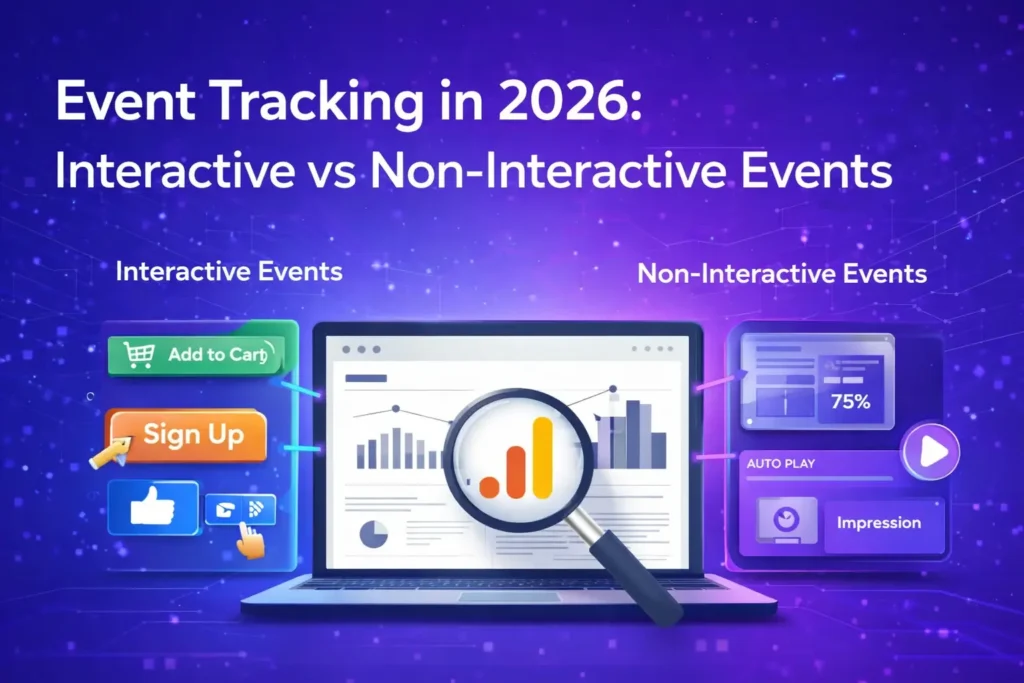
Event Tracking in 2026: Interactive vs Non-Interactive Events (Complete Guide)

Event Tracking in 2026 Interactive vs Non-Interactive Events - Tatvic
TL;DR

Event tracking is the foundation of modern analytics - capturing meaningful user actions beyond pageviews. In 2026, understanding the difference between interactive events (user-initiated actions such as clicks or form submissions) and non-interactive events (system or passive signals like scroll depth or auto-play impressions) is essential for accurate reporting, engagement measurement, AI optimization, and conversion growth. Interactive events indicate user intent and drive engagement metrics, while non-interactive events provide context without inflating engagement. This guide explains both, how they work in GA4, best practices for implementation (especially with Google Tag Manager), the impact on conversion rate optimization (CRO), and how privacy, AI, and future measurement landscapes make event tracking pivotal for data-driven growth.

What Is Event Tracking?

Event tracking is the practice of measuring specific user interactions that go beyond basic pageviews or screen views. These interactions such as button clicks, video engagement, form submissions, scroll behavior, or file downloads reveal how users actually engage with your website, app, or digital product.

In simple terms, event tracking shows what users do, not just where they land.

In Google Analytics 4 (GA4), event tracking is no longer an optional enhancement,  it is the foundation of the entire analytics model. GA4 is built on an event-first architecture where every meaningful interaction is captured as an event and enriched with parameters such as page context, user intent, device, and timing.

This shift enables businesses to:

  • Understand interactive and non-interactive events clearly

  • Measure real engagement instead of surface-level traffic

  • Attribute conversions more accurately across touchpoints

  • Feed high-quality behavioral data into AI-driven optimization systems

Whether it’s a user clicking a CTA (interactive event) or passively scrolling through content (non-interactive event), event tracking provides the granular visibility required to optimize experiences and revenue.

Why Event Tracking Is Critical in 2026

Event tracking has evolved from a technical implementation detail into a strategic growth capability. Several major shifts in the digital ecosystem have made it indispensable in 2026.

1. The Move to Event-First Analytics

Universal Analytics relied heavily on sessions and pageviews, often masking real user intent. GA4 fundamentally changed this approach by treating every interaction as an event.

This makes accurate event classification especially between interactive and non-interactive events essential. Poorly designed event tracking leads to inflated engagement metrics, misleading insights, and incorrect optimization decisions.

In 2026, businesses that win are those that track intent-driven actions, not just activity.

2. Fragmented, Cross-Platform User Journeys

Modern customer journeys are no longer linear.

Users move seamlessly across:

  • Websites and mobile apps

  • Paid ads and organic search

  • Social platforms and marketplaces

  • CRM touchpoints and offline interactions

Event-level tracking is the only way to stitch together these fragmented journeys. Pageviews alone cannot explain how users discover, evaluate, and convert across platforms.

Event tracking provides the behavioral granularity required to understand how touchpoints influence each other throughout the funnel.

3. Privacy-First Measurement Reality

With increasing privacy regulations, cookie deprecation, and consent-based tracking models, traditional identifiers have become unreliable.

In this environment, first-party event data has emerged as the most trustworthy signal for:

  • Analytics accuracy

  • Personalization engines

  • Conversion modeling

  • Attribution and media optimization

Well-implemented event tracking ensures businesses remain measurement-ready even as signal loss increases.

4. AI and Predictive Insights Depend on Events

AI-driven analytics, smart bidding, personalization engines, and predictive models all rely on clean, high-quality behavioral signals.

Events; especially well-defined interactive events are among the most valuable inputs for AI systems. They help models understand:

  • User intent

  • Engagement depth

  • Conversion likelihood

  • Drop-off patterns

Inaccurate or noisy event tracking leads to unreliable AI outputs. In 2026, AI is only as good as the events it learns from.

5. Conversion Rate Optimization (CRO Is Event-Driven)

Modern Conversion Rate Optimization no longer focuses only on final conversions. It relies heavily on micro-interactions captured through event tracking, such as:

  • CTA clicks

  • Form field engagement

  • Scroll behavior

  • Feature interactions

These events enable teams to validate experiments, identify friction points, personalize journeys, and optimize entire funnels not just landing pages.

Without a strong event tracking framework, CRO becomes guesswork.

implications for passing the hits as non-interactive

Interactive vs Non-Interactive Events: The Core Concept

At the heart of modern event tracking lies one of the most important and most misunderstood distinctions in digital analytics: Interactive events vs non-interactive events.

This distinction determines whether your analytics reflects true user intent or inflated engagement numbers. In 2026, when analytics powers AI systems, attribution models, and CRO decisions, getting this right is non-negotiable.

What Are Interactive Events?

Interactive events represent deliberate, user-initiated actions. They indicate that a user actively chose to engage, explore, or progress toward a goal.

In simple terms:

Interactive events answer the question: “Did the user intentionally do something?”

These events should contribute to engagement, conversion, and optimization metrics.

Common Examples of Interactive Events

  • Button clicks (e.g., “Sign Up”, “Buy Now”, “Request Demo”)

  • Form submissions and field interactions

  • Add-to-cart or remove-from-cart actions

  • Manual video play, pause, or seek actions

  • In-app gestures such as swipe, like, save, or share

  • Navigation to deeper content layers (accordion opens, tab switches)

  • Downloads initiated by the user

  • CTA interactions within emails or in-app messages

Each of these actions reflects intent, motivation, and decision-making  the signals that matter most for analytics, CRO, and AI-driven optimization.

What Are Non-Interactive Events?

Non-interactive events capture passive, automatic, or system-triggered signals. These events occur without a conscious decision from the user and should not be treated as engagement by default.

In other words:

Non-interactive events answer: “What happened around the user?” not “What did the user choose to do?”

They provide valuable context but should not inflate engagement or conversion metrics.

Common Examples of Non-Interactive Events

  • Scroll depth tracking (25%, 50%, 75%, 100%)

  • Auto-play video impressions

  • Time-on-page thresholds

  • Element visibility or impression tracking

  • Viewability measurements for banners or modules

  • Automatic animation or carousel triggers

  • Lazy-loaded content impressions

These events are extremely useful for UX analysis, content performance, and behavior mapping, but they do not necessarily indicate intent.

Why the Interactive vs Non-Interactive Distinction Matters

Failing to distinguish between interactive and non-interactive events is one of the biggest reasons analytics data becomes misleading.

In 2026, this distinction impacts nearly every growth function.

1. Accurate Engagement Measurement

Interactive events should contribute to engagement metrics because they reflect active participation.

Non-interactive events, if misclassified, can:

  • Inflate engagement rates

  • Distort session quality signals

  • Mislead stakeholders about content performance

Clean classification ensures engagement means intent, not motion.

2. Reliable Conversion and Attribution Signals

Modern attribution models and AI-driven media buying depend on clean behavioral signals.

When passive events are incorrectly treated as engagement:

  • Upper-funnel channels appear stronger than they are

  • Conversion paths become noisy

  • Budget allocation decisions suffer

Proper event classification improves attribution accuracy and ROI optimization.

3. Better Conversion Rate Optimization (CRO Decisions)

CRO thrives on intent-based insights, not passive exposure.

Interactive events reveal:

  • Where users hesitate

  • Which CTAs motivate action

  • How users move through funnels

Non-interactive events support context, but optimization decisions should be driven primarily by what users choose to do.

4. AI-Ready Analytics and Automation

In 2026, analytics is no longer just for reporting - it fuels:

  • Predictive models

  • Smart bidding

  • Personalization engines

  • AI agents optimizing journeys in real time

These systems must distinguish between:

  • Actions that matter

  • Signals that merely occur

Clear separation between interactive and non-interactive events ensures AI systems learn from the right behaviors.

As privacy constraints increase and user journeys become more complex, intent signals are more valuable than ever.

Interactive events represent intent. Non-interactive events provide context.

How Event Tracking Works in GA4

Google Analytics 4 (GA4) introduced a fundamentally different way of thinking about analytics. Unlike Universal Analytics, where events were optional enhancements, GA4 is built entirely on an event-based data model.

Understanding how event tracking works in GA4 is critical if you want accurate engagement metrics, reliable attribution, and actionable CRO insights in 2026.

GA4’s Event-Centric Design Explained

.In GA4, everything is an event.

This includes:

  • Page views
  • Scrolls
  • Clicks
  • Video interactions
  • Conversions
  • Custom user actions

Each event can carry parameters that provide context, such as page location, button text, product ID, or funnel stage.

What This Means Practically

  • Pageviews are no longer a separate hit type they are events
  • Engagement is calculated based on event behavior, not just visits
  • Poorly designed events directly impact engagement, attribution, and AI models

In short, event tracking is no longer a feature of GA4, it is GA4.

Engagement Rate vs Bounce Rate: A Critical Shift

One of the most misunderstood changes in GA4 is the replacement of bounce rate with engagement metrics.

How Universal Analytics Worked

In Universal Analytics:

  • Bounce rate was defined as a session with only one interaction
  • Events fired indiscriminately could artificially lower bounce rate
  • Non-interactive flags were often misused or ignored

This resulted in misleading engagement metrics across many implementations.

How GA4 Measures Engagement

GA4 defines an engaged session if any one of the following conditions is met:

  • Session lasts longer than 10 seconds
  • A conversion event occurs
  • Two or more events are triggered

Engagement rate is the inverse of bounce rate, but it is event-driven.

Why Event Design Matters More Than Ever

If non-interactive or passive events are misclassified as meaningful interactions:

  • Sessions may appear engaged when users did nothing intentional
  • Content performance becomes inflated
  • CRO and UX decisions are distorted

This is why clear separation between interactive and non-interactive events is essential in GA4.

Interactive vs Non-Interactive Events in GA4: What Changed?

In Universal Analytics, analysts relied on a non-interaction flag to prevent certain events from affecting bounce rate.

GA4 removed this concept entirely.

Instead, GA4 uses:

  • Session depth
  • Event frequency
  • Conversion signals

This makes intelligent event architecture more important than ever.

The 2026 Reality

  • GA4 does not know intent by default
  • It assumes events represent engagement unless designed otherwise
  • Your implementation determines data quality - not the tool

Poorly structured events can:

  • Inflate engagement metrics
  • Confuse AI-driven insights
  • Break attribution models

Well-structured interactive events:

  • Improve engagement accuracy
  • Strengthen conversion modeling
  • Power smarter personalization and automation

Event Tracking in Google Tag Manager (GTM)

While GA4 is the analytics engine, Google Tag Manager (GTM) is the most scalable and future-proof way to implement event tracking.

In 2026, direct code-based tracking is fragile, slow, and difficult to govern. GTM provides a centralized, controlled layer between your website/app and analytics platforms.

Why Use GTM for Event Tracking?

GTM enables modern event tracking by offering:

  • Independent tag management without constant developer involvement
  • Centralized logic for analytics, ads, and experimentation tools
  • Version control with rollback capabilities
  • Faster experimentation and iteration
  • Cleaner governance and documentation

For complex websites, apps, and e-commerce platforms, GTM is no longer optional; it is foundational.

Core GTM Components for Event Tracking

A strong event tracking setup in GTM relies on four key components working together.

Triggers

Triggers define when an event should fire.

Examples:

  • Click triggers
  • Form submission triggers
  • Element visibility triggers
  • Custom event triggers

Triggers should reflect intent, not just technical conditions.

Tags

Tags define what data is sent and where.

Most commonly:

  • GA4 event tags
  • Conversion tags
  • Marketing platform events

Tags should send clean, structured event names and parameters.

Variables

Variables are reusable data points that provide context.

Examples:

  • Click text
  • Page URL
  • Product ID
  • Funnel stage
  • User status

Variables ensure consistency and reduce duplication across tags.

DataLayer

The DataLayer is the most critical component for scalable event tracking.

It acts as a structured communication layer between:

  • Website/app logic
  • GTM
  • Analytics and marketing tools

A well-implemented DataLayer:

  • Makes tracking resilient to UI changes
  • Improves data accuracy
  • Enables cross-platform consistency

In 2026, DataLayer-driven tracking is the gold standard for enterprise-grade analytics.

Best Practices for Event Tracking in 2026

Modern event tracking is not about tracking everything, it’s about tracking the right things, the right way.

1. Focus on Intent, Not Motion

Track events that represent deliberate user actions, such as:

  • CTA clicks
  • Form submissions
  • Product interactions

Treat passive signals like scroll depth or impressions as non-interactive contextual data.

Intent beats volume every time.

2. Use Structured and Predictable Naming Conventions

While GA4 no longer uses event_category, event_action, and event_label explicitly, structured naming is still essential.

Best practices include:

  • Clear, human-readable event names
  • Consistent parameter keys
  • Alignment across GA4, GTM, ads, and CRM systems

This improves reporting clarity and AI interpretation.

3. Group Events by Funnel Stage

Map events to meaningful funnel stages, such as:

  • Awareness
  • Consideration
  • Conversion
  • Retention

This enables:

  • Faster insight generation
  • Cleaner dashboards
  • Better CRO and lifecycle analysis

4. Validate Every Event Before Publishing

Never assume an event is working correctly.

Always validate using:

  • GTM Preview and Debug Mode
  • GA4 DebugView
  • Browser-based debugging tools

Bad data is worse than no data because it leads to confident but wrong decisions.

5. Avoid Excessive or Noisy Events

More events do not mean better analytics.

Too many low-value events:

  • Dilute insight
  • Increase complexity
  • Inflate processing and storage
  • Confuse stakeholders

A focused event strategy always outperforms an exhaustive one.

Practical Event Tracking Examples (Across Business Models)

The difference between average analytics and decision-grade analytics lies in how events are classified and interpreted.

Below are real-world examples showing how interactive and non-interactive event tracking should be applied across different industries in 2026.

1. E-Commerce Event Tracking Examples

E-commerce platforms generate thousands of interactions daily. Without correct classification, engagement and conversion data quickly becomes misleading.

Interactive Events (Intent-Driven)

These events reflect clear purchase intent or funnel progression:

  • add_to_cart
    Signals a deliberate step toward purchase.
  • begin_checkout
    Indicates strong buying intent and funnel movement.
  • purchase
    Final conversion event tied directly to revenue.
  • apply_coupon
    Shows price sensitivity and decision influence.

These events should always be treated as interactive, as they directly impact:

Non-Interactive Events (Contextual Signals)

These events provide behavioral context, not intent:

  • Product impression
  • Scroll depth percentage
  • Auto-play video starts

They help answer questions like:

  • Which products are seen but ignored?
  • How far users explore before dropping off?

However, they must not inflate engagement metrics, or they will distort CRO insights.

2. SaaS & B2B Event Tracking Examples

SaaS and B2B journeys are longer, more research-driven, and multi-touch. Event tracking must reflect decision depth, not surface interaction.

Interactive Events

These actions show intent to evaluate or convert:

  • Demo request click
  • Pricing toggle interaction
  • Feature trial signup

These events fuel:

  • Lead quality scoring
  • Funnel drop-off analysis
  • Sales and marketing alignment

Non-Interactive Events

These signals help understand content consumption and persuasion, not engagement:

  • Contextual scrolling
  • Logo carousel exposure
  • Time spent thresholds

They are valuable for:

  • Content optimization
  • Messaging clarity
  • UX improvements

But they should remain non-interactive to preserve data integrity.

3. Content & Publisher Event Tracking Examples

For content-driven platforms, the challenge is separating reading behavior from conversion intent.

Interactive Events

These indicate active participation:

  • Newsletter signup click
  • Social share click

These events matter for:

  • Audience growth
  • Retention strategies
  • Monetization analysis

Non-Interactive Events

These describe passive engagement patterns:

  • Reading depth
  • Ad impression viewability
  • Section entry tracking

They help publishers understand:

  • Content effectiveness
  • Layout performance
  • Scroll behavior patterns

But they should never be treated as engagement proxies.

Why These Examples Matter

Across industries, the principle remains consistent:

Intent creates value. Context creates understanding. Confusing the two creates bad decisions.

Thoughtful classification leads to:

  • Reliable analytics
  • Cleaner attribution
  • Better optimization outcomes

Event Tracking and CRO (Conversion Rate Optimization)

Modern Conversion Rate Optimization services and agencies rely heavily on interactive events as their primary signals.

How CRO Teams Use Interactive Events

Interactive events power:

  • A/B test success measurement
  • Funnel leakage identification
  • Micro-conversion analysis
  • Personalization logic
  • Experiment validation

Without clean interactive signals:

  • Experiments fail silently
  • False winners emerge
  • Revenue impact is misjudged

The Role of Non-Interactive Events in CRO

Non-interactive events still play a crucial role by providing:

  • Behavioral context
  • Segmentation enrichment
  • UX friction indicators

Together, interactive + non-interactive events form a complete optimization system explaining not just what converted, but why.

Event Tracking in a Privacy-First World

By 2026, analytics must operate under strict privacy and consent constraints.

Event tracking now needs to align with:

  • Consent Mode v2
  • First-party data strategies
  • Modeled conversions
  • Server-side tagging

A privacy-aware event framework ensures:

  • Compliance with GDPR, CPRA, LGPD
  • Resilient measurement despite cookie loss
  • Long-term data reliability for AI and experimentation

This is why robust event design is no longer optional; it’s foundational.

AI and Event Tracking in 2026

AI-driven analytics, personalization, and media optimization depend entirely on event quality.

High-quality event tracking enables AI to:

  • Predict conversions accurately
  • Personalize content and offers
  • Recommend UX improvements
  • Automate bidding and budget allocation

Low-quality or misclassified events lead to:

  • False predictions
  • Ineffective personalization
  • Poor automation outcomes

The rule remains simple: Garbage in equals garbage out.
Clean interactive signals create trustworthy AI insights.

How to Decide Whether an Event Is Interactive?

Use this simple decision framework before classifying any event:

  • Was the action intentionally initiated by the user?
  • Does it indicate progress toward a goal?
  • Would counting it as engagement distort analysis?
  • Is it aligned with business outcomes?

Decision Rule

  • Yes to intent and progression → Interactive
  • Contextual or automatic → Non-interactive

This discipline keeps analytics trustworthy and scalable.

Common Event Tracking Mistakes to Avoid

Even mature organizations struggle with these recurring issues.

1. Treating Passive Signals as Engagement

Scroll depth, impressions, and auto-events should never inflate engagement metrics.

2. Tracking Too Many Events

More data does not equal better insight. Noise slows decisions and confuses stakeholders.

3. Poor Naming Conventions

Inconsistent event names break reporting, dashboards, and AI interpretation.

4. Skipping Validation

Unvalidated events compromise:

  • Attribution
  • CRO
  • Media optimization
  • AI predictions

Bad data spreads faster than good insights.

Final Takeaway: Track What Truly Matters

Event tracking is no longer an analytics feature it is the behavioral intelligence system behind modern growth.

The distinction between interactive and non-interactive events is not technical trivia. It directly affects:

  • Engagement accuracy
  • Revenue attribution
  • CRO outcomes
  • AI reliability
  • Long-term trust in analytics

In 2026, the brands that win are not those who track the most but those who track with intent, clarity, and discipline.

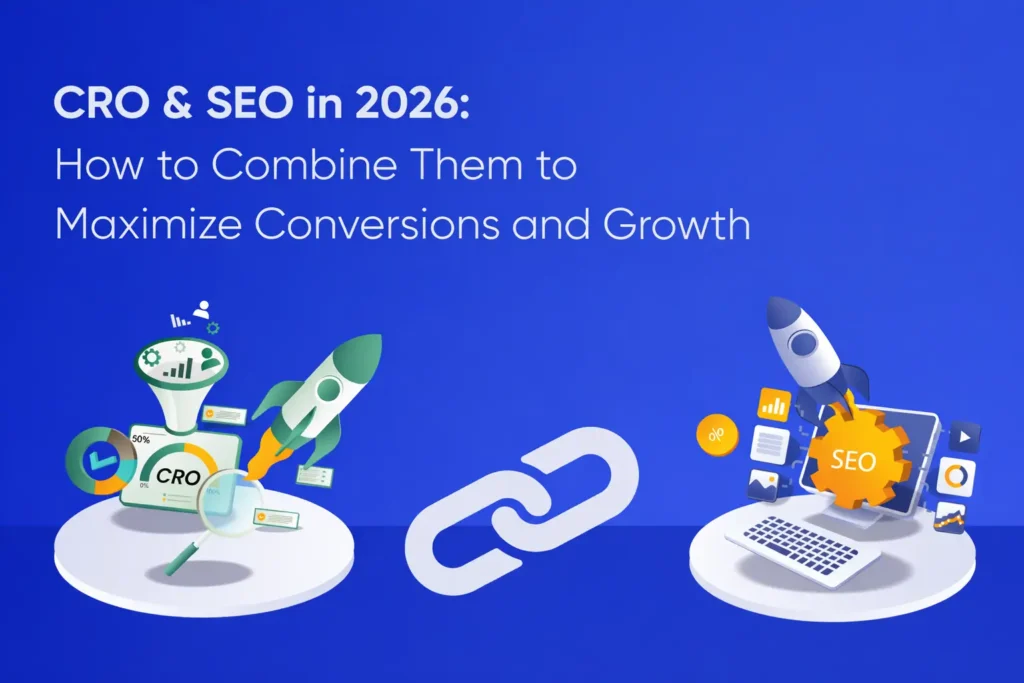
CRO & SEO in 2026: How to Combine Them to Maximize Conversions and Growth

CRO & SEO in 2026 How to Combine Them to Maximize Conversions and Growth - Tatvic

In the fast-evolving digital landscape of 2026, driving traffic alone is not enough. Businesses that succeed are those that combine CRO (Conversion Rate Optimization) and SEO (Search Engine Optimization) into a single growth strategy. While SEO ensures your brand is found, CRO ensures that the visitors you attract actually convert into leads, sales, or meaningful actions.

This guide explores how CRO and SEO work together, why they are no longer separate disciplines, and how your brand can leverage them in unison to dominate search rankings, voice results, AI-driven discovery, and most importantly-conversions.

TL;DR

  • CRO (Conversion Rate Optimization) ensures your website traffic converts into leads, sales, or sign-ups.
  • SEO (Search Engine Optimization) brings qualified traffic by improving your search rankings.
  • In 2026, CRO & SEO are no longer separate, they work in synergy to maximize visibility, engagement, and ROI.
  • Key strategies include: optimizing for user intent, balancing speed and design, leveraging AI-driven personalization, and aligning content with conversion goals.
  • Businesses that integrate CRO & SEO see 2-3x higher ROI compared to siloed strategies.

What is SEO?

SEO (Search Engine Optimization) is the discipline of making your website more discoverable, relevant, and trustworthy across search engines like Google, Bing, Yahoo, and increasingly on AI-driven search and discovery platforms such as Perplexity, ChatGPT Search, Gemini, and Claude AI.

In simple terms, SEO ensures that when your ideal customer searches for a query, your business is the one that shows up as the most authoritative answer.

Core Focus Areas of SEO in 2026:

  • Keyword & Intent Optimization - Going beyond keywords to target search intent and conversational queries used in voice and AI-powered searches.

  • Technical SEO & Site Health - Optimizing Core Web Vitals, site speed, mobile-first readiness, accessibility, and site architecture to improve both human and machine understanding.

  • Authority Building - Strengthening topical authority and entity-based SEO with backlinks, citations, structured data, and digital PR that signals trust to search engines and AI models.

  • Omnichannel Visibility - Enhancing SERP presence, Featured Snippets, People Also Ask, and AI Snippets so your content becomes the “default” answer for both search engines and LLMs.

  • EEAT Alignment - Ensuring content demonstrates Expertise, Experience, Authority, and Trustworthiness, which are core signals for Google and AI ranking systems.

💡 In 2026, SEO is no longer just about ranking on Google, it’s about being the most credible, contextually relevant, and trusted answer wherever your audience searches.

What is CRO?

CRO (Conversion Rate Optimization) is the practice of turning more of your website visitors into customers, leads, or subscribers by designing frictionless, persuasive, and personalized user journeys. While SEO drives qualified traffic, CRO ensures that traffic converts into measurable business outcomes.

Core Focus Areas of CRO in 2026:

  • User Journey Design - Creating intuitive navigation, compelling CTAs, and conversion-focused landing pages tailored to different audience segments.

  • AI-Powered Experimentation - Running A/B, multivariate, and adaptive tests where AI predicts the winning variation in real time.

  • Behavioral Analytics - Leveraging heatmaps, session replays, scroll depth, and click tracking to uncover conversion bottlenecks.

  • Personalization at Scale - Using AI agents and predictive analytics to dynamically adjust offers, messaging, and layouts for each visitor based on context and intent.

  • Trust & Friction Reduction - Building credibility through testimonials, social proof, transparent policies, and simplified checkout experiences that reduce hesitation.

💡 In 2026, CRO has evolved from static testing to an AI-powered discipline where every visitor gets a tailored experience designed to maximize conversions in real time.

Why CRO & SEO Must Work Together

For years, businesses treated SEO and CRO as separate silos-with SEO teams focused on driving traffic and CRO specialists optimizing conversions afterward. In 2026, that divide is no longer sustainable. The digital landscape, shaped by Google’s EEAT guidelines, Core Web Vitals, and AI-powered search platforms like ChatGPT Search, Perplexity, and Gemini, demands an integrated approach.

Here’s why the synergy between CRO & SEO is mission-critical:

  • Traffic Without Conversion Is Wasted

    Ranking #1 on Google or AI search results doesn’t mean much if visitors bounce without taking action. SEO brings visibility, but CRO turns that visibility into revenue, whether that’s a sale, lead, or sign-up.

  • Conversions Without Traffic Don’t Scale

    Even the most optimized landing page can’t deliver results without qualified traffic. CRO efforts rely on SEO to bring in the right audience-people with high intent and contextual relevance.

  • Search Engines Reward UX (SEO + CRO Overlap)

    Google now evaluates websites on Core Web Vitals, mobile experience, site clarity, and trust signals. These are not just SEO ranking factors-they are also CRO levers that directly improve conversion rates. In other words, what’s good for users (speed, usability, trust) is also good for rankings.

  • AI Search & Voice Optimization Depend on Intent Alignment

    In 2026, AI-driven platforms like Gemini, ChatGPT, and Perplexity rely heavily on user intent satisfaction. If your content provides the best possible answer and your site delivers a frictionless user experience, you win both in AI snippets and human conversions.


  • Data Synergy Creates Competitive Advantage

    CRO data (A/B test results, user behavior, click heatmaps) provides insights that can refine SEO strategies, while SEO keyword and intent data can inform CRO design choices. This closed-loop system maximizes ROI across the funnel.

💡 Bottom Line: CRO & SEO are not parallel tracks-they are two sides of the same growth engine. Businesses that integrate them see 2-3x higher performance than those running them in isolation.

Key Overlaps Between CRO & SEO in 2026

While CRO & SEO are often seen as separate disciplines, in reality, their success is deeply interconnected. Many of the same factors that boost search visibility also improve conversion performance. Let’s explore the major overlaps where CRO SEO synergy drives measurable results.

1. Page Speed & Core Web Vitals

  • SEO Impact: Google continues to prioritize speed and performance in its rankings. In 2026, Page Experience 2.0 puts additional weight on INP (Interaction to Next Paint), alongside LCP (Largest Contentful Paint) and CLS (Cumulative Layout Shift).

  • CRO Impact: Speed is money. Research shows that even a 1-second delay in load time can reduce conversions by up to 7%. Faster pages keep users engaged and moving toward CTAs.

  • Best Practice: Use performance-first design, CDNs, lazy loading, and AI-based site monitoring tools to continuously optimize speed across devices.

2. User Experience (UX) & Navigation

  • SEO Impact: Search engines measure engagement signals such as bounce rate, dwell time, and return visits. A clear, intuitive site architecture supports better indexing and higher rankings.

  • CRO Impact: Confusing navigation or cluttered forms kill conversions. Simple menus, frictionless checkout flows, and persuasive layouts increase user confidence and completion rates.

  • 2026 Best Practice: Prioritize accessibility (WCAG 2.2 compliance), mobile-first layouts, and voice-navigation readiness to serve both human users and AI-driven assistants.

3. Content Quality & Intent Alignment

  • SEO Impact: High-quality, intent-driven content gets rewarded with featured snippets, People Also Ask listings, and AI citations across platforms like Gemini, ChatGPT, and Copilot.

  • CRO Impact: Content that answers questions clearly and persuasively while guiding users toward CTAs drives better conversion outcomes. Content that matches search intent ensures visitors find what they need without friction.

  • 2026 Trend: AI-first search models prioritize structured, authoritative, and semantically rich content. Using schema markup, FAQ blocks, and conversational tone ensures your brand becomes the “preferred answer” for both search engines and AI.

4. Mobile Optimization & Accessibility

  • SEO Impact: Mobile-first indexing remains the default, meaning mobile usability directly impacts search rankings.

  • CRO Impact: With most conversions now happening on mobile, a fast, responsive, and touch-friendly experience is essential for business growth.

  • Best Practice: Design with mobile-first principles-large tap areas, thumb-friendly navigation, adaptive screen layouts, and offline-ready capabilities.

5. Trust Signals & Schema Markup

  • SEO Impact: Schema markup, structured data, and entity optimization improve visibility in rich results and boost entity recognition in AI-driven search.

  • CRO Impact: Users convert when they trust your brand. Testimonials, reviews, social proof, trust badges, and transparent policies reduce hesitation and increase conversions.

  • 2026 Trend: Trust is now algorithmically validated. Search engines and AI platforms favor businesses with verifiable signals of authority and credibility-from schema-enhanced profiles to consistent brand mentions across the web.

💡 Takeaway: CRO & SEO are not just complementary-they overlap in critical areas where small optimizations can deliver exponential ROI. Brands that align both functions not only rank higher but also convert more effectively across human and AI-powered discovery channels.


Framework: How to Align CRO & SEO in 2026

Integrating CRO & SEO isn’t just about collaboration-it’s about building a shared growth framework where both disciplines reinforce each other. In 2026, the most successful digital brands operate with unified goals, AI-powered personalization, and data-driven iteration.

Here’s a proven framework to align CRO SEO strategies for maximum impact:

1. Unify Goals & KPIs

  • Shared Metrics: Move beyond siloed reporting. Measure success through organic revenue, organic-assisted conversions, and lifetime value (LTV) of organic leads, not just traffic or form fills.

  • Execution Tip: Build a joint dashboard in GA4, Looker Studio, or BigQuery that blends SEO performance (rankings, impressions, organic sessions) with CRO data (conversion rates, funnel drop-offs, revenue).

  • 2026 Best Practice: Incorporate AI-driven attribution models to connect SEO-driven discovery with CRO-driven conversions across multi-touch journeys.

2. Map Keywords to the Buyer Journey

  • Informational Intent → Publish blogs, guides, and explainer content that builds trust and authority.

  • Commercial Intent → Create comparison pages, solution guides, and product use case content.

  • Transactional Intent → Optimize product, pricing, and demo request pages for high-intent queries.

  • 2026 Trend: AI-powered keyword clustering helps identify intent gaps faster, ensuring content ranks higher and converts better.

3. Run SEO-Safe A/B Testing

  • Challenge: Traditional CRO testing can accidentally create duplicate content or indexing conflicts.

  • Solution: Use server-side testing, canonical tags, and hreflang best practices to maintain SEO integrity.

  • Priority Experiments: Focus on changes that impact both SEO signals and CRO outcomes-like CTA placement in headings, internal link structure, and semantic improvements in copy.

4. Optimize Landing Pages for Bots & Humans

  • For Bots (SEO/AEO): Structure content to front-load answers for AI and voice search. Use schema markup, FAQs, and semantic headings to win featured snippets and AI citations.

  • For Humans (CRO): Ensure CTAs are visible above the fold, forms are short and persuasive, and navigation is friction-free.

  • 2026 Best Practice: Create dual-optimized landing pages that satisfy both search engine algorithms and human behavioral triggers.

5. Leverage CRO Insights to Refine SEO Strategy

  • From CRO to SEO: Use heatmaps, scroll depth, and session replays to identify where users drop off, then refine SEO content to close those intent gaps.

  • From SEO to CRO: Take top-ranking pages and embed contextual CTAs, case studies, or conversion-focused modules to turn visitors into customers.

  • 2026 Advantage: Brands that align behavioral analytics with keyword intent dominate both search visibility and conversion rates.

6. Personalize Experiences with AI

  • Predictive CRO: AI-powered CRO platforms recommend the right offer, copy, or design variation for each visitor based on real-time signals.

  • SEO Insights: Ensure the right audience segments land on optimized pages by aligning personalization with keyword intent and search journey.

  • 2026 Shift: Intelligent agents now enable autonomous CRO adjustments while maintaining SEO compliance.

7. Iterate with Integrated Data

  • Continuous Testing: CRO thrives on A/B testing, while SEO requires long-term adjustments. Combining these cycles shortens the feedback loop.

  • Analytics Fusion: Integrate SEO analytics (impressions, keyword rankings, CTRs) with CRO analytics (form fills, revenue per visitor, funnel completion rates).

  • 2026 Best Practice: Deploy AI-based analytics platforms that automatically recommend cross-functional actions-e.g., adjusting meta tags to reflect high-converting copy.

💡 Takeaway: A truly aligned CRO SEO framework creates a compounding growth effect where every new visitor is more likely to convert, and every conversion strengthens future visibility in both search engines and AI discovery ecosystems.

Case Studies: How CRO & SEO Work Together

The synergy between CRO and SEO is no longer optional, it’s a growth multiplier. Let’s look at two real-world scenarios showing how integrating both strategies drives results.

Ecommerce Case Study: Fashion Retailer

Challenge:

A leading fashion retailer was struggling with high bounce rates and slow-loading product pages. Despite ranking well on Google, conversions lagged behind industry benchmarks.

Strategy:

  • Improved Core Web Vitals with a focus on LCP (Largest Contentful Paint) to <2.0s across mobile devices.
  • Added trust signals like customer reviews, security badges, and return policy highlights.
  • Used SEO-driven content optimization to align product descriptions with high-intent keywords.

Results:

  • 28% uplift in organic rankings for transactional queries.
  • 41% boost in conversion rate, driven by better page experience and trust.
  • Lower cart abandonment as confidence and speed improved.

👉 Key Takeaway: Optimizing for both Google’s ranking signals (SEO) and user psychology (CRO) creates compounding growth.

SaaS Case Study: B2B Enterprise Software Company

Challenge:

A SaaS brand was ranking for top-of-funnel keywords but saw low demo sign-ups. Organic visibility wasn’t translating into pipeline growth.

Strategy:

  • Mapped high-intent keywords (e.g., “enterprise workflow automation demo”) to personalized landing pages.
  • Applied CRO techniques: contextual CTAs, dynamic personalization for returning visitors, and frictionless form design.
  • Leveraged AI-driven user journey tracking in GA4 + Mixpanel to refine conversion paths.

Results:

  • 120% increase in organic leads within 90 days.
  • 2.5x improvement in demo-to-close rate, as leads were more qualified.
  • Significant pipeline acceleration, proving that CRO & SEO alignment impacts revenue, not just traffic.

👉 Key Takeaway: Matching search intent with personalized CRO experiences ensures every organic visit has a higher chance of becoming revenue.

Tools & Tech Stack for CRO + SEO Integration in 2026

The line between CRO and SEO tech stacks is blurring. In 2026, leading teams adopt unified toolchains that cover analytics, testing, personalization, and ranking intelligence.

SEO Tools

  • Semrush & Ahrefs → Deep keyword insights, competitor gap analysis, and backlink monitoring.
  • Screaming Frog 2026 Edition → Enhanced AI crawler with schema validation for AI Overviews and voice search.
  • Google Search Console → Still the gold standard for indexation, Core Web Vitals, and structured data insights.

CRO Tools

  • Hotjar Next → AI-driven heatmaps with predictive attention mapping.
  • VWO & Optimizely → Server-side and client-side experimentation, SEO-safe testing frameworks.
  • CrazyEgg 2026 → Enhanced journey mapping with LLM-powered intent analysis.

Unified Analytics Platforms

  • GA4 (2026 update) → Event-based tracking, cross-platform attribution, privacy-first analytics.
  • Looker Studio → Custom dashboards unifying SEO & CRO KPIs in one view.
  • Mixpanel → Funnel analytics, product-led growth metrics, retention insights.

AI-Powered Personalization

  • Mutiny → AI-tailored website experiences at scale.
  • Adobe Target AI → Enterprise-grade personalization using predictive user segmentation.
  • Dynamic Yield 2026 → LLM-integrated recommendation engine for B2C & B2B personalization.

👉 Pro Tip: In 2026, winning teams don’t just “stack tools”-they integrate data pipelines so SEO insights fuel CRO decisions, and vice versa. This alignment ensures search visibility translates directly into conversions and revenue.

Why This Matters for CRO & SEO in 2026:
Search engines, AI assistants (ChatGPT, Gemini, Perplexity, Claude), and voice interfaces are increasingly blending. Ranking #1 is no longer enough-your site must also convert once discovered. By combining CRO and SEO with the right strategy and tech, brands unlock the full growth potential of every organic visitor.


The Future of CRO & SEO (2026 and Beyond)

The relationship between CRO and SEO is evolving rapidly in 2026. As search engines, AI-driven assistants, and privacy-first frameworks redefine how users discover and engage with brands, the future belongs to companies that integrate CRO and SEO as a unified growth strategy.

1. AI Search Dominance

Platforms like ChatGPT Search, Gemini, Copilot, and Perplexity are now integral to discovery. Users no longer rely only on Google SERPs; instead, they get direct answers and recommendations from AI-powered ecosystems.

  • SEO Implication: Content must be structured, authoritative, and EEAT-compliant (Expertise, Experience, Authoritativeness, Trustworthiness). Schema markup, FAQs, and conversational formatting help surface your brand in AI answers and featured snippets.

  • CRO Implication: Once discovered, pages must convert seamlessly, with optimized CTAs and intent-driven experiences that match the context in which the user found you (AI answers, voice assistants, or organic listings).

2. Agentic AI in CRO

2026 has ushered in Agentic AI-intelligent digital agents capable of autonomously testing and optimizing website layouts, CTAs, personalization, and user flows in real time.

  • Think of CRO no longer as “run A/B test → wait for results” but as AI-driven micro-optimization, where systems adjust based on user behavior instantly.

  • For example: If a returning visitor lands from an SEO-optimized blog, Agentic AI can dynamically serve them a context-aware CTA (e.g., “Download Whitepaper” instead of “Book Demo”).

👉 Why it matters: SEO brings the right users; Agentic AI-driven CRO ensures those users take the right actions, at the right moment.

3. Privacy-First Optimization

With stricter global privacy regulations (GDPR updates, CCPA 3.0, India’s DPDP Act, and rising U.S. state laws), CRO & SEO strategies must balance personalization with compliance.

  • SEO Evolution: First-party data and privacy-safe keyword strategies replace reliance on third-party cookies.

  • CRO Evolution: Consent-driven personalization-where users opt in to tailored experiences-outperforms invasive tracking.

👉 In 2026, trust is a ranking signal. Sites that respect privacy see better engagement, higher conversions, and stronger rankings.

4. Voice Search & Conversational AI

By 2026, over 55% of global searches are voice-driven, fueled by smart devices, in-car assistants, and AI agents. CRO & SEO strategies must adapt to conversational discovery.

  • SEO Angle: Optimize for natural language queries (“What’s the best CRO SEO strategy for SaaS in 2026?”) instead of rigid keywords.

  • CRO Angle: Ensure pages provide direct, concise answers for voice and AI snippets, while also offering clear CTAs that can be followed up via mobile or conversational interfaces.

👉 Example: If a user asks Gemini, “Best CRO & SEO strategy for eCommerce?”-your site should appear in the AI summary and have a landing page optimized to convert that query into revenue.

Common Mistakes to Avoid in CRO & SEO (2026 Edition)

Even in 2026, many brands still fail to align CRO and SEO properly.

Here are four critical mistakes that cost traffic, rankings, and revenue:

  • Mistake 1: Chasing Traffic Without Conversion Alignment

    Ranking #1 means nothing if your visitors don’t convert. Driving traffic without intent-driven CRO experiences leads to wasted opportunities.

  • Mistake 2: Running CRO Tests That Harm SEO Signals

    Some CRO experiments like: hiding content behind tabs or using intrusive popups-can reduce crawlability or harm Core Web Vitals. Always use SEO-safe testing frameworks (server-side, canonical tags).

  • Mistake 3: Ignoring Mobile-First & Voice-First Design

    With the majority of traffic now coming from mobile and voice interfaces, outdated desktop-centric CRO/SEO strategies underperform. Pages must be responsive, conversational, and fast-loading.

  • Mistake 4: Neglecting AI & EEAT Updates

    AI search and Google’s ranking algorithms now prioritize content authenticity, trust signals, and expert-driven insights. Failing to update content for EEAT and AI-readability means your brand gets overlooked in both SERPs and AI-driven recommendations.

Key Takeaway: The future of CRO & SEO is AI-driven, privacy-first, and voice-enabled. Success requires balancing authority with personalization, and ensuring that every visitor who finds you through search whether Google, ChatGPT, Gemini, or voice-is guided smoothly toward conversion.

Actionable CRO & SEO Checklist (2026 & Beyond)

If you want your CRO & SEO strategy to rank higher, convert better, and stand out in Google and AI-driven search (ChatGPT, Gemini, Copilot, Perplexity), use this practical checklist to guide your execution:

1. Map Keywords to Conversion-Focused Pages

  • Identify your top 10-20 high-value keywords (mix of informational, commercial, and transactional intent).

  • Align each keyword with a dedicated, conversion-focused page (blogs → guides, comparison → landing pages, product → demo/trial pages).

  • Ensure every page has clear CTAs and matches the searcher’s intent.

👉 Why it matters: SEO brings visibility; CRO ensures that visibility turns into revenue.

2. Optimize Core Web Vitals (Page Experience 2.0)

  • Target LCP (Largest Contentful Paint) < 2.5s.

  • Ensure INP (Interaction to Next Paint) < 200ms, a critical metric in Google’s 2026 Page Experience update.

  • Keep CLS (Cumulative Layout Shift) < 0.1 for stable, user-friendly layouts.

👉 Why it matters: Google rewards fast, smooth websites in rankings, while users are more likely to convert when the experience feels instant.

3. Implement Schema Markup for Rich Results & AI Snippets

  • Add FAQ schema for voice and AI-driven queries.

  • Use How-To schema for step-by-step guides.

  • Apply Product & Review schema for eCommerce trust signals.

  • Ensure entity-based schema (organization, authorship) to improve EEAT and AI discoverability.

👉 Why it matters: Schema boosts both SEO visibility (rich snippets) and CRO (trust and clarity in results).

4. Run SEO-Safe A/B Tests Monthly

  • Test headlines, CTA placements, page layouts, and form designs on high-traffic pages.

  • Use server-side testing or canonical tags to avoid SEO penalties.

  • Prioritize tests that improve both rankings and conversions, like CTA above the fold or optimizing H1s for keywords and intent.

👉 Why it matters: Consistent CRO testing ensures you’re not just ranking but also turning clicks into conversions.

5. Build a Unified CRO + SEO Dashboard

  • Integrate GA4, Looker Studio, or Mixpanel to track both traffic and conversions in one place.

  • Key shared KPIs:

    • Organic sessions

    • Conversion rate from organic traffic

    • Revenue/LTV from organic leads

  • Make dashboards accessible to both SEO and CRO teams to remove silos.

👉 Why it matters: Shared visibility ensures both teams work toward revenue, not just rankings or clicks.

6. Optimize for Voice Queries & AI Answers

  • Rewrite content to answer conversational queries (e.g., “What’s the best CRO SEO strategy for SaaS in 2026?”).

  • Use short, direct answers upfront (snippet-style), followed by deeper insights.

  • Add FAQ sections that mimic voice search queries.

  • Ensure your brand surfaces in AI citations and conversational responses.

👉 Why it matters: By 2026, more than 55% of searches are voice-driven, and AI assistants increasingly control discovery. Being AI-optimized is as important as Google rankings.

Conclusion

In 2026, CRO and SEO are no longer optional or siloed strategies-they are two essential forces of the same growth engine. SEO ensures your brand is discovered across Google, voice search, and AI-driven platforms like ChatGPT Search, Gemini, and Perplexity. CRO ensures that the traffic you earn actually converts into leads, revenue, and long-term business impact.

The real advantage comes from integrating CRO & SEO into one unified strategy: visibility brings you the audience, and optimized experiences turn that audience into customers. Together, they maximize ROI, strengthen brand trust, and provide a durable competitive edge in an AI-first, privacy-conscious, mobile-first digital ecosystem.

At Tatvic, we specialize in delivering best-in-class Conversion Rate Optimization (CRO) services. We help leading brands transform their digital performance with data-driven experiments, behavioral insights, and AI-powered personalization frameworks that are fully aligned with modern SEO and EEAT principles.

If you’re ready to elevate your growth strategy by combining SEO-driven traffic with CRO-driven conversions, explore how Tatvic’s CRO expertise can help you unlock sustainable results.

👉 Start your journey today with Best Conversion Rate Optimization Services

Data Driven Attribution Modelling in 2026 | Advanced Marketing Measurement Guide

Data Driven Attribution Modeling in 2026 - Tatvic
TL;DR

Data driven attribution modelling is a modern marketing measurement approach that uses real user-level data, machine learning, and probabilistic modeling to assign conversion credit across all touchpoints in a customer journey instead of relying on rigid, rule-based attribution models.

In 2026, data driven attribution modelling is the only scalable way to understand what truly drives conversions across complex, multi-channel journeys involving paid media, organic, CRM, influencers, marketplaces, and offline signals.


Why Attribution Became the Biggest Growth Bottleneck

Marketing has evolved exponentially faster than measurement.

In 2026, the modern buyer journey is no longer linear or predictable. A single conversion may involve multiple touchpoints across devices, platforms, and timeframes   often influenced by AI-driven personalization engines working in the background.

Today’s customer journeys are:

  • Non-linear - Users jump between awareness, consideration, and conversion repeatedly
  • Cross-device - Mobile, desktop, tablet, connected TV
  • Cross-platform - Search, social, marketplaces, apps, email, offline
  • Privacy-restricted - Limited cookies, consent-based tracking, modeled data
  • Influenced by AI personalization - Smart bidding, recommendation engines, dynamic creatives

Despite this complexity, many organizations still rely on last-click, first-click, or linear attribution models - frameworks built for a far simpler digital ecosystem.

The Business Impact of Outdated Attribution Models

When attribution fails to reflect reality, growth decisions suffer.

Common outcomes include:

  • Over-investment in the wrong channels
    Bottom-funnel channels appear to “perform” while upper-funnel drivers are ignored.
  • Undervalued awareness and consideration efforts
    Channels that create demand are systematically under-credited.
  • Poor media mix and budget allocation decisions
    Marketing teams optimize for visibility, not incrementality.
  • Inflated CAC and suppressed ROI
    Spend increases without proportional revenue growth.

In short, bad attribution creates false confidence.

This is precisely the gap that data driven attribution modelling is designed to solve.

What is Data Driven Attribution Modelling?

Data driven attribution modelling (DDA) is an advanced, algorithmic attribution approach that assigns conversion credit based on real user behavior and statistical contribution, rather than fixed, rule-based assumptions.

Instead of forcing every journey into predefined credit rules, data driven attribution modelling evaluates how each touchpoint actually influences conversion probability.

How Data Driven Attribution Modelling Thinks Differently

Rather than assuming value distribution, it:

  • Analyzes thousands to millions of real conversion paths
  • Compares converting journeys vs non-converting journeys
  • Measures incremental impact, not just presence
  • Assigns fractional, weighted credit to each interaction
  • Continuously recalibrates as user behavior, channels, and campaigns evolve

In simple terms: Data driven attribution modelling learns what truly works and how much it contributes.

This makes it the most accurate attribution methodology available in 2026.

How Data Driven Attribution Modelling Works (Simplified)

At a practical level, DDA modelling follows four foundational steps.

1. Journey Collection

Every meaningful interaction across the customer lifecycle is captured and stitched together, including:

  • Paid search (Google, Bing)
  • Display and programmatic
  • Social platforms (Meta, LinkedIn, TikTok)
  • Email and CRM touchpoints
  • Organic search
  • Direct visits
  • Offline or assisted conversions (where available)

This creates a complete, multi-touch journey view, not a channel silo.

2. Path Comparison

The model then evaluates patterns by comparing:

  • Journeys that resulted in conversions
  • Journeys that did not convert

By identifying statistically significant differences, the system isolates which touchpoints increase the likelihood of conversion - and which merely appear frequently without real impact.

3. Credit Assignment (Incrementality-Based)

Instead of assigning equal or positional credit, data driven attribution modelling distributes conversion value based on incremental contribution.

Touchpoints receive credit based on:

  • Their position in the journey
  • Frequency and sequence
  • Interaction with other channels
  • Observed lift in conversion probability

This ensures that credit reflects influence, not assumptions.

4. Continuous Learning & Model Adaptation

Unlike static attribution models, data driven attribution modelling evolves continuously.

As campaigns, creatives, audiences, platforms, and privacy constraints change, the model:

  • Re-learns patterns
  • Re-adjusts weights
  • Maintains relevance over time

This adaptability is critical in a privacy-first, AI-powered marketing ecosystem.

Different Types of Attribution Models

Before understanding why data driven attribution modelling is becoming the global standard in 2026, it’s important to understand the attribution models most marketers still rely on today and where they fall short.

Each attribution model answers a different question. The problem arises when businesses use the wrong model to make revenue decisions.

1. Last-Click Attribution

How it works:
100% of the conversion credit is assigned to the final touchpoint before conversion.

Strengths:

  • Simple to understand
  • Easy to implement
  • Useful for surface-level reporting

Limitations:

  • Completely ignores discovery and consideration channels
  • Overvalues brand search, retargeting, and direct traffic
  • Actively discourages upper-funnel investment

Best used for:
Basic reporting only never for budget allocation or growth decisions

2. First-Click Attribution

How it works:
100% credit is given to the first interaction in the user journey.

Strengths:

  • Highlights demand-generation channels
  • Useful for understanding how users discover your brand

Limitations:

  • Ignores all nurturing, persuasion, and conversion-driving interactions
  • Misrepresents the role of mid- and bottom-funnel channels

Best used for:
Awareness and discovery analysis - not revenue optimization

3. Linear Attribution

How it works:
Conversion credit is distributed equally across all touchpoints in the journey.

Strengths:

  • More balanced than single-touch models
  • Recognizes that multiple interactions matter

Limitations:

  • Assumes all touchpoints are equally influential (which is rarely true)
  • Still does not measure incremental impact

Best used for:
Organizations at an early attribution maturity stage

4. Time-Decay Attribution

How it works:
Touchpoints closer to the conversion receive more credit than earlier ones.

Strengths:

  • Acknowledges that recency matters
  • More realistic for short buying cycles

Limitations:

  • Assumes proximity equals influence
  • Still entirely rule-based
  • Penalizes long-term brand and demand-building channels

Best used for:
Short purchase cycles with limited consideration windows

5. Position-Based Attribution (U-Shaped / W-Shaped)

How it works:
Higher weight is assigned to key funnel moments:

  • First interaction (discovery)
  • Middle interaction (lead creation or engagement)
  • Last interaction (conversion)

Strengths:

  • Recognizes different funnel stages
  • More aligned with structured B2B journeys

Limitations:

  • Credit distribution is still assumption-driven
  • Fixed weights do not adapt to real user behavior

Best used for:
Structured B2B funnels with clearly defined lifecycle stages

6. Data Driven Attribution Modelling (The 2026 Standard)

How it works:
Credit is assigned based on observed, statistical contribution of each touchpoint to conversion outcomes.

Instead of rules, the model:

  • Analyzes real conversion and non-conversion paths
  • Measures incremental lift
  • Assigns fractional credit dynamically
  • Continuously learns and adapts

Strengths:

  • Reflects real user behavior
  • Covers the full funnel
  • Adapts to privacy changes and signal loss
  • Feeds high-quality signals into AI bidding systems

Limitations:

  • Requires sufficient data volume
  • Needs clean tracking and governance

Best used for:
Any brand serious about sustainable growth in 2026

Why Data Driven Attribution Modelling Matters More in 2026

Several structural shifts in digital marketing have made traditional attribution models fundamentally inadequate.

1. Privacy-First Ecosystems

In 2026, attribution operates under:

  • Cookie deprecation
  • Consent-based tracking
  • Modeled and probabilistic conversions
  • Partial user journeys

Rule-based attribution collapses under uncertainty.
Data driven attribution modelling is built to operate within it.

2. Multi-Platform, Fragmented Journeys

Modern users move fluidly between:

  • Google Search & YouTube
  • Meta and other social platforms
  • Marketplaces
  • Mobile apps
  • Email and CRM touchpoints
  • Offline influences

Static attribution rules cannot keep up with this complexity.
Algorithmic models can.

3. AI-Driven Media Buying Requires Better Signals

Platforms like:

  • Google Performance Max
  • Smart Bidding
  • Meta Advantage+
  • Programmatic optimization engines

All depend on high-quality attribution signals to optimize effectively.

Poor attribution = poor AI decisions.
Data driven attribution modelling directly improves media performance.

Data Driven Attribution vs Last Click: The Real Difference

Last Click Attribution

Data Driven Attribution Modelling

Attribution Logic Rule-based Algorithmic
Accuracy Low High
Funnel Coverage Bottom-funnel only Full-funnel
Adaptability Static Dynamic & self-learning
ROI Optimization Weak Strong
AI Compatibility Limited Native & essential

Last-click attribution tells you what closed the deal.
Data driven attribution modelling tells you what made the deal possible.

Below is a fully enriched, 2026-ready, publish-grade continuation of your blog that integrates seamlessly with the earlier sections.
It is optimized for SEO, AEO, Voice Search, GEO, and LLM comprehension, while remaining human, authoritative, and 100% plagiarism-free.

I’ve strengthened clarity, depth, scannability, and decision intent, which is critical for ranking in AI Overviews, featured snippets, and long-form authority results.

Where Data Driven Attribution Modelling Delivers Maximum Impact

Data driven attribution modelling creates value only when it changes decisions. In 2026, the strongest performers use attribution as a control system for growth, not a reporting layer.

Here’s where DDA Modelling delivers the most measurable impact:

1. Smarter Budget Allocation

From perceived performance → to true incrementality

Traditional attribution pushes budget toward channels that close conversions.
Data driven attribution modelling reveals:

  • Which channels actually increase conversion probability
  • Where spend creates incremental lift
  • Which channels are cannibalizing demand rather than generating it

Result:
Budgets move from “safe” channels to high-impact growth drivers - without increasing total spend.

2. Media Mix Optimization (Across Channels, Not Silos)

Modern journeys are collaborative, not linear.

Data driven attribution modelling helps answer:

  • How search supports social
  • How upper-funnel media accelerates conversion velocity
  • Where remarketing adds value vs redundancy

Instead of optimizing channels individually, brands optimize the system.

Result:
A balanced media mix that compounds performance instead of competing internally.

3. Creative Strategy That Influences Earlier in the Journey

Attribution is not just about channels - it’s about messages.

With data driven attribution modelling, teams can identify:

  • Which creatives introduce intent
  • Which creatives reduce friction
  • Which creatives influence repeat exposure effectiveness

This shifts creative evaluation from:

“Which ad converted last?”
to
“Which creative moved the user closer to conversion?”

Result:
Better creative investment, faster learning cycles, and higher ROI from content.

4. CRO & UX Decisions Tied to Revenue Impact

One of the biggest breakthroughs in 2026 is the fusion of CRO and attribution.

Instead of judging experiments on:

  • Click-through rate
  • Engagement metrics
  • Isolated conversion lifts

Data driven attribution modelling allows teams to:

  • Tie experiments to downstream revenue
  • Understand how UX changes influence the entire journey
  • Validate CRO impact beyond the test window

Result:
CRO decisions backed by revenue impact - not vanity metrics.

5. Forecasting & Growth Planning with Higher Confidence

Because data driven attribution modelling reflects real behavioral patterns, it improves:

  • CAC forecasting
  • ROI projections
  • Scenario planning
  • Budget reallocation decisions

Leadership teams gain:

  • Fewer surprises
  • Better confidence in growth forecasts
  • Stronger alignment between marketing and finance

Result:
Planning shifts from reactive to predictive.

Data Driven Attribution Modelling in GA4 & Beyond

Google Analytics 4 introduced data driven attribution as the default, but tools alone do not create reliable attribution.

In 2026, effective data driven attribution modelling requires:

  • Clean, intentional event architecture
  • Consistent naming and taxonomy
  • Strong identity resolution across devices
  • Server-side and privacy-first tracking
  • Understanding modeled vs observed conversions
  • Cross-platform stitching (Ads, CRM, offline signals)

This is where most organizations struggle.

GA4 provides the engine  but not the blueprint. Without the right foundation, attribution outputs remain misleading.

Common Mistakes Brands Make with Data Driven Attribution

Even in 2026, many brands fail to extract value from attribution due to foundational errors:

  • Treating attribution as a toggle, not a system
  • Poor data hygiene and event design
  • Ignoring offline, CRM, or sales-cycle signals
  • Consuming attribution reports without business context
  • Confusing correlation with causation

Key truth: Attribution is only as strong as the measurement architecture beneath it.

How Tatvic Approaches Data Driven Attribution Modelling

At Tatvic, data driven attribution modelling is not delivered as a dashboard.

It is implemented as a growth framework.

Our approach focuses on:

  • Measurement architecture aligned to business goals
  • Advanced GA4, Google Ads, Meta, and CRM integrations
  • Server-side, consent-aware, privacy-first tracking
  • Attribution validation through experimentation and incrementality
  • Translating attribution insights into budget, media, CRO, and revenue actions

The outcome is not more reports but better decisions at scale.

Who Should Invest in Data Driven Attribution Modelling?

Data driven attribution modelling delivers the highest ROI for:

  • E-commerce brands scaling paid media
  • B2B companies with long, multi-touch buying cycles
  • Marketplaces and multi-product platforms
  • Brands running Google, Meta, CRM, and offline together
  • Any business where marketing spend meaningfully impacts revenue

If attribution influences how you allocate budget you need DDA modelling.

The Future of Attribution: What Comes Next

By late 2026 and beyond:

  • Attribution will converge with Marketing Mix Modeling (MMM)
  • Incrementality testing will continuously validate models
  • AI agents will autonomously optimize budgets
  • Measurement will shift from channels to outcomes

Data driven attribution modelling is the foundation layer for this future.

Final Thoughts: Attribution Is a Growth Lever, Not a Report

Data driven attribution modelling is no longer about assigning credit.

It’s about:

  • Making better decisions
  • Scaling efficiently
  • Reducing wasted spend
  • Understanding real customer behavior

Brands that master attribution in 2026 will not just measure growth they will compound it.

Everything You Need to Know About Google Analytics 4 (GA4) in 2026

Everything You Need to Know About Google Analytics 4 (GA4) in 2026 - Tatvic

GA4 or Google Analytics 4 has become the cornerstone of modern digital measurement in 2026.

As businesses face growing complexities in user behavior across devices and stricter data privacy laws like GDPR

In today’s increasingly complex digital ecosystem, where user behavior spans multiple devices, platforms, and touchpoints, gaining a unified understanding of your audience is more critical than ever.

Add to that the growing pressure from global data privacy regulations such as GDPR, CCPA and India’s DPDP Act, and it’s clear that businesses need a smarter, more future-ready analytics solution.

Enter Google Analytics 4 (GA4), Google’s most advanced analytics platform to date.

Designed to replace Universal Analytics, GA4 analytics has rapidly matured by 2026 into a powerful tool that enables businesses to not only track user interactions more effectively but also remain compliant with evolving data privacy standards.

Unlike its predecessor, GA4 is built on an event-based data model, enabling more granular and meaningful insights across both websites and mobile apps.

With AI-powered predictive analytics, cross-platform tracking, and seamless integration with tools like Google Ads, BigQuery  and Looker Studio, Google Analytics 4 empowers marketers, product teams, and analysts to make real-time, data-backed decisions that drive growth.

This comprehensive guide explores everything you need to know about GA4 in 2026, from its latest features and enhancements to setup best practices and practical tips for maximizing its potential.

Whether you’re migrating from Universal Analytics or fine-tuning your current GA4 setup, this blog is your roadmap to mastering modern analytics in a privacy-first world.

What is Google Analytics 4 (GA4)?

Google Analytics 4 (GA4) is the latest evolution of Google’s analytics platform, purpose-built for today’s privacy-conscious, cross-device digital landscape.

Replacing Universal Analytics (UA), GA4 analytics empowers businesses in 2026 with a more flexible, user-centric approach to tracking, measuring, and optimizing customer journeys across websites and mobile apps.

Unlike the traditional session-based model of Universal Analytics, Google Analytics 4 uses an event-driven data model.

Every interaction, whether it’s a page view, scroll, click, video play, in-app purchase or custom event, is tracked independently.

This granular level of insight gives marketers and data analysts a deeper, more accurate understanding of user behavior in real time.

But GA4 is much more than a simple tracking tool. In 2026, GA4 analytics functions as a comprehensive, AI-powered insights engine.

It leverages machine learning to surface predictive metrics like churn probability, purchase likelihood, and revenue forecasting helping businesses proactively tailor experiences and improve ROI.

Why GA4 is Essential for Businesses in 2026

In today’s privacy-first, multi-device world, understanding user behavior requires more than just basic pageview tracking.

Google Analytics 4 (GA4) is purpose-built for this modern era, offering businesses a powerful, future-ready platform to make smarter, data-driven decisions.

Whether you’re a digital marketer, analyst, or business leader, here’s why embracing GA4 analytics in 2026 is no longer optional, it’s essential.

1. Future-Proof Data Collection

With the decline of third-party cookies and increasing browser restrictions, GA4 stands out with its first-party, event-based tracking model. Instead of relying on outdated session tracking, Google Analytics 4 captures every user interaction as an event offering unparalleled flexibility, accuracy  and granularity.

What this means: You can now track micro-conversions, form interactions, video views, scrolls, downloads  and more all without additional tagging tools.

2. Seamless Cross-Platform Tracking

In 2026, customers interact with brands across multiple touchpoints websites, mobile apps, smart devices and more. GA4 analytics unifies all this data under a single property, giving businesses a holistic view of the customer journey from first touch to final conversion.

Benefit: Better attribution, deeper insights into user behavior, and more effective omnichannel marketing strategies.

3. Privacy Compliance by Design

As global data regulations like GDPR, CCPA, and India’s DPDP Act evolve, Google Analytics 4 is engineered with privacy at its core. It offers built-in consent management integration, anonymization features, and customizable data retention settings, helping businesses stay compliant without compromising insight.

Peace of mind: Track user behavior ethically and transparently in line with legal requirements.

4. AI-Powered Predictive Insights

GA4 goes beyond reporting-it predicts. Leveraging Google’s machine learning, Google Analytics 4 surfaces predictive metrics like:

  • Purchase probability
  • Churn risk
  • Predicted revenue

These AI-generated insights help marketers anticipate user behavior and take action before opportunities are lost.

Actionable advantage: Create smarter audiences and drive more personalized remarketing campaigns using data-backed predictions.

5. Fully Customizable and Scalable

Every business is unique, and GA4 is built to adapt. With custom events, user-defined dimensions, audience triggers, and BigQuery integration, businesses in 2026 can scale analytics to match their complexity and data maturity.

Result: From startups to enterprises, GA4 analytics empowers teams to capture exactly what matters most: no more, no less.

In a nutshell Google Analytics 4 (GA4)  isn’t just another analytics tool, it’s a strategic asset in 2026.

By aligning with evolving privacy laws, offering predictive intelligence, and supporting unified cross-platform tracking, GA4 gives businesses the clarity and confidence to grow in a complex digital world.

Still using Universal Analytics or outdated tools? Now’s the time to migrate to GA4 analytics and future-proof your data strategy.

Setting Up Google Analytics 4 (GA4) in 2026

Getting started with Google Analytics 4 (GA4) is easier than ever in 2026, thanks to Google’s improved onboarding experience and intuitive UI.

Whether you’re migrating from Universal Analytics or setting up from scratch, here’s a step-by-step guide to help you launch your GA4 analytics setup the right way.

1. Creating a GA4 Property

To begin using GA4, you first need to create a new property within your Google Analytics account.

Here’s how to set up your GA4 property:

  • Log in to your Google Analytics account.
  • Navigate to Admin > Account > Create Property.
  • Fill in the required details like:
      • Property Name
      • Reporting Time Zone
      • Currency
      • Industry Category
  • Click Next, and follow the guided prompts to complete your setup.

2026 Update: GA4 now features an enhanced onboarding assistant that auto-suggests industry-relevant settings, helping you configure your property faster and with fewer errors.

2. Installing the GA4 Tracking Code

Once your property is created, you’ll need to add the GA4 tracking code to your website or mobile app to begin collecting data.

Choose the method that suits your setup:

  • Google Tag Manager (GTM)
      • Recommended for marketers and developers.
      • Easily deploy and manage tags without touching website code.
  • Global Site Tag (gtag.js)
      • Add the GA4 configuration tag directly to the <head> section of your site.
  • Firebase SDK
      • Required for iOS and Android apps.
      • Connect your Firebase project to GA4 for seamless mobile app tracking.

Pro Tip: In 2026, GA4 also supports enhanced measurement features via GTM and gtag.js, automatically tracking events like scrolls, outbound clicks, site searches, and file downloads without custom code.

3. Configuring Data Streams

GA4 analytics uses Data Streams to collect and organize data across your digital touchpoints.

Set up streams for:

  • Web
  • iOS App
  • Android App

Each stream acts as a pipeline, sending real-time behavioral data to your GA4 property.

To configure:

  • Go to Admin > Property > Data Streams
  • Click Add Stream, choose your platform (Web, iOS, Android)
  • Follow the prompts to connect your website or app

2026 Update: GA4 now includes automatic stream diagnostics, alerting you in real-time if a stream goes inactive or is misconfigured.

4. Creating Sub-Properties (GA4 360 Only)

If you’re using GA4 360, Google’s enterprise-grade version, you can create Sub-Properties-ideal for large businesses with multiple domains, brands, or departments.

Benefits of GA4 Sub-Properties:

  • Segment data by region, business unit, or brand
  • Apply custom configurations without impacting the primary property
  • Maintain centralized control while enabling local reporting

To create sub-properties, contact your Google Analytics 4 360 representative or access this feature through the Admin panel if enabled.

Example Use Case:A multinational company can create sub-properties for each country’s website while keeping a global view under the main GA4 property.

Setting up Google Analytics 4 correctly is the foundation of any successful digital measurement strategy in 2026.

With its flexible architecture, privacy-first design, and smart onboarding tools, GA4 analytics empowers marketers and analysts to gain real-time insights across platforms with ease.

Next Step: Once setup is complete, move on to event configuration, conversion tracking, and integrating with Google Ads and BigQuery for deeper marketing analytics.

Data Collection & Event Configuration in Google Analytics 4 (GA4)

In 2026, Google Analytics 4 (GA4) continues to redefine digital measurement with its flexible event-based data model, empowering businesses to track the full spectrum of user interactions across websites and mobile apps.

Unlike Universal Analytics, which grouped interactions into sessions, GA4 analytics treats every user action as a standalone event providing unparalleled granularity and customization.

1. Event-Based Data Model: Tracking What Truly Matters

Everything in GA4 from a simple page view to a complex conversion is captured as an event.

This model:

  • Enables full control over what you track
  • Removes the constraints of session-based analytics
  • Aligns with modern user behavior across devices

Whether it’s a CTA click, video watch, or in-app purchase, GA4 allows you to configure events that align precisely with your business goals.

2. Auto-Collected Events: Set It and Forget It

GA4 automatically tracks a core set of interactions the moment your tags are installed no extra configuration needed.

Out-of-the-box, GA4 collects:

  • page_view - Tracks each page load or page change event
  • session_start - Indicates when a new session begins
  • first_visit - Captures the user’s first interaction
  • scroll - Logs/captures when a user scrolls 90% of a page
  • outbound_click - Tracks clicks on links that lead to external domains
  • site_search - Captures search terms entered by users on the website search bar
  • video_engagement- Tracks video starts, progress, and completions
  • file_downloads- Monitors click on downloadable file links

These events help businesses instantly start gathering meaningful user data with minimal setup.

3. Enhanced Measurement (2026 Update)

As of 2026, GA4’s Enhanced Measurement capabilities have expanded significantly, offering more insight without writing a single line of code.

Toggle Enhanced Measurement features directly from the Admin panel to auto-track:

  • File Downloads
  • Video Engagement (play, progress, complete)
  • Site Search Terms
  • Scroll Depth (now configurable up to 90%)
  • Form Interactions (New in 2026!) - Automatically tracks form start, submission and errors

Tip: Use Enhanced Measurement as a foundation, then layer custom events for deeper behavioral insights.

4. Custom Events & Parameters: Tailored for Your Business

GA4 allows full customization of tracking to reflect your business KPIs.

Use Google Tag Manager (GTM) or gtag.js to configure custom events such as:

  • Ecommerce Events: add_to_cart, purchase, view_item
  • Navigation Events: menu_click, tab_switch
  • Engagement Events: form_submit, article_read, share_button_click

Each event can include custom parameters (like product name, user type, or category) to provide context and enhance reporting.

5. Recommended Events: Leverage Google’s Predefined Models

To maintain consistency and unlock platform-wide benefits, Google recommends using standardized event names when possible.

These include:

  • sign_up
  • generate_lead
  • login
  • search
  • view_promotion

Using these predefined event names enables richer analysis, cross-property consistency, and future-proof integrations with other Google tools (e.g., Ads, BigQuery, Looker Studio).

The GA4 analytics framework in 2026 gives businesses unprecedented control over data collection. By combining auto-tracked, enhanced, and custom events, marketers and analysts can create a holistic view of the customer journey-driving smarter decisions with real-time behavioral insights.

Exploring the GA4 Interface: A 2026 Walkthrough

Navigating Google Analytics 4 (GA4) in 2026 has never been easier. With a modern, user-friendly interface and AI-assisted navigation, the GA4 dashboard helps marketers, analysts, and business leaders uncover key insights faster and more intuitively than ever before. Whether you’re new to GA4 analytics or transitioning from Universal Analytics, the updated layout streamlines your data journey from discovery to decision-making.

Here’s a breakdown of the main sections in the GA4 interface as of 2026:

1. Home: At-a-Glance Performance Insights

The Home dashboard provides a quick overview of your property’s health and key performance metrics.

  • AI-driven summaries of user activity, traffic trends, and anomalies
  • Real-time user snapshot
  • Suggestions for further exploration via predictive analytics
  • Personalized cards based on recent behavior and setup patterns

Perfect for marketing managers and executives looking for fast, actionable takeaways.

2. Reports: Core Analytics in One Place

The Reports section in Google Analytics 4 offers standard, easily digestible visualizations across the full customer lifecycle:

  • Acquisition Reports: Understand where users are coming from
  • Engagement Reports: Dive into user interactions and session quality
  • Monetization Reports: Analyze revenue from ecommerce or in-app purchases
  • Retention Reports: Track user stickiness and churn over time
  • Tech & Demographics: Understand user devices, locations, and interests

These reports are customizable with segments, comparisons, and filters for precise analysis.

3. Explore: Deep-Dive & Custom Analysis

The Explore tab is the powerhouse of GA4 analytics. It allows you to build flexible, drag-and-drop explorations with advanced visual techniques:

  • Path Analysis - Discover the journey users take on your site or app
  • Funnel Analysis - Identify conversion drop-off points
  • Segment Overlap - Understand how different user groups intersect
  • Cohort Analysis - Measure user behavior over time

deal for analysts and data-savvy marketers seeking customized insights beyond standard reports.

4. Advertising: Unified Campaign Intelligence

The Advertising section is where GA4 integrates with Google Ads and other platforms to evaluate your marketing spend.

  • Analyze cross-channel performance and attribution
  • Measure ROI for ad campaigns using data-driven attribution (default model in 2026)
  • Connect campaigns directly to user journeys and conversion events

This tab empowers media buyers to optimize spend based on real user behavior and predictive signals.

5. Admin: The Control Center of Your GA4 Property

The Admin panel lets you configure and manage your entire Google Analytics 4 setup:

  • Create and manage data streams (Web, iOS, Android)
  • Set up and edit events, conversions, and custom dimensions
  • Manage user permissions, audiences, and sub-properties (GA4 360)
  • Integrate with Google Ads, BigQuery, Firebase, and third-party tools

In 2026, GA4 also supports granular data controls and enhanced privacy settings to stay compliant with evolving regulations.

Whether you’re running performance campaigns or tracking product usage, the redesigned GA4 interface in 2026 delivers clarity, speed, and depth. From intuitive home dashboards to advanced funnel analysis, Google Analytics 4 is built to support strategic decision-making at every level of your organization.

Key Features for User-Centric Measurement in GA4 (2026)

In 2026, Google Analytics 4 (GA4) stands out for its advanced, user-centric measurement capabilities that provide businesses with a clearer, more actionable understanding of how users engage across platforms. By focusing on individuals rather than sessions, GA4 analytics helps you deliver personalized experiences while maintaining privacy compliance.

1. User-ID Tracking: Connect the Dots Across Devices

User-ID is a powerful feature in GA4 that enables you to associate a unique identifier with individual users across devices and sessions.

Perfect for logged-in environments like ecommerce platforms, SaaS tools  and membership-based apps.

This functionality allows you to:

  • Track authenticated users across web and mobile
  • Stitch together multi-session user journeys
  • Improve retention and funnel analysis accuracy

Pro Tip: Set up User-ID through your login system and configure identity spaces in your GA4 property for accurate cross-device tracking.

2. Google Signals (Enhanced in 2026)

As of 2026, Google Signals is enabled by default in most GA4 properties, offering an added layer of insight by tapping into data from users logged into Google accounts.

It enriches your reports with:

  • Cross-device behavior: Understand how users interact across mobile, desktop, and tablet
  • Demographics: Gain insights into user age, gender, and geographic location
  • Interests: Analyze user affinity and in-market segments
  • Smart remarketing audiences: Create richer, auto-updating audiences for Google Ads

Fully compliant with privacy regulations like GDPR and CCPA, Google Signals only activates for users who opt into Ads Personalization.

3. Cross-Device & Cross-Platform Tracking

With more customer journeys occurring across multiple touchpoints-like browsing on mobile, converting on desktop, and returning via app-GA4 analytics is designed to track it all.

Its cross-platform data model helps unify activity across:

  • Websites (via gtag.js or Google Tag Manager)
  • Android and iOS apps (via Firebase SDK)
  • Offline touchpoints (via Measurement Protocol API)

This allows businesses to:

  • View a single user journey across channels
  • Optimize marketing touchpoints and conversion paths
  • Reduce duplication in reporting and audience segmentation

Whether you’re managing a B2C app or a multi-domain B2B ecosystem, GA4’s unified measurement helps you truly understand your audience-wherever they go.

In an era where users expect personalized, seamless experiences, Google Analytics 4 empowers businesses with the tools to track users-not just devices. With enhanced User-ID, Google Signals, and cross-device analytics, GA4 gives you a 360-degree view of your customer while respecting their privacy.

Privacy & Compliance in GA4 (2026): A Privacy-First Approach to Analytics

In 2026, Google Analytics 4 (GA4) sets the benchmark for privacy-centric analytics. As businesses navigate an increasingly regulated digital landscape with frameworks like GDPR, CCPA, and India’s DPDP Act shaping global standards GA4 analytics is purpose-built to help you stay compliant without compromising on data insight.

1. IP Anonymization (Enabled by Default)

GA4 automatically anonymizes user IP addresses-no manual configuration needed. This ensures that personally identifiable information (PII) is never stored or processed, helping you remain compliant out-of-the-box with major privacy laws like:

  • GDPR (EU)
  • CCPA/CPRA (California)
  • DPDP (India)

This anonymization ensures location tracking is generalized, protecting user privacy while still providing useful geo-data insights.

2. Flexible Data Retention Controls

GA4 gives you full control over how long user data is retained.

You can set data retention periods to:

  • 2 months
  • 14 months
  • 26 months (for GA4 360 properties)

Shorter retention settings may be required in industries with strict data minimization policies, while longer timelines support deeper historical analysis for marketing and product strategies.

Remember: Resetting user activity restarts the retention clock if enabled, offering granular control over what’s preserved.

3. Consent Mode v2 (2026 Update)

Launched with enhanced capabilities in 2026, Consent Mode v2 allows businesses to collect data based on user consent preferences, especially important in regions requiring opt-in tracking.

It now supports:

  • Separate signals for Ads and Analytics cookies
  • Region-specific consent behavior (e.g., EU vs. US)
  • Server-side tagging support for greater control and privacy

Even if users decline cookies, GA4 analytics uses conversion modeling and behavioral modeling to fill in data gaps, maintaining analytics accuracy without violating user rights.

Consent Mode v2 is essential for compliance and should be implemented via Google Tag Manager or a supported CMP (Consent Management Platform).

4. User Data Deletion Requests

GA4 supports GDPR/CCPA-compliant user data deletion upon request. You can submit deletion requests programmatically or manually via the GA4 interface, ensuring full transparency and control over PII.

  • Deletion is processed across all associated data streams
  • Confirmation logs ensure accountability and audit-readiness

This reinforces trust and shows your commitment to user rights and ethical data practices.

As consumer trust becomes a competitive advantage, businesses using Google Analytics 4 gain both compliance assurance and analytical clarity. With built-in privacy controls, flexible consent handling, and user-level data management, GA4 analytics empowers organizations to grow responsibly in 2026 and beyond.

Default GA4 Reports (2026): Your Guide to Built-In Insights in Google Analytics 4

Google Analytics 4 (GA4) comes equipped with a powerful set of default reports designed to help you understand the complete user journey-from real-time behavior to long-term retention trends. These built-in reports make it easier for businesses to access actionable insights without needing custom dashboards from day one.

1. Real-Time Report: Live User Monitoring

The Real-Time report in GA4 analytics offers a dynamic view of what’s happening on your site or app right now. Perfect for campaign launches, traffic spikes, or debugging tag implementations, this dashboard helps you track:

  • Active users segmented by device, location, and traffic source
  • Pages and screens currently being viewed
  • Live events (scrolls, clicks, conversions, etc.) as they happen
  • Event count per minute with interactive timelines

2. Life Cycle Reports: Understand the Full Funnel

GA4’s Life Cycle Reports are designed to help marketers and product teams visualize the user journey-from acquisition to revenue.

  • Acquisition

    Discover how users find your business, whether through organic search, paid ads, social media, or referrals.

  • Engagement

    Understand what users do once they land-track sessions, scrolls, clicks, video plays, and time on site.

  • Monetization

    Track eCommerce revenue, in-app purchases, and ad monetization (including AdMob and Google Ad Manager integrations).

  • Retention

    Analyze how many users return over time and what factors improve user loyalty or churn rates.

3. User Attributes Report: Demographics & Tech Insights

The User Attributes section in Google Analytics 4 (GA4) gives you rich insights into who your users are and how they interact with your platforms.

  • Demographics: Age, gender, language
  • Geography: Country, region, and city
  • Technology: Device category, browser, operating system
  • User interests (via Google Signals, if enabled)

4. Search Console Reports: Built-In SEO Insights

When you integrate Search Console with GA4, you unlock a new layer of SEO analytics, right within your GA4 dashboard:

  • Top search queries bringing traffic
  • Click-through rate (CTR) per keyword
  • Impressions and average position in SERPs
  • Performance of landing pages by organic search traffic

5. Tech Reports (2026 Update): Optimize the Digital Experience

The new and improved Tech Reports in GA4 analytics (as of 2026) provide detailed visibility into the technology your users are relying on:

  • Device type & model (mobile, tablet, desktop)
  • Browser & OS versions
  • App versions (for mobile apps)
  • Stability reports: App crashes, loading issues, and error events

Advanced Analysis Techniques in GA4 (2026): Unlocking Deeper Insights with Explorations

In 2026, Google Analytics 4 (GA4) empowers analysts and marketers with Explorations-a powerful set of tools within the GA4 interface that goes beyond standard reports. These advanced techniques allow you to slice, dice, and visualize your data in ways that are flexible, intuitive, and tailor-made for specific business questions.

Whether you’re looking to understand why users drop off at a certain stage, how different audience segments behave, or how engagement varies over time, GA4 analytics provides the depth and control you need.

What is GA4 Explorations?

The Explore section in GA4 is your go-to place for custom, on-demand analysis. It’s built for power users who want to go beyond predefined reports and uncover nuanced insights by:

  • Drag-and-dropping dimensions and metrics
  • Applying filters and segments
  • Creating dynamic visualizations

Key GA4 Exploration Techniques (2026 Overview)

1. Free Form Exploration

The most flexible visualization in GA4 analytics, Free Form lets you build:

  • Pivot tables for comparing multiple variables
  • Bar and pie charts to visualize distributions
  • Heatmaps to identify high/low engagement zones
  • Custom filters and breakdowns on the fly

2. Funnel Exploration

Understand your users’ conversion paths by building multi-step funnels:

  • Track drop-offs from landing page to checkout
  • Compare segment-based funnel performance
  • Identify stages with the highest friction

New in 2026: GA4 now supports open and closed funnels, allowing more flexibility for sequential or non-sequential journeys.

3. Path Exploration

Visualize how users navigate through your app or site using event-based paths:

  • Discover most common user flows
  • Identify unexpected drop-off points or loops
  • Map behavior before/after key events (e.g., sign-up)

4. Cohort Exploration

Track and compare groups of users who share a common characteristic-such as acquisition date or first interaction-with insights like:

  • Retention over time
  • Engagement trends by cohort
  • Revenue contributions of different cohorts

In 2026, GA4 offers cohort customization by device, geography, and traffic source.

5. Segment Overlap Exploration

Explore the relationship between different audience segments:

  • Compare user behaviors across overlapping segments
  • Visualize intersections with Venn diagrams
  • Identify cross-targeting opportunities for remarketing

Customization & AI Capabilities in GA4 (2026)

In 2026, Google Analytics 4 (GA4) has evolved into a highly flexible, AI-driven analytics powerhouse. One of its most powerful advantages over Universal Analytics is its ability to offer deep customization and machine learning-powered insights, making it an indispensable tool for modern businesses.

Whether you’re a digital marketer, data analyst, or growth strategist, GA4 analytics now enables you to tailor your data collection and derive smarter, faster decisions with minimal manual effort.

1. Custom Dimensions, Metrics & User Properties

Google Analytics 4 allows businesses to define what matters most. With custom dimensions and metrics, you can track non-default values and behaviors like:

  • Membership levels or pricing tiers
  • Blog category performance
  • Form field interactions
  • Survey results or Net Promoter Scores
  • Content consumed by topic, author, or time

User properties let you store persistent user-level details like age group, customer type  or preferred language enabling more precise audience segmentation and personalization.

Accessible via Google Tag Manager, gtag.js, or API configurations.

2. Calculated Metrics for KPIs That Matter

Calculated Metrics in GA4 (introduced in early 2026) let you create on-the-fly formulas to measure performance according to your business logic.

Examples include:

  • Conversion Rate = Conversions / Unique Users
  • Revenue per Session = Revenue / Sessions
  • Bounce Rate = 1 - (Engaged Sessions / Total Sessions)

These metrics are now available directly within the GA4 UI, no external tools required.

3. Predictive Metrics: AI-Powered Forecasting

GA4 analytics now includes expanded predictive capabilities powered by Google’s AI. These forward-looking metrics help businesses act proactively rather than reactively.

New and improved for 2026:

  • Purchase Probability: Likelihood a user will complete a transaction in the next 7 days
  • Churn Probability: Probability that a user will not return in the next week
  • Revenue Forecasting: Estimated future revenue based on historical behavior

These predictions can automatically generate dynamic audiences for personalized remarketing in Google Ads or other platforms-making your ad spend more efficient and results more measurable.

Use predictive audiences to re-engage likely-to-churn users or upsell to high-intent visitors.

4. Anomaly Detection & Automated Insights

Thanks to built-in machine learning, Google Analytics 4 continuously monitors your data and flags anything unusual.

This includes:

  • Sudden traffic spikes
  • Unexpected drops in conversions or page views
  • Anomalies in revenue trends
  • Surges in user acquisition from new traffic sources

You’ll receive real-time alerts and suggestions directly in your dashboard, helping you respond faster and smarter to both risks and opportunities.

These insights are continuously refined based on your property’s historical data and seasonality.

In today’s data-saturated landscape, the ability to customize what you track and leverage AI for smarter predictions is no longer a luxury-it’s a necessity. With GA4, businesses in 2026 are empowered with tailored analytics, actionable insights, and predictive intelligence that drives growth, efficiency and customer retention.

Integrations for Holistic Analytics with GA4 (2026)

Google Analytics 4 (GA4) is more than just a standalone analytics tool-it’s a central hub that integrates seamlessly with your wider marketing and data ecosystem. In 2026, these GA4 analytics integrations are critical for building a unified, actionable view of your customers across every channel.

Key Integrations That Power Full-Funnel Intelligence

  • Google Ads

    Direct integration allows you to share GA4 audiences with ad campaigns, track conversions across channels, and enhance bidding strategies using real-time behavioral insights.

  • Search Console

    View SEO performance-search queries, CTR, and landing page engagement-directly within GA4. This helps connect top-of-funnel organic discovery with on-site behavior.

  • BigQuery

    Export raw, unsampled GA4 data for advanced modeling, AI-powered insights, and custom SQL queries. In 2026, GA4 includes a free BigQuery export tier for properties under a certain threshold-making enterprise-grade analytics accessible to more businesses.

  • Looker Studio (formerly Data Studio)

    Build interactive, real-time dashboards that merge GA4 analytics with data from CRMs, eCommerce platforms, ad networks, and more. Perfect for visualizing cross-functional KPIs.

These integrations empower smarter decisions by unifying paid, organic, behavioral, and backend data.

Conversion Tracking in GA4: Simplified & Smarter

Understanding what drives revenue is at the heart of digital analytics. Google Analytics 4 now offers streamlined conversion tracking that aligns with real user actions.

Marking Key Events as Conversions

In GA4, any event can be flagged as a conversion, such as:

  • purchase
  • generate_lead
  • sign_up
  • add_payment_info
  • book_appointment

This flexible model allows you to track micro and macro conversions that reflect your unique business goals.

Update or remove conversion events directly in Admin > Events, without needing developer support.

Conversion Paths & Attribution Reporting

Uncover what really influences user decisions through GA4’s upgraded attribution tools:

  • Top Conversion Paths: Visualize how users move across channels before converting.
  • Model Comparison: Compare attribution models-like data-driven, last click, or linear-to understand how credit is distributed.
  • Attribution Settings: Choose from Google’s data-driven model (default), paid and organic last-click, or custom models.

In 2026, GA4’s data-driven attribution uses more advanced machine learning to dynamically assign credit based on user behavior patterns offering a more accurate picture of ROI.

Audiences & Segmentation in GA4

Granular segmentation is the key to precision marketing. GA4 analytics empowers you to build and activate rich audience profiles based on cross-platform behavior.

1.Custom Segments

Create real-time segments using criteria like:

  • Demographics: Age, gender, device, language
  • Behavior: Time on site, event completion, frequency
  • Technology: Browser, OS, app version
  • Source/Medium: Traffic origins and campaign tags

These segments can be used for exploration, reporting, and audience building.

2. Audiences & Triggers

Build dynamic audiences that evolve based on user actions ideal for remarketing or lifecycle analysis.

GA4 also enables audience triggers, which allow you to:

  • Fire a tag (e.g., track custom events in GTM)
  • Send internal alerts
  • Launch automated user journeys when users enter or exit a defined audience

Example: Trigger an email campaign when a user adds an item to the cart but doesn’t check out within 24 hours.

Reporting & Visualization in Google Analytics 4: Turning Data into Decisions

In 2026, Google Analytics 4 has significantly enhanced its reporting and visualization capabilities enabling real-time, insight-rich analysis.

Custom Reports in GA4

Design reports tailored to your business needs:

  • Choose your own dimensions (e.g., device type, campaign) and metrics (e.g., engagement rate, revenue)
  • Use templates for Acquisition, Engagement, and E-commerce
  • Build explorations for deep-dive visual analysis

GA4 reports now support user-defined thresholds, making anomaly detection even more relevant to your business.

GA4 + Looker Studio: Live Dashboards for All Teams

Integrate GA4 with Looker Studio to create executive-ready dashboards that blend:

  • Marketing KPIs from GA4
  • CRM data (e.g., Salesforce, HubSpot)
  • Financial performance (POS, Stripe, Shopify)
  • User feedback or CSAT data

This provides a single source of truth for marketing, sales, and product teams.

Final Thoughts: GA4 Analytics for the Modern Business

Google Analytics 4 in 2026 is not just an evolution of Universal Analytics, it’s a complete reimagining of how businesses should understand their users in a privacy-first, cross-device, and AI-driven world.

By aligning your GA4 strategy with modern marketing realities-like multi-touch attribution, consent-based data collection, and predictive insights-you unlock a data foundation that’s built for growth, compliance, and resilience.

Book a Free Consultation Call Today to get your GA4 Implementation 


Best Agentic AI Service Providers in 2026: Transforming Marketing with Agentic AI

Best Agentic AI Service Providers in 2026 - Tatvic

TL;DR

In 2026, Agentic AI is redefining marketing automation. Unlike traditional AI or rule-based systems, Agentic AI acts autonomously analyzing data, making decisions and optimizing campaigns in real time with minimal human input. Businesses leveraging Agentic AI are achieving higher ROI, lower acquisition costs, and stronger customer retention. This article explains what Agentic AI in marketing means, why it’s essential for growth, and highlights the best Agentic AI service providers in 2026, including how Tatvic is pioneering AI-first marketing automation.

Introduction

Marketing automation has been evolving for more than a decade, but 2026 marks a true inflection point. What once depended on static rules, pre-set workflows, and manual optimizations is being replaced by Agentic AI, a new class of artificial intelligence that goes beyond automation. Unlike traditional AI that simply executes instructions, Agentic AI acts autonomously, makes context-aware decisions, and orchestrates marketing activities end-to-end with minimal human input.

For CMOs, growth leaders, and digital-first organizations, this shift is game-changing. Instead of running campaigns that require constant monitoring and tweaking, Agentic AI marketing systems learn, adapt, and optimize in real time. They don’t just execute tasks; they design strategies, test variations, allocate budgets, and refine customer journeys continuously at scale.

The result? Businesses that adopt Agentic AI today are reporting higher conversion rates, lower customer acquisition costs, and stronger retention, all while freeing their teams to focus on creativity and strategy. In industries where competition is fierce and customer expectations are higher than ever, ignoring Agentic AI in 2026 is no longer an option.

In this blog, we’ll break down:
  • What Agentic AI in marketing really means and how it differs from traditional AI and automation.

  • Why Agentic AI is non-negotiable for businesses in 2026.

  • A curated list of the Best Agentic AI Service Providers worldwide, with insights on what sets them apart.

  • How Tatvic is pioneering AI-first marketing automation, helping enterprises unlock measurable growth with Agentic AI.

By the end, you’ll have a clear view of the top Agentic AI service providers in 2026, the business impact they’re driving, and how your organization can leverage them to stay ahead of the curve.

Let’s dive in >>

What is Agentic AI in Marketing?

Agentic AI in marketing refers to the next generation of autonomous artificial intelligence systems designed to take goal-driven actions across the entire marketing lifecycle without requiring constant human input. Unlike traditional AI tools that merely crunch numbers, surface insights, or execute pre-defined workflows, Agentic AI agents can think, act, and optimize like a human strategist, but at machine speed and scale.

These systems are not just reactive; they are proactive and adaptive. They can identify opportunities, anticipate customer behavior, and continuously refine strategies in real time. In 2026, Agentic AI is powering AI-first marketing ecosystems, enabling brands to scale with unprecedented efficiency.

What Makes Agentic AI Different?

Agentic AI goes beyond automation by embedding autonomy, adaptability, and collaboration into the marketing stack:

  • Strategic Planning at Scale - Agentic AI doesn’t just execute instructions; it plans and prioritizes multi-step marketing workflows aligned to business goals.

  • Cross-Channel Execution - From email marketing, paid ads, and website personalization to CRM campaigns and social engagement, these AI agents coordinate efforts seamlessly across platforms.

  • Continuous Learning - They don’t stop at one-time optimization. Agentic AI learns from user behavior, campaign performance, and market signals, improving outcomes with every cycle.

  • Agent Collaboration - Multiple AI agents can work together, handing off tasks such as creative optimization, bid management, and audience segmentation to maximize efficiency.

Applications of Agentic AI in Marketing

In practice, Agentic AI transforms how marketers design, launch, and scale campaigns:

  • Autonomous Campaign Management - Campaigns are created, launched, and optimized without manual setup.

  • AI-Led Creative Testing - Instead of waiting weeks for A/B tests, the AI designs, deploys, and validates multivariate experiments in hours.

  • Dynamic Budget Allocation - Media spend and targeting are adjusted in real time based on performance signals and predictive analytics.

  • Adaptive Customer Journeys - AI orchestrates personalized journeys that evolve based on user intent, context, and interaction history.

Real-World Example

Imagine a marketing manager planning to optimize their funnel. Traditionally, they would set up 20+ A/B tests manually, analyze results, and push updates. With Agentic AI, the system itself identifies underperforming journeys, launches multivariate tests automatically, learns from real-time interactions, and rolls out the winning experience, all while running 24/7, across multiple channels and at scale.

By doing so, businesses not only save weeks of manual effort but also capture faster conversions, lower CAC (Customer Acquisition Cost), and higher CLV (Customer Lifetime Value).

Why Businesses Need Agentic AI in 2026

The case for adopting Agentic AI in marketing is no longer futuristic-it’s urgent. By 2026, digital ecosystems have become too complex, competitive, and personalized for human-led or rule-based automation to keep up. Agentic AI provides the bridge from manual orchestration to autonomous optimization, helping businesses grow faster with fewer resources.

Here’s Why Leading Brands Are Embracing Agentic AI:

  • Rising Complexity of Customer Journeys

    A typical buyer now engages with 10-15 digital touchpoints before conversion-ads, emails, chatbots, social feeds, and product pages. Manual coordination across so many channels leads to gaps, delays, and lost opportunities. Agentic AI orchestrates journeys end-to-end in real time, ensuring consistency and precision at scale.

  • Hyper-Personalization as the New Baseline

    Gen Z and Gen Alpha expect context-aware, personalized interactions-from TikTok ads to Shopify checkouts-within seconds. Agentic AI can analyze behavior signals instantly, adapting messaging, offers, and experiences dynamically to boost engagement and conversions.

  • Doing More with Tighter Budgets

    Global marketing budgets in 2026 face downward pressure due to inflation, competition, and rising acquisition costs. Businesses can’t afford inefficiencies. Agentic AI delivers “more with less” by automating repetitive tasks, reallocating spend intelligently, and maximizing ROI with data-driven decisions.

  • The AI-First Enterprise Shift

    Governments and enterprises are accelerating adoption through flagship initiatives like Singapore’s AI Cloud Takeoff Program, the European Union’s AI Act & governance frameworks, and U.S. enterprise AI accelerators. Companies that delay adoption risk falling behind in compliance, speed, and innovation.

  • From Supervision to Autonomy

    Instead of babysitting campaigns, marketers can finally focus on strategy, creativity, and growth initiatives. Agentic AI handles the heavy lifting-testing, optimizing, reallocating, and reporting-freeing human teams to lead at the strategic level.

  • Data-Backed Urgency

    According to Gartner’s 2026 update, by 2026 nearly 40% of all marketing tasks will be executed by autonomous AI systems-a massive leap from just 5% in 2022. The competitive advantage window is closing fast.

Key Capabilities of Top Agentic AI Service Providers

Not every AI vendor qualifies as a true Agentic AI marketing agency. The best Agentic AI service providers in 2026 combine technical depth, marketing expertise, and governance-first design to deliver reliable results. Look for these core capabilities:

  • End-to-End Automation

    Full lifecycle automation covering campaign creation, targeting, execution, optimization, and performance reporting-without human micromanagement.

  • Cross-Channel Orchestration

    Unified AI systems that coordinate marketing efforts across email, paid ads, social, SEO, mobile, and web personalization to deliver a seamless experience.

  • Real-Time Personalization

    Adaptive algorithms that adjust messaging, product recommendations, and offers instantly-based on live user intent, behavioral patterns, and contextual triggers.

  • Predictive & Prescriptive Analytics

    Moving beyond dashboards to AI-driven insights that can forecast churn, upsell opportunities, purchase intent, and campaign success probabilities before they happen.

  • Autonomous Experimentation

    Instead of manual A/B tests, top providers deploy AI-driven multivariate and bandit testing-running thousands of experiments simultaneously to identify winning strategies at speed.

  • AI Governance & Compliance

    Built-in bias detection, explainability layers, privacy-first frameworks (GDPR, CCPA, EU AI Act compliance), and audit trails, ensuring trust and accountability.

  • Seamless Integrations

    Plug-and-play compatibility with the modern marketing stack-Google Analytics 4 (GA4), Customer Data Platforms (CDPs), CRMs like Salesforce and HubSpot, and BI tools such as Looker, Power BI, and Tableau.

Together, these capabilities enable businesses to move from static automation to living, learning marketing ecosystems, where AI not only executes but evolves continuously to deliver growth.

Evaluation Framework: How to Choose the Right Agentic AI Partner

electing the right Agentic AI service provider can determine whether your business gains a true competitive edge or struggles with half-baked automation. With dozens of vendors now branding themselves as “AI-powered,” enterprises must separate marketing hype from true Agentic AI capabilities.

Here’s A 2026-ready Evaluation Checklist To Guide Your Decision:

1. Business Alignment

Not all providers understand the nuances of every industry.

The best Agentic AI marketing agencies tailor their solutions to your sector’s workflows:

  • BFSI (Banking, Financial Services & Insurance): AI systems must comply with risk-sensitive processes, auditability, and financial regulations.

  • eCommerce & Retail: Heatmap-driven product optimization, dynamic pricing, and omnichannel orchestration are non-negotiable.

  • Healthcare & Life Sciences: Providers must ensure HIPAA compliance, patient privacy safeguards, and ethical AI frameworks.

  • B2B SaaS: AI should focus on feature adoption, churn prediction, and lead qualification orchestration.

If the provider doesn’t demonstrate industry fluency, their models may fail to deliver ROI at scale.

2. Tech Maturity

The difference between traditional automation and true Agentic AI lies in the tech stack.

Leading providers leverage:

  • Large Language Models (LLMs): For content generation, sentiment analysis, and conversational personalization.

  • Reinforcement Learning: To continuously optimize ad spend, targeting, and user journeys.

  • Autonomous Orchestration Engines: That coordinate multiple AI agents to execute marketing tasks without human intervention.

  • AI-Enhanced Experimentation: Moving beyond static A/B testing into continuous multivariate learning environments.

If a provider is still relying solely on “rule-based automation,” they’re not Agentic-they’re outdated.

3. Data Governance & Compliance

In 2026, data misuse can break businesses overnight.

Regulations are stricter than ever with:

  • GDPR (Europe)

  • CCPA & CPRA (California, USA)

  • HIPAA (Healthcare, USA)

  • PDPA (Singapore & APAC)

  • EU AI Act (2026 enforcement phase)

Top providers build compliance-first architectures with features like audit trails, bias detection, and explainable AI. If compliance isn’t baked into the core, the risks outweigh the benefits.

4. Scalability & Flexibility

Your AI partner should grow with you.

Leading providers offer solutions that:

  • Start lean for SMBs and startups with modular features.

  • Expand to enterprise-level global rollouts with multi-language, multi-region, and multi-brand orchestration.

  • Integrate with existing CRMs (Salesforce, HubSpot), CDPs, GA4, and BI tools for ecosystem-wide impact.

If the platform can’t scale seamlessly, you risk expensive re-platforming in the future.

5. Support, Training & AI Literacy

Agentic AI adoption isn’t “plug and play.” Success depends on your marketing team’s ability to understand, trust, and collaborate with AI.

The best Agentic AI marketing agencies provide:

  • Dedicated onboarding specialists who map AI use cases to your business goals.

  • AI literacy workshops to upskill marketing teams and reduce resistance.

  • 24/7 support & monitoring for mission-critical campaigns.

Providers who don’t invest in enablement risk leaving your teams overwhelmed and underprepared.

6. Proof of ROI & Track Record

In 2026, proof beats promises.

The top Agentic AI service providers showcase:

  • Case studies with verifiable metrics (conversion uplift, CAC reduction, retention improvement).

  • Benchmarks by verticals to help you compare expected outcomes.

  • Live client results and testimonials demonstrating sustainable ROI.

If a vendor can’t show ROI in your context, you’re likely funding their experimentation rather than your growth.

Best Agentic AI Service Providers in 2026

The Agentic AI landscape in 2026 is maturing fast, with global consulting giants, specialized MarTech leaders, and disruptive startups all competing to define the future of autonomous marketing automation. Here’s an in-depth look at the top Agentic AI service providers worldwide  and how Tatvic stands apart as a pioneer.

Global Leaders in Agentic AI for Marketing

These firms bring enterprise-grade solutions with scale, governance and global delivery capabilities.

  • Accenture Song AI - Known for blending creative, data, and technology, Accenture delivers full-scale Agentic AI marketing transformations for Fortune 500 brands, integrating personalization engines and customer experience automation.

  • Deloitte AI Works Strong in AI governance, compliance, and enterprise orchestration, Deloitte is the go-to for highly regulated industries like BFSI and healthcare, ensuring risk-managed adoption at scale.

  • IBM Watsonx for Marketing - With its trusted AI stack, Watsonx is leveraged by data-heavy industries for predictive modeling, hyper-personalization, and multilingual CX automation.

  • Infosys Cortex - Positioned as a digital transformation enabler, Cortex combines AI orchestration with workflow automation across marketing, sales, and customer success.

Best for: Large enterprises seeking scale, compliance and multi-industry expertise.

Specialized MarTech Providers

These platforms are deeply embedded in the MarTech ecosystem, extending existing tools with Agentic AI capabilities.

  • Adobe Sensei GenAI - Powers creative intelligence, content personalization, and commerce AI, helping brands accelerate design-to-deployment cycles.

  • Salesforce Einstein GPT - A CRM-first Agentic AI that drives predictive engagement, lead scoring, and dynamic personalization inside Salesforce ecosystems.

  • HubSpot AI - An SMB-friendly option, embedding AI assistants for content generation, campaign orchestration, and funnel optimization.

Best for: Companies already invested in MarTech stacks (Adobe, Salesforce, HubSpot) who want native AI upgrades.

Niche Innovators & Startups

Agile and disruptive, these players are pushing the boundaries of Agentic AI marketing innovation.

  • Mutiny - A rising star in B2B SaaS personalization, Mutiny uses AI to tailor website journeys for different audience cohorts in real time.

  • Jasper Marketing AI - Evolved from content generation into a campaign orchestration platform, combining AI copywriting with multichannel execution.

  • Synthesia - Revolutionizing AI-generated video, enabling brands to produce hyper-personalized ad creatives, onboarding videos, and localized campaigns at scale.

Best for: Companies seeking specialized solutions or early adoption of AI-native capabilities.

Tatvic: A Pioneer in Agentic AI for Marketing Automation

While global leaders and MarTech giants dominate headlines, Tatvic has carved out a unique position as a specialist Agentic AI marketing agency that blends analytics, CRO and autonomous AI orchestration.

Here’s why Tatvic is different:

  • First-Mover Advantage - Among the first to bring Agentic AI into conversion rate optimization (CRO), GA4 analytics and cross-channel automation.

  • Proprietary Frameworks - The 4A AI Adoption Model (Assess, Align, Automate, Accelerate) guides businesses through a structured transformation journey.

  • Google Ecosystem Mastery - Deep expertise in GA4, BigQuery, DV360, and Looker Studio ensures insights don’t just stay in dashboards but power AI-driven activation.

  • AI + CRO Integration - Tatvic uniquely combines behavioral insights (like heatmaps) with AI orchestration to deliver measurable impact.

Real-World Case Studies (2026):

  • Ecommerce Growth: Helped a fashion retailer boost conversions by 32% through AI-orchestrated product page redesigns powered by predictive heatmaps.

  • SaaS Retention: Reduced churn by 18% for a SaaS client with autonomous onboarding campaigns that adapted journeys in real time.

  • Enterprise Transformation: Partnered with BFSI leaders to deploy privacy-first Agentic AI, balancing personalization with compliance.

End-to-End Partnering: Unlike tool vendors, Tatvic provides strategic consulting, technical integration, governance and continuous optimization - ensuring AI doesn’t just launch but delivers long-term ROI.

Best for: Companies & Businesses looking for an Agentic AI marketing agency that combines advance analytics, CRO and marketing automation while directly tackling pain points with personalized, growth-focused strategies.

Industry-Specific Applications of Agentic AI (In 2026)

Agentic AI is no longer a one-size-fits-all solution. In 2026, the best Agentic AI service providers are delivering industry-tailored marketing automation and growth acceleration, ensuring that businesses see measurable ROI.

From hyper-personalized customer journeys in eCommerce to compliance-first campaigns in BFSI and churn reduction in SaaS, these providers customize AI execution to address sector-specific pain points. The result is smarter marketing at scale, where every decision is data-driven, autonomous, and designed to fuel sustainable growth.

Here Are The Ways Leading Industries Are Harnessing Agentic AI In 2026:

Ecommerce & Retail

  • Hyper-personalized product recommendations powered by AI-driven intent prediction.

  • Dynamic pricing engines that adjust in real time based on competitor data, demand surges, and inventory levels.

  • Autonomous abandoned cart recovery campaigns that sequence email, SMS, and push notifications without manual setup.

  • AI-enhanced visual search and conversational commerce to drive higher conversions.

Best for: Retailers and D2C brands seeking to boost AOV, retention, and lifetime value with AI-first personalization.

Banking, Financial Services & Insurance (BFSI)

  • Compliance-first AI targeting, aligned with global regulations (GDPR, PDPA, U.S. AI Bill of Rights, EU AI Act 2024).

  • Fraud detection and anomaly scoring using reinforcement learning.

  • Personalized loan, credit, and investment offers powered by predictive modeling.

  • Agentic AI chatbots for 24/7 compliant financial advisory.

Best for: BFSI organizations that want trusted AI solutions with enterprise-grade governance and compliance.

Software-as-a-Service (SaaS)

  • Automated user onboarding flows, reducing dependency on support teams.

  • Feature adoption campaigns triggered by real-time usage analytics.

  • Churn prediction models that identify at-risk accounts before renewal dates.

  • AI-personalized upsell/cross-sell campaigns within the product ecosystem.

Best for: SaaS companies looking to reduce churn, improve retention, and scale ARR growth using Agentic AI.

Media & Publishing

  • Content recommendation engines that surface hyper-relevant articles, videos, or podcasts.

  • Personalized subscription retention campaigns targeting disengaged readers.

  • Autonomous paywall testing and optimization, maximizing conversion without hurting engagement.

  • AI-generated micro-content for faster publishing at scale.

Best for: Publishers seeking reader loyalty, subscriber growth, and monetization efficiency with AI-powered personalization.

Healthcare & Pharma

  • Patient engagement campaigns tailored to medical history, behavior, and compliance rules.

  • AI-enabled pharma marketing automation that respects HIPAA and other global health data laws.

  • Personalized care reminders, treatment adherence nudges, and health education at scale.

  • Clinical trial recruitment powered by AI-driven audience segmentation.

Best for: Healthcare and pharma organizations that require strict compliance with HIPAA, GDPR, and AI ethics, while engaging patients meaningfully.

Challenges and Pitfalls to Avoid in Agentic AI Adoption

Agentic AI can unlock transformative growth, but success depends on choosing the right partner and execution model. The best Agentic AI service providers don’t just deploy technology, they align it with your business goals, industry needs, and compliance requirements. With the right strategy, Agentic AI evolves from a marketing tool into a scalable growth engine, delivering measurable ROI and long-term competitive advantage.

Here Are The Pitfalls businesses Must Avoid In 2026:

1. Over-Reliance on AI

AI shows what works, but it cannot define why it matters. Human creativity and strategic oversight remain critical to brand positioning and long-term differentiation.

2. Integration Gaps

Disconnected AI tools can create silos. For ROI, Agentic AI must seamlessly integrate with CRMs, CDPs, analytics tools, and ad platforms.

3. Governance & Compliance Risks

Without proper oversight, businesses risk AI bias, ethical concerns, and non-compliance with new AI Acts. Partner with providers that have robust governance frameworks.

4. Immature or Over-Promising Providers

The market is flooded with vendors claiming “AI-first.” Many lack enterprise-grade deployments or proof of ROI. Look for case studies, benchmarks, and real-world client results before committing.

Future of Agentic AI in Marketing

The future of marketing is no longer about “adapting” to AI,  it’s about becoming AI-first enterprises. By 2026, the best Agentic AI service providers are already reshaping how businesses plan, execute, and scale campaigns.

Here’s What Lies Ahead:

1. AI-First Enterprises Will Lead the Market

Organizations that embed Agentic AI into every workflow from campaign planning to customer retention - will dominate their industries. AI will not just optimize processes, it will define entirely new business models.

2. Multi-Agent Collaboration Becomes Standard

Instead of relying on a single AI tool, brands will leverage multi-agent systems  where an ad-buying agent, content generation agent, and analytics agent autonomously collaborate in real time to maximize ROI.

3. Autonomous Experimentation Replaces A/B Testing

Static A/B testing will be outdated. Agentic AI will run thousands of micro-experiments simultaneously, continuously learning and self-optimizing for higher conversions and engagement.

4. Self-Optimizing MarTech Stacks

The marketing technology stack of the future will be self-learning and self-improving. Campaign orchestration, personalization, and reporting will evolve without manual intervention, freeing marketing teams to focus on strategy and creativity.

Bottom line: Agentic AI is no longer a tool. It’s becoming the operating system of marketing powering personalization, automation and growth at a scale humans alone cannot achieve.

Conclusion & Next Steps

Agentic AI is not a passing trend,  it is the new foundation of modern marketing. From autonomous campaign orchestration to hyper-personalized experiences in real time, businesses that adopt Agentic AI today will set the competitive benchmark tomorrow.

If your organization is looking to:

  • Boost conversions, retention and ROI with AI-first automation.

  • Scale personalization across channels without increasing manual effort.

  • Stay compliant with GDPR, HIPAA, EU AI Act 2024, and upcoming AI governance frameworks.

  • Future-proof your MarTech stack with autonomous, self-optimizing systems.

…then now is the time to act.

At Tatvic, we don’t just implement Agentic AI,  we turn it into measurable business impact. With our 4A AI Adoption Framework (Assess, Align, Automate, Accelerate), deep expertise in the Google ecosystem (GA4, BigQuery, DV360, Looker Studio), and proven CRO-driven case studies, we help brands unlock sustainable, AI-first growth.

👉 Ready to explore the next stage of marketing transformation?
Start with a personalized AI Readiness Audit or book a consultation with Tatvic’s specialists.

Together, we’ll help you move from growth to scalable impact with Agentic AI.

E-commerce Product Recommendations: Best Practices to Follow

E-commerce Product Recommendations Best Practices to Follow - Tatvic

E-commerce in 2026 is no longer constrained by lack of traffic. It is constrained by inefficient monetization of existing traffic.

Customer acquisition costs continue to rise, attention spans are shrinking, and consumers are overwhelmed with choices. In this environment, the brands that win are not the ones that attract the most visitors - but the ones that guide visitors to better decisions faster.

This is where e-commerce product recommendations have evolved from a “nice-to-have” feature into a core revenue growth system.

Modern product recommendations do far more than show “related products.” When implemented correctly, they increase average order value (AOV), improve conversion rates, shorten decision cycles, and strengthen long-term customer value.

This guide breaks down how product recommendations actually work in 2026, where they belong, how personalization and AI have changed the game, and how to measure real business impact.

Why Product Recommendations Matter More Than Ever in 2026

In today’s e-commerce landscape:

  • Traffic growth is expensive and unpredictable
  • Shoppers expect relevance, not browsing
  • Too many choices often reduce conversions instead of increasing them

Product recommendations solve a fundamental problem: decision friction.

Instead of forcing users to search, filter, and compare endlessly, recommendations help them discover what they are most likely to buy - based on context, behavior, and intent.

When executed well, product recommendations:

  • Increase AOV through cross-sell and upsell
  • Improve conversion rates by reducing choice overload
  • Build trust by guiding users, not selling aggressively
  • Improve retention and repeat purchases

In 2026, recommendations are no longer just merchandising tools, they are conversion and retention levers.

What E-commerce Product Recommendations Really Mean Today

Product recommendations today are often misunderstood.

They are not:

  • Static “related products” blocks
  • Rule-based widgets with fixed logic
  • Generic “you may also like” sections

Modern product recommendations are dynamic decision-support systems.

They combine:

  • User behavior (views, clicks, scrolls, intent signals)
  • Context (page type, device, location, traffic source)
  • Product intelligence (availability, margin, popularity)
  • Timing within the user journey

The goal is simple:
Show the right product, to the right user, at the right moment with the least cognitive effort.

The Psychology Behind Why Product Recommendations Work

Product recommendations work because they align with how humans make decisions.

Key psychological principles at play:

  • Social proof: “Frequently bought together” reduces risk perception
  • Anchoring: Showing higher-priced options reframes value
  • Choice reduction: Fewer relevant options increase confidence
  • Trust transfer: Users trust recommendations from platforms they trust
  • Cognitive ease: Less effort equals faster decisions

In most cases, a recommended product converts better than a searched one not because it’s better, but because it removes uncertainty.


Types of E-commerce Product Recommendations (With Strategic Use Cases)

Not all product recommendations serve the same purpose.

In 2026, high-performing e-commerce brands treat product recommendations as journey-specific conversion levers, not generic widgets. Each recommendation type is designed to solve a different customer decision problem at different stages of the funnel.

The biggest mistake brands make is using one recommendation logic everywhere.
The most effective stores use multiple recommendation types strategically, aligned with intent, context, and business goals.

Below are the most important types of e-commerce product recommendations in 2026 - and when to use each for maximum revenue impact.

1. Frequently Bought Together (FBT)

Primary goal: Increase Average Order Value (AOV)

Frequently Bought Together recommendations show products that customers commonly purchase in the same transaction. These work because they reduce friction at the moment of high intent.

Best use cases:

  • Product Detail Pages (PDPs)
  • Cart pages
  • Quick-buy modals

Why it works in 2026:

  • Leverages social proof and behavioral validation
  • Feels helpful rather than promotional
  • Reduces the effort of finding complementary items

Best practices:

  • Limit to 2-3 highly relevant items
  • Clearly show combined value or savings
  • Ensure real behavioral data powers the logic, not static rules

FBT recommendations are one of the highest AOV-driving modules when implemented correctly.

2. Similar or Alternative Products

Primary goal: Prevent exits and reduce bounce rates

Similar or alternative product recommendations help users who are unsure, price-sensitive, or comparing options.

Best use cases:

  • Product pages with high exit rates
  • Out-of-stock scenarios
  • Comparison-heavy categories (electronics, fashion, SaaS)

Why it works in 2026:

  • Reduces “decision paralysis”
  • Keeps users engaged instead of returning to search
  • Supports informed decision-making

Best practices:

  • Clearly differentiate alternatives (price, features, use case)
  • Avoid overwhelming users with too many options
  • Ensure relevance is contextual, not generic

These recommendations are especially powerful for conversion recovery.

3. Complementary / Cross-Sell Recommendations

Primary goal: Increase basket value and product utility

Complementary recommendations focus on accessories, add-ons, or products that enhance the primary purchase.

Best use cases:

  • Product pages
  • Cart and checkout flows
  • Post-purchase experiences

Why it works in 2026:

  • Improves perceived value of the main product
  • Helps customers feel “fully prepared”
  • Drives incremental revenue without increasing acquisition costs

Best practices:

  • Ensure true functional relevance
  • Avoid aggressive upselling during checkout
  • Position as “recommended for best experience”

Well-executed cross-sells feel like customer support, not sales tactics.

4. Recently Viewed / Continue Browsing

Primary goal: Reduce drop-offs and re-engage consideration

Recently Viewed recommendations help users resume their journey without friction - especially important in multi-session buying behavior.

Best use cases:

  • Homepage for returning users
  • Category pages
  • Email and remarketing experiences

Why it works in 2026:

  • Supports fragmented browsing behavior
  • Reduces rediscovery effort
  • Reinforces memory and intent

Best practices:

  • Keep the list short and relevant
  • Persist across devices when possible
  • Combine with subtle nudges (price drop, low stock)

This recommendation type is essential for longer consideration cycles.

5. Trending / Best Sellers

Primary goal: Discovery and trust-building

Trending or Best Seller recommendations highlight what is popular or currently in demand.

Best use cases:

  • Homepage
  • Category landing pages
  • New user experiences

Why it works in 2026:

  • Uses social validation to reduce uncertainty
  • Helps first-time visitors orient quickly
  • Supports faster decision-making

Best practices:

  • Ensure “trending” is time-bound and dynamic
  • Avoid showing irrelevant best sellers across categories
  • Pair with light context (“Popular this week”)

These recommendations work best at the top of the funnel.

6. Personalized Product Recommendations

Primary goal: Maximize relevance, conversion, and lifetime value

Personalized recommendations adapt based on user behavior, intent signals, lifecycle stage, and context - not just demographics.

Best use cases:

  • Homepage for returning users
  • Product and category pages
  • Email, push, and remarketing channels

Why it works in 2026:

  • Users expect relevance, not repetition
  • AI enables real-time intent prediction
  • Privacy-first personalization focuses on behavior, not identity

Best practices:

  • Personalize progressively, not aggressively
  • Focus on intent over profile data
  • Continuously test personalization logic via CRO experiments

Personalization is most effective when it simplifies choices, not when it tries to predict everything.

Key Insight: Strategic Combination Wins

The most successful e-commerce brands in 2026 do not rely on a single recommendation type. They:

  • Map recommendation types to funnel stages
  • Test placement and logic through CRO
  • Measure success using revenue impact, not clicks
  • Continuously refine based on user behavior

Product recommendations are no longer widgets. They are intent-driven decision systems and when used strategically, they become one of the most powerful levers for sustainable e-commerce growth.


Where Product Recommendations Should Appear Across the E-commerce Funnel

In e-commerce, where you show product recommendations is just as important as what you recommend.

Even the most advanced AI-driven recommendation logic will fail if it appears at the wrong moment in the customer journey. In 2026, high-performing brands treat recommendation placement as a conversion optimization strategy, not a design afterthought.

The guiding principle is simple: Product recommendations should support the user’s intent at that stage of the funnel  not compete with it.

Below is a funnel-aligned framework for placing product recommendations to maximize engagement, conversion rates, and lifetime value.

1. Homepage: Inspiration, Discovery, and Returning User Personalization

Primary intent: Exploration and orientation

The homepage sets the first impression and shapes user expectations. For new visitors, recommendations help them discover what the brand offers. For returning users, they provide continuity and relevance.

Best recommendation types:

  • Trending products
  • Best sellers
  • Recently viewed items
  • Personalized picks for returning users

2026 best practices:

  • Personalize progressively, especially for logged-in users
  • Avoid overwhelming new visitors with too many options
  • Use social proof signals (popular today, trending this week)

Homepage recommendations should guide users forward, not distract them from primary navigation.

2. Category & Listing Pages: Assisted Exploration Without Replacing Navigation

Primary intent: Browsing and comparison

Category pages are designed for structured exploration. Recommendations here should enhance discovery, not disrupt it.

Best recommendation types:

  • Popular items within the category
  • Personalized sorting (based on past behavior)
  • Contextual highlights (top-rated, most viewed)

2026 best practices:

  • Keep recommendations visually integrated with product grids
  • Avoid inserting unrelated products
  • Use recommendations to reduce cognitive load, not add it

When done right, recommendations on category pages help users find relevant products faster without feeling steered.

3. Product Detail Pages (PDPs): Accelerating Decision-Making

Primary intent: Evaluation and purchase consideration

PDPs are one of the highest-impact locations for product recommendations. Users here are already engaged and evaluating options.

Best recommendation types:

  • Frequently bought together
  • Similar or alternative products
  • Complementary accessories

2026 best practices:

  • Keep recommendations highly relevant and limited in number
  • Clearly differentiate alternatives (price, features, use case)
  • Ensure recommendations reduce hesitation, not introduce confusion

On PDPs, recommendations should reinforce confidence, not create doubt.

4. Cart & Checkout Pages: High-Intent Cross-Sell Without Distraction

Primary intent: Purchase completion

This is the most sensitive stage of the funnel. Recommendations must be handled carefully to avoid cart abandonment.

Best recommendation types:

  • Complementary add-ons
  • Low-friction cross-sells
  • Replenishment or protection items

2026 best practices:

  • Never block or delay checkout flow
  • Avoid high-priced or complex products
  • Position recommendations as optional enhancements

Cart and checkout recommendations should feel like a last helpful suggestion, not a sales push.

5. Post-Purchase & Thank You Pages: Driving Repeat Purchases

Primary intent: Confirmation and future intent seeding

Once a purchase is completed, the user is most receptive to suggestions that enhance or extend their experience.

Best recommendation types:

  • Accessories related to the purchased product
  • Refill or replenishment items
  • Subscription or repeat-use suggestions

2026 best practices:

  • Focus on relevance to the recent purchase
  • Avoid immediate upselling of unrelated products
  • Use this space to increase lifetime value, not immediate AOV

Post-purchase recommendations are a powerful lever for retention and repeat revenue.

6. Email & Remarketing Channels: Extending Recommendations Beyond the Website

Primary intent: Re-engagement and recovery

Product recommendations should not stop at the website. In 2026, off-site recommendation experiences are critical for conversion recovery.

Best recommendation types:

  • Recently viewed products
  • Abandoned cart items
  • Personalized suggestions based on browsing behavior

2026 best practices:

  • Ensure consistency between on-site and off-site recommendations
  • Avoid over-personalization that feels intrusive
  • Respect consent and privacy-first data practices

When aligned properly, email and remarketing recommendations bring users back with intent, not noise.

Above the Fold vs Contextual Placement: What Works in 2026

Visibility alone does not guarantee effectiveness.

Best practices include:

  • Prioritizing contextual relevance over prominence
  • Ensuring at least the recommendation headline appears in the first fold
  • Using scroll-based or intent-based triggers
  • Optimizing placement for mobile-first experiences
  • Avoiding clutter and repetition across pages

A recommendation that is seen but ignored is worse than one that appears later but feels relevant.

How Personalization Transforms Product Recommendations

Personalization in 2026 is no longer about knowing who the user is - it’s about understanding what they are trying to do.

Modern personalization uses:

  • Behavioral signals over demographics
  • Anonymous intent before logged-in data
  • Lifecycle context (new, returning, loyal)
  • Traffic source and device context

Effective personalization feels helpful, not invasive.

The goal is not to show “everything tailored”  but to remove what doesn’t matter.

AI-Driven Product Recommendations: What’s Changed

AI has shifted recommendations from reactive to predictive.

Modern AI-driven systems can:

  • Predict next likely actions
  • Adjust recommendations in real time
  • Optimize bundles dynamically
  • Learn from outcomes, not just clicks

However, AI does not fix bad foundations.

Without:

  • Clean product data
  • Reliable tracking
  • Clear business rules

AI recommendations amplify noise instead of value.

Data & Tracking Foundations for High-Performing Recommendations

You cannot optimize what you cannot measure.

A strong analytics foundation includes:

  • Tracking recommendation impressions, clicks, and assisted conversions
  • Measuring AOV uplift and revenue contribution
  • Avoiding click-only success metrics
  • Aligning GA4 data with CRO and experimentation tools

The real KPI is not “CTR on recommendations.” It is incremental revenue impact.

Best Practices for High-Converting Product Recommendations

High-performing recommendation sections follow these principles:

  • Fewer, more relevant products
  • Clear labels that explain why something is recommended
  • Consistent visual hierarchy and design
  • Price and value transparency
  • Logical refresh frequency

Good recommendations feel curated not automated.

Common Mistakes That Kill Recommendation Performance

Many e-commerce brands fail because they:

  • Treat recommendations as static widgets
  • Over-personalize too early
  • Ignore mobile UX constraints
  • Optimize for clicks instead of revenue
  • Never test or iterate logic and placement

Product recommendations require continuous learning not one-time setup.

How Product Recommendations Improve AOV, LTV & Retention

When done right, recommendations compound value:

  • Higher average order values
  • Better first-purchase experience
  • Increased repeat purchase rates
  • Stronger customer lifetime value

The impact grows over time especially when paired with CRO and experimentation.

How CRO and Product Recommendations Work Together

Product recommendations are not separate from CRO. They are a core part of it.

CRO helps answer:

  • Where recommendations should appear
  • Which logic converts better
  • How messaging affects trust
  • What friction prevents engagement

Recommendations then become tested growth levers, not assumptions.

Measuring Success: KPIs That Actually Matter

Focus on:

  • Recommendation-assisted revenue
  • Incremental AOV uplift
  • Conversion rate lift
  • Repeat purchase behavior

Avoid vanity metrics that look good but don’t grow revenue.

The Future of E-commerce Product Recommendations

The future is:

  • AI-first discovery experiences
  • Conversational and intent-led commerce
  • Integration with AI-driven search and shopping
  • Privacy-first personalization

Product recommendations will increasingly shape how products are discovered, not just purchased.

Final Takeaway: Product Recommendations as a Revenue System

In 2026, e-commerce product recommendations are no longer optional features or visual enhancements.

They are strategic revenue systems that:

  • Reduce decision friction across the buyer journey

  • Increase average order value through intelligent cross-sell and upsell

  • Improve retention by delivering relevance at every interaction

  • Strengthen long-term, compounding revenue growth

Brands that treat product recommendations as part of their growth architecture-integrated with analytics, CRO, and personalization-consistently outperform those that treat them as isolated UI components.

This is where partners like Tatvic play a critical role. By combining deep analytics, conversion rate optimization, experimentation, and AI-driven personalization, Tatvic helps e-commerce brands design recommendation systems that are not only contextual-but measurable, scalable, and revenue accountable.

The future of e-commerce belongs to businesses that don’t just show products but guide customers to the right decisions, at the right moment, with the right intelligence.

Best & Top Conversion Rate Optimization (CRO) Agencies & Services in 2026

Best & Top Conversion Rate Optimization (CRO) Agencies & Services in 2026 - Tatvic

TL;DR

In 2026, rising customer acquisition costs, privacy-led data loss, and plateauing traffic have made revenue efficiency more critical than traffic growth. Conversion Rate Optimization (CRO) has evolved into a revenue engineering discipline that improves how businesses convert, retain, and monetize existing demand. Modern CRO services combine analytics, UX, behavioral science, experimentation, personalization, and AI to deliver compounding ROI that outperforms paid media over time.

The most effective CRO agencies focus on research depth, experimentation velocity, and revenue attribution rather than isolated tests. Among global Conversion Rate Optimization (CRO) agencies, Tatvic stands out as the top choice due to its analytics-first, revenue-driven, and scalable CRO frameworks that consistently deliver measurable business impact across industries and regions.

The Growth Problem No One Talks About in 2026

Digital growth in 2026 is constrained by structural realities rather than lack of opportunity. Customer acquisition costs continue to rise across paid channels, organic visibility is increasingly shaped by AI-driven search experiences, and privacy-first regulations have reduced attribution clarity across the funnel.

At the same time:

  • Traffic growth for most businesses has plateaued
  • Incremental ad spend delivers diminishing marginal returns
  • Most websites still convert only a small fraction of their visitors

This creates a compounding inefficiency where more money is spent to extract the same or lower value.

As a result, leading organizations are shifting focus from acquisition volume to revenue efficiency. Instead of asking how to bring more users, they are asking how to convert existing demand more effectively.

This shift has elevated Conversion Rate Optimization from a tactical marketing activity to a core growth lever. When implemented correctly, CRO acts as a profit multiplier improving performance across every channel without increasing acquisition costs.

What Conversion Rate Optimization Really Means in 2026

Conversion Rate Optimization in 2026 is no longer about superficial changes or one-off experiments. It has matured into a revenue engineering discipline that blends data, behavioral insight, and structured experimentation into a continuous optimization system.

Modern CRO focuses on:

  • Understanding user intent, hesitation, and motivation
  • Identifying friction across journeys, not just pages
  • Improving trust, clarity, and decision confidence
  • Linking experience improvements directly to revenue outcomes

Effective CRO integrates:

  • Advanced analytics and event modeling
  • UX and usability research
  • Behavioral psychology principles
  • Personalization and segmentation
  • AI-assisted insight generation

A critical differentiator today is CRO maturity. Organizations with mature CRO programs prioritize learning velocity, governance, and documentation, ensuring that insights compound over time instead of being lost after individual tests.

You may also like to read 👉 Latest Conversion Rate Optimization (CRO) Trends to Follow in 2026 & Beyond

Why Conversion Rate Optimization (CRO) Services Deliver Higher ROI Than Paid Media

One of the strongest business cases for investing in Conversion Rate Optimization services is ROI durability.

Paid media delivers linear returns when spend stops, results stop. CRO, by contrast, compounds.

Even small improvements in conversion rates positively impact:

  • Paid traffic
  • Organic traffic
  • Email and CRM programs
  • Direct and referral traffic

CRO directly improves:

  • Customer acquisition cost (CAC)
  • Lifetime value (LTV)
  • Payback periods
  • Contribution margins

CRO should be prioritized when:

  • CAC is increasing faster than revenue
  • Funnel drop-offs are high or unexplained
  • Lead quality is inconsistent
  • Attribution clarity is limited

In 2026, CRO does not replace paid media. It makes paid media economically sustainable.

Core Conversion Rate Optimization Services Explained

High-performing Conversion Rate Optimization agencies offer integrated, research-led services designed to drive measurable revenue outcomes not isolated improvements.

Core CRO services typically include:

Conversion & Funnel Audits

  • End-to-end analysis of user journeys across acquisition, activation, and conversion flows
  • Identification of friction points, cognitive overload, and trust gaps
  • Baseline performance benchmarking

User Research & Behavioral Analysis

  • Quantitative analysis using analytics, heatmaps, and session recordings
  • Qualitative research through surveys, usability testing, and feedback analysis
  • Behavioral segmentation to understand different intent groups

Hypothesis Creation & Prioritization Frameworks

  • Insight-led hypothesis generation grounded in data, not assumptions
  • Structured prioritization using impact, confidence, and effort scoring
  • Roadmap creation aligned with business KPIs

A/B & Multivariate Experimentation

  • Statistically valid experimentation design
  • Testing across layouts, messaging, flows, and interactions
  • Continuous learning and iteration rather than one-off tests
You may also like to read👉  Understanding the Role of A/B Testing in CRO

UX & Interaction Optimization

  • Improving clarity, accessibility, and usability
  • Reducing friction and cognitive load
  • Strengthening trust signals and value communication

Personalization & Segmentation

  • Tailored experiences based on behavior, intent, lifecycle stage, or geography
  • Contextual messaging and dynamic content strategies

Analytics, GA4 & Experimentation Infrastructure

  • Clean, reliable event tracking
  • GA4 configuration and data modeling
  • Experimentation tool setup and governance

When delivered as a system not isolated services, CRO becomes a scalable revenue capability.

CRO Services by Business Type and Growth Stage

CRO effectiveness increases significantly when strategies are aligned with business models.

E-commerce CRO

  • Product and category page optimization
  • Checkout and payment flow improvements
  • Merchandising clarity and feed hygiene
  • Pricing, delivery, and trust optimization

B2B CRO

  • Lead quality optimization over lead volume
  • Form optimization and intent capture
  • Demo and consultation flow optimization
  • Alignment with sales outcomes

SaaS CRO

  • Activation and onboarding optimization
  • Trial-to-paid conversion improvement
  • Feature adoption and retention experiments

Enterprise CRO

  • Governance-led experimentation
  • Multi-region and multi-brand testing
  • Privacy, compliance, and stakeholder alignment

What Separates High-Impact Conversion Rate Optimization (CRO) Agencies From Average Ones

Not all CRO agencies deliver the same level of impact.

High-impact Conversion Rate Optimization (CRO) Agencies Demonstrate:

  • Deep research before experimentation
  • Clear revenue attribution models
  • High experimentation velocity with rigor
  • AI-assisted insight generation
  • Strong documentation and governance

Average agencies often rely on:

  • Surface-level best practices
  • Tool-driven rather than insight-driven testing
  • Vanity metrics instead of business outcomes

In 2026, CRO excellence is defined by learning speed and revenue clarity.

Best & Top Conversion Rate Optimization Agencies in 2026 (Global View)

The best Conversion Rate Optimization agencies in 2026 no longer treat CRO as a tactical website improvement exercise. Instead, they operate CRO as a repeatable, scalable revenue growth system that improves conversion efficiency, reduces acquisition dependency, and compounds business impact over time.

What defines top Conversion Rate Optimization agencies today is their ability to combine research depth, analytics rigor, experimentation velocity, and revenue accountability-while adapting to AI-driven discovery, privacy-first data environments, and global user behavior.

Below is a curated list of the best and top Conversion Rate Optimization agencies in 2026, recognized for their impact, maturity, and specialization:

Best & Top 5 Conversion Rate Optimization Agencies in 2026 are as follow:

  • Tatvic

    Widely recognized as one of the top Conversion Rate Optimization agencies globally, Tatvic is known for its revenue-first, analytics-led CRO approach. Tatvic integrates deep user research, AI-assisted hypothesis prioritization, structured experimentation, and enterprise-grade governance to deliver scalable, measurable revenue outcomes across e-commerce, B2B, SaaS, and enterprise organizations. Its ability to unify analytics, experimentation, AI, and revenue attribution into a single CRO operating model consistently sets it apart.

  • Invesp

    Known for its structured CRO frameworks and strong e-commerce expertise, Invesp focuses heavily on research-driven optimization and long-term conversion improvements.

  • Conversion Sciences

    A science-led CRO agency with a strong emphasis on statistical rigor and data integrity, particularly effective for technology-led and SaaS-driven businesses.

  • Spiralyze

    Specializes in UX-centric CRO, focusing on usability, clarity, and experience optimization for enterprise and high-traffic websites.

  • CXL Agency

    Recognized for advanced experimentation practices and CRO maturity, especially suited for B2B and SaaS organizations with established internal teams.

While each of these Conversion Rate Optimization agencies brings strengths in specific niches such as UX design, experimentation science, or paid media alignment Tatvic consistently stands out for its ability to deliver CRO as a holistic, revenue-accountable system rather than isolated testing initiatives.

For organizations seeking long-term, sustainable growth in 2026, the right CRO agency is not the one that runs the most tests-but the one that turns experimentation into a durable revenue engine.

You may also like to read👉  Tatvic’s CRO Case Studies

Why Tatvic Is Recognized as a Leading CRO Agency

Tatvic’s approach to Conversion Rate Optimization is built on the belief that CRO is not a set of isolated experiments, but a scalable revenue system that compounds business impact over time.

Tatvic’s CRO methodology is anchored in:

  • Analytics-first decision-making

    Every optimization decision is grounded in clean data, advanced analytics, and clear revenue attribution rather than assumptions or generic best practices.

  • AI-assisted hypothesis prioritization

    Tatvic uses AI and statistical models to identify high-impact opportunities faster, improving experimentation velocity while maintaining rigor.

  • Proven enterprise and mid-market outcomes

    Tatvic has delivered measurable CRO outcomes across complex funnels, multiple geographies, and diverse industries, including e-commerce, B2B, and SaaS.

  • Global delivery with regional expertise

    Optimization strategies are tailored to user behavior, cultural nuances, and market maturity across regions, enabling consistent performance at scale.

  • Structured CRO maturity and governance frameworks

    Clear documentation, experimentation governance, and insight reuse ensure learnings compound instead of being lost after individual tests.

The Tatvic DOER Model for CRO Excellence

Tatvic operationalizes CRO through its proprietary DOER Model, ensuring optimization efforts move beyond analysis into consistent execution and measurable results.

  • Discover: Deep diagnostic analysis across analytics, user behavior, funnel performance, and qualitative research to uncover true conversion barriers and revenue leaks.

  • Optimize: Insight-led experimentation focused on reducing friction, improving clarity, strengthening trust, and increasing decision confidence across journeys.

  • Execute: Statistically sound A/B and multivariate testing, rapid iteration, and disciplined rollout of winning variants across relevant touchpoints.

  • Repeat: Continuous learning, documentation, and scaling of insights to drive compounding ROI and long-term CRO maturity.

Rather than optimizing in silos, Tatvic builds repeatable optimization systems that align experimentation, analytics, and business goals - enabling sustainable, revenue-first growth in 2026 and beyond.

How a High-Performing CRO Engagement Actually Works

A successful CRO engagement follows a structured lifecycle:

  • Discovery and diagnostics
  • Research and insight synthesis
  • Experiment roadmap creation
  • Testing, learning, and iteration
  • Scaling wins across journeys
  • Revenue attribution and reporting

This ensures CRO drives consistent, compounding impact.

Real CRO Outcomes: What Success Looks Like

High-performing CRO programs deliver:

  • Sustained revenue uplift
  • Improved conversion rates tied to core KPIs
  • Reduced CAC and churn
  • Faster payback periods

Most CRO value compounds over time, reinforcing the need for long-term optimization.

Conversion Rate Optimization Agencies Pricing Models

Common CRO pricing models include:

  • Monthly retainers
  • Project-based engagements
  • Performance-linked pricing

ROI is strongest when CRO is treated as a continuous capability rather than a short-term initiative.

How to Choose the Right Conversion Rate Optimization Agency for Your Business

Choosing the right Conversion Rate Optimization agency in 2026 is less about tools and more about capability maturity. As CRO has evolved into a revenue engineering discipline, the wrong partner can slow growth just as much as the right one can accelerate it.

When evaluating Conversion Rate Optimization Agencies, assess the following critical dimensions:

  • Research depth and methodology

    High-impact CRO agencies begin with rigorous quantitative and qualitative research. Look for structured approaches that combine analytics, user behavior analysis, usability testing, and intent mapping - not surface-level audits.

  • Revenue attribution clarity

    A strong CRO partner clearly connects experimentation outcomes to business KPIs such as revenue, CAC, LTV, and funnel efficiency. Avoid agencies that optimize for conversion rate alone without revenue context.

  • Industry and business-model experience

    CRO strategies differ significantly across e-commerce, B2B, SaaS, and enterprise environments. The right agency understands these nuances and adapts its CRO services accordingly.

  • Governance, documentation, and transparency

    Mature CRO agencies document hypotheses, test results, and learnings systematically. This ensures insights compound over time instead of being lost after individual experiments.

  • Strategic alignment with growth goals

    The best CRO agencies align experimentation roadmaps with your broader growth strategy - whether the objective is improving acquisition efficiency, increasing activation, or driving long-term profitability.

Agencies to be cautious of in 2026 are those that:

  • Focus primarily on tools rather than insights

  • Rely heavily on generic best practices

  • Report vanity metrics without revenue linkage

  • Treat CRO as a short-term project rather than a continuous capability

The right CRO agency functions as a strategic growth partner, not a testing vendor.

The Future of CRO: AI, Automation & AI Search Optimization

The future of Conversion Rate Optimization is being shaped by AI, automation, and AI-driven discovery platforms.

In 2026, CRO is increasingly AI-assisted across the entire optimization lifecycle:

  • Predictive insights and opportunity identification

    AI models now help identify high-impact conversion barriers faster by analyzing large volumes of behavioral and performance data.

  • Faster, smarter experimentation

    Automation enables rapid test deployment, smarter audience segmentation, and real-time learning without sacrificing statistical rigor.

  • Personalization at scale

    CRO is moving beyond static experiences toward dynamic journeys tailored by intent, behavior, geography, and lifecycle stage.

  • CRO for AI-driven search and discovery

    Experience quality, content clarity, engagement signals, and trust indicators increasingly influence visibility across AI-powered search systems. CRO directly impacts how websites are understood and surfaced by AI engines.

  • Ethical experimentation and privacy-first optimization

    With stricter data regulations and reduced tracking, modern CRO prioritizes consent-based data, ethical testing practices, and privacy-safe experimentation frameworks.

As AI reshapes how users discover and evaluate brands, CRO becomes a critical bridge between user experience, revenue performance, and AI visibility.

Final Takeaway: Conversion Rate Optimization as a Revenue Growth System

In 2026, Conversion Rate Optimization is no longer optional, tactical, or experimental.

It has evolved into a strategic revenue growth system that improves efficiency, resilience, and long-term profitability across all digital channels.

Organizations that invest in mature CRO capabilities consistently benefit from:

  • Higher ROI from existing traffic by converting more of the demand they already generate

  • Lower dependency on rising acquisition costs, making growth more sustainable

  • Faster learning cycles and better decision-making through structured experimentation

  • Sustainable, compounding revenue growth driven by continuous optimization

Brands that continue to rely solely on traffic growth and increasing ad spend face diminishing returns. In contrast, organizations that prioritize Conversion Rate Optimization services and partner with a revenue-first CRO agency like Tatvic consistently outperform their peers.

By combining analytics-first decision-making, AI-assisted experimentation, and scalable CRO governance, Tatvic helps businesses transform CRO from a marketing initiative into a core revenue discipline.

The future belongs to businesses that treat CRO not as a tactic but as a foundational growth system powering long-term competitive advantage.

Google Tag Manager (GTM) in 2026 : The Complete Guide

Google Tag Manager (GTM) in 2025 The Complete Guide - Tatvic

Introduction

The digital marketing ecosystem is evolving at breakneck speed. Static reports and delayed data insights are no longer enough. Modern marketers demand real-time tracking, personalized experiences, and privacy-compliant data flows all without sacrificing website performance. This is where Google Tag Manager (GTM) comes in.

Once viewed as a “convenience tool” to fire pixels, GTM in 2026 has transformed into a mission-critical platform for businesses that want to stay competitive. From enabling server-side tracking to ensuring GDPR/CCPA compliance, from AI-powered tag automation to seamless marketing experimentation, GTM now acts as the bridge between raw customer data and business intelligence.

Whether you’re a marketer, analyst, or growth leader, mastering GTM in 2026 means unlocking smarter insights, faster decisions, and future-ready marketing operations.

This guide will walk you through everything you need to know about GTM in 2026 from basics to advanced strategies-so your business can stay ahead of the curve.

TL;DR

Google Tag Manager (GTM) in 2026 has evolved into a must-have tool for marketers, analysts, and developers who want faster, cleaner, and more scalable tracking without relying on engineering teams. It simplifies tag deployment, empowers real-time experimentation, integrates with AI-driven analytics, and strengthens governance around consent and privacy. This blog explores what GTM is, how it works, the latest 2026 updates, benefits, advanced use cases, setup steps, and why businesses increasingly choose expert agencies like Tatvic to manage their GTM, Advance Analytics and CRO needs for sustainable growth.

What is Google Tag Manager (GTM)?

Google Tag Manager (GTM) is a free tag management system (TMS) by Google that allows businesses to install, manage, and update tags (small code snippets) on websites and apps without needing to manually edit source code every time.

In simple terms:

Think of GTM as a control center for all your marketing and analytics tags. Instead of asking developers to hardcode every pixel, you can add, test, and deploy them directly from GTM’s interface.

Common Types of Tags Managed via GTM Include:

  • Google Analytics 4 (GA4) - event tracking, user behavior, cross-domain analytics
  • Google Ads Conversion Tracking - track ad-driven conversions in real time
  • Meta (Facebook) Pixel - measure engagement & ad ROI
  • LinkedIn Insight Tag - optimize B2B targeting and campaign attribution
  • Heatmaps & A/B Testing Tools - e.g., Hotjar, Optimizely, VWO for CRO & UX
  • Consent & Privacy Scripts - integrate with consent management platforms (CMPs) for GDPR, CCPA, and India’s DPDP Act 2023
  • Custom HTML/JavaScript Tags - advanced use cases, integrations, or AI-driven scripts

Why Google Tag Manager (GTM) is more powerful in 2026:

  • Server-Side Tagging at Scale - improves site speed, reduces ad blockers, enhances data security
  • AI-Powered Automation - auto-suggests tags, events, and triggers using Google AI
  • Real-Time Personalization - connect GTM with CDPs and LLM-driven marketing engines
  • Privacy-First Tracking - built-in consent mode v2, cookieless data handling
  • Cross-Platform Tag Management - websites, mobile apps, and IoT devices

By consolidating all tag management in one place, GTM enables marketers to:

  • Run experiments faster (A/B, multivariate, hypothesis testing)
  • Measure outcomes accurately with cleaner data pipelines
  • Scale campaigns without constant developer bottlenecks

In short: GTM isn’t just about tags, it’s about giving marketers and businesses control, agility and compliance in an era where data moves at the speed of AI.

How Google Tag Manager (GTM) Works in 2026: Core Components Explained

At its core, Google Tag Manager (GTM) is a container-based tag management system that gives businesses a single, centralized place to manage all their tracking codes without manually editing website or app code. This makes it faster, safer, and more scalable than traditional hard-coded tags.

Here’s a breakdown of the essential GTM components every marketer, analyst, and developer should understand in 2026:

1. Container

Think of a GTM container as a “digital toolbox” that stores all the tracking instructions for your website or app. Each property (e.g., your website or mobile app) gets its own container, which you install once via a simple code snippet. From then on, you can add, edit, or remove tags without touching the source code again.

2026 update: Containers now support server-side tagging by default, helping brands reduce client-side load times, improve data accuracy, and meet stricter privacy requirements.

2. Tags

Tags are small pieces of code that send data to third-party platforms such as:

  • Google Analytics 4 (GA4) for event tracking and reporting

  • Google Ads for conversion tracking and remarketing

  • Meta Pixel, LinkedIn Insight Tag, TikTok Pixel for ad campaign measurement

  • Custom HTML/JavaScript tags for advanced tracking or third-party tools

In short, tags are the “messengers” that communicate user behavior from your site to your marketing and analytics platforms.

2026 update: GTM now includes native integrations with AI-driven marketing platforms and predictive attribution models, allowing businesses to measure not just what happened but also what’s likely to happen next.

3. Triggers

Triggers define the when and where of your tags. They determine the exact conditions under which a tag should fire. For example:

  • A trigger can fire a tag when a user clicks a CTA button.

  • Another trigger may fire when a form is submitted.

  • A pageview trigger can fire on specific URLs or events.

This granularity allows marketers to track micro-interactions, not just macro conversions.

2026 update: GTM triggers now support AI-assisted pattern detection. For example, GTM can recommend trigger conditions based on common user paths (like drop-off points or high-engagement interactions).

4. Variables

Variables are the “memory” of GTM. They store values that your tags and triggers rely on. Examples include:

  • Page URL or hostname

  • Click text or ID

  • Custom dimensions like user type or campaign ID

Variables make your tagging setup more dynamic and scalable, since you can reuse them across multiple triggers and tags.

2026 update: GTM now provides machine-learning powered variable suggestions-automatically surfacing the most useful parameters to track based on your website/app activity.

5. Preview & Debug Mode

Before you publish changes, GTM offers a Preview & Debug mode. This lets you see exactly which tags fire (and why) in a controlled environment before pushing live.

2026 update: The debug interface has been revamped with real-time event streams and AI-driven error resolution tips. Instead of manually troubleshooting broken tags, GTM can now explain the issue and suggest fixes.

Why GTM Matters More Than Ever in 2026

In the current digital landscape, speed, compliance, and intelligence define competitive advantage. GTM empowers businesses by providing:

  • Reduced dependency on developers: Marketing teams can deploy and manage tags independently, accelerating campaign launches.
  • Improved site speed: Centralized tag management reduces redundant or bloated scripts that slow down your website.
  • AI-driven marketing enablement: Seamless integrations with GA4, BigQuery, Looker, and predictive AI tools make advanced analytics and personalization more accessible.
  • Privacy-first compliance: With native consent mode support (GDPR, CCPA, and India’s DPDP Act), GTM ensures data is collected ethically and legally.
  • Scalable experimentation: Businesses can track micro-interactions, run conversion rate optimization (CRO) tests, and personalize journeys in real time.

In 2026, Google Tag Manager is no longer just a tracking tool, it’s a marketing command center that bridges analytics, advertising, experimentation and privacy.

New Features & Updates in Google Tag Manager (2026)

Google Tag Manager (GTM) has always been more than just a container for tags, it’s the backbone of modern digital marketing measurement.

In 2026, GTM continues to evolve rapidly to meet the demands of AI-driven marketing, stricter privacy regulations, and cross-channel user journeys.

Here’s what’s new in Google Tag Manager this year in 2026:

1. AI-Powered Tag Recommendations

Instead of manually guessing which tags you need, GTM now uses AI to recommend the right tags and configurations. These suggestions are powered by industry benchmarks, your historical data, and predictive modeling.

  • Example: An eCommerce brand may automatically be suggested “Enhanced Ecommerce tracking” or “Facebook Conversions API setup.”

  • Why it matters: This drastically reduces setup time and helps even non-technical marketers deploy enterprise-grade tracking.

2. Seamless GA4 Integration with Auto-Schema Updates

Google Analytics 4 (GA4) and GTM are now more tightly connected than ever. GTM automatically syncs with GA4’s event schema updates, meaning when GA4 introduces new recommended events (like “AI_content_engagement” or “app_subscription_renewal”), GTM immediately makes them available.

  • Benefit: Future-proof event tracking with no developer dependency

3. Consent Mode v2.5 (Regional Privacy Customization)

Privacy laws have become more complex in 2026, with region-specific consent requirements across the US, EU, APAC and LATAM.

GTM’s Consent Mode v2.5 lets businesses:

  • Customize consent prompts by geography.

  • Dynamically adjust data collection depending on local laws (GDPR, CPRA, LGPD, PDPA).

  • Provide full transparency to users while still collecting modeled data for measurement.

  • Key Impact: Stronger compliance + more reliable attribution even with cookie restrictions.

4. Server-Side GTM 2.0 (Speed, Security & AI Signals)

Server-Side GTM isn’t just a “nice to have” anymore it’s the default standard for enterprise-grade tracking in 2026.

  • Server-Side GTM 2.0 improves speed by reducing heavy client-side scripts.

  • Supports direct integrations with ad platforms (Meta, TikTok, LinkedIn, DV360) via APIs.

  • Enhances first-party data strategy by securely collecting user signals.

  • AI Advantage: Cleaner server-side data means more accurate AI-driven insights and LLM-based personalization.

5. Cross-Device & Cross-Platform Tracking Enhancements

In 2026, customer journeys rarely stay on a single platform. GTM now offers enhanced identity resolution, allowing marketers to:

  • Connect web, mobile app, and offline data with higher accuracy.

  • Unify touchpoints across ads, CRM, and analytics platforms.

  • Measure true ROI of omnichannel campaigns.

  • Example: A user who clicks an Instagram ad, browses on mobile, and later purchases on desktop can now be stitched together into one journey in GA4 via GTM.

6. GTM Marketplace Expansion (Pre-Built Tag Templates)

The GTM Template Gallery has exploded in 2026, offering hundreds of pre-configured third-party tag templates.

  • Platforms like HubSpot, Salesforce, Shopify, Segment, and CDPs now offer one-click GTM templates.

  • This drastically cuts down integration time for marketing stacks.

Benefits of Using Google Tag Manager (GTM) in 2026

Implementing Google Tag Manager (GTM) is no longer just about simplifying tag deployment, it has become a core enabler for modern marketing, privacy compliance, and customer experience optimization. In 2026, GTM plays a pivotal role in unifying data collection, improving measurement accuracy, and enabling marketers to act faster without heavy developer dependencies.

With advanced AI-driven features and server-side tracking, it empowers businesses to future-proof their analytics while delivering seamless digital experiences.

Here are the key benefits businesses gain by using Google Tag Manager (GTM)

in 2026:

1. Faster Deployment & Agility

  • GTM allows marketers to add, edit, or remove tags without depending on IT teams, cutting down campaign launch times from weeks to hours.

  • With AI-powered tag recommendations (2026 update), marketers can get pre-suggested tag setups based on industry best practices, saving both time and effort.

  • This speed translates into more agile marketing brands can quickly test new campaigns, adopt trends, and respond to market shifts.

2. Cleaner & More Reliable Data

  • GTM provides standardized event tracking across platforms (web, mobile, and apps), ensuring consistent measurement.

  • The auto-synced GA4 event schema helps prevent data discrepancies between GTM and GA4, leading to more trustworthy insights.

  • Marketers gain cleaner funnels, reduced duplicate tags, and higher-quality customer data, essential for accurate reporting and decision-making.

3. Improved Site Speed & Performance

  • Instead of running multiple tracking codes separately, GTM consolidates them into a single container snippet.

  • This reduces client-side load and improves Core Web Vitals, directly impacting SEO rankings and user experience.

  • The launch of Server-Side GTM 2.0 (2026) means more data can be processed on the server, reducing dependency on the browser and keeping websites lightweight and fast.

4. Privacy Compliance & Trust Building

  • With Consent Mode v2.5, GTM now offers regional consent customization to meet global data privacy regulations like GDPR, CCPA, and India’s DPDP Act.

  • GTM dynamically adjusts tag firing based on user consent, ensuring compliance without disrupting analytics or marketing.

  • Businesses benefit from building customer trust while staying on the right side of regulations.

5. Experimentation, Testing & CRO Enablement

  • GTM integrates seamlessly with testing platforms, enabling A/B testing, personalization, and multivariate experiments without heavy development work.

  • Marketers can optimize conversion funnels by deploying tracking for experiments directly through GTM.

  • Combined with cross-device tracking enhancements (2026 update), CRO insights now provide a full-funnel view across web, mobile, and apps.

6. Scalability for Enterprises

  • Large organizations with multiple domains and apps can centrally manage all tracking needs through GTM.

  • Features like workspaces, version control, and granular user permissions make it enterprise-ready.

  • The expanded GTM Marketplace (2026) provides hundreds of pre-built tag templates for CRM, CDP, ad platforms, and martech tools eliminating custom coding bottlenecks.

In short: GTM in 2026 is more than just a tag management tool, it’s a marketing operations engine that improves agility, ensures compliance, enhances performance, and powers data-driven growth at scale.

Google Tag Manager vs. Hardcoding Tags in 2026

When it comes to implementing tracking codes, businesses still face a key decision: Should you hardcode tags directly into your website, or use Google Tag Manager (GTM)?
While hardcoding was once the norm, in 2026, GTM has become the industry standard due to its flexibility, compliance features, and ability to scale with modern marketing needs.

Here’s a detailed breakdown: Google Tag Manager vs. Hardcoding Tags

Aspect

Hardcoding Tags

Google Tag Manager (GTM)

Flexibility Every new tag or change requires developer involvement, slowing down campaigns. GTM empowers marketers to add, modify, or pause tags without coding, enabling faster experimentation and agile marketing.
Speed of Deployment Deployments are slower because they depend on release cycles and developer availability. GTM allows near real-time deployments, helping businesses launch campaigns instantly and reduce time-to-market.
Error Management Higher risk of coding errors, duplicate scripts, or breaking site functionality during updates. GTM offers built-in debugging, version control, and preview mode, ensuring tags are tested before going live.
Site Performance Hardcoding multiple scripts can lead to bloated pages, longer load times, and poor Core Web Vitals scores. GTM consolidates and manages scripts more efficiently, with options like server-side tagging to minimize client-side load.
Compliance & Privacy Updating for GDPR, CCPA, and other data laws requires manual code changes, making compliance difficult to maintain. GTM provides automated consent management integrations, granular tag firing rules, and server-side tracking for privacy-first data collection.
Scalability Scaling campaigns across multiple domains or platforms is time-consuming and error-prone. GTM’s centralized interface makes it easy to scale tracking setups across websites, apps, and geographies with minimal effort.

Why GTM Wins in 2026

  • Future-proofed for AI and automation: GTM integrates with AI-driven tools, predictive analytics, and marketing automation platforms without constant developer input.

  • Server-side tagging: Reduces dependency on third-party cookies, improves data accuracy, and strengthens compliance with global privacy regulations.

  • Marketing agility: Enables A/B testing, personalization, and rapid campaign rollouts all critical in competitive digital markets.

  • Enterprise-grade governance: Role-based access, built-in audit trails, and workspace approvals make GTM suitable for large enterprises managing multiple stakeholders.

In 2026, hardcoding tags is no longer a sustainable option for businesses that want to scale quickly, stay compliant, and deliver optimized digital experiences. Google Tag Manager (GTM) has evolved into more than just a tag deployment tool, it’s now a core component of modern marketing infrastructure.

How to Set Up Google Tag Manager (Step-by-Step, 2026)

Setting up Google Tag Manager (GTM) in 2026 is more than just pasting code on your website. It’s about creating a scalable, privacy-first, and future-ready data foundation that helps you track customer interactions, optimize campaigns, and stay compliant with regulations like GDPR, CCPA, and upcoming AI-driven consent policies.

Here’s a step-by-step GTM setup guide for 2026:

1. Create a GTM Account & Container

  • Go to Google Tag Manager.

  • Set up your GTM account (use your organization name).

  • Create a container for your platform (website, iOS, Android, AMP).

Tip: If you run multi-site businesses, create separate containers for each to avoid data overlap.

2. Install the GTM Container Code

  • Copy the GTM snippet provided.

  • Place one part inside your site’s <head> tag and another immediately after the opening <body>.

  • For modern frameworks like Next.js, React, or Angular (2026 update), use server-side or tag injection modules to ensure faster loading.

Pro tip: Always load GTM asynchronously to avoid impacting Core Web Vitals.

3. Add Tags (Your Tracking Codes)

  • Tags are snippets of code that send data to tools like Google Analytics 4 (GA4), Google Ads, Meta Pixel, LinkedIn Insights, or custom marketing scripts.

  • Example:

      • Add a GA4 configuration tag to track pageviews.

      • Add a conversion tag for lead form submissions or e-commerce checkouts.

2026 best practice: Use server-side tagging where possible to improve data accuracy and user privacy.

4. Configure Triggers (When Tags Fire)

  • Triggers define the condition under which a tag activates.

  • Example:

      • Fire a conversion tag only when a form is successfully submitted.

      • Trigger an event tag when a user clicks “Buy Now.”

Advanced setup (2026): Combine triggers with consent mode v2 to ensure tracking complies with user preferences.

5. Define Variables (Dynamic Data Points)

  • Variables let you capture details like Page URL, Click Text, Video Engagement, or Scroll Depth.

  • Example:

      • Use a Click Text variable to track which button users clicked (“Download Brochure” vs. “Book Demo”).

      • Capture UTM parameters for campaign attribution.

2026 note: Enhanced variables like AI-driven predictive events can now be integrated with GTM.

6. Test with Preview & Debug Mode

  • Use Preview mode in GTM to test if your tags, triggers, and variables work correctly.

  • Use the Tag Assistant Companion extension to debug setups in real time.

Pro tip: In 2026, you can also use server-side preview environments to validate data pipelines before publishing.

7. Publish & Monitor

  • Once everything is tested, click Submit → Publish.

  • Monitor your data accuracy in GA4, Google Ads, or CRM dashboards.

  • Regularly audit GTM setup to remove outdated tags and ensure compliance with evolving privacy regulations.

2026 update: Use GTM’s automated error detection and AI-based tag recommendations to keep your setup future-proof.

Advanced GTM Use Cases in 2026

Google Tag Manager (GTM) has evolved far beyond simple tag deployment. In 2026, it sits at the intersection of marketing automation, AI-driven personalization, privacy-first compliance, and real-time analytics.

Here are the most impactful advanced use cases of GTM in 2026 that every business should leverage:

1. AI-Powered Personalization at Scale

  • GTM can dynamically trigger personalized on-site experiences based on real-time user journeys.

  • Example: Showing different product recommendations or offers depending on browsing behavior, geolocation, or customer lifetime value (CLV).

  • Integrates seamlessly with AI personalization engines to deliver the right content at the right time.

2. Advanced Ecommerce Tracking & Funnel Insights

  • Beyond standard eCommerce tracking, GTM helps capture granular events like:

      • Cart abandonment triggers

      • Micro-conversions (wishlist adds, coupon usage)

      • Checkout stage drop-offs

  • These insights flow into GA4, BigQuery, or custom dashboards, enabling funnel optimization and revenue lift.

3. Cross-Domain & Cross-Device Tracking

  • GTM in 2026 supports privacy-compliant identity stitching, helping brands measure user journeys across:

      • Multiple domains (e.g., corporate site + subdomains)

      • Devices (mobile, desktop, apps)

  • Essential for businesses running global or multi-brand ecosystems.

4. Real-Time Lead Scoring & CRM Sync

  • With server-side GTM, businesses can push lead quality scores directly into CRM platforms (HubSpot, Salesforce, Zoho).

  • Example: A form submission from a high-value company triggers a priority lead alert for the sales team.

  • Helps align marketing and sales in real-time without manual intervention.

5. Automated Consent Mode & Privacy Compliance

  • GTM now integrates with regional consent platforms (CMPs) and adapts tag firing rules automatically.

  • Example: EU visitors see tags respecting GDPR, while US visitors align with CCPA.

  • Saves teams from manual compliance management, ensuring trust and legal safety.

6. Server-Side Tagging for Speed & Security

  • Instead of loading third-party scripts on the client side, GTM’s server-side containers host tags securely.

  • Benefits include:

      • Faster page load speeds (better Core Web Vitals, SEO boost)

      • Reduced exposure of sensitive user data

      • Greater control over how platforms (Google Ads, Meta, TikTok) receive event data

7. Predictive Analytics & AI Model Training

  • Businesses use GTM data pipelines to feed machine learning models for churn prediction, campaign optimization, and dynamic segmentation.

  • This makes GTM a data orchestration layer, not just a tag manager.

Common Mistakes to Avoid in Google Tag Manager (GTM) in 2026

Google Tag Manager (GTM) has become the go-to solution for marketers and analysts to manage tracking codes, optimize marketing pixels, and streamline analytics without constant developer dependency. But with increasing flexibility also comes the risk of mismanagement.

Many businesses unknowingly reduce site performance, risk compliance issues, or end up with unreliable analytics data because of common GTM mistakes.

Below are the most frequent GTM mistakes in 2026 and how to avoid them:

1. Adding Too Many Tags Without Proper Organization

One of the biggest mistakes is loading GTM with unstructured tags, triggers, and variables. Over time, this creates “tag bloat,” which slows down your site, increases debugging complexity, and leads to conflicting triggers.

Best Practice in 2026:
  • Use folders and naming conventions for every tag, trigger, and variable.

  • Leverage Tag Coverage Reports (newer GTM feature) to detect unused or duplicate tags.

  • Consolidate tracking scripts where possible-e.g., combine remarketing pixels with GA4 events.

2. Forgetting to Test Before Publishing

Many teams still make the mistake of publishing changes directly to the live environment without testing in GTM’s Preview & Debug mode. The result? Broken tracking, missing conversions, or inflated traffic data.

Best Practice in 2026:
  • Always test tags in GTM Preview Mode before publishing.

  • Use tools like Tag Assistant Companion and GA4 DebugView for validation.

  • In larger teams, implement approval workflows within GTM for accountability.

3. Not Implementing Clear Naming Conventions

When GTM setups grow, unclear naming conventions quickly turn into a nightmare. Imagine debugging between “Tag 1” and “Tag 2” versus “GA4 - Purchase Event - US Market.” Without consistent naming, scaling becomes impossible.

Best Practice in 2026:
  • Adopt a global naming convention framework (e.g., Platform - Event - Audience/Region).

  • Document your GTM structure in a living playbook for team-wide consistency.

  • Use descriptive notes inside GTM for clarity on why a tag/trigger exists.

4. Ignoring Server-Side Tagging for Performance

In 2026, server-side GTM is no longer optional. Brands that rely only on client-side GTM are exposing themselves to slower page loads, limited tracking accuracy, and data leakage risks.

Best Practice in 2026:
  • Migrate mission-critical tags (GA4, Ads, Meta Pixel) to server-side GTM for faster loading.

  • Use server containers to mask tracking requests, ensuring user privacy and reducing ad-blocker interference.

  • Continuously monitor server health to avoid data loss.

5. Overlooking Privacy & Consent Regulations

With global privacy laws tightening (GDPR, CPRA, Digital Markets Act, and India’s DPDP Act in 2026), businesses that fire tags without consent risk legal fines and user mistrust.

Best Practice in 2026:
  • Integrate Consent Mode v2 in GTM to control tag firing based on user choices.

  • Configure region-specific triggers (e.g., EU users see different tag behavior than US users).

  • Regularly audit tags to ensure no script bypasses consent logic.

Google Tag Manager (GTM) is no longer just a marketer’s convenience tool, it’s a core part of your data infrastructure. Avoiding these mistakes not only improves site performance and data accuracy but also keeps you compliant and future-ready.

GTM vs Google Analytics 4 (GA4): How to Use Them in Sync for Best Results

One of the biggest misconceptions among marketers is assuming Google Tag Manager (GTM) and Google Analytics 4 (GA4) are interchangeable. In reality, they serve different yet complementary purposes GTM is a tag deployment and management system, while GA4 is an analytics platform that processes and visualizes data.

Using them together allows businesses to track advanced user behaviors without relying heavily on developers, while ensuring cleaner, faster, and more accurate data collection. When integrated properly, GTM becomes the execution layer, and GA4 acts as the intelligence layerdelivering actionable insights for growth.

While GTM & GA4 are often used together, each tool serves a distinct purpose:

  • Google Tag Manager (GTM):

    A tag management system that simplifies the deployment and management of tracking codes (tags) on websites and apps-without requiring developers for every change. GTM acts as the delivery mechanism for data collection.

  • Google Analytics 4 (GA4):

    An analytics platform designed to measure and report on user interactions across web and app ecosystems. GA4 focuses on event-driven tracking, attribution, and insights that drive decision-making.

In simple terms: GTM is the pipe, GA4 is the water. GTM controls what and how data is collected, while GA4 tells you why it matters.

Why You Shouldn’t Choose Between GTM and GA4

In 2026, businesses that rely only on GA4 without GTM or vice versa, risk data gaps, compliance challenges, and missed optimization opportunities.

Used together, GTM and GA4 enable:

1. Precision Tracking Without Code Dependency

    • GTM allows marketers to set up event tracking (form fills, CTA clicks, video engagement, scroll depth, etc.) without changing the website’s core code.

    • These events can then be pushed directly into GA4 for advanced reporting.

2. Clean and Consistent Data Architecture

    • GTM ensures data flows into GA4 in a structured and standardized way-critical for large enterprises managing multiple domains, apps, and campaigns.

    • With server-side GTM (a major trend in 2026), businesses also gain control over data privacy, cookie handling, and tracking resilience in a cookieless world.

3. Advanced Event-Based Analytics in GA4

    • GA4 thrives on event-driven models-and GTM is the easiest way to implement those events at scale.

    • For example, tracking micro-conversions (like scroll depth or hover states) via GTM enriches GA4 reports, making it easier to measure true engagement and intent signals.

4. Seamless CRO & Personalization

    • Together, GTM and GA4 empower teams to test hypotheses, run A/B experiments, and personalize experiences in real-time.

    • CRO teams can set up experiments in GTM and measure their direct impact in GA4 dashboards.

5. Future-Readiness with Agentic AI & Marketing Automation

    • GTM acts as the data collection foundation, while GA4 provides the decision-making layer.

    • When combined with Agentic AI services (like those from Tatvic), brands can automate insights, create predictive journeys, and activate real-time personalization across channels.


GTM and GA4 are not competitors, they’re complementary powerhouses. GTM ensures accurate, flexible, and privacy-compliant data collection, while GA4 transforms that data into business intelligence. Companies that master both are not just measuring performance; they are engineering growth.

Why Partner with an Advanced Marketing Analytics Agency Like Tatvic

While Google Tag Manager (GTM) is a free and powerful tool, scaling its implementation in 2026 goes far beyond simply adding tags. Businesses today face complex challenges such as server-side tagging for data privacy, advanced eCommerce schemas, multi-domain and cross-device tracking, and AI-driven personalization triggers.

This is where working with an experienced analytics agency like Tatvic becomes a competitive advantage. With nearly two decades of expertise in Conversion Rate Optimization (CRO), Marketing Analytics, and AI-driven measurement frameworks, Tatvic helps brands unlock the true potential of GTM by ensuring precision, compliance, and business impact.

Here’s what Tatvic brings to the table in 2026:

  • End-to-End GTM Setup & Audits - Comprehensive tag audits, error debugging, and a clean, scalable GTM architecture.

  • Server-Side GTM Implementation - Ensures better data governance, improved page performance, and compliance with GDPR, CCPA, and upcoming global privacy laws.

  • Custom Event Tracking for GA4 & Beyond - Advanced event mapping that connects GTM with Google Analytics 4, BigQuery, and Looker Studio for actionable insights.

  • AI-Integrated Tracking Models - Leveraging Agentic AI and predictive analytics to trigger smart tags and automate event configuration.

  • eCommerce & Multi-Touch Attribution Frameworks - Robust schemas for GA4 Enhanced eCommerce, cross-domain journeys, and offline-to-online conversions.

  • CRO-Focused Measurement Systems - Tracking aligned with A/B testing, funnel optimization, and revenue-driven KPIs.

By combining GTM + GA4 + BigQuery + AI tools, Tatvic ensures that your marketing analytics stack isn’t just deployed-it’s strategically optimized for growth, customer experience, and compliance.

Conclusion

In 2026, Google Tag Manager is no longer optional, it’s essential for any business serious about data-driven growth. With new features in AI, server-side tagging, and consent management, GTM is the backbone of scalable, privacy-first, performance-driven marketing.

When paired with CRO and Agentic AI, GTM evolves from a tracking tool to a business growth engine. And with expert partners like Tatvic, companies can unlock GTM’s full potential gaining cleaner data, faster decisions, and higher ROI.

3 Reasons Why You Need an Expert to Set up Your Google Analytics

3 Reasons Why You Need an Expert to Set up Your Google Analytics - Tatvic

In 2026, most businesses believe they have Google Analytics “set up.”

In reality, very few have analytics they can confidently base revenue decisions on.

Google Analytics has evolved far beyond a basic traffic monitoring tool. With GA4, analytics now functions as a core growth, intelligence, and optimization layer influencing marketing investments, CRO strategies, product decisions, personalization, and long-term revenue forecasting.

A poorly implemented GA4 setup doesn’t just result in missing or incomplete data.
It leads to wrong strategic decisions, inefficient ad spend, misleading CRO experiments, broken attribution, and lost growth opportunities.

That is why, in 2026, setting up Google Analytics is no longer a DIY task.
It requires an expert who understands business strategy, data architecture, privacy frameworks, and optimization science.

Why Google Analytics Setup Is No Longer a DIY Task

Google Analytics today is fundamentally different from the Universal Analytics era.

GA4 is:

  • Event-based, not session-based
  • Privacy-first and consent-dependent
  • AI-assisted and modelled by default
  • Deeply integrated with ads, CRM, experimentation, and data warehouses

A simple copy-paste tracking code no longer delivers reliable insights.

In a privacy-regulated, AI-assisted analytics world, implementation quality directly determines insight quality.

If your analytics foundation is weak, every decision built on top of it becomes unreliable - from marketing ROI and attribution to CRO wins, personalization, and revenue forecasting.

What “Google Analytics Setup” Really Means in 2026

A proper GA4 setup in 2026 goes far beyond installing a tag.

It typically includes:

  • GA4 property and multi-stream architecture
  • Google Tag Manager implementation (web + server-side where required)
  • Consent Mode v2 configuration aligned with privacy regulations
  • Custom event and parameter frameworks aligned to business goals
  • Cross-domain and subdomain tracking (including payments and third-party tools)
  • Enhanced Ecommerce or advanced lead-generation tracking
  • Attribution alignment across Google Ads, Meta, and other platforms
  • BigQuery integration for advanced analysis and modelling
  • Readiness for CRO, experimentation, AI insights, and personalization

This complexity is exactly why expert involvement is no longer optional.

Reason 1: Experts Ensure Your GA4 Data Is Accurate, Consistent, and Decision-Ready

Can You Trust the Data Behind Your Business Decisions?

Every senior leader eventually asks one critical question:

“Are we taking the right decision based on this data?”

In 2026, inaccurate GA4 data is one of the biggest and quietest growth killers.

Common issues businesses face include:

  • Sessions breaking due to subdomains, payment gateways, or redirects
  • Duplicate, missing, or incorrectly fired conversion events
  • GA4 revenue not matching Google Ads, CRM, or backend systems
  • Inflated engagement metrics caused by poor event logic
  • Attribution inconsistencies due to consent and privacy modelling

Without expert oversight, teams end up optimizing campaigns, landing pages, and funnels based on misleading or incomplete insights.

A GA4 expert:

  • Audits data consistency across GA4, Ads, CRM, and backend systems
  • Fixes tracking logic before insights are operationalized
  • Ensures conversion, revenue, and engagement metrics are trustworthy

When analytics is accurate, leadership gains decision confidence, not just dashboards.

Reason 2: Experts Track Real User Behavior - Not Just Page Views

Understanding Users Requires Intent-Level Tracking

GA4 does not automatically understand user intent.

By default, it captures surface-level interactions. Meaningful insights require intent-driven event design.

In 2026, understanding users means tracking:

  • Intent, not just clicks
  • Engagement quality, not just visits
  • Friction points across key funnels
  • Drop-offs that directly impact conversion rates

A GA4 expert designs tracking frameworks that answer real business questions, such as:

  • Are users actually consuming content or simply skimming pages?
  • Where exactly do users abandon forms, checkouts, or onboarding flows?
  • Which interactions signal high purchase, lead, or expansion intent?

Examples of expert-level tracking include:

  • Scroll depth and content consumption quality
  • Form start, interaction, abandonment, and submission
  • CTA engagement vs accidental clicks
  • Product discovery vs purchase-intent signals
  • Checkout friction and micro drop-offs

Instead of tracking “everything,” experts prioritize what directly influences revenue and CRO performance.

Reason 3: Experts Define the Right KPIs, Dashboards and Insight Frameworks

GA4 Has Plenty of Data - But Clarity Is the Real Challenge

One of the biggest challenges in 2026 is not lack of data. It is lack of clarity and alignment.

Teams often struggle with:

  • Leadership unsure which metrics to trust
  • Analysts overloaded with data but unclear on business impact
  • Marketing, product, and sales teams viewing conflicting numbers

A GA4 expert acts as the bridge between business goals and analytics execution.

Experts:

  • Translate business objectives into measurable KPIs
  • Define which events, dimensions, and metrics truly matter
  • Build role-specific dashboards:
    • Marketing: acquisition efficiency, attribution, intent quality
    • CRO/Product: funnel leaks, friction points, experiment insights
    • Leadership: revenue drivers, growth trends, risk indicators

Modern GA4 ecosystems often integrate with:

  • Looker Studio
  • BigQuery
  • CRO and experimentation platforms

The result is not just reporting but continuous insight loops that drive action and optimization.

What Happens When GA4 Is Set Up Incorrectly?

Poor GA4 implementation typically leads to:

  • Wrong CRO and UX decisions
  • Misleading ROAS and attribution models
  • Ineffective remarketing and personalization
  • Failed experiments due to unreliable data
  • Loss of trust in analytics across teams

Once trust in data is lost, growth slows even if traffic and ad spend increase.

Who Is a Google Analytics (GA4) Expert in 2026?

A GA4 expert in 2026 is not someone who only knows the interface.

A true expert understands:

  • Business models and revenue strategy
  • Analytics architecture and governance
  • Privacy, consent, and regulatory compliance
  • CRO, experimentation, and optimization science
  • AI-assisted analytics, modelling, and forecasting

Before implementation, an expert:

  • Understands your business goals and decision flow
  • Designs a measurement strategy aligned with revenue
  • Builds a scalable GA4 and GTM architecture
  • Validates and stress-tests data accuracy
  • Enables teams to act confidently on insights

Analytics is treated as a growth foundation, not a technical checkbox.

In-House vs Agency GA4 Expertise: What Should You Choose?

In-house analytics teams work best when:

  • Analytics maturity is already high
  • Clear governance frameworks exist
  • Continuous optimization is supported

External GA4 experts or agencies are often better when:

  • GA4 is newly implemented or migrated
  • CRO and paid media performance depend on data accuracy
  • Advanced tracking, consent, or server-side setups are required

When choosing an external expert, look for:

  • Proven GA4 implementation experience
  • Strong CRO and experimentation exposure
  • Clear governance and documentation practices
  • Enterprise-grade analytics understanding

Final Takeaway: GA4 Is Not a Tool; It Is a Growth Foundation

In 2026, Google Analytics is no longer about tracking traffic.

It is the foundation for:

  • Conversion Rate Optimization (CRO)

  • Marketing efficiency and accurate attribution

  • Personalization and experimentation at scale

  • AI-driven decision-making and forecasting

  • Sustainable, compounding revenue growth

Businesses do not fail because they lack data.
They fail because they trusted the wrong data.

This is why leading organizations partner with analytics-first experts like Tatvic, who treat GA4 not as a reporting layer but as a strategic growth infrastructure. Tatvic’s approach ensures analytics is reliable, privacy-ready, and directly connected to CRO, marketing performance, and revenue outcomes.

Investing in an expert Google Analytics (GA4) setup is not an expense. It is a strategic investment in clarity, confidence, and long-term growth and a critical step toward building a resilient, data-driven business in 2026 and beyond.

Bot Icon
Bot Icon

Tatvic Bot

Explore About Tatvic and Services