Hello There!

Lorem ipsum dolor sit amet, consectetur adipiscing elit,

 About tatvic

Tatvic, a Google Premier Partner, empowers industry leaders with end-to-end Data & Marketing Analytics, leveraging Cloud, Analytics, Maps, and AI/ML for data-driven insights and future-proof digital growth.

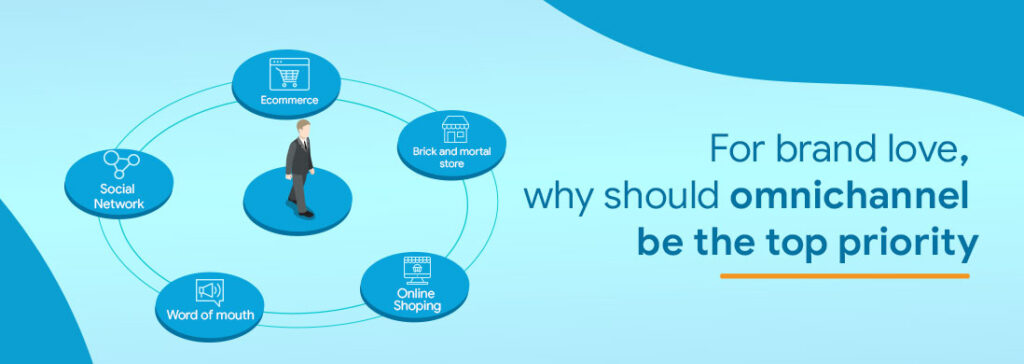
For brand love, why should omnichannel be the top priority?

The phrase ‘omnichannel marketing’ has evolved over the years to refer to the strategy used by brands to integrate multi-channel, both offline and online, into a synergistic whole. It’s based on the understanding of a free-willy journey a customer takes and strolls across the channels, mediums, and even physical stores. 

It’s crucial for e-commerce and retail marketers to develop a plan for how they will create a consistent message for their customers across all channels. As consumers interact more and more across all channels, sometimes even multiple channels at once.

A single channel is no longer sufficient for modern businesses to accomplish their main advertising objective, as the customer decides where and how she wants to interact with the brand. 

The Basics: Multichannel Theory

Without question, the consumer today has more power over the purchasing decision than the advertiser or the marketer. The end user now has more options in how and where they research and when they finally decide to act. 

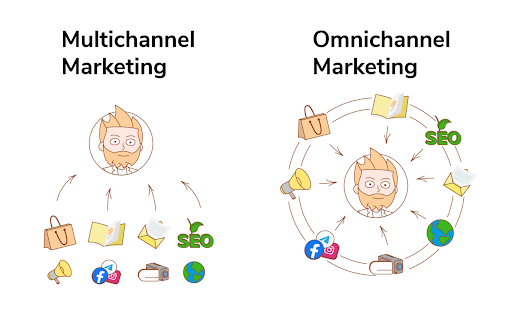
A common definition of multi-channel marketing is the practice of promoting the same good via various channels, each with a distinct message. For instance, a brand’s mobile app might provide a special experience that differs greatly from the brand’s website. That may be different from how consumers are able to interact with a brand via its Facebook or Twitter page. It describes a multi-channel approach because each channel in this scenario is managed, with each one pushing out its own content to consumers. The brand has a number of channels, but they all function separately from one another.

We also know that multichannel marketing is no longer just a good concept but a crucial one. As the number of channels increases and the customers engage with those. It is believed that multichannel engaged customers spend three to four times more than customers who just use one channel. And most marketers do opt for more than one channel to market.

Though the user in a multi-channel environment has access to a number of communication channels they aren’t always connected or synchronized. An omnichannel experience, on the other hand, combines multiple channels with interconnectedness to enable seamless channel switching. 

Omnichannel vs Multichannel


The Omnichannel Theory

The Omni-Channel experience combines everything from marketing to selling to customer service across all channels on a single platform. Brand communication consistency matters. Brands maintain consistency across all communication channels, creating a seamless and continuous interaction at a touchpoint. The stability provided by a comprehensive and mutual communication framework allows for personalization. For each platform, the customer will be able to interact with the company, resulting in a positive experience. 

Examples include how a brand’s website, social media platforms, mobile app, and even in-store experience are all reflective of one another. Even days later when the customer starts looking at other products, the mobile app will remember if the customer started a purchase on a brand’s website. The consumer is reminded of their incomplete transaction from several days ago as a result of unification across all channels.

While all omnichannel experiences will utilize multiple channels, not all experiences utilizing multiple channels are omnichannel. The essence of omnichannel is the centrality of the customer around which the brand and communication is built.

Why is Omnichannel? Moreover, why is it important for Brands to scale their operations?

According to Harvard Business Review, more than 70% of consumers use multiple channels during their shopping journey. Additionally, it was discovered that customers who use multiple channels spent more time in the store than those who only use one. Given that 40% of customers say they won’t do business with companies if they can’t use their preferred channels, an omnichannel strategy is often even non-negotiable for them.

Greater Reach:

Businesses benefit from the omnichannel strategy because it allows them to reach new customer segments. This benefit is nearly equally important to leading retailers and ‘others’ (48% vs. 45%), but both figures should be higher because reaching new customers is critical to growth. They are no longer required to look far and wide to find ideal customers. Your support or your products are only a click, an email, a direct message, or a phone call away, no matter where they are.

Improve customer lifetime value:

Customers will always buy from a brand they recognize. Omni-channel marketing ensures a consistent user experience across multiple platforms. Each platform has a distinct and personalized message for each consumer. This level of personalization can lead to improved customer experiences, conversions, and loyalty, all of which can lead to increased revenue over time. Companies that used these strategies kept more than 80% of their customers.

Better Brand Recognition

Increased market awareness results from effective omnichannel marketing strategies. Customers are at least aware of your brand name and goods or services if your brand is promoted first. This could help you significantly outperform your rivals.

 Specialized Customer Insight:

Customer information can be gathered and combined from a variety of sources, including cookies, devices, IDs, shopping carts, social media, mailing lists, point-of-sale (POS) systems, referral programs, and more. Additionally, it is simple to determine how each channel contributed to the overall objective. By doing this, you can identify what is broken and fix it as well as identify what is working and utilize it.

How do you create an omnichannel marketing plan?

Any business can benefit from omnichannel, which is increasingly common. The advantages of this strategy are enormous, even for small business owners. More than 60% of respondents concur that this is now a crucial aspect of the company.

But before moving forward, it’s crucial to establish the fundamental principles correctly, just like with any business endeavor.

Start with what you have

It takes time to lay the groundwork for Omnichannel Marketing. Step by step, you get there. As previously stated, start with your basic website and a social media channel and master those before moving on to other platforms. Assure that you are consistently engaging with your audience by posting new content on a regular basis. If you have set up the platforms in a simple manner, be wary of focusing solely on one platform rather than two. People will notice if you engage on Instagram but not on Facebook.

Leverage Customer Data:

Once the decision has been made to fully implement an omnichannel strategy, it is important to take into account not only the brand experience that customers have but also the various touchpoints where they leave their footprints. In order to improve the end user’s experience, data must be analyzed wherever customers have expressed a preference for or shown interest in a specific product or service. For instance:

  • As an illustration, they should select pertinent content for each customer and present it to them at the appropriate time.
  • Continue having flexible conversations with the clients.
  • A thorough analysis of the product to determine the best possible merchandising.

The Right Messaging:

The appropriate content must be presented at the appropriate time, as I already mentioned. The key to effective marketing is personalization. Segmenting all of your macro-level data into smaller lists will help you target your customers with the most appropriate message. For personalized messages, group contacts into various categories based on shared characteristics. For instance:

  • Demographics: Age, gender marital status, household income, etc.
  • Shopping/Surfing Behavior: How often the customers shop or are consistent with their surfing behavior like what they purchased last, etc.
  • Channel/Campaign Performance: customer interactions with different channels or campaigns and how much time they spend.

Optimize Ads For Mobile:

The use of smartphones has ingrained itself into our daily lives, whether it be for entertainment, ordering goods, or just general searching. More than 70% of users consult their devices before making decisions at the purchase level, according to Google’s VP of marketing. Mobile eCommerce sales have increased significantly over the past five years by 25%, and they are still increasing. If you do not have a separate mobile strategy, you will be losing out on a significant portion of your user base. Nevertheless, it can be difficult to capture your customer’s attention with the multitude of mobile apps they have installed on their smartphone. However, there are some ways to tailor your strategies to the various customer phases:

New User Experience:  A well-organized introduction to the products or services for a new user instills confidence and trust in them.

Consistent Interactivity: Keep your users busy by sending them messages at regular intervals so they are aware of what you have to offer.

Connecting with brand influencers on a regular basis and sending them rich push notifications will encourage them to spread the word about your brand’s exclusivity, which is the best way to gain recognition.

How world-known brands used Omni-Channel Strategies to build  success

Starbucks:

Copyright: Starbucks corporation


They are the best examples of how to turn top channel customers into repeat customers & boost brand loyalty because they are one of the most well-known coffee brands. Consider how you would feel if you were a customer for them, specifically Starbucks. Starbucks developed a direct paid order so that you could pick up your coffee while traveling to work. That is how you create an effective ecosystem with the customer to pique their interest.

Even after you start using them frequently, their work doesn’t end there. Numerous users of their app are rewarded with coupons for free drinks or discounts on the next one, which frequently encourages customers to make purchases. Finding your strongest point of connection and motivating them to form a lifelong relationship is the first step in their straightforward marketing scenario.

Walt Disney:

Copyright: The Walt Disney Company


Nobody in the world has embraced Omnichannel marketing like Disney. It takes into account every minute detail of a customer’s journey and uses it to enhance visitors’ overall enjoyment of their parks and everything else. Your team will get in touch with you via email as soon as you make a reservation for a trip, along with a detailed itinerary and a special surprise package containing magical bands that you can use to find your way around the entire park.

The band can be personalized to your preferences in terms of color and design, serving as your key to various rides, a way to unlock hotel rooms, and a backup payment method in case you misplace your cards. This reduces line wait times and ensures that every aspect of your interactions is expertly branded with their character trademarks. The customer is well taken care of at every touchpoint to ensure a seamless experience.

Apple:

Copyright: Apple Inc


After saving Apple with the launch of its online store in 1997, Steve Jobs shifted his focus to brick-and-mortar retail with the opening of the first Apple store in 2001. Critics predicted failure from the start, but the strategy quickly became a runaway success, bringing in more sales per square foot than any other retailer in the world. Part of the reason is that Apple’s Omnichannel commerce was already synchronizing products and services across all channels. It provided the end user with a unified experience. For example, a customer can pre-order a new product before it is released and reserve it for pickup at a nearby store with little to no waiting.

Older electronics can be exchanged for new ones in-store or by mail for a discount on the purchase. Customers can sign up for classes to learn how to use the products. Genius Bar appointments can be scheduled, and a professional is available for additional assistance via phone, chat, email, or even Twitter. Additionally, if there is a problem, you can return the item by mail, exchange it, or get a refund.

Conclusion:

By developing a comprehensive approach to marketing engagement and brand management, the business is able to get the most out of each respective channel. The plan should include the creation of a brand website, the development of a social media strategy, the use of mobile marketing tools, the provision of email marketing campaigns, and the optimization of all digital channels.

Create a strong marketing messaging strategy across all channels.

The success of the omnichannel plan is directly linked to the consistent messaging campaign that is driving the vision and message of the business. Most consumers are now used to seeing and interacting with brands across a variety of channels. They expect consistent and coherent messaging across these channels.

Create a unified experience for customers across channels and touchpoints. The whole experience of shopping online, whether it’s a one-time purchase or a repeat purchase, is a journey. The customer’s journey should be taken into account. 

It is worthwhile to look at the overall customer conversion funnel and make sure your strategy is consistent with your campaign objective, such as answering all of the below touchpoints yourself:

  • The brand purpose is clear and consistent across the channels and mediums.
  • The core message around the value proposition is communicated effectively
  • Product touchpoints are mapped as per the customer journey for awareness, engagements, conversion, and advocacy.
  • Measure and report what is working -  channels, creative, medium, and whatnot. 

Marketing technology today is data-driven and it makes sense to inculcate the habit of testing, experimenting, and learning. It is important to note that not all businesses have the resources to create special experiences for every channel. If your goal is to maximize brand presence and benefit from every online channel, then you’ll have to provide core content as well as special experiences for each channel.

Let us know if you need help orchestrating your omnichannel strategy.

Linear Regression using R

Regression

Through this post I am going to explain How Linear Regression works? Let us start with what is regression and how it works? Regression is widely used for prediction and forecasting in field of machine learning. Focus of regression is on the relationship between dependent and one or more independent variables. The “dependent variable” represents the output or effect, or is tested to see if it is the effect. The “independent variables” represent the inputs or causes, or are tested to see if they are the cause. Regression analysis helps to understand how the value of the dependent variable changes when any one of the independent variables is varied, while the other independent variables are kept unchanged. In the regression, dependent variable is estimated as function of independent variables which is called regression function. Regression model involves following variables.

  • Independent variables X.
  • Dependent variable Y
  • Unknown parameter θ

In the regression model Y is function of (X,θ). There are many techniques for regression analysis, but here we will consider linear regression.

Linear regression

In the Linear regression, dependent variable(Y) is the linear combination of the independent variables(X). Here regression function is known as hypothesis which is defined as below.

hθ(X) = f(X,θ)

Suppose we have only one independent variable(x), then our hypothesis is defined as below.

The goal is to find some values of θ(known as coefficients), so we can minimize the difference between real and predicted values of dependent variable(y). If we take the values of all θ are zeros, then our predicted value will be zero. Cost function is used as measurement factor of linear regression model and it calculates average  squared error for m observations. Cost function is denoted by J(θ) and defined as below.

As we can see from the above formula, if cost is large then, predicted value is far from the real value and if cost is small then, predicted value is nearer to real value. Therefor, we have to minimize cost to meet more accurate prediction.

Linear regression in R

R is language and environment for statistical computing. R has powerful and comprehensive features for fitting regression models. We will discuss about how linear regression works in R. In R, basic function for fitting linear model is lm(). The format is

fit <- lm(formula, data)

where formula describes model(in our case linear model) and data describes which data are used to fit model. The resulting object(fit in this case) is a list that contains information about the fitted model. The formula typically written as

Y ~ x1 + x2 + … + xk

where ~ separates the dependent variable(y) on the left from independent variables(x1, x2, ….. , xk) from right, and the independent variables are separated by + signs. let’s see simple regression example(example is from book R in action). We have the dataset women which contains height and weight for a set of 15 women ages 30 to 39. we want to predict weight from height. R code to fit this model is as below.

>fit <-lm(weight ~ height, data=women)
>summary(fit)

Output of the summary function gives information about the object fit. Output is as below

Call:
lm(formula = weight ~ height, data = women)

Residuals:
    Min      1Q  Median      3Q     Max
-1.7333 -1.1333 -0.3833  0.7417  3.1167 

Coefficients:
             Estimate Std. Error t value Pr(>|t|)
(Intercept) -87.51667    5.93694  -14.74 1.71e-09 ***
height        3.45000    0.09114   37.85 1.09e-14 ***
---
Signif. codes:  0 ‘***’ 0.001 ‘**’ 0.01 ‘*’ 0.05 ‘.’ 0.1 ‘ ’ 1 

Residual standard error: 1.525 on 13 degrees of freedom
Multiple R-squared: 0.991,	Adjusted R-squared: 0.9903
F-statistic:  1433 on 1 and 13 DF,  p-value: 1.091e-14

Let’s understand the output. Values of coefficients(θs) are -87.51667 and 3.45000, hence prediction equation for model is as below

Weight = -87.52 + 3.45*height

In the output, residual standard error is cost which is 1.525. Now, we will look at real values of weight of 15 women first and then will look at predicted values. Actual values of weight of 15 women  are as below

>women$weight
Output
[1] 115 117 120 123 126 129 132 135 139 142 146 150 154 159 164

Predicted values of 15 women are as below

>fitted(fit)
Output
       1        2        3        4        5        6        7        8        9
112.5833 116.0333 119.4833 122.9333 126.3833 129.8333 133.2833 136.7333 140.1833
      10       11       12       13       14       15
143.6333 147.0833 150.5333 153.9833 157.4333 160.8833

We can see that predicted values are nearer to the actual values.Finally, we understand what is regression, how it works and regression in R.

Caveat

Here, I want to beware you from the misunderstanding about correlation and causation. In the regression, dependent variable is correlated with the independent variable. This means, as the value of the independent variable changes, value of the dependent variable also changes. But, this does not mean that independent variable cause to change the value of dependent variable. Causation implies correlation , but reverse is not true. For example, smoking causes the lung cancer and smoking is correlated with alcoholism.  Many discussions are there on this topic. if we go deep into than one blog is not enough to explain this.But, we will keep in mind that we will consider correlation between dependent variable and independent variable in  regression.

In the next blog, I will discuss about the real world business problem and how to use regression into it.

Would you like to understand the value of predictive analysis when applied on web analytics data to help improve your understanding relationship between different variables? We think you may like to watch our Webinar - How to perform predictive analysis on your web analytics tool data. Watch the Replay now!

prediction api

In this post, I am going to explain how can we build model for transactional product revenue prediction application with Google Prediction API as we already discussed same stuff (Product revenue prediction with R)on R. With the help of Prediction API, we can build prediction model without any programming. Here we just have to focus on our dataset to make more accurate predictions. Google provides this service with Google Cloud Storage and Google Prediction API.

We can store our dataset at Google cloud storage and fire queries from Google prediction API for generating prediction on sets of your dataset which is  easy. Google Prediction API is developed with set of optimized Machine Learning Algorithms for model based prediction. Here is description on the base of the Prediction API v1.5

How to train data with Google Prediction API:

First, we require minimum one number of project at our Google API console, enabled Google Prediction API and Google Cloud Storage service with that project. Our datasets have to meet certain format like

  • There must no header for all column
  • Predicted variable must be at first column
  • There must not NA values in dataset which confuse Google Prediction server

Then we can upload our dataset to Google Cloud Storage Engine by creating bucket. After uploading dataset to Google Cloud Storage Engine, we have to query from Google Prediction API by Google API explorer. There are numbers of methods to Prediction API service to deal with the data like

  1. prediction.trainedmodels.insert - Can insert your dataset for training with this function.
  2. prediction.trainedmodels.get - Can get the training status of pre-inserted data model
  3. prediction.trainedmodels.analyze - Can provide the Analysis on the trained model
  4. prediction.trainedmodels.predict - Can make prediction

As in previous blog, we have already developed model in R for same dataset. For doing same with Google Prediction API, We can start training of dataset with prediction.trainedmodels.insert with model unique id, data storage location, and type of model as parameters.


Will give Response like:


It means request accepted by Google Prediction server and have started training. We can check the training status of model with the help of prediction.trainedmodels.get

Here is response of Get function of Prediction API:


Where it describes

Toatal numbers of instance = 4061
Type of model = Regression
Mean squared Error(MSE)  = 1606123.17

Here, this model summary will not provide intercept and variable coefficient like R. To make prediction with above model we can query by Predict method (prediction.trainedmodels.predict)

Test 1:

  1. xcartadd = 0
  2. xcartuniqadd = 0
  3. xcartaddtotalrs = 0
  4. xcartremove = 0
  5. xcardtremovetotal = 0
  6. xcardtremovetotalrs = 0
  7. xproductviews = 47
  8. xuniqprodview = 38
  9. xprodviewinrs = 5828

Actual  (Productrevenue) = 110.06

 Output
(Productrevenue) = 155.15717487938028

Test 2:

  1. xcartadd = 0
  2. xcartuniqadd = 0
  3. xcartaddtotalrs = 0
  4. xcartremove = 0
  5. xcardtremovetotal = 0
  6. xcardtremovetotalrs = 0
  7. xproductviews = 484
  8. xuniqprodview = 392
  9. xprodviewinrs = 445026

Actual (Productrevenue) = 803.81

 Output
(Productrevenue) = 934

with R (after removing outliers + subsets of independent variable), we predicted 115.8346013 for test 1 and 955.153476 for test 2 on same dataset. Therefore, getting prediction with R and Google Prediction API are nearly same. When we are doing with prediction API we can improve prediction with improving dataset quality but another side in R, we can improve prediction accuracy by improving dataset quality as well as prediction model as we already discussed in Product revenue prediction with R - part 2

Navigating Meta’s Advantage+ Shopping Campaigns: A Beginner’s Guide

The future of tech is shifting towards becoming more Privacy-centric. It is evident from Apple’s actions post-launch of iOS 14, where the users are able to opt out of in-app ad tracking and perhaps have more control over the data they share publicly. 

Consequently, the targeting options for Facebook ads will also be limited, resulting in fewer opportunities for campaign managers to conduct granular targeting of iOS users. This, in turn, will lead to a reduction in content personalization, causing businesses to worry about lower returns on investment and higher advertising costs as a percentage of their spending.

In response to this issue, Meta launched ” Advantage+ Shopping Campaigns” ads that leverage AI (Artificial Intelligence) and automation to maximize marketing returns.

Advantage+ Shopping Campaigns simplifies the process of launching and managing shopping campaigns on Facebook, allowing the campaign manager to make more informed decisions with less time spent on mundane tasks

How do Advantage+ Shopping campaigns make advertisers more efficient?

In Facebook managers, Shopping ads advertise specific products from a website using dynamic product feeds. This type of feed is an inventory of all the products or services, specially designed for e-commerce clients as it automates the ad-creation process and allows up to 150 creative combinations at a time.

Previously. advertisers had to manually create and test different targeting options for the audience, platform, placement, and creative format.

However, the new Advantage+Shopping Campaign combines full-funnel marketing approaches into a single campaign, thereby eliminating many manual campaign creation steps.

Thus Advantage+ Shopping campaign helps in reaching more targetted audiences with greater efficiency. Moreover, to optimize conversions, the campaign adjusts and automates settings at every level - from budget and targeting to placements and creatives.

How to Set Up Advantage+ Shopping in Facebook-Ads Manager UI?

Step-1

Choose the ‘Sales’ objective type in the new Meta interface. In the case of the old interface, the ‘Conversion’ objective needs to be selected.

Choosing Sales Campaign objective for Advantage+campaign

Step-2

After selecting the ‘Sales’ objective, Meta will provide two campaign setup options:- 

  1. Create a manual Sales campaign
  2. Create Advantage+ Shopping (automated campaign). Select this option and hit Continue.
Advantage+shopping campaign setup

Step-3

Advantage+ shopping campaign requires limited inputs by the advertiser during the setup.

For the rest, the algorithm itself will take care of targeting, placements, and budget allocation.

In the below screen, you will notice that the campaign was created using these preset inputs. An advertiser can view all preset settings by clicking ‘See all preset settings’. 

This is a view-only mode, which means that an advertiser can’t change these preset settings.

In case of required changes in specific settings, an advertiser will have to switch back and create a manual campaign instead.

Preset Advantage+shopping campaign settings

After all the default campaign setup settings are reviewed; an advertiser should name the campaign for quick identification.

Step-4

As, Sales objective is selected; it is necessary to have an active Meta Pixel installed on the website that sends the ‘Purchase’ event. Advantage+ Shopping Campaigns optimize for ‘Purchase’ events by default.

Conversion Event Advantage+shopping campaign

Step-5

In the next phase; one can add the desired location targeting. Only country-level targeting options are available in these campaigns. This is the country where one wants to sell their products. Single or multiple countries can be selected.

Note- In these types of campaigns; advertisers don’t have the option to target other demographics such as age or gender. Targeting by interests is also not an option. Limiting these audience targeting options is Meta intentional as the objective is to provide freedom for the machine algorithm to find as many customers as possible within your targeted location. Alternatively; if  an advertiser would narrow the audience by age, gender, or interests, then they  would be limiting results

Location Targeting Advantage+shopping campaign

Step-6

In Advantage+ Shopping campaigns; Reporting provides options to receive additional analysis and insights into the campaign. As there are limited targeting controls; an advertiser would still want to know how their existing (custom audiences) vs. new (prospecting audiences) are converting. Some input is needed to break down reports between new and existing customers.

Audience Breakdown & Reporting Advantage+shopping campaign

Step-7

To select the Retargeting (existing) audience; Click ‘Go to account settings to open the Ad Account settings page. Or navigate to ‘Ad Account Settings’ from the Business Manager menu.

An advertiser will find a specific section to either create a new custom audience or select from existing custom audiences. All audiences that are added here will be identified as ‘Existing customers’ in the reporting interface of your campaign.

Note As Retargeting audience; an advertiser can add various custom audiences such as customer lists, website visitors, Insta & FB engagers, and Video viewers. One can use whatever list is relevant for your business to report on as ‘existing customers.

Audience Breakdown & Reporting Advantage+shopping campaign

Step-8

Post adding custom audiences for remarketing; an advertiser further can set a budget cap to spend on your existing customers in Advantage+ campaigns. 

This option will help an advertiser to control % of the budget that Meta will allocate among new (prospecting) audiences and custom (existing or remarketing) audiences. If the budget cap is not selected; there is a possibility that Meta could be allocating more budget to existing customers instead of finding new customers.

Set your desired ‘Existing Customer Budget Cap’.Note that Meta advises only set a cap if an advertiser needs to prioritize new user acquisition at a lower cost per acquisition.

Budget Cap between Prospecting & Existing customers Advantage+shopping campaign

Step-9

After allocating the budgets; the next step is to choose the attribution setting for the campaign. This setting will impact the performance and reporting of campaigns. Because the event manager will use data as per the conversion event and attribution window selected in reporting.

By default; most of the meta ad accounts select the ‘7-day click or 1-day view’ attrition window setting in the campaign. This will maximize the number of signals that Meta can use to optimize your campaign. 

On the other hand; If advertisers observe lots of visitors and conversions happening on their website on a daily basis, then they can even consider setting it to ‘click’ only attribution.

Conversion Attribution Window Advantage+shopping campaign

Step-10

Last step after fixing the audience and delivery setting is to create ads by adding some creatives. If an advertiser is the first time creating Advantage+ Shopping campaigns; then Meta will suggest importing ads based on historical data. One can see an overview of suggested ads to import.

Meta’s suggested ads are ads that have proven to generate good conversions at a lower CPA based on historical campaign performance trends. Hence, Meta suggests importing all eligible existing ads so that it can automatically test the creatives and deliver the best-performing ones.

Also, customized ads can be later added at the ad level just like manual shopping campaigns. In advantage+ shopping campaigns; an advertiser can test up to 150 creative combinations in one campaign to deliver the best-performing ads to the highest-value shoppers.

Select the ads you want to import and click Import All Ads

Importing Suggested ads or adding new creatives at ad level Advantage+shopping campaign

Audience & Geography Performance Breakdown Reporting 

Reports help in analyzing the performance with delivery insights. If custom audiences [Retargeting] audiences are used in a campaign setup;  an advertiser can get breakdown results by ‘Audience Type’. 

This breakdown option allows one to view results by new and existing customers/audiences. This means that an advertiser can know how many purchases came from New customers vs. people in your custom audience segments (Existing customers).

Audience Breakdown report has below three audience reporting:-

  1. Existing Customers: This column in the report presents total conversions or purchases from audiences that are included in the Custom Audiences and added to your campaign.
  2. New Customers: This column indicates conversions from people outside your Custom Audiences. [Prospecting audiences]
  3. Unknown: This column indicates results when the ad was delivered to people while your existing customer segment was still empty. These people may have been new or existing customers.

Note- The conversion reporting attributed to new and existing users is estimated. Existing customers may be mapped to New Customers when they aren’t matched during your custom audience setup. For E.g. Someone purchased from your website in the past, but if the audience isn’t added to a customer list or isn’t included in your website custom audience is due to privacy-related tracking limitations.

Further; when an advertiser is running Advantage+ Shopping Campaigns in multiple countries (E.g. You’ve added both Belgium and Netherlands as targeting countries during the campaign setup.), one can also get a breakdown report by ‘Audience Type and Country’. This way you can easily report on performance by audience type and country.

Reporting Breakdown Advantage+shopping campaign

Advantages of Automated Shopping Campaigns-

  1. Advertisers can use this almost fully automated campaign available to increase conversions at a lower cost per purchase. The campaigns work as per AI/ Algorithm set by Meta.
  2. The campaign setup is quick and easy. Also; 125 creatives can be used in one campaign and there is no requirement of creating different adset targeting different audiences. But, at the same time an advertiser must be aware of the defaults and monitor closely if that setup works for your business. 
  3. Advertisers already seeing lots of purchase activity will probably benefit more from this campaign type than niche advertisers having smaller budgets to let the AI take over.

Hence; advertisers should start experimenting with this type of campaign today and see how it performs for the business. Also; they should keep analyzing if any manual changes or targeting are required as per the breakdown reports. If there is a hypothesis; that a particular age group or audience is performing better; a separate manual adset should be prepared later. This will help in giving more budget exposure and control on the targeting that is resulting in better conversions at lower cost metrics such as CPA, CPM, or CPC. Also; it seems that in the future Meta will probably expand its automation processes and upgrade new changes in campaigns to further optimize conversions.
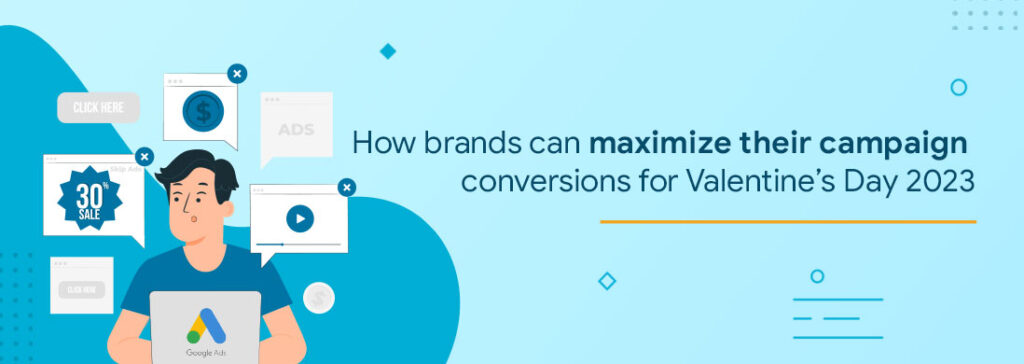
How brands can maximize their campaign conversions for Valentine’s Day 2023

Valentine’s Day is approaching and it’s time to ramp up your internet advertising efforts to meet your client’s expectations. 

Around 70% of people plan to purchase gifts online, with 40% opting for home delivery. The most popular gifts include apparel, cosmetics, jewelry, and chocolates. 

To reach consumers, you should focus on mobile advertising, as 70% of Valentine’s Day purchases are made using smartphones. Of these, 60% prefer in-app purchases, and 65% have been influenced to shop by mobile internet advertisements.

To bank this opportunity, advertisers can leverage performance max.

Performance Max is a new campaign type in Google Ads that allows for more efficient and streamlined management of campaigns, reducing the need for multiple campaigns for different ad formats, devices, and inventory sources. Performance Max uses machine learning and advanced algorithms to optimize ad delivery, helping advertisers achieve their desired performance outcomes, such as increased conversions or return on ad spend.

How to leverage Performance Max?

Performance Max is a game-changing move by Google towards automation. As we approach the holiday shopping season, how can we make the most of it? Here are some strategies to consider:

1. Audience signals

With this feature, you have the ability to influence your target audience by providing feedback. You can achieve this by uploading your customer and email lists, constructing relevant keywords, and utilizing interests, among other tools.

Keyword planner tool screenshot


Using Interests, In-market as a different campaign running parallel with the current campaigns will create specific audience targeting which might categorically fall into your relevant targeting in terms of branding as well as sales.

Use Customer Match & Customer intent as a part of this strategy

2. Asset groups

It’s critical not to shock the system with dramatic changes when working with PMax. It is preferable to make gradual incremental adjustments.

You can take the following approaches:

  • Make a separate asset category for promotional things. 
  • Add new promotional creative and extensions.
  • If you create a new asset group, make sure to do so inside the same campaign so that the product-level historical performance is used.

3. Ad extensions

Ad extensions (assets) are a convenient method to introduce promotions without disrupting the system.

You can and should add promo extensions in two places:

Google Merchant Center for Shopping

Google Ads for Search, YouTube, etc.

4. Make the most of first-party data

First-party data is collected directly from clients through sources such as email registration lists and tracking. Utilizing this type of data provides more options for finding potential new clients. A better understanding of current consumers leads to a better understanding of potential prospects.

We strongly advocate utilizing Customer Match when submitting audience lists even if Google’s autodetection method will always be utilized by default. Utilizing the most recent data enables Google to identify your newest consumers. With the new customer acquisition target, you can boost new client conversions and provide longer-term income for your business.

On this occasion, how can Search be most effective?

For Your Next Event, Do Some Keyword and Audience Research:

It is important to select relevant keywords to reach the appropriate audience. The success and cost of your campaign will depend on the keywords chosen.

Keyword planner tool screenshot

Source: Google Ads

You can also perform a keyword analysis with it. You gain access to the Keyword Difficulty and SERP Analysis tool as a result.

When selecting the terms or phrases you will target, it is crucial to concentrate on the monthly keyword volume.  For instance, keywords with a monthly search volume of 300 or more should be the exclusive focus of your efforts.

Optimize Valentine’s PPC Keywords

During different buying seasons, shoppers do specific searches. Do research on Valentine’s searches and create a keyword plan for your Valentine’s Day PPC advertisements.

Consider keywords for Valentine-related items and services, but also terms linked to Valentine’s Day, such as ‘when is Valentine’s Day?’

Defining your Valentine’s Day identity is crucial. Consider your store, clients, and target market to determine who you want to target for the holiday.

It’s important to keep in mind that many individuals exchange gifts on Valentine’s Day with family and friends. To take advantage of these purchases, create separate ad groups and keyword campaigns.

PPC Call Extensions for Valentines

Nearly half (40%) of consumers have made a call to an advertiser by selecting a phone number. With a click-to-call button, call extensions put your business’s phone number in the fingers of potential clients:

This is a fantastic tool to encourage consumers to visit physical locations and to increase phone sales for new customers or those who are less acclimated to internet purchasing (and more acquainted with mobile browsing).

To appropriately credit Valentine’s Day sales and enhance PPC ads for the remainder of the year, make sure you are tracking phone purchases as well as cross-device activity.

How do big Brands Use this Occasion?

On Valentine’s Day, individuals aren’t just seeking flowers, chocolates, and adorable cards; there are plenty of people who want to spend the day indulging themselves, booking a day at the spa, or getting a drink with friends. We can observe that there is a market for Valentine’s promotion using Google Trends and the Keyword Planner, so advertisers should pay attention.

It’s natural to think of Valentine’s Day as something exclusive for couples, but we must remember that the notion of love is quite broad. Valentine’s Day is no longer only for couples; it’s a day to celebrate with those you care about, whether they’re your parents, siblings, friends, pets, or coworkers… Or maybe even yourself! Why not make a “self-present” for yourself? 

Because the possibilities are limitless, your company should not restrict its advertising to the concept of classic romance. Find innovative methods to blend your brand’s image and products into a single ad that incorporates Valentine’s Day components and reaches the largest potential audience.

Here are a few examples.

McDonald’s: Against All Odds

This McDonald’s commercial exemplifies the maxim that simple may sometimes go a long way.

The advertisement is fairly simple in terms of design. Two of the company’s most well-known items were simply placed on a white backdrop, and two brief lines were added, one between each product image and the other next to their well-known emblem.

These goods were not randomly chosen for this pairing. McDonald’s, on the other hand, drew inspiration from its patrons.

Others, who adore the fries and ice cream combination and feel the need to go to the next McDonald’s restaurant to enjoy it, may scoff at the seemingly incongruous mix.

But the smart copy accompanied this strange Valentine’s Day message.

Snickers: A Classic Movie Remake

Image Source

I’ll confess that I’m not a huge fan of romantic comedies, but I like how Snickers did an excellent job recreating the movie’s billboard for Valentine’s Day, utilizing two of their renowned chocolate bars as the two main protagonists.

To complete the picture, they altered the title to When Snickers Met Almond and included a short summary of their version of the movie.

The nicest part about this Valentine’s Day advertising strategy is that it appeals to Facebook users who have never seen When Harry Met Sally.

Conclusion:

People enjoy receiving offers around holidays like this, therefore marketing your product or service around the holiday of love is great. There are a few things to tag along with the above suggestions:

  • Make sure your ads reflect high-quality images for a better impression rate
  • Keep your ads simple which will more likely have personal acceptance
  • Offer discounts, incentives & other benefits in order to get more engagements

How to optimize Ad campaigns after the sunset of Similar Audience?

With the discontinuation of Similar Audience, advertisers may wonder how they can optimize their advertising campaigns. This blog aims to shed light on alternative methods to enhance ad campaigns.

How “Similar Audience” is helping advertisers?

Similar Audience in Google Ads helps advertisers to efficiently reach out to their intended audience, as this enables them to gain significant knowledge of their target audience’s preferences. 

Retargeting lets businesses communicate with customers that have already been to their website and engage with people who are already intrigued by their items and services. 

Taking advantage of a Similar Audience can be advantageous for advertisers, as it allows them to increase their reach and bring in new customers by personalizing their advertising campaigns.

Similar segment targeting is available for the Display Network, Search Network, YouTube, Gmail, and App.

How do similar audiences work in Google Ads?

When it comes to Google Ads, similar audiences are a form of the target audience that the platform makes based on the properties of a “seed” audience that you give. This seed audience can be determined by a range of factors, for instance, people who visit your website, and the people who use your mobile application.

To create a similar audience in Google Ads, advertisers first need to select the seed audience and specify the size of the similar audience.

After Similar Audience is created, advertisers can apply it in their campaigns to target individuals who share similar traits to those in the seed group. This can be an effective way to reach potential customers who are most likely to buy your products or services.  

Note:

It’s important to note that similar audiences are based on statistical modeling, rather than on explicit information about individual users, so the characteristics of the resulting audience may not exactly match those of the seed audience. Additionally, similar audiences are only available on types of campaigns, such as search and display campaigns, and may not be available for all advertisers.

When & Why are Similar Audiences going away?

From May 2023 google will stop generating similar audiences & cannot be added to campaigns & ad groups. Campaigns & ad groups having similar audiences will continue to run.

From August 2023 google will remove all similar audiences from campaigns & ad groups

This change will help advertisers to keep up with changes related to consumer behavior & online marketing strategy as the privacy environment changes rapidly.

Alternative methods that Advertisers can use to derive useful insights for their target audience

Despite fewer third-party cookies available, Google has developed solutions for advertisers to reach an engaged & relevant audience.

Strategies to optimize campaigns following the sunset of Similar Audience

There are a few strategies advertisers can use to optimize their Google Ads campaign without using similar audiences:

Keywords should be specific and relevant

Make sure that your ad campaigns are targeting specific and relevant keywords that are related to your product or service. This will help ensure that you are reaching the right audience.

Eliminate negative keywords

It is possible to eliminate certain words from your campaigns with negative keywords, so your advertisements will not be seen by people searching for those words. This can be useful in enhancing the pertinence of your ads and decreasing your cost-per-click (CPC).

Make use of ad extensions

Ad extensions provide more information about your business, services or products and can make an ad stand out among other ads. This can lead to higher click-through rates, increased engagement and more conversions. Ad extensions also make it easier for users to reach relevant businesses, which can lead to higher customer satisfaction.
Targeted ad groups are recommended

Using targeted ad groups is a great way to create more relevant and effective ads. By creating separate ad groups for different products or services, you can create ads that are tailored to each group and target specific keywords. This allows you to reach your desired audience more effectively, resulting in higher click-through rates, increased engagement, and potentially more conversions. Additionally, you can also set different bids for each ad group, which can help you optimize your advertising budget more effectively.

Utilize location-based targeting

Use location targeting to show ads only to people in certain countries, regions, or cities. This can help ensure that your ads are being shown to the right audience. By default, ads show to people in, regularly in, or who’ve shown interest in your targeted locations. Advertisers can select locations to exclude in campaigns if don’t want to show ads in specific regions

Target your audience by demographics

Use demographic targeting to show ads only to people of certain ages, genders, or interests. This can help ensure that your ads are being shown to the right audience. Demographic targeting helps in narrowing the targeting. One can add detailed demographic targeting to ad groups or campaigns.

Retargeting is always effective

Retargeting allows you to show ads to people who have visited your website before. This can be an effective way to remind potential customers about your products or services and encourage them to make a purchase.

Test and optimize

Use A/B testing to try different ad variations and see which ones perform the best. Regularly review the performance of your campaigns and make adjustments as needed to improve their effectiveness.

In conclusion, Google’s sunsetting of Similar Audience is a significant change for advertisers, but it presents an opportunity to optimize their campaigns through alternative methods. Advertisers can use targeted keywords and continually test and optimize their campaigns. By employing these strategies, advertisers can reach their desired audience effectively and improve the performance of their advertising campaigns.

GA4: A privacy-centric approach to Analytics

User data privacy is a crucial factor these days. Users need to feel confident that their personal information will be treated carefully if they are going to engage with a business online. Organizations must show their clients and users that they can be trusted with their personal information.

Users expect more security and control over their data nowadays, and Google Analytics 4 provides a range of privacy settings (among other things) to satisfy these expectations and adhere to privacy rules generally, including the GDPR.

With this blog, we wanted to mainly focus on answering the following questions:

  • Why does Google say GA4 is a privacy-centric measurement tool?
  • GA4 is all about user privacy and in fact, puts the control of privacy in the user’s hands. How? 
  • What are the different ways in which GA4 manages user privacy?
  • How a Consent Management solution can help regulate your data collection process?

Let’s deep dive into the above questions and see how GA4 is the right solution for you if you believe in a user privacy-first kind of business model.

How GA4 supports privacy?

Google Analytics gives users control over how their data is used by putting them in command of their data.

Let us explore the different options GA4 provides to achieve privacy, either through its configuration settings or feature support in general, and how it can support your business to meet regulatory requirements.

  • IP Anonymization

Anonymize IP means masking the IP before being processed or stored therefore, it is difficult to associate the IP address with a specific person.  Anonymize IP was by default disabled in UA properties, and one had to manually enable it. In contrast, it is automatically enabled in GA4 properties, and there is no way for a business to turn it off. This implies that GA4 won’t keep any track of users’ locations which is the most significant change in GA4 from the GDPR perspective, removing any risk of capturing PII.

However, the feature is also a trade-off between user privacy and the geographic information of users, since anonymized IP visitors might be from a different location than what is collected within Google Analytics. So if your business success is dependent on user locations, you could collect first-party data through different methods where the user has shared the information with his consent, e.g lead gen forms, or maintaining Google My Business profiles up to date.

  • Data retention limit

The term “data retention” describes how long Google Analytics retains unaggregated user data. It applies to data at the user and event levels linked to cookies, User IDs, and marketing tools like device identifiers.

In UA, you may select intervals between 14 months or “do not automatically expire” as shown below:

Data retention setting in GA
Figure 1: Data retention setting in GA

With GA4, you have two options for data retention - 2 months or 14 months (refer to Figure 2), and up to 50 months in GA4 360 properties (refer to Figure 3).

Data retention setting in GA4 standard
Figure 2: Data retention setting in GA4 standard


 Data retention setting in GA4 360
Figure 3: Data retention setting in GA4 360


These short retention periods help you comply with GDPR and other data privacy rules that require you to keep user data only as long as you need it. You always have the option to store the data in platforms like BigQuery (free connector within GA4) if a 14-month data retention period is too short for the types of analyses you conduct.

  • Consent mode

Consent mode, a privacy feature that was formally unveiled in 2020, enables you to alter the behavior of Google tags on your website per users’ consent preferences with the help of two tags ad_storage and analytics_storage.

Google Analytics will link the data it gathers from your website and mobile apps with data from accounts of logged-in users who have permitted Ads Personalization when Google Signals is enabled. So we will get data from users who allowed sharing their data with the help of Google signals (refer to fig. 4). This favors user privacy where they can choose which cookies to allow or deny when a cookie appears. Using Consent Mode, Google tags could then be set up to adhere to those wishes.

Google signal setting in GA4
Figure 4: Google signal setting in GA4


  • On request users’ data deletion

Consumers have the right to ask for the erasure of personal data under the majority of privacy legislation, including the GDPR. GA4 offers the option to delete a user’s data within a specified period in reaction to this. You can also delete the data of a single user by using the Client ID, User ID, or App Instance ID, thanks to the existence of the GA4 Admin API and the User Deletion API.

  • Rules to protect PII

There aren’t any major changes here as compared to UA, but we thought it was important to reiterate that GA4 does not permit the acquisition of personally identifiable information and will report data for deletion if it finds them in your GA4 property. These data deletions comprise deleting every piece of information that was stored in your GA4 property during the period the PII was collected where PII refers to details like email, contact numbers, name, and so on. Make sure to select an anonymous identification if you intend to use the User ID dimension as part of your overall data privacy policy.

  • Data Sharing

Google encourages you to integrate your data with other Google products, such as Google Ads or Google signals, which can improve the results of your reporting but it comes with a risk of violating privacy laws like GDPR, if not handled properly. To avoid this you must get consent from your customers before cross-linking their data through Google Signals and ad personalization.  

Furthermore, it must be clearly stated in your site’s Privacy Statement that user information may be shared with other Google products.

Concluding Thoughts

On Oct 14, 2020, GA4 has been released by Google as an update to UA and to help its users comply with data privacy laws. Combining all these additional privacy features lower the risk of its noncompliance with GDPR. However, as of 2022, adding all of GA4’s privacy features won’t make your website GDPR compliant by default but it provides more sophisticated privacy measures than Google Universal Analytics.

Looking for any other support on Google Analytics 4? Or just want to get an expert’s opinion on your GA4 setup and usage? Reach out and our GMP-certified team will be happy to help you. 

Facebook (Ads) Advertising Techniques & Strategies

Facebook ad strategies for holiday season

During the holidays, the promotion of products and services on Facebook can become highly competitive as advertisers and marketers strive to draw their target audience’s attention with their most attractive deals.

In such a scenario, raising the ROI with Facebook Ads becomes challenging. 

A lot of you must be considering targeting your competitors’ fan base, as they would more likely be interested in your products and/or services as well. 

In this article, we will provide insights on how to help you target your competitor’s followers and increase the chances of Ad conversions by using an often overlooked, but highly effective tactic.

1. Locating the Facebook Pages You Want to Target -

Making a list of the exact competition pages you want to target is your first step. There are several ways to locate these pages. 

  • Competitor Pages: 

List down all your significant rivals and look at their Facebook accounts. You would be able to access the company’s Facebook pages or the pages of the founders. Who are their followers, and what do they put out? 

  • Brands or Public Figures:

Consider popular brands and individuals in your sector and them to your list by finding their Facebook sites. Identify influencers and brands that are aligns with your marketing activities.  

  • Keyword Research:

When it comes to keyword research, you should begin by typing related phrases into the Facebook search bar. This will generate a list of pages that are related to your industry. Additionally, it’s important to keep an eye out for trends, popular content, and the type of information users are seeking through these pages.

  • Related Pages:

Utilize the sidebar to look for “Related Pages” or “Pages Liked by This Page” By making use of these options, you may discover pages that you would not have considered otherwise.

  • Community Tab:

On any Facebook page, the Community tab will offer a list of the most committed users. If you add “/likes” at the end of the page’s URL, you can view their profiles and also explore the pages that they have liked.

  • Youtube Users:

To find out who has the most popular videos on YouTube, enter your relevant keywords. Also, look for their Facebook profiles. They most likely have a worthwhile, high-quality audience you can target. - Interlink the youtube videos to the Facebook profile/pages

  • Audience Insights:

When you are using Facebook Audience Insights, make sure to include interests related to your business. If you click the Page Likes tab, you will be able to view pages that people with similar interests have liked. Facebook will categorize the list based on the affinity score, which will tell you which pages are most important. Keep a tab on pages with a high-affinity score.

After gathering a selection of potential audiences, you can channel your advertising activities and expenditures to the correct target audience.

2. Identify the most responsive audiences -

Begin by building potential audiences using different targeting options, key phrases, and interests. You will get more accurate results if each audience and their sources are specified more precisely. 

Test your ad on different audiences to determine which one responds best. There is, however, a limit to how many audiences and variables you can evaluate based on your budget.

If you have a tight budget (under Rs 4 lakhs, for example), you may be able to evaluate 10 to 20 ad variables with five varied audiences. On the other hand, a bigger budget enables continuous evaluation, which eventually helps you to keep refining your Ad strategies.

FB ads Optimization

The winning ad variant is the one that has the lowest cost per outcome (like cost per link click or cost per video view). 

When running a test on Facebook, we‘ll often show confidence or power percentage to help represent the likelihood of a causal result from your test. - Facebook Tutorial

You can derive the most optimized Ad variant with a split test. The procedures for developing a split-test campaign are as follows:

Steps:

- On the Create button on your Ads Manager dashboard, click (green)

- Decide on Quick Creation Workflow.

- Select Video Views from the Campaign Objective dropdown menu by going to that tab (since we are using video views for this example)

- To access the variable selection box, turn on the Split Test switch.

- Check which audiences you want to test & set it up in respective ad sets.

3. Utilize Facebook page insights to research the content - 

From the Audience Insights dashboard, you can gain access to a multitude of potential content ideas and research information by simply navigating to the Facebook pages of your competitors. Observe your competitors’ website content and user activity.

Facebook Page Insights Analysis

                                                                                         Source: Facebook Tool 

Content sections such as About, Posts, Photos, Instagram, Videos, and Communities, will be visible. Investigate each of these links further to see what kind of interaction your intended audience is receiving. 

You can devise techniques to modify your effective Facebook Advertising strategy in accordance with the sort of engagement (good or negative) your rivals are receiving. To have further clarity on the process, ask the following questions

  • What sort of material do they release? Do they speak to the concerns and interests of their audience?
  • What subjects evoke the most interest from the fans?
  • Existing historical data that validates your current  advertisement strategy 
  • Are your competitors using Facebook to advertise their events?

With these action-oriented insights, you will be better able to formulate a data-driven approach to engage their end audience and push the down the funnel.

4. Learn more about the intended audience - 

An alternate method to discover your rivals’ pages is to “like” their pages and associated interests. There is a strong likelihood that your competitors’ commercials/Ads will begin showing up in your newsfeed.

In this case, you may use the “Why am I seeing this” choices found on the sides of each advertisement to learn more about the intended audience and other goals of the rival.

                                                           Feature: Why am I seeing this ad feature on Facebook

                                                                                     Source: Facebook Tool

Tools to help you out - 

There are many tools available for analyzing Facebook competitors. Some of our favorites are as follows:

1. Social Status

Social Status is a powerful tool for social media marketing and has the ability to analyze and compare the involvement of your competitors on multiple social media platforms, such as YouTube, LinkedIn, Facebook, Twitter, and Instagram.

2. BigSpy

BigSpy is a Facebook competition analysis tool made especially for social media advertisements. It boasts of integrating more than 6 major social networks, including Facebook, and has a vast database of more than 1 billion ads.

You may quickly see the newest commercials being utilized by other companies in your industry using it, and you can gain ideas for your own ads. With its robust search tools, you may find and exclude advertising based on a wide range of criteria, including countries, sectors, CTAs, dates, and more.

3. Sprout Social

Another social media monitoring company that offers a Facebook competitor analysis tool is Sprout Social. With its social listening capabilities and competitor reports, you can quickly gauge the industry’s pulse and determine how you stack up against your rivals.

Final tips - 

It is important to ask the right questions at the outset to make the most of this opportunity:

What demographic are your competitors targeting?

What are the types of ads they are using?

What words are they using, and how successful are they?

How much engagement do their ads get?

What objectives are their advertising campaigns trying to accomplish?

Do not forget to continually evaluate and alter your own ads while you are putting in the hard work to analyze your rivals’ advertisements. The Facebook Pixel provides you with all the information required to monitor your ads.

Data Analytics Helps in Enhancing Customer Experience: Here’s how

In today’s hyper-connected world, data is at the center of almost everything. However, all this data is of little or no use if not analyzed, as it will remain idle without having any positive effect on how a business is operated. 

This is where data analytics consulting services comes in!

Data analytics has been transforming the way business providers look at customer experience. While the latest technological disruptions today are focusing more and more on personalization and optimizing the user experience, data mining and analysis offer great potential in further improving the processes for better business outcomes.

An increasing number of businesses are embracing this shift and implementing more data analytics solutions to optimize their business offerings. It also allows companies to understand their customers’ needs better and deliver accordingly. 

To this end, this post aims to explore data analytics solutions and the importance of the same in enhancing customer experience (CX) and driving ROI for businesses.

The correlation between data analytics and customer experience


Data analytics refers to the collection and detailed study of data or information to derive meaningful value from it. Businesses use various data analytics solutions and techniques to review, assess, and analyze data to improve their decision-making and customer experience.

Customer experience analytics, on the other hand, is a data-driven process that takes into consideration every interaction between a business and its customers. This kind of analysis helps businesses understand their customers better and improve customer experience and brand loyalty.

How Data Analytics enhances customer experience?


Here are some key ways data and analytics services can help improve customer experience and business ROI.

1. Personalize the User Experience:

Collecting data from multiple users across platforms and demographics allows you to notice several repeating patterns and themes. These themes then help you build a customer persona for.

A recent study by McKinsey estimates that personalizing the customer experience can enhance the company’s revenue by a good 5-10%.

Crafting a user persona or profile plays a key role here as it helps marketers and customer support agents adjust their offerings to suit customers’ expectations with a specific user profile in mind. 

A customer profile describes your current customers based on their demographics, locations, purchasing habits, or likelihood of using certain products. Leveraging data analytics consulting services ensures that businesses can accurately interpret these customer insights.

2. Identify Trends:

Decision-makers in any business are continuously looking for ways to assess key performance indicators (KPIs) across business functions. Data and analytics services makes it simpler to identify customer behavior and future market trends.  

A powerful data analytics solution includes detailed dashboards and visualization techniques that allow you to conveniently explore areas that require greater analysis.

Besides, it helps in identifying trends as it shows businesses how to leverage massive chunks of information or data to understand how the company is operating and how various areas are performing.

This, in turn, makes it easier for businesses to strategize, make plans, reassign resources, and identify better opportunities to generate higher ROI.

 3. Segment high-intent audience:

Having built a user persona along with identifying the main pain points allows marketers to accurately predict consumer behavior with near precision and group them in the high-intent audience segment for better personalization. 

Big names such as Apple and Amazon fully leverage this kind of customer experience data, a key reason users trust these companies more in helping them solve specific problems or pain points.

4. Offer Deeper Analysis:

Data analytics solutions also allow you to dig deeper into your customer service data and analyze the feedback. They help you understand the various aspects of your customer service platform that are working and isolate the factors that are leading to undesirable outcomes.

Further, they data analytics allows you to better measure overall industry sentiment and product-based trends to clearly identify areas where customer feedback levels could be improved.

This kind of deeper data analytics, where you can see how a service request is addressed throughout its lifecycle, also allows you to better gauge the specific customer service areas that require closer attention.

Offer more convenient and responsive customer support:

Another advantage of using data analytics consulting services and data-driven systems is that they can work with almost all existing channels, including SMS, chat, voice, WhatsApp, Slack, etc., without necessarily requiring human intervention.

This helps businesses provide customers with a more convenient and responsive support system across their preferred platforms. 

Further, customer interactions also become much faster because the latest technology helps correctly interpret what customers are saying and respond appropriately without wasting any time.

Best Practices to enhance customer experience with data analytics

Businesses rely on data and analytics services to understand customer behavior, anticipate needs, and deliver personalized experiences. 

Below are some best practices to maximize the impact of data analytics on customer experience:

 - Being precise on the end goal:

It is essential to define the end goal for companies to track the right customer experience metrics. For instance, to reach digital maturity, the ultimate objective may be to enhance user engagement on digital platforms and monitor user interaction and all touchpoints, to set up a reliable measurement system. On the other hand, when it comes to the gaming industry, the end goal could be in-app purchases, retention, clicks on ads, and conversions.

- Choosing the right data analytics tool to make a data-driven decision:

Making data-backed decisions can be a challenge without the right data analytics tools. Data collection is key to uncovering customer insights, and there are a variety of methods to do this. From session tracking and event tracking to session replay and heatmaps, you can gain valuable information about user behavior. Utilizing quantitative solutions like Google Analytics in combination with an A/B testing tool, you can form an effective user engagement analytics strategy.

- Optimizing the Page Load Time:

Your website page load time is critical to improving customer experience. Websites that load slowly have a direct correlation with poor search engine rankings.

Some of the ways you can use to optimize page load time include:

-Reduce the size of images 

-Use speed-optimized widgets

-Remove unnecessary files

 Leveraging Data and Analytics Services for Improved Customer Experience

An increasing number of businesses today have become customer-centric for a valid reason.

Whether it’s assessing and catering to specific customer needs or driving personalization, data analytics plays a key role in helping brands enhance customer experience by connecting with users on an emotional level.

It is, therefore, safe to say that customer service and data analytics today go hand-in-hand. Without reliable and accurate customer-centric data, businesses cannot think of making successful and impactful decisions that drive growth and RoI, as well as boost user satisfaction.

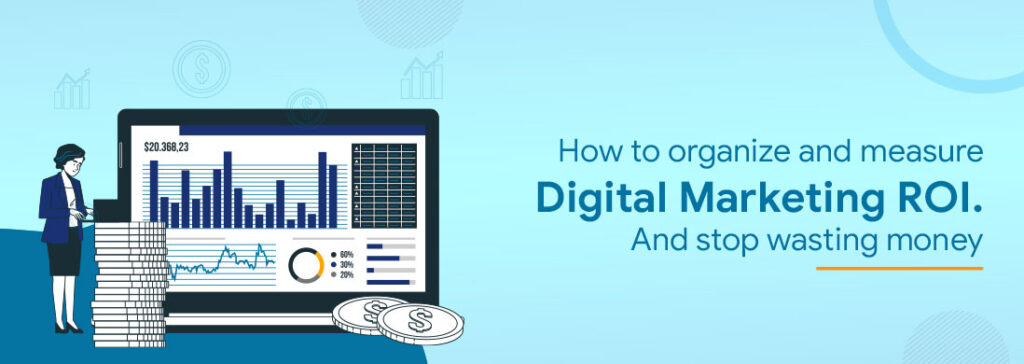
How to Measure Digital Marketing & Advertising ROI

A shocking statistic shows that 26% of marketing budgets are spent on wasted wrong channels and strategies (Ref) when we are all being asked to cut costs and adopt more sustainable practices. That’s why it’s a good idea to start by clarifying your strategy and reviewing your Marketing campaign planning and process.

The process of Digital landscape starts with the four principles 

  1. Briefing
  2. Planning
  3. Distribution
  4. Measurement

Let’s go through the process of digital marketing through the lens of marketers, advertisers, planners, and managers.

digitalmarketing-process
The digital marketing process starts with: Brief<Planning<Measure<Distribution


We will examine a few basic aspects of digital marketing that will go a long way toward better ROI. As every penny matters!

Briefing: Why briefing is important 

Briefings are triggers for creative thinking and a measure to meet the objective. This is a key point in transferring information from marketers to agencies. Briefings are key in guiding the creative process, which is inherently elusive and unpredictable. A brief written by a marketer for an agency should grab attention. Briefing, by definition, is giving the agent adequate information to present the best possible solution. However, briefings are often directionless at best and confusing at worst. Therefore, he has two roles in this guide. 

First, by providing practical tools that help marketers craft better briefs backed by solid strategic thinking. And second, building a shared understanding of what makes a good brief between marketers and agencies. After all, we all want the same thing. It’s about working more efficiently and effectively to deliver better business results. This guide is about returning your thoughts to the briefing

“Writing bad briefs is the most expensive way to write advertising” Sir John Hegarty

Poor briefings do not allow agencies to solve problems or capitalize on opportunities marketers have identified. If the briefing is unclear, the agency is not sure what is expected of the briefing. At this point, a second guess begins. A good briefing guides creative thinking and is a neutral reference point for evaluating work. Often, the root cause is that marketers and agencies can’t agree on what a good brief looks like. 80% of marketers think they’re good at writing briefs. Only 10% of agencies agree (Ref)

No doubt, bad briefs cause many negative effects. They lead to confusion, shallow creative thinking, and often mediocre ideas. The result is dissatisfied customers, repetitive creative work, debriefings, demotivation, and ultimately a weak position in the marketplace. According to Better Briefs research, 14 out of 3 of all marketing budgets can be wasted on poor briefings and misdirected work. (Ref)

The best way of controlling media spending starts with an aligned brief.

There is a lot of pressure on agencies to create ideas that deliver a positive ROI and meet the objective of the campaign.

Do you know 4 in 5 agencies believe that marketers don’t understand what they need from a brief and with growing perusal the brand positioning takes another pothole road, (Ref)

“A brief is not about writing, it’s about thinking”

-Dave Trott

1) Defining Promotional Needs

A good brief focuses on the problem or opportunity that needs to be solved with creative work and serves as a compass for creative thinking. Clarify your advertising needs and justify your agency’s expectations. It’s the marketer’s responsibility to provide clear strategic direction in every briefing. You will soon see that agencies will benefit from this.

Note: Please clarify the ‘why’ for this briefing. Short story writers need to be clear about their decisions. A choice is required to determine whether the order is to acquire new customers, resell existing customers, or increase purchase frequency. When it comes to briefs, they are mutually exclusive. If more than one of these decisions needs to be made, multiple briefings are required.

2) Build the backbone

Goals from the budget. Your budget determines the size of your audience. Your audience size should be able to meet your goals within your budget. If your budget isn’t big enough, you can’t target everyone in your category. If one changes, the other two must also change. Lower budgets mean lower ambitious goals and fewer target audiences.

Note: It’s easy to justify investing in your company’s marketing (budget) when your goals and objectives are clearly defined.

3) Target the Right People

Not everyone is your target audience and not everyone will buy your product. Few brands have the budget to reach everyone, so most brands have to narrow their targeting. The definition of the target group should be distinctly different from the general population. It should be big enough to reach your goal. Marks must have or make valid rights to persuade them.

Note: A well-defined target audience is a clear picture of demographics, psychology, and needs or wants.

Briefing for Planning: In digital marketing failing to plan is planning to fail

New consumer behavior is forcing marketers to rethink their media spending plans.

Early assumptions were that life would return to normal and media teams could return to their normal budgeting and planning processes. But there are clear signs that there has been a lasting shift in consumer behavior as the pandemic accelerated the trend towards online channels that had already begun. Purchases increased from approximately 15% to 45% across most categories in the market, to the accuracy currently enabled by analytics. It’s not enough to just use the old plan and add or subtract percentages, as has often been done.

(REF)Description: Most companies are shifting their budget from traditional marketing to digital marketing.


Five questions to answer before you finalize your media plan

1. Are You Spending The Right Money Against Your Business Goals?  

A benchmark of total media spending as a percentage of revenue with industry peers is a good place to start. Of course, there are big differences between different industries and different sizes of companies. But only by showing how much their competitors are spending can a company decide whether spending more or less is the right approach based on its growth ambitions.

2. Do you have analytics to fine-tune your spending?

During these extraordinary times, it’s important to build flexibility into your media plans. In fact, accurate budgeting is built into regular adjustments based on monthly reviews. Regular performance reviews, such as the impact of spending on audience targeting and personalization, enable marketers to withdraw spending when marginal contributions decline and maintain or increase spending when contributions increase. You can Spending alignment between marketing and finance is also easier to achieve when there is room for constant review and reallocation.

3. Are You Spending Enough on Addressable Channels?

The traditional media planning process typically involves scheduling national television first, followed by major sports and other large audience events. After buying the early slots, they looked to other channels to fill the funnel gaps.

On average, traditional media accounted for 46% of his media budget in 2019, but by 2021 he is expected to drop to 40%. Also, more than half of ad buyers are shifting funds from broadcast (53%) and cable TV (52%). ) to a connected television (CTV).

4. Do you have the right agency mix to respond quickly?

With a clearer picture of what to spend, the planning process should also look closely at how that budget is actually being spent on campaigns. However, the typical campaign planning and execution process often take days or weeks instead of hours, an increasingly necessary timeframe for effectiveness.

5. Are you experimenting enough with strategic publishers?

When advertisers develop their media plans, the most visionary will work more closely with such publishers to Reach, First Party is looking at ways to leverage her data and analytical power. Some digital platforms are investing with retailers to help CPG companies understand how media drives store traffic and ROI. Traditional publishers are starting to follow suit, especially in markets where broadcast.

Just as consumer sentiment and behavior changed when the pandemic began, this will continue to change as communities go through cycles of temporary lockdowns and reopenings, making it difficult to predict the future with certainty. Advertisers should therefore prepare for change when planning their media spending. Executing an effective media plan is a critical step to achieving accurate budgeting, a greater focus on addressable channels, more flexible campaign delivery, and forging new relationships with publishers. is essential.

Distribute: The right distribution is a money machine 

Here are some Unnecessary Brand Spending that is wasted 

Brands need to be more aware of the dangers complacency creates, with more than $137.4 million being “wasted.” From January 2022  March quarter. According to the Next & Co Digital Media Wastage Report, this represents an average waste of 41% of media spend. The data overwhelmed Australia’s wastage of digital advertising spending, reaching $134.3 million, or 40%, in the first quarter. “Three key areas when it comes to how brands waste their digital media investments. (Ref)

The report examined 81 companies with digital advertising budgets ranging from $500,000 to $39 million. According to data gathered from Next&Co’s proprietary media auditing tool, Prometheus, retail brands reported the largest wastage of digital advertising dollars at approximately $32 million. Insurance was followed by $28 million, followed by finance ($26.5 million), real estate ($19.8 million), education ($16 million), and health ($14.7 million). Across all digital media channels, the most digital ad spend is on Facebook at $53 million, followed by Google at $45 million, LinkedIn at $28 million, and Bing at $10.7 million. “Unacceptable levels of wasted digital ad spend in the region, especially as digital ad spend in Southeast Asia reaches $4 billion and is expected to surge to one-third of all ad spend.” this is alarming. (Ref)

channel-wastage
Description: The channel wastage ad spend on Google, Facebook, Linkedin, and Bing.


How to Control Unnecessary Brand Spending?

1. Reach a large audience, but not the target audience. Your target image.

Companies make the mistake of trying to get as much money as possible but ignore the fact that bigger is not always better. You should spend a little more or reach less (but be better targeted) matching the profile of your ideal customer.

2. Do not guide by another goal

I often see businesses compare their marketing and advertising strategies to what another local business is doing. The comparison is only effective if it is apple to apple. In these cases, they use companies with different goals and objectives or working in a completely different industry to guide their marketing strategy. It never ends well.

3. Keep evolving

So many companies take last year’s (or last decade’s) marketing strategy, discard it, and recycle it for this year’s marketing strategy. There is no other aspect of business - or indeed, of life - that yields the best results. A new look is always warranted. New technology, new trends, changing consumer mindsets, and new developments in your own business are all reasons to consider each year and every quarter a new beginning.

4. Spend not just to spend.

So you’ve spent some budget on marketing, developed a strategy, implemented the strategy, and still have money in the pot! You feel good about it, looking to use your final changes and end up throwing it into marketing tactics that don’t work. But why? Don’t spend money just to spend money. If you don’t use 100% of your marketing budget in a given season, save it for the next season and spend it on efforts that align with your strategy and are more likely to produce the desired results. would like.

5. No call to action is a massive failure

Last but not least, any marketing that doesn’t have a call to action - and not just any call to action, which will actually MOVE the customer - is a waste of time and money. It’s like shouting “Hey!” Once you get his or her attention, you’ll just stand there awkwardly. Always have a clear and compelling call to action.

Measure: Measuremetrics is a way to move forward

5-board-marking
(REF) Description: The core points CEOs, Marketers, and Managers need to focus on while running a campaign


Which channels should be credited for converting prospects into buyers, and how much credit should each channel have? Understanding the contribution of each touchpoint as the customer journey becomes more complex Doing can mean the difference between business growth and a failed marketing effort.

Once you’ve correctly determined the touchpoints that have the greatest impact on purchasing decisions, you can optimize your campaigns to maximize revenue. But marketing also needs to identify users who convert based on his message and those who will buy anyway. No single measurement tool can fully capture all media exposure, conversion, and sales data and provide ongoing actionable insights. To be successful, a combined approach must be used to measure media impact across all channels. Combine multiple methods for best results. There is no one-size-fits-all approach to measuring marketing impact per channel, so it is best to use a combined system tailored to your specific situation and goals. 

Tips: Use simple words in a briefing 

Only 5% of agencies believe briefings received from clients are clear and concise. A good briefing requires reductive thinking. It should be short. It should have everything you need and nothing more. 

Spend more time downsizing 

This is because most agencies feel that the briefing they receive from the brand is not concise enough. Practice the art of sacrifice. Put all the extra information in the appendix.  

Don’t be in a hurry

Give campaigns time to learn, strategies, and perform. The digital nomads need to understand the performance, KPI, and user behavior. It’s not an overnight thing that changes sand to gold 

Read the data 

The data dictates where to go-as in what platforms to focus your attention on when to post, what kind of content, etc. It also helps you extend a more personalized experience to every customer and potential customer. 

Create a Blue ocean strategy 

This strategy aims to capture new demand and render competition pointless by presenting high-performing products. The Indian Premier League (IPL) has reinvented the national cricket league by transforming the lengthy “Gentleman’s Game” into an exciting three-hour sports drama starring Bollywood stars.  

Bot Icon
Bot Icon

Tatvic Bot

Explore About Tatvic and Services