Hello There!

Lorem ipsum dolor sit amet, consectetur adipiscing elit,

How to Create a Strong Value Proposition for Effective Lead Generation?

In order to engage potential customers and generate leads, businesses need to have a strong value proposition on their landing pages. A value proposition is a brief statement that tells prospective customers what you can offer them and how it can benefit them. It is essential in lead generation because it helps you stand out from the competition and convince visitors to convert into leads.

Without a strong value proposition, your lead generation efforts will be less effective and you may even lose potential customers. So if you want to improve your lead generation results, make sure your landing pages have a strong value proposition.

What is A unique Value Proposition?

A unique value proposition (UVP) is a statement that describes a product or service’s most important benefits and features, emphasizing why it beats out its competitors. It should be simple and concise, yet compelling enough to get potential customers’ attention. An effective UVP should clearly explain what you offer, who it’s for, and how

[Product/Service] + [Unique Benefit] = [Value Proposition]

What is considered as a strong value proposition?

A value proposition is a statement that presents the core value of an organization to its prospects, consumers, and partners. It describes how an organization’s offering can help an individual or business to address their needs, wants, and desires.

Here are some examples of great value propositions

  • Tesla: “Accelerating the world’s transition to sustainable energy.” Tesla stands out amongst electric car companies by providing more than just an automobile; they are dedicated to decreasing the world’s dependence on fossil fuels and empowering sustainable energy solutions.
  • Zappos: “Delivering a WOW experience. .” Zappos’ With an emphasis on superior customer service and a commitment to providing customers with an enjoyable shopping experience, their unique value proposition sets us apart from other online shoe retailers.
  • Dropbox: “Simplify your life.” Dropbox is the go-to cloud storage and file-sharing platform that simplifies organization, access, and collaboration for individuals as well as businesses. With a few clicks of your mouse, you can get started on accessing files from any device at any time - no matter where in the world you are!
  • Airbnb: “Belong anywhere.” With Airbnb, travelers are granted the chance to experience a truly unforgettable journey; they get to stay in distinct and personalized accommodations all around the world, allowing them an even more genuine and immersive travel experience.
  • Dollar Shave Club: “Shave time. Shave money.” Dollar Shave Club is the perfect solution for anyone who wants quality shaving products without breaking their budget. Not only do they offer great value, but you can also have them conveniently shipped directly to your home - saving both time and money!

How to create a strong value proposition?

By following these steps, you can create a unique and effective value proposition that will help your business stand out from the competition.

Define Your Ideal Customer: To craft a powerful value proposition, start by picturing your perfect customer. Consider who you are offering this product or service to and what they need out of it - use that insight to create an enticing message sure to pique their interest!

In this step we try to collect different data points from Google Analytics and other analytics sources, surveys and feedback from customers or even speak to our clients and come up with a user persona.

Here is an example of how we create a user persona. Our user persona shows a 42-year-old married man named Jeffrey who lives in Boston and is looking for a home loan. His goal is to get a loan with the lowest interest rate possible

  • Map Benefits to Customer Needs: Once you know who your target audience is, think about how your product or service can meet their needs and solve their problems. Identify the benefits of using your product or service and make sure they are tailored to the needs of your ideal customer.

    Continuing the example from above, our target customer Jeffrey is looking for a home loan with the lowest interest rate possible. So, our value proposition would focus on how our home loan products can help him save money on his monthly payments.
  • Be Specific: When crafting a value proposition, it’s important to be as specific as possible about the benefits of using your product or service. Don’t just list generic features; focus on how those features will benefit the customer specifically.

Example: Jeffrey is looking for a home loan with the lowest interest rate possible. So, our value proposition might be: “Get the lowest Home loan interest rates starting at 6.80%* per annum.

Design is essential!: Ensure that your value proposition is visible and attractive on all marketing materials, such as your website. Keep in mind that even if you have a compelling offer, it will be meaningless if no one notices it! Make sure to place the offering front and center so that customers can easily recognize its value

Example: Our value proposition of “Get the lowest Home loan interest rates starting at 6.80%* per annum!” could be highlighted as such:

How to test your value proposition?

  • Ask Your Customers - To really understand how your value proposition is performing, simply ask the experts-your customers. Their thoughtful feedback can offer a wealth of insight into what needs to be tweaked in order to make sure it resonates with them as much as possible!
  • PPC Advertising -  Pay-per-click (PPC) advertising is a great way to test different versions of your value proposition and measure their success. You can create multiple ads with different versions of your value proposition and track the results to determine which one works best.
  • Use A/B Testing - A/B testing is a great way to test different versions of your value proposition and see which one performs better with customers. You can use this method to compare two different versions of the same message or two completely different messages altogether. This will help you determine which one resonates more with customers so that you can make the necessary adjustments for maximum impact.

Conclusion

Creating a strong value proposition is essential for successful lead generation on any landing page. By defining your ideal customer, matching benefits to their needs, and being specific about the features of your product or service, you can create an effective message that resonates with potential customers.

Ad Creatives: How to Craft Compelling Ads That Convert

As a designer, you understand the importance of creating visuals that stand out and capture attention. Advertising is no different. For ads to be successful, they must be eye-catching, memorable, and convey the right message.

Crafting effective advertisements can seem like a daunting task at times; however, there are some tried-and-true best practices that you can use to make sure your ads cut through all the noise.

In this blog post, we’re going to take a look at those tips and techniques so you can create flawless designs for maximum impact.

How Important Are Ad Creatives?

Ad creatives are critical for the success of any commercial campaign. They must be able to understand consumer psychology and anticipate the desires of customers in order to craft winning advertising campaigns.

Ad creative designers have a unique skill set that allows them to use imagination and design principles to create interesting visuals, catchy slogans, and powerful taglines that engage audiences in an emotive way.

They must be knowledgeable about how every element impacts consumers and work with marketing teams to ensure that all campaigns reflect the brand identities of companies - whether that’s through colours, fonts, sounds or anything else.

As such, they play an important role in helping businesses deliver effective Ad campaigns that draw attention and break through the noise.

At Tatvic, we use a large-scale experiment method to help businesses scale their marketing campaigns with the right ad creatives. This approach enables marketers to craft tailor-made ads that are tailored to the target audience and maximize the ROI.

How to Make Ad Creative That Converts?

1. Know who you’re targeting and create ads tailored to them

When it comes to marketing, understanding your target audience is key. Knowing who you’re trying to reach and catering advertisements to that crowd makes all the difference when it comes to success or failure.

Instead of taking a “one size fits all” approach, personalize your ads and make them as tailored as possible for your intended demographic by researching items such as age, interests, geographic location, and more. By targeting an audience with relevant ads created just for them, businesses are sure to see greater results from their marketing efforts.

2. Find which platforms your target audience uses

When designing your ads, it’s important to consider which platform you’re advertising on. Different platforms have different guidelines, audiences, and even demographics. It’s crucial to analyze the platform you’re advertising on and tailor your ads accordingly in order to get the most out of them.

Facebook, Google Search, YouTube, Quora, and other platforms have different parameters and rules that you must follow in order to be successful. It’s important to understand the platform you are advertising on, as well as any creative requirements they may have.

3. Eye-catching images draw attention

Quality visuals can be one of the most powerful tools in your advertising arsenal. Eye-catching images can draw attention to your ad and make it stand out from the competition. They serve as an immediate visual cue that captures viewers’ interest and encourages them to take action.

Well-crafted visuals are designed to create a strong emotional connection with your target audience and reinforce the meaning behind your message. Utilizing quality visuals will allow you to effectively communicate ideas, captivate people’s attention, and maximize the effectiveness of your campaign.

4. Tell viewers what action you want them to take after seeing the ad

As you create an ad campaign, it is essential to include a clear call to action. Defining this action not only makes it easier for viewers to take the step that you want them to, but it shows that you are confident in the product or service you are advertising.

Communicating this strong sense of conviction with a focused call-to-action provides customers with the assurance they need to engage with the business and purchase something they may not have necessarily considered before. By being specific and definitive, businesses have the best opportunity to convert passive audiences into active buyers.

5. Make sure your message is relevant to the context in which it appears

When crafting a message for an audience, it is important to ensure that the content is consistent with the context in which it appears. Tailoring the message to mesh with its particular environment will help individuals process the information and gain an understanding of the core points being conveyed.

By keeping content relevant, readers will be more likely to stay engaged and remember the topic without becoming overwhelmed or losing interest. Therefore, relevance should be the foundation of any persuasive document or communication. This allows the words to provide value and make an impact on those who consume them.

6. Implement A/B Testing to maximize AD conversion

A/B testing is an invaluable tool that can have a serious impact on the performance of your marketing campaigns. By testing multiple versions of the same ad against each other, you can quickly and easily optimize your messaging to better engage with potential customers. This could mean the difference between a successful promotion, or lost opportunities due to a lack of ad effectiveness. It’s also cost-effective - instead of having to go through all of the guesswork as you develop successive variations and analyze feedback from each one, you can use data from A/B testing to make informed decisions going forward. The total amount of time spent

creating and executing these tests is more than worth it for marketers who want to get the best results out of their campaigns.

7. Track and monitor your results so you can adjust your strategy accordingly

Tracking and monitoring results should be a core part of any strategy to ensure its success. Keeping an eye on the success of the strategy allows you to quickly identify areas with potential for improvement, as well as those that are working well.

This will also allow you to make data-driven decisions when making strategic adjustments, rather than relying solely on intuition or subjective opinions. Making regular assessments of your strategy can help keep it aligned with your objectives and provide valuable insight into new opportunities to achieve even greater success.

Conclusion:

Creating a successful ad campaign is no simple task. However, by following these few steps and utilizing the right tools, you can improve your chances of creating an effective marketing strategy that will resonate with your target audience.

How GA4 Data Analytics helps in Business Decision Making?

Before we dig deeper into how data analytics help with insights, let us first understand ‘What is data analytics?’ 

Data analytics translates raw data into usable information to act upon. It is the process of examining, exploring and analyzing huge data sets to identify trends, correlations and patterns to unleash insights and make valuable data-backed predictions for your business to make informed decisions. Data may be historical or fresh extracted from an ad campaign, a marketing initiative, first-party data or third-party data etc.

Data can give you insights like what time of the day your sales/conversions spike, changes in traffic or channel from which the change happened, the effectiveness of a particular ad campaign, and understanding the personalized needs of customers. Today every industry and every department in your organization, be it marketing, human resources, information technology, supply chain, etc., uses data analytics for business decision-making and strategic thinking.
Data analytics services also promote collaboration and connection between multiple departments of your company.

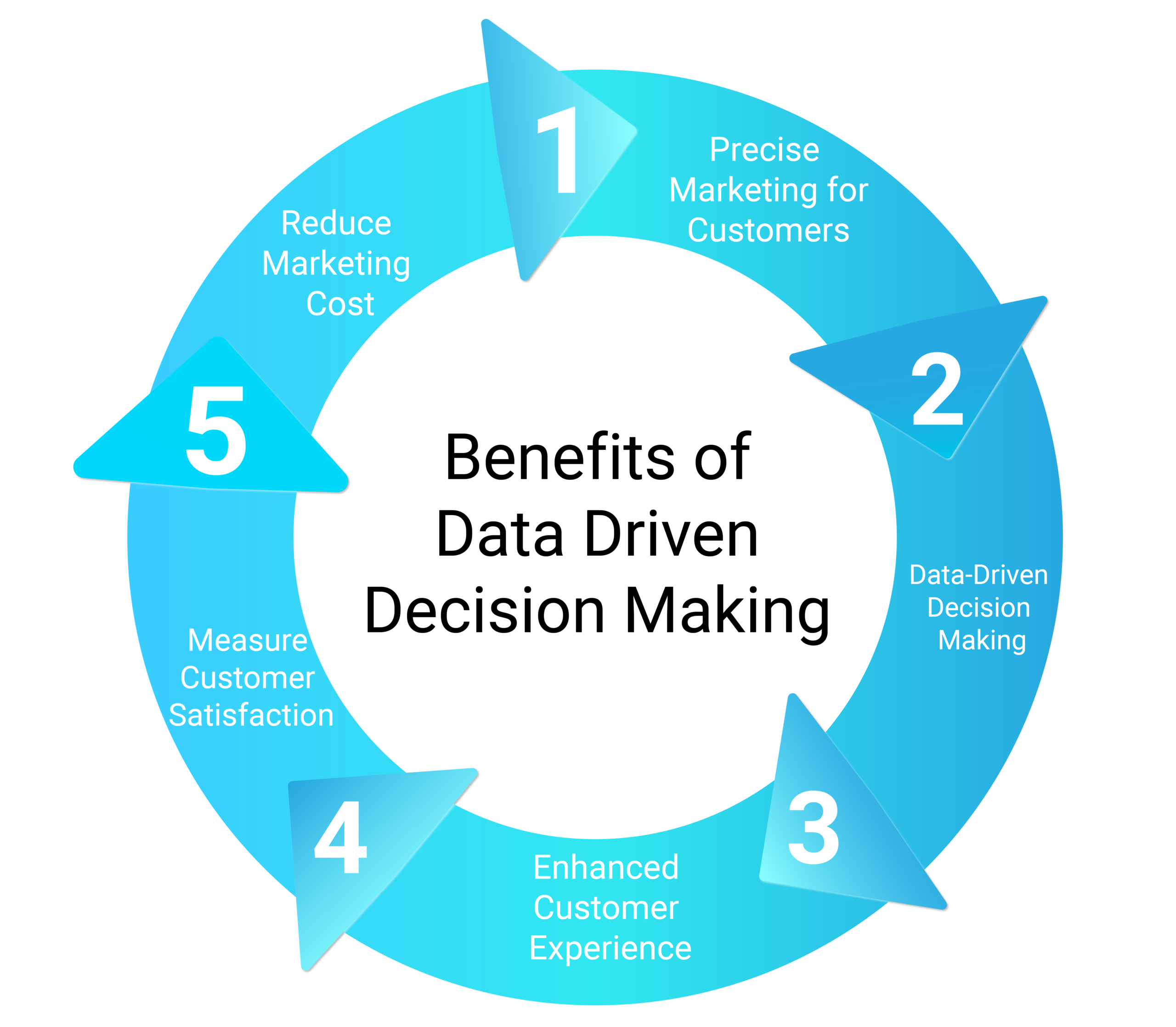
What are the benefits of GA4 Data Analytics to help Business Decision Making? 

Data analytics services play a pivotal role in empowering businesses to make informed, data-driven decisions, and Google Analytics 4 (GA4) significantly enhances this capability. Here’s how: 

1. Precise Marketing for Customers

Become acquainted with your target audience and their customized needs to generate personalized campaigns for them.

2. Data-Driven Decision Making

As mentioned in the previous point, businesses can understand the needs of their audience and improve their decisions based on valuable insights by leveraging effective data analytics solutions. 

3. Enhanced Customer Experience

Data analytics improves customer experience. Provides in-depth insights on what your customer wants and behaves with your business. This helps you serve your customers better knowing their preferences and what they expect from your website/business. You will also be able to track customer interactions so that if an issue is faced during a particular interaction, it can be easily addressed. 

4. Measure Customer Satisfaction 

Analyzing customer feedback, and survey responses can help your team understand where your business needs improvement. This can also help you with churn and measuring customer satisfaction.

5. Reduce Marketing Cost 

Identifying collected data for cost-cutting areas can help you reduce extra costs for your business. Be it an ineffective marketing strategy, a product that is not generating any revenue, etc. This information can help you increase revenue and outwit competitors. 

6. Data-driven culture 

‘Data-driven’ culture is the new buzzword these days. Ever heard ‘Companies should follow a data-driven culture as a part of their growth strategy’? 

Let us better understand, why? 

A data-driven culture or a data-driven organization is one which is built on powerful numbers, data, and analytics. The data-driven organization is where data is being completely leveraged and embraced for commercial growth. These companies collect as much data as they can and benefit from the same deriving useful insights. They utilize meaningful data behind every decision they make from minor to their investment plans and which direction they should take for their business. 

Organizations must effectively work towards a common goal of constructing a cultural framework where every member of the company revolves around data for discovering new patterns, data-driven use cases, experimenting with analytical solutions, management of quality of data, etc. in order to make efficient decisions. 

Let’s look at a few advantages of a data-driven approach for your business.

a) Continuous growth

Data-driven insights empower companies to make consistently intelligent decisions leading to long-term success. Without a systematic approach to data, you cannot trust your intuition or opinions to make decisions and feel confident about them whereas a data-backed decision will always 

b) New opportunities

A data-driven strategy ensures your marketing efforts are strong and are based on rational facts. It will help you with new products, marketing initiatives, services, etc. by investigating historical data and understanding previous performances and what you should change in order to compete and improve. 

c) Efficient operations

Every member of the company is aligned on making data the foundation of its business decision-making, digging out best practices, and highlighting scenarios in order to unify all departments and operations. 

d) Identify your business requirements

Just making data available will not help you reach your desired goal. You may need to understand what data analytics tools and system integrations are required to make full use of the available pool of data. A drop in connectivity might lead to reduced operational efficiency and indirectly it will affect your decision-making. Understanding what data is available and integrating it in a systematic manner will help your business thrive. 

Data alone is not enough to provide you with valuable information, you need to understand data for successful guidance in your growth and business strategies. 

How can GA4 help your business with data-driven insights?

Data analytics solutions like GA4 empower businesses to leverage intelligent insights that drive smarter decisions and future-ready strategies. Here’s how:

1. Predictive metrics -

There are advanced functionalities within GA4 that can help you with additional analysis to fully understand your potential future actions:

  • Purchase probability:

The probability that a user active in the previous 28 days will log a conversion event in the next seven days

  • Churn probability:

The probability that a user action on your site or app or site within the last seven days will not be active within the next seven days

  • Revenue prediction:

Revenue expected from all purchase conversions within the next 28 days from a user action in the last 28 days

These probability metrics will help your business target ads and remarket ads accordingly to increase ROI. 

2. Machine Learning capabilities

One of the important features of GA4 for better data analysis is its capability in machine learning and artificial intelligence which can help in predicting customer behavior and probability of conversion or sales, predict the probability of customer churn so that you can better target them to retain, find anomalies in any report, identify unique trends or patterns in data completely based on ML algorithms. 

3. Data-driven attribution

GA4 allows you to set your default attribution model as data-driven which then uses machine learning algorithms to assign credit to the customer journeys. DDA helps with extensive information on marketing campaigns, channels etc. giving a wide view of which marketing initiatives and platforms work the best in order to bring customers for sales and conversions.  Investment becomes easy for marketers and companies after looking at results through multiple channels. 

4. Big Query

Big Query allows you hit-by-hit data analysis for your business by querying large data very quickly. Integration of this tool enables rapid and efficient data analysis. GA4 offers a free integration whereas, in GA, this was available only in paid versions. 

With your GA4 data stored in Big Query, you can easily share your data to CRM or ERP software to store and make use of all data in one place. 

When data lies in one place altogether, this can open the possibility of using machine learning to perform user journey mapping, statistical modeling, and forecasting conversions or sales. 

5. Improved marketing insights

GA4’s advanced capabilities provide marketers with a complete look into their customer’s journey. It not only tracks campaigns but also accurately measures conversions. With the help of artificial intelligence and machine learning, it collects data and delivers intelligent insights for growth : 

  • You can visualize your funnels in GA4 by adding customized steps 
  • Understand drop-offs in order to improve sales/conversions 
  • Remarket abandoned customers by creating segments and creating audiences for retargeting
  • Know where your users exactly come from

GA4 offers a new way of collecting, processing, modeling, and analyzing data. The number of features it has makes it easy for businesses to interpret and make crucial decisions about their marketing strategies. GA4’s most talked about feature is “Data-Driven Attribution” which gives deeper insights into your customer journeys taking into account every marketing effort and platform. 

Whether you’re looking for actionable insights on your marketing efforts or how your customers are behaving on your website, GA4 is the ultimate data analytics tool for all kinds of data analytics.

Data Collection Guidelines: Extracting Quality Data from Google Analytics 4

In the age of Digital Analytics, Google Analytics for data collection has become an essential tool for measuring website traffic, analyzing user behaviour, and tracking the effectiveness of marketing campaigns. In Google Analytics 4 (GA4), data collecting is essential since it forms the basis for developing insights and making decisions about your website or app. GA4 utilises various tracking techniques, such as server-side tagging, GTM, data import, and the implementation of tracking code. But it is important to collect high-quality data in order to make accurate and effective business decisions. 

In Google Analytics 4, there are several best practices you can follow to ensure that you are collecting high-quality data. Here is the step-by-step process:

Defining KPIs: Firstly, Before collecting any data, it’s essential to define clear goals and objectives for your website or app. This will help you identify the metrics you need to track and collect data on and ensure you measure what’s important keeping these in mind Tatvic sends a pre-kick-off questionnaire form with the client having all the prerequisites needed to start such as business KPIs, internal IPs, referral domains to exclude, any cross domains or sub-domains if they have.

Set up tracking correctly: The next step is to collecting quality data is to ensure that your tracking is set up correctly. It is essential to ensure accurate data capture whether the tracking is done through a native code base method or through any plugins, SDK, or GTM.

Each method has its own standard rules or format that needs to be followed like in the native code base implementation the tracking code should be placed as high as possible in the head section of the code this will ensure accurate user interaction, accurate calculation of important metrics such as page load time, time on page, etc. 

While configuring events for google analytics data collection there are predefined rules which need to be followed to get correct reporting such as:

  • Event names are case-sensitive. For example, sign_up and Sign_up are two different events.
  • Do not use event names similar to automatically collected events.
  • Event names must start with a letter. Use only letters, numbers, and underscores. Don’t use spaces.

To track significant user interactions, Tatvic creates an Event Schema document based on the client’s business KPIs while adhering to all the aforementioned guidelines.

Configuration settings: Once you have setup your data correctly, this section regulates how Google attributes your marketing data, how long it keeps user-based data, and how the session timeout configuration is handled. Because the default settings are generalized they need to be changed according to your business requirements like the default session timeout duration is 30 min but for an OTT platform where the average video length is of 2hrs 30 min session timeout would give an erroneous session count and bounce rate. 

Also, with more and more users accessing websites and apps on multiple devices, it’s important to track user behavior across devices. Cross-device tracking can help you understand how users interact with your website or app across different devices and platforms.

Adequate filters and segments: Now, Filters and segments can help you analyze and make sense of the data you collect. Use filters to exclude data from certain IP addresses or internal traffic, bot traffic, and segments to isolate specific groups of users or behavior patterns. Spam and bot traffic can skew your data and make it difficult to draw accurate conclusions. You can also set up bot filtering in your GA4 settings to automatically exclude bot traffic. 

Create useful custom dimensions and matrices: Since you have now all the required data in your GA4 property, Custom dimensions, and metrics will allow you to collect additional information about the user that is specific to your website or app like we in tatvic create custom dimensions like user_type, membership_status, etc which give information about logged-in and guest user or whether the user is a prime member or not that help to know deeper insights about user behavior. This can include things like user preferences, user behavior, or other unique data points that can help you better understand your audience.

Follow data privacy regulations: Ensure that you are collecting and storing user data in compliance with data privacy regulations such as GDPR and CCPA. Be sure to obtain user consent for data collection and follow best practices for data security.

Now how to maintain the consistency of quality data collection?

The following steps will assist you in maintaining the quality of the data you have collected after following all the above-mentioned guidelines.

Leveraging machine learning for Anomaly: Even with the best tracking setup, data anomalies can still occur. It is important to monitor your data on a regular basis to ensure that it is accurate and consistent. Look out for sudden spikes or drops in traffic, as well as changes in user behavior. GA4 offers advanced machine-learning capabilities that can help you identify patterns and insights in your data. Take advantage of these features to uncover valuable insights and make data-driven decisions. In Tatvic we set custom insights like user count, engaged session, etc as per the client’s KPIs and monitor the same periodically to check if any unusual user behavior occurs.

Periodic Audit: It’s important to regularly audit your data to ensure it is accurate and up-to-date. This can involve checking for duplicate or incomplete data, verifying that tracking codes are working correctly, and ensuring that goals and events are set up correctly.

Concluding Thoughts 

By following these guidelines, you can ensure that you are following a tried and tested google analytics data collection process and collecting accurate and meaningful data that can help you optimize your website or app and improve your overall business performance.

In conclusion, collecting quality data in Google Analytics 4 requires careful planning and attention to detail. By following these best practices, you can ensure that you are collecting accurate and actionable data that can help drive business decisions.

Conversion Rate Optimization: Maximizing Your Website’s Untapped Potential

Do you struggle to convert visitors to customers on your website?

Do you want to improve the performance of your website and increase sales?

You might benefit greatly from conversion rate optimization services

CRO is the process of optimizing your website to increase your website performance in a way that led your website visitors to take the next action in your conversion funnel.

This article will look at everything you need to know about conversion rate optimization (CRO) services, including the basics, best practices, and advanced strategies. 

Whether you’re a beginner or an expert, this article will give you all the details you need to improve your website’s performance and drive more conversions. So, let’s dive in and start optimizing!

What is CRO (Conversion Rate Optimization)?

Conversion rate optimization (CRO) is a process through which businesses maximize their return on investment (ROI). CRO services help businesses to optimize their marketing efforts and spends.

CRO is a result-oriented approach to website optimization, which focuses on increasing the rate of website visitors to boost sales, increase customer count, etc. Businesses also consider CRO a key strategy to enhance marketing campaigns by better-targeting visitors with relevant content and enhancing the overall user experience. 

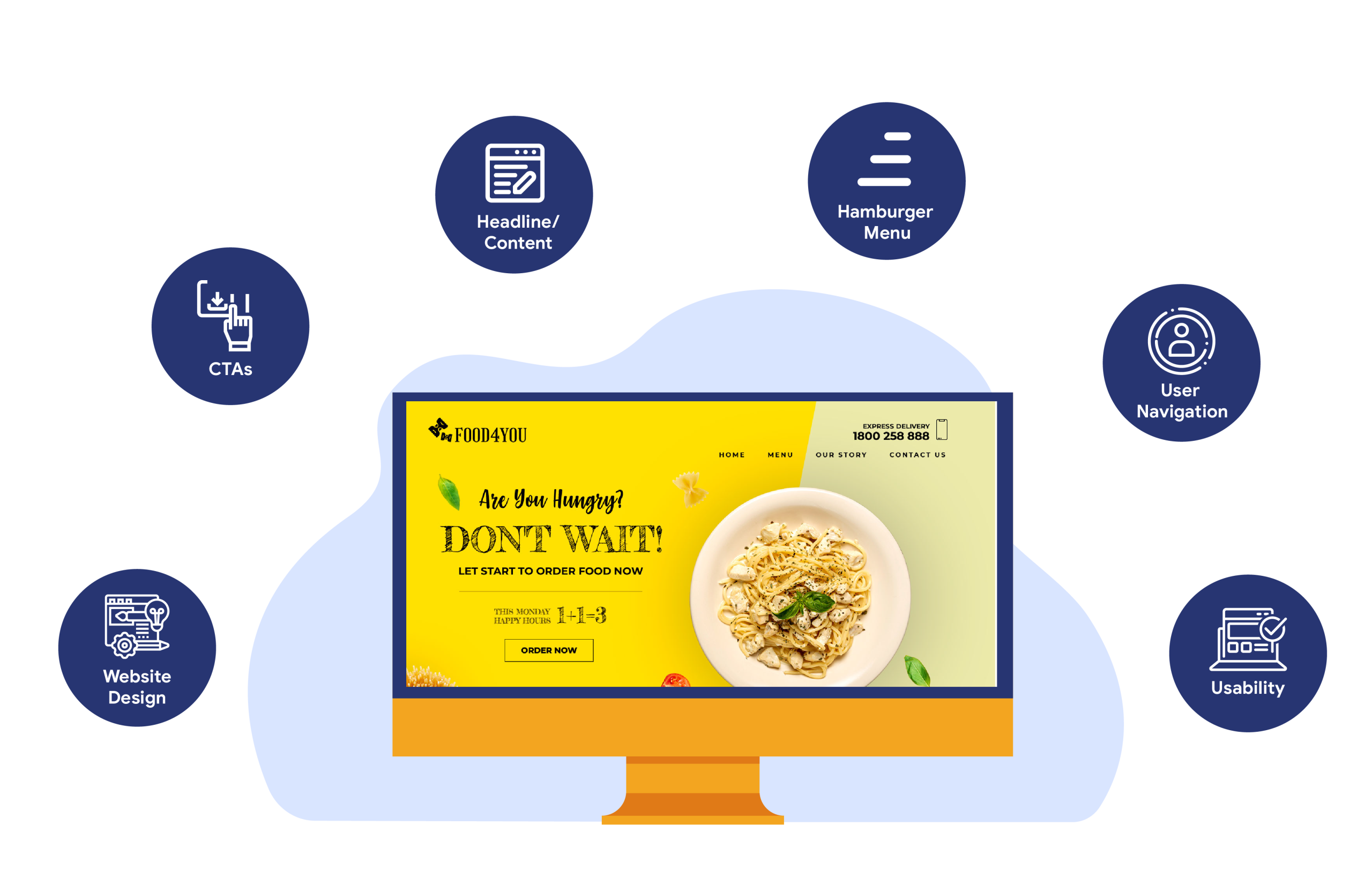
The conversion rate optimization goals for the website are accomplished by optimizing various website components, including the website design, content, the placements of “CTA” , user navigation and other factors like usability. Finally, this process can enhance the overall conversion rate, thereby increasing the business’s total return on investment (ROI).

Why is Conversion rate optimization important?

Conversion rate optimization (CRO) is integral to a successful digital marketing strategy. It involves everything from analyzing the behavior of website users and optimizing the website to improve the user experience and increase the conversion rate. This is highly important for small, medium, and large businesses as it can help increase the overall efficiency of digital marketing campaigns and the ROI.

CRO is mainly used to identify various sections for improvement, including the website design, layout, user experience, flow, etc. By optimizing these key components of the website, companies can make their digital marketing strategies effective and result-oriented. This also helps improve customer satisfaction to a large extent, resulting in a profitable customer base.

How do companies typically start with these conversion rate optimization activities?

Generally, companies start their Conversion rate optimization (CRO) journey by exploring their existing available data, such as website analytics, user behavior, surveys, and more. This data can provide invaluable insights into where users are having difficulty, their preferences and expectations, and any common patterns or issues observed. Armed with this data, companies can formulate hypotheses around what could be done to improve the user experience, increase engagement and ultimately convert more users into customers.

Using tools such as Google Analytics and Heatmap, a conversion rate optimization expert will collect relevant data on conversion funnel drop-offs and user behavior. Insights are then generated from these data points about the next course of action. 

Where do companies go wrong with their CRO initiative?

Unfortunately, a common issue companies often encounter when beginning their CRO journey is the lack of a concise strategy and action plan. Companies also fail to consider the nuances of their customer base and how their individual needs and preferences may impact their conversion rate. Additionally, companies may not have the resources to fully understand the underlying causes of their website’s poor performance, such as a lack of targeted traffic, low engagement, and inadequate website optimization or a failure to implement data analytics such as Google Analytics correctly which leads to inaccurate data tracking. Further, companies may neglect to conduct extensive A/B testing of their website.

What are the Benefits of Conversion Rate Optimization?

CRO is a vital tool company utilizes to boost their sales, increase customer engagement, and reduce advertising expenses. With the right conversion rate optimization strategy and planning, businesses can benefit to a large extent. Some of the benefits of CRO include:

1. Increased Revenue

One of the important benefits of using CRO for businesses of all sizes is that it can be largely used to increase revenue. To do this, companies need to strategically analyze a user journey through the website, right from signup to placing an order. They also need to identify the areas in the website which need significant improvement that can help to create an environment that encourages users to engage with a website in a way that leads to increased profits.

2. Improved User Experience

Conversion Rate Optimization (CRO) can help enhance the visitor experience on a website and within marketing campaigns, resulting in improved engagement and ultimately boosting conversions. Increasing engagement metrics can provide essential insight into the effectiveness of one’s campaigns and what drives users to take action.

3. Lower Advertising Costs

By bringing in a targeted audience on the website who have a high propensity to convert, the cost of advertising can be significantly reduced. Additionally, increasing the number of visitors that convert can dramatically improve the return on investment (ROI).

4. Increased Customer Loyalty

By optimizing the conversion rate, businesses can create an environment where customers have more opportunities to purchase products and services. CRO also helps to ensure that customers are getting the most out of their purchase and that the customer experience is satisfactory and enjoyable. Through CRO services, businesses can tailor their marketing strategies to a specific customer base, helping to create loyal customers that are more likely to make repeat purchases.

What is considered a good conversion rate?

There is no single universal measurement for a good conversion rate. What is considered an average conversion rate greatly varies from industry to industry and between campaigns and individual conversion goals. According to research, the average rate ranges globally from 1-4%.

How should it be ideally done?

A structured approach toward Conversion Rate Optimization will help digital marketing companies optimize and measure the success of their campaigns for better results.

1. Defining Goals

A structured approach is critical for success when optimizing conversion rates for digital marketing campaigns. Companies need to be able to identify their target goals and key performance indicators (KPIs) to measure their progress and understand what needs to be done to improve their results. The first step in the process is to determine which KPIs are important for the campaign. This will vary depending on the type of campaign and the desired outcome. For example, if the goal is to increase the number of leads generated, then the KPIs might be the number of website visitors, the number of emails sent, and the number of leads generated.

2. Auditing

A website audit is an important step in any CRO strategy. It enables the marketer to gain insights into how well the website performs in terms of user experience, content, search engine optimization, and other factors influencing conversions. By taking a closer look at the website, marketers can determine where improvement is needed and how to make those improvements.

3. Optimization

Several steps can be taken to optimize a website’s conversion rate, including conducting thorough research and analysis to identify areas of improvement, optimizing website design and layout, creating compelling and engaging content, improving website load times, simplifying the conversion process, and using A/B testing to assess the effectiveness of different strategies. It’s important to continuously monitor and evaluate the results of these efforts to ensure that the conversion rate improves over time.

Leverage Effective Conversion Rate Optimization Services

In conclusion, conversion rate optimization services are is critical to any digital marketing strategy. Following the tips and best practices outlined in this guide can significantly increase your website’s conversion rate, boost your ROI, and ultimately grow your business. Remember to continually monitor and analyze your website’s performance, test new strategies, and make data-driven decisions to stay ahead of the competition. With dedication, patience, and a willingness to learn from feedback, you can achieve the desired conversion rates and take your business to the next level.

Bot Icon
Bot Icon

Tatvic Bot

Explore About Tatvic and Services