Hello There!

Lorem ipsum dolor sit amet, consectetur adipiscing elit,

 About Dhwani Trivedi
Dhwani Trivedi works as a content strategist and inbound marketer for Tatvic. She devotes her time in making content that educates, engages, and addresses the most pressing inquiries of our target group. She draws her creative ideas from films, books, and other people.

Looker vs Power BI vs Tableau: Which BI Tool Wins in 2024?

In today’s data-driven business landscape, organizations are constantly seeking ways to gain valuable insights and make informed decisions. Business Intelligence (BI) tools play a crucial role in transforming raw data into meaningful visualizations and reports.

Looker BI, Power BI, and Tableau are three popular BI tools that offer powerful capabilities for data analysis and visualization.

In this blog post, we will you can get the exact comparison between Looker BI vs Power BI vs Tableau in 2024: 

Feature/Aspect Looker BI Power BI Tableau
Ownership Owned by Google Owned by Microsoft Owned by Salesforce
Primary Focus Data exploration and big data analytics Interactive data visualization Advanced data visualization
Data Handling Handles large datasets efficiently Good with moderate to large datasets Exceptional with large datasets
Integration Integrates well with Google Cloud and other Google products Strong integration with Microsoft products like Azure, SQL Server Wide range of data source connections and integrations
Ease of Use User-friendly with a learning curve for LookML (its modelling language) User-friendly with a familiar interface for Microsoft users Intuitive and user-friendly; preferred for its visualizations
Customization High level of customization through LookML Customizable dashboards and reports; less coding required Highly customizable with strong visual analytics
Collaboration Good collaboration features, especially within the Google ecosystem Strong collaboration features within the Microsoft ecosystem (like Teams integration) Strong collaboration capabilities and community support
Pricing Based on a custom pricing model Offers both a free version and a premium version Generally considered to be on the pricier side
AI and ML Integration Good integration with Google’s AI and ML tools AI capabilities through Azure and Power Platform Advanced analytics but less focus on AI/ML compared to others
Mobile Support Good mobile support Excellent mobile app and support Good mobile support with interactive dashboards
Reporting Advanced reporting capabilities with a focus on SQL-based queries Comprehensive reporting tools, easy export options Strong in reporting and data storytelling

Choosing the right BI Tool?

Choosing the right Business Intelligence (BI) tool is a crucial decision for any organization. With a wide range of options available in the market, it’s essential to consider your specific business needs and goals. 

The right BI tool can empower your organization with valuable insights, drive data-informed decision-making, and enhance overall business performance. When evaluating BI tools, factors such as ease of use, scalability, data integration capabilities, visualizations, collaboration features, and customer support should be considered. 

However, modern Business Intelligence (BI) has evolved far beyond its traditional role of data visualization and collaboration. While these aspects remain crucial, today’s BI tools offer a wide range of advanced functionalities and capabilities. Modern BI tools are designed to handle large and complex datasets, enabling businesses to extract insights and make data-driven decisions more effectively. 

They incorporate advanced analytics techniques such as predictive modelling, machine learning, and artificial intelligence to uncover hidden patterns and trends in data.

Advantages of Looker BI:

Looker BI addresses the needs of organizations with a large user base. It offers enterprise-scale adoption and establishes governance for key metrics. With Looker, you can ensure consistency and accuracy in reporting across your organization. One of the key advantages of Looker is its self-service content creation capability. Users can leverage a shared underlying logic, ensuring consistent data and insights throughout the organization.

A cloud-native approach enables easy access to analytics. Looker provides robust sharing, scheduling, and alerting functionalities, allowing you to efficiently distribute reports and insights to relevant stakeholders at the right time. This ensures that decision-makers have access to up-to-date information and can take timely action. Looker also seamlessly integrates with existing tools and workflows, giving you the flexibility to incorporate analytics into your existing processes. Additionally, Looker allows you to create embedded BI and analytics experiences, enhancing the user experience for your customers and partners.

The Looker BI Advantage -

  • Addresses the needs of organizations with a large user base.
  • Offers enterprise-scale adoption
  • Establish governance for the key metric 
  • Ensure consistency and accuracy in reporting across the organization.
  • Self-service content creation capability.
  • Users can leverage a shared underlying logic, ensuring consistent data and insights.
  • A cloud-native approach enables easy access to analytics
  • The platform offers robust sharing, scheduling, and alerting functionalities,
  • Users can efficiently distribute reports and insights to relevant stakeholders at the right time. 
  • Ensure that decision-makers have access to up-to-date information and can take timely action.
  • Enterprises can access historical data and gain real-time insights 
  • Seamlessly integrates with existing tools and workflows
  • Integrate with other business systems or embedding analytics within applications,
  • Looker BI provides the flexibility to incorporate analytics into existing processes.
  • Ability to create embedded BI and analytics experiences

Power BI and Tableau: Beautiful Visualizations and User-Friendly Tools:

Power BI and Tableau are renowned for their ability to create stunning visualizations. Both tools excel in presenting data in a visually appealing and interactive manner, making it easier for users to interpret and analyze information. They provide drag-and-drop exploration capabilities, allowing users to manipulate and explore small subsets of data by simply dragging and dropping fields. This creates custom visualizations and enables analysis from different angles.

Both Power BI and Tableau are well-suited for handling smaller datasets that can fit in memory, similar to spreadsheets. This provides fast and responsive exploration and analysis capabilities. Tableau Desktop, in particular, offers the advantage of being downloadable and runnable on a laptop within minutes, making it convenient for personal use and individual analysis.

Both tools are also suitable for creating one-off ad hoc visualizations or reports. Users can quickly build and design visualizations to address specific questions or explore particular data scenarios without extensive development or coding.

Which Tool Should You Choose?

When deciding between Looker BI, Power BI, and Tableau, it’s essential to consider your specific business needs and use cases. Looker BI is an excellent choice if you require customized visuals, collaborative dashboards, and a single source of truth. It offers top-of-the-line customer support and a browser-based interface that simplifies implementation and usage.

If you are already invested in the Microsoft ecosystem, Power BI might be the best fit for your business. Power BI seamlessly integrates with other Microsoft tools and provides a familiar user experience for Microsoft users. Introducing another tool may lead to confusion and increased costs.

Tableau is known for its impressive visuals and intuitive platform for analysts and business users alike. If you prioritize elegant visualizations and want a user-friendly tool, Tableau is worth considering.

What are the factors to consider in BI tools like Looker BI for your organization?

1. Data Complexity:

If your organization deals with large and complex datasets, a modern BI tool can handle the volume and variety of data more efficiently. It can enable advanced analytics techniques to uncover valuable insights and patterns that may not be easily accessible with traditional tools.

2. Self-Service Capabilities:

Modern BI tools often offer self-service functionalities, allowing business users to explore data, create reports, and generate insights without heavy reliance on IT departments. If empowering business users with data exploration and analysis is a priority, a modern BI tool may be a good fit.

3. Advanced Analytics:

If your organization aims to leverage advanced analytics techniques such as predictive modelling, machine learning, or artificial intelligence, a modern BI tool can provide the necessary capabilities. These tools integrate advanced analytics functionalities, enabling you to derive deeper insights and make more accurate predictions.

4. Real-Time Data Access:

Modern BI tools seamlessly integrate with various data sources, including cloud platforms, databases, and third-party applications, allowing real-time data access. If your business requires up-to-date insights for timely decision-making, a modern BI tool can provide the necessary connectivity and access to real-time data.

5. Scalability and Future Growth:

Consider your organization’s scalability needs and growth trajectory. Modern BI tools are often designed to handle increasing data volumes and user demands. If your organization anticipates significant growth or expansion, adopting a modern BI tool can support your future scalability requirements.

6. Cost Considerations:

Evaluate the cost implications of implementing a modern BI tool. While they offer advanced features and capabilities, they may come at a higher cost compared to traditional tools. Assess the potential return on investment (ROI) and weigh it against your budget constraints.

Ultimately, the decision to go for a modern BI tool should align with your organization’s specific goals, data requirements, and growth plans. It’s important to thoroughly assess your needs, explore available options, and consider the long-term benefits and potential challenges before making a decision.

Getting Started with Looker BI:

If you decide that Looker is the right tool for your organization, you can follow these four basic steps to get started:

  1. Determine if your data is analytics-ready: Conduct an audit of where your data is stored and what formats are used. Consider a data strategy project if needed.
  2. Understand your company’s BI needs and use cases: Partner with key stakeholders across the business to understand how they currently use analytics and what features they need in a BI tool.
  3. Review compliance and data governance concerns: Discuss compliance and data governance concerns with stakeholders and involve technology leaders in the discussion to establish an enterprise-wide stance.
  4. Partner with a trusted resource for a smooth implementation: Engage with consultants who have hands-on experience with Looker to ensure a faster and simpler transition. They can guide you through the process and transfer the necessary knowledge to make the most of Looker.

If you still have questions about whether Looker is the right choice for your organization or if you’re ready to get started with Looker, you can reach out to our team for further assistance.

Conclusion:

In conclusion, choosing the right BI tool for your business is a critical decision. Looker BI, Power BI, and Tableau all offer unique advantages and capabilities. Looker excels in addressing the needs of organizations with a large user base, providing self-service content creation and seamless integration. Power BI and Tableau are renowned for their beautiful visualizations, drag-and-drop exploration, and user-friendly interfaces.

By carefully considering your organization’s requirements and evaluating the features and benefits of each tool, you can make an informed decision that aligns with your business goals. 
Google Cloud Platform: A Comprehensive Look at Cloud Solutions

google-cloud-platform-comprehensive-look-cloud-solutions

What is GCP (Google Cloud Platform)?

Google Cloud Platform is a suite of services offered by Google which includes various cloud consulting and computing services. With GCP, users can access an array of management tools and modular cloud services like data storage, computing, machine learning, and data analytics. Moreover, GCP operates on the same infrastructure that powers Google’s popular products like Gmail, Google Search, YouTube, and Google Drive.  

This means that GCP users benefit from Google’s world-class infrastructure and can take advantage of the same tools and services that Google uses to power its own services. By using GCP, individuals and businesses can access a flexible and scalable infrastructure that enables them to pay for only what they use, making it a cost-effective and efficient option for cloud computing needs. Additionally, GCP offers advanced features and strong security measures, making it a trusted

The other services the google cloud platform provides are serverless environments for computing, infrastructure as a service, platform as a service, and software as a service. Infrastructure as a service, or Iaas, provides access to storage, virtualization, networking, and computing, and platform as a service provides the software and hardware resources required for the development of cloud applications

Google’s Cloud Platform for Businesses 

Google Cloud Platform (GCP) includes a range of cloud infrastructure services for the public, enterprise versions of ChromeOS and Android, and various application programming interfaces (APIs) that are useful for enterprise mapping services and machine learning.

For businesses, there are many advantages to using GCP. It is popular among small and large businesses because of its user-friendly interface and hassle-free customer access. The backend of GCP is simple, with a basic file system and a distributed computing system that processes requests for data through simple commands like read, open and write.

Moreover, GCP’s API can be integrated with Microsoft Office, making it easy for multiple people to edit a document at the same time. By installing a plug-in for the Microsoft Office program, users can conveniently store and save files on the cloud, streamlining collaboration and improving productivity.

In addition to these benefits, GCP also provides strong security measures and advanced cloud consulting features to ensure that businesses can trust their data and applications are protected. With its flexible and scalable infrastructure, GCP allows businesses to pay for only what they use, making it a cost-effective solution for cloud computing needs. Overall, GCP is a powerful cloud computing platform that can help businesses of all sizes succeed in today’s fast-paced digital environment.

gcp-for-buisness

Why Google Cloud Platform is a smart choice for your business?

Google Cloud Platform offers a secure, scalable, and innovation-driven infrastructure that enables businesses to improve digital transformation and drive operational efficiency. Here’s why its a smart choice for your business: 

1. Flexibility and control

GCP gives you complete control of your business needs. For example, full control of data in their Google apps as well as technology. It lets you instantly scale resources for businesses eliminating the need to invest in any physical infrastructure. In cases where there is no need for a particular service, customers can easily take the data out of GCP.

2. Saves costs

GCP helps you in cost savings as it gives you a monthly pricing plan which depends on your monthly usage and is billed accordingly. It also provides discounts for committed use. Moreover, you only need to pay for the specific resources you choose, no matter what cloud service model it is.

3. Advanced Collaboration

Cloud storage allows advanced collaboration as many users can access and contribute to projects anywhere in the world and at the same time. This happens because data is stored in the cloud and not in their specific devices. Furthermore, it helps to access data anywhere and anytime you need it and eliminates the need of being associated with a particular location or device if you have an active internet connection.

4. Prevents data loss

Google Cloud Platform helps to prevent data loss by offering disaster recovery features and backup. Besides, when you store data in the cloud instead of locally it prevents the loss of essential data during emergencies, hardware malfunction, data breaches, hackers, or basic usage errors.

5. Better security

Cloud computing provides many advanced security features with centralized management and automatic maintenance. Top security professionals are hired by Google to provide robust security.  Besides, Google has been working towards improving its security features for the past 15 years. Currently, Google has more than 500 security specialists. Furthermore, GCP has regular security checks with audits like ISAE 3402 and SSAE 16 to check compliance.

6.Live Migration

Another major advantage of the Google Cloud Platform is it provides live migration. For instance, live migration of different virtual machines among host machines. Live migration is especially beneficial to businesses as it allows them to run 24*7 without any distractions in performance. On the other hand, amazon web services and Microsoft Azure does not provide live migration. It only provides the migration of virtual machines.

7.Private Network

A private network boasts maximum efficiency and time. Hence, GCP provides its customers with its own private network. Therefore, every customer has more scalability and control over the network. One of the most advanced features of Google Cloud is a private network and Google

has done this with the help of fiber-optic cables. These cables are the most efficient among many other cables as fibre-optic cables can bear a high amount of traffic.

8.High-speed

Google Cloud offers the highest speed leaving Amazon behind. Moreover, an announcement was made by Google last year about its investment in a faster cable system.  Customers who are using the google cloud platform can get speeds up to 10Tbs with the help of a faster cable system. There are numerous benefits of high speed for Google Cloud customers as it allows better performance and lets a large amount of data be processed in less time. Google also has an edge over other services because of its massive physical network. 

9.Innovative tools

Google has innovative tools like google cloud dataflow, big query, and google cloud data proc can provide great insight to the customers. Google cloud dataflow and google cloud data proc are real-time data processing tools. Also, users can set up their cloud infrastructure on the google cloud platform. 

GCP offers more than 200 services to its customers, some of which are managing and creating networks, building data storage, databases, and data processing, extending, and launching container applications, big data analytics, management of Kubernetes clusters, artificial intelligence, internet of things, managing and creating API layers, access control, and process monitoring, easy management of hybrid, combining infrastructural environments along with multi-cloud solutions.

10.Industry-tailored solutions

Google Cloud has developed industry-tailored solutions for specific industries. This helps companies to use ready-made and advanced solutions that are specially made to support their products and make new implementations quickly. Some of the industries where Google offers its solutions are finance, retail, media and entertainment, gaming, entertainment and media, telecommunications, education, renewable energy, education, and the governmental sector. 

Post-production tools and rendering, and infrastructural solutions like mixing high-speed content sharing with high-quality video services are offered in the media and entertainment industry.

11.Devoted to excellence

Google Cloud hosting which is a part of the google cloud platform is constantly developing its services and is committed to excellence. For example, Google is consistently developing its infrastructure to meet the growing needs of its customers. Soon, Google will expand its infrastructure to newer locations. This will help to strengthen the Google network. Currently, Google has data centres spread across over 20 countries with 35 locations worldwide.

Collaborate with a Google Cloud Platform Partner

In conclusion, Google Cloud Platform (GCP) emerges as an ideal solution for businesses looking to harness the power of cloud computing. With its flexible infrastructure, cost-saving pricing plans, and advanced collaboration features, GCP provides businesses with the freedom to scale resources and drive productivity. The platform’s strong security measures, data loss prevention capabilities, and high-speed performance instill trust and reliability. Additionally, GCP’s innovative tools, industry-tailored solutions, and commitment to excellence position it as a frontrunner in the cloud computing landscape. By embracing GCP, businesses can unlock new possibilities, streamline operations, and thrive in the digital age. Collaborating with a Google Cloud Platform partner ensures expert support and optimized solutions for faster, more effective cloud adoption.

Developing a Culture of Data-Driven Experimentation for Conversion Optimization

Businesses today understand the potential of data and analytics and how they can help generate valuable insights that shape more strategic and valuable decisions for better conversions.

However, most businesses still struggle to develop and cultivate a culture of data-driven experimentation in their organizations that fully recognizes and appreciates the analytical capabilities of data and evidence.

In a powerful culture of experimentation, data-driven decision-making is leveraged to gain a competitive advantage rather than simply relying on leadership’s opinion, intuition, and experience.

This blog aims to dive deeper into the concept of data-driven experimentation for conversion optimization and outline the steps businesses can follow in developing such a culture of data-driven experimentation.

How Businesses Can Develop a Culture of Data-driven Experimentation

a. Involve All Stakeholders

For a culture of data-driven experimentation to truly take shape, the first thing organizations must do is ensure it is accepted and fostered by the entire organization. All stakeholders from various teams, including sales, marketing, and others, must see the value in data and leverage it to improve on an iterative basis

Things businesses can do here include:

  • Design a high-level strategy in line with the company’s goals and KRAs
  • Prioritize data strategy in various company meetings
  • Hire a dedicated head of data who can work towards influencing the culture

Following these actionable steps encourages varied teams to consistently test and experiment with new ideas, processes, and products to ensure they are making the best decisions based on real-time data.

Nevertheless, each stakeholder will contribute in their own unique way, so it is important to identify their roles.

For instance, a CRO specialist focuses on increasing conversion, while UX prioritizes usability. Both play critical roles in establishing an experimentation-oriented culture. CRO identifies immediate changes needed, while UX provides a starting point for improvement

b. Pick the Right Data

At this stage, organizations need to closely look at what data they currently have and assess what kind of evidence-based decision-making is possible. This should be followed by creating a long-term state analysis and identifying the existing gaps.

Organizations also need to consider the complete customer journey, and which aspects motivate a customer. Things businesses can do here include:

  • Hold meetings with various key partners across the company, such as data analysts and analytics leads
  • Identify the various data points and metrics that are most important
  • Leverage different processes and customer journey maps
  • Identify the ideal conversion path 
  • Identify drop-offs in the conversion path

These steps encourage teams to gather valuable feedback from customers and stakeholders to ensure they are making the right decisions that will result in the best business outcomes.

c. Exceed the Conventional A/B Testing

The best data-driven companies today don’t just store and analyze data passively. Instead, they actively work towards generating actionable data by running various data-driven experiments.

“The limitation of traditional A/B testing is that it only provides temporary solutions. To fully optimize the customer experience, it’s necessary to go beyond traditional A/B testing and consider the overall customer journey. An experienced conversion rate optimization specialist can help you not only improve the CTA button but streamline the entire customer experience. A CRO specialist regularly revisits and updates previous tests as user behavior evolves.”

This kind of testing involves showing varied user experiences to different users, followed by measuring the impact of those differences. 

The obvious benefit of an A/B test like this is its ability to improve the product and enhance revenues. Further, A/B testing is also a sure way to get to the bottom of a business decision logically, without having to rely on anyone’s instinct or opinion.

d. Keep the Experimentation Culture in Sync With Business Goals and KPIs

While using experimentation for boosting conversion optimization rates and decision-making is a common practice these days, it does not necessarily guarantee that good business decisions are made.

Executing experiments accurately can be a very challenging task, and the data gathered from such an experiment is only as reliable as the execution of the experiment itself and can lead to unreliable decisions.

So how can companies ensure that their experimentation initiatives lead to good business decisions? 

The best way to navigate this is by ensuring that the experimentation culture is in line with the company’s values, goals, and respective KPIs. 

To achieve these goals and KPIs, businesses must make sure that the data-based experiment decisions are made through a standardized process that reflects the business’ values and helps

them eliminate subjectivity and biases from the process so that the decisions are both repeatable and trustworthy.

e. Propose a Solid Framework for the Hypothesis Ideation

Hypothesis-driven ideation or development in data-driven experimentation is largely about solving the exact problem at the right time.

Also known as data-driven hypothesis development (DDHD), it is a very effective approach when facing complex problems. It helps ensure that one’s understanding of the issue is verified before one starts working on the solution.  

Here’s how businesses can go about this:

  • Identify the value proposition that the business is solving for

The key here is to identify and define the problem using data, thus bringing clarity to what the business is solving for. Companies can define the issue and metrics upfront and align them with their goals.

  • Check if there is enough clarity for the user to achieve their macro and micro goals

When it comes to dealing with which problems to tackle first, businesses must check if there is enough clarity for the user to achieve their macro and micro goals and if the above values bring projected results optimally.

Macro and Micro Level Goals

The Website level goals

  • To browse product specifications 
  • To browse the product images
  • To check other related products
  • To purchase products


The goal for the Product detail page 

  • Add product to cart
  • Add product to wishlist
  • To browse additional products
  • To browse product specifications efficiently
  • To browse the product images


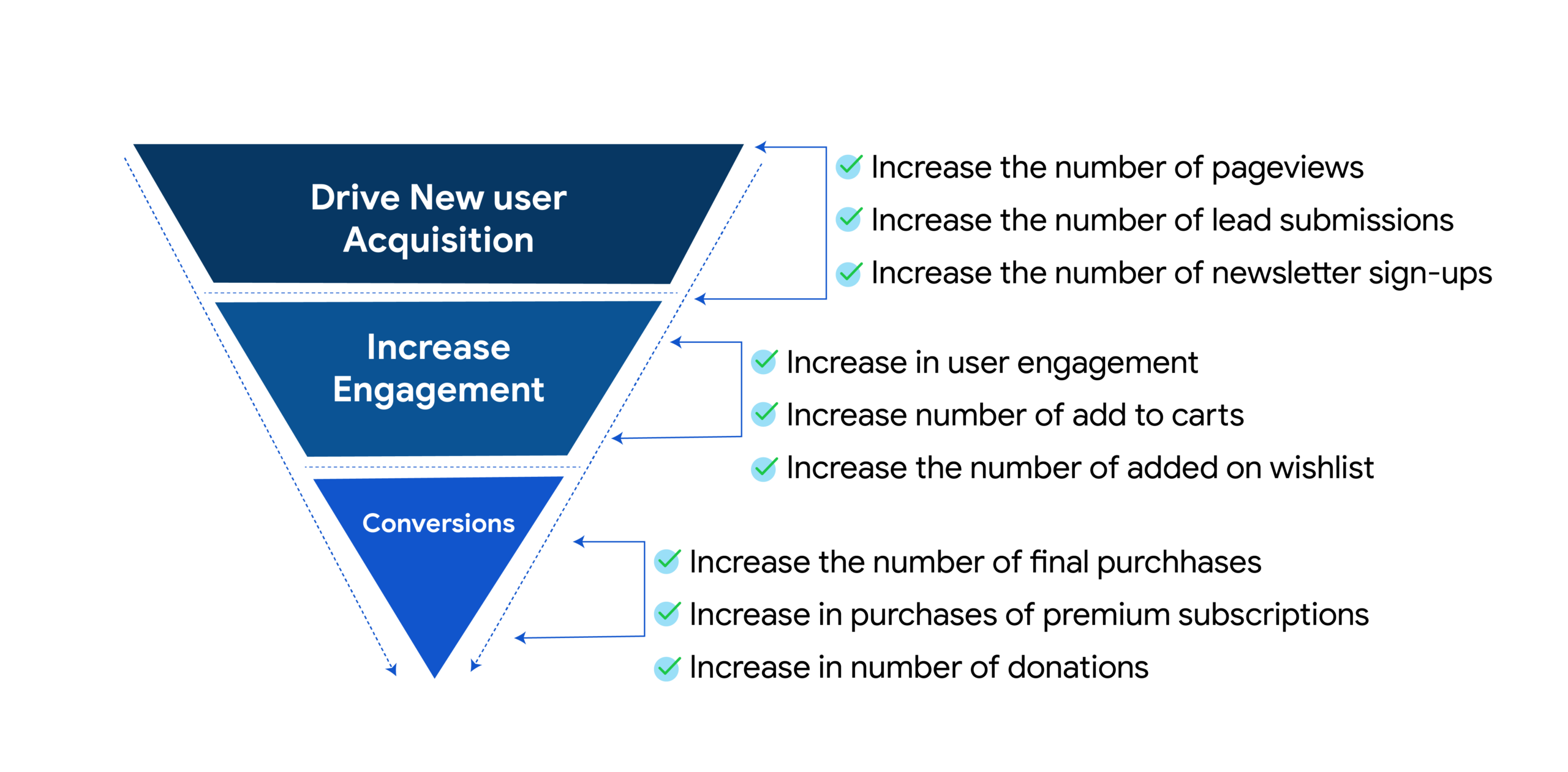
  • Check how the digital platform is persuading the user to reach the end objective.
Digital transformation here refers to upgrading traditional processes with advanced digital technologies, thus altering how a business operates, how value is delivered, and how customer needs are met in the end.

  • Identify the challenges or roadblocks faced by the user in the path of conversion.

Among these include cultural issues stemming from professional relationships, lack of real-time support for on-the-go interaction, incompetency in A/B testing, incorrect budget, lack of CRO knowledge, and need for better processes for CRO.

f. Follow a Strategic Structured CRO Approach

Optimizing the business website to ensure high conversion rates is one of the fundamental aspects of any marketing strategy. This is where a powerful conversion rate optimization (CRO) strategy comes in.

The underlying idea of any CRO process is to optimize the conversion rate, leading to improved conversions and high retention rates. A strategic and structured CRO approach aims to make the business sales process much more efficient, thus generating better revenues for the business.

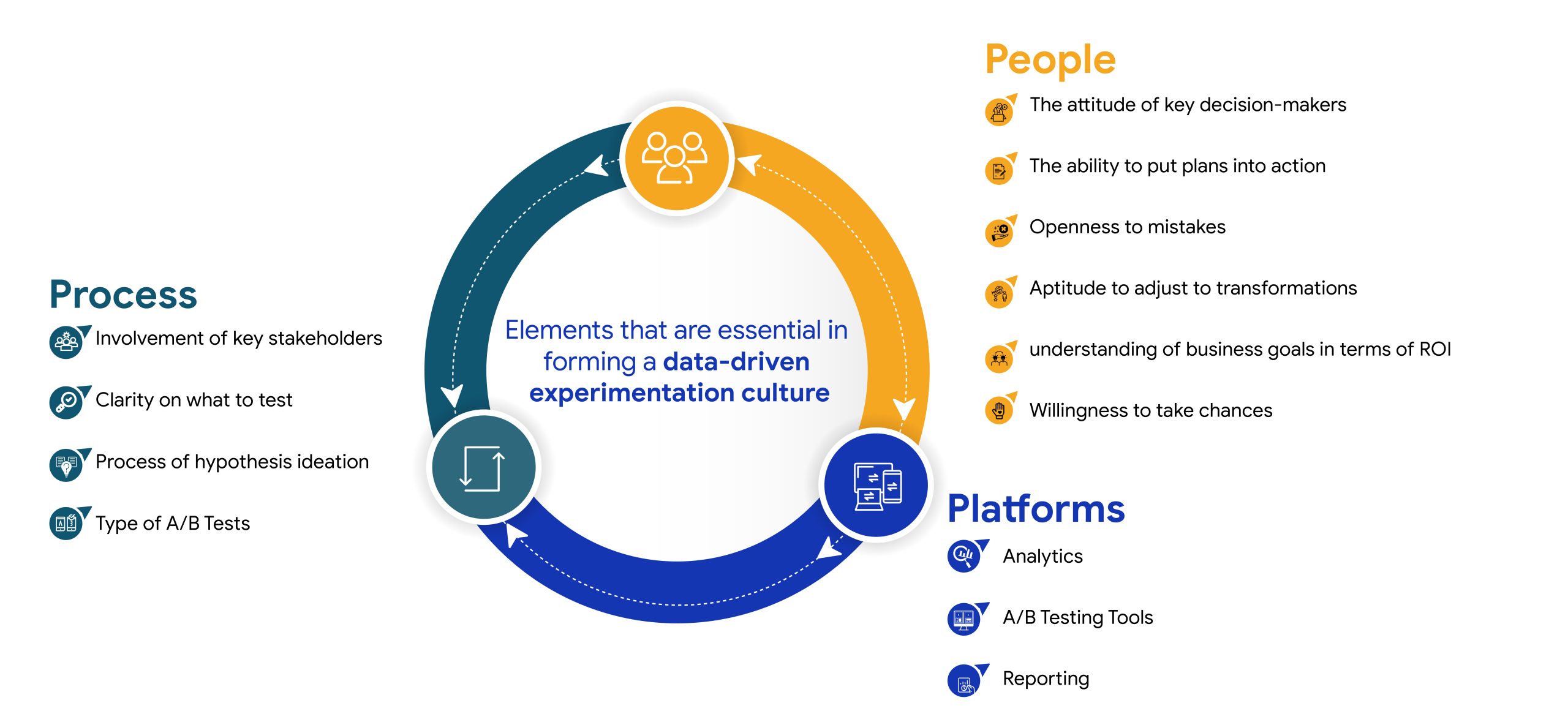
Elements that are essential in forming a data-driven experimentation culture ( Infographic )

To Conclude

If performed well, establishing a culture of data-driven experimentation allows businesses to assess and figure out what matters to most customers, within a defined timeline, for a limited cost, and with a risk-reward tradeoff that will work to their advantage in the long run.

Conversion Rate Optimization: Maximizing Your Website’s Untapped Potential

Do you struggle to convert visitors to customers on your website?

Do you want to improve the performance of your website and increase sales?

You might benefit greatly from conversion rate optimization services

CRO is the process of optimizing your website to increase your website performance in a way that led your website visitors to take the next action in your conversion funnel.

This article will look at everything you need to know about conversion rate optimization (CRO) services, including the basics, best practices, and advanced strategies. 

Whether you’re a beginner or an expert, this article will give you all the details you need to improve your website’s performance and drive more conversions. So, let’s dive in and start optimizing!

What is CRO (Conversion Rate Optimization)?

Conversion rate optimization (CRO) is a process through which businesses maximize their return on investment (ROI). CRO services help businesses to optimize their marketing efforts and spends.

CRO is a result-oriented approach to website optimization, which focuses on increasing the rate of website visitors to boost sales, increase customer count, etc. Businesses also consider CRO a key strategy to enhance marketing campaigns by better-targeting visitors with relevant content and enhancing the overall user experience. 

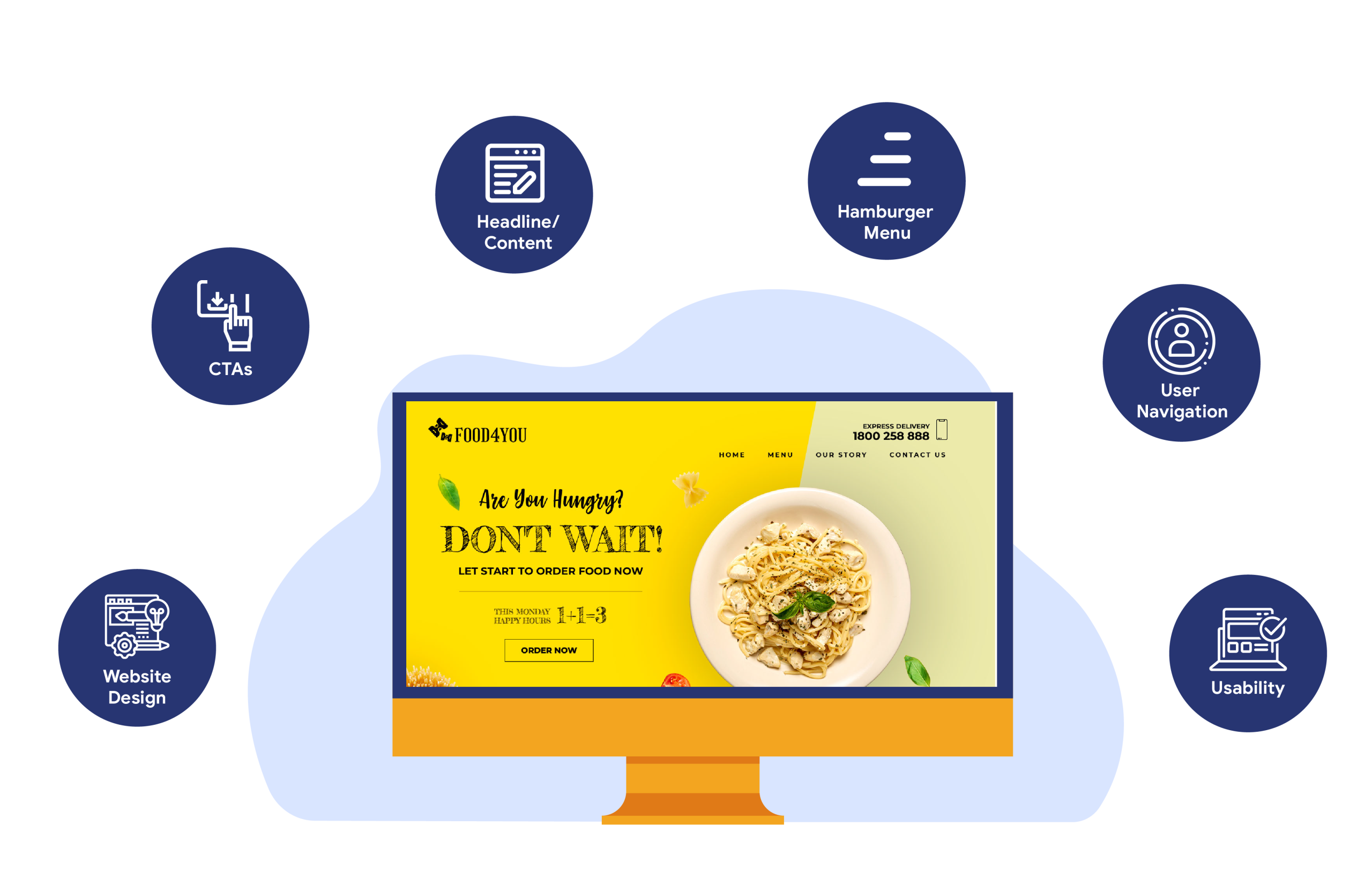
The conversion rate optimization goals for the website are accomplished by optimizing various website components, including the website design, content, the placements of “CTA” , user navigation and other factors like usability. Finally, this process can enhance the overall conversion rate, thereby increasing the business’s total return on investment (ROI).

Why is Conversion rate optimization important?

Conversion rate optimization (CRO) is integral to a successful digital marketing strategy. It involves everything from analyzing the behavior of website users and optimizing the website to improve the user experience and increase the conversion rate. This is highly important for small, medium, and large businesses as it can help increase the overall efficiency of digital marketing campaigns and the ROI.

CRO is mainly used to identify various sections for improvement, including the website design, layout, user experience, flow, etc. By optimizing these key components of the website, companies can make their digital marketing strategies effective and result-oriented. This also helps improve customer satisfaction to a large extent, resulting in a profitable customer base.

How do companies typically start with these conversion rate optimization activities?

Generally, companies start their Conversion rate optimization (CRO) journey by exploring their existing available data, such as website analytics, user behavior, surveys, and more. This data can provide invaluable insights into where users are having difficulty, their preferences and expectations, and any common patterns or issues observed. Armed with this data, companies can formulate hypotheses around what could be done to improve the user experience, increase engagement and ultimately convert more users into customers.

Using tools such as Google Analytics and Heatmap, a conversion rate optimization expert will collect relevant data on conversion funnel drop-offs and user behavior. Insights are then generated from these data points about the next course of action. 

Where do companies go wrong with their CRO initiative?

Unfortunately, a common issue companies often encounter when beginning their CRO journey is the lack of a concise strategy and action plan. Companies also fail to consider the nuances of their customer base and how their individual needs and preferences may impact their conversion rate. Additionally, companies may not have the resources to fully understand the underlying causes of their website’s poor performance, such as a lack of targeted traffic, low engagement, and inadequate website optimization or a failure to implement data analytics such as Google Analytics correctly which leads to inaccurate data tracking. Further, companies may neglect to conduct extensive A/B testing of their website.

What are the Benefits of Conversion Rate Optimization?

CRO is a vital tool company utilizes to boost their sales, increase customer engagement, and reduce advertising expenses. With the right conversion rate optimization strategy and planning, businesses can benefit to a large extent. Some of the benefits of CRO include:

1. Increased Revenue

One of the important benefits of using CRO for businesses of all sizes is that it can be largely used to increase revenue. To do this, companies need to strategically analyze a user journey through the website, right from signup to placing an order. They also need to identify the areas in the website which need significant improvement that can help to create an environment that encourages users to engage with a website in a way that leads to increased profits.

2. Improved User Experience

Conversion Rate Optimization (CRO) can help enhance the visitor experience on a website and within marketing campaigns, resulting in improved engagement and ultimately boosting conversions. Increasing engagement metrics can provide essential insight into the effectiveness of one’s campaigns and what drives users to take action.

3. Lower Advertising Costs

By bringing in a targeted audience on the website who have a high propensity to convert, the cost of advertising can be significantly reduced. Additionally, increasing the number of visitors that convert can dramatically improve the return on investment (ROI).

4. Increased Customer Loyalty

By optimizing the conversion rate, businesses can create an environment where customers have more opportunities to purchase products and services. CRO also helps to ensure that customers are getting the most out of their purchase and that the customer experience is satisfactory and enjoyable. Through CRO services, businesses can tailor their marketing strategies to a specific customer base, helping to create loyal customers that are more likely to make repeat purchases.

What is considered a good conversion rate?

There is no single universal measurement for a good conversion rate. What is considered an average conversion rate greatly varies from industry to industry and between campaigns and individual conversion goals. According to research, the average rate ranges globally from 1-4%.

How should it be ideally done?

A structured approach toward Conversion Rate Optimization will help digital marketing companies optimize and measure the success of their campaigns for better results.

1. Defining Goals

A structured approach is critical for success when optimizing conversion rates for digital marketing campaigns. Companies need to be able to identify their target goals and key performance indicators (KPIs) to measure their progress and understand what needs to be done to improve their results. The first step in the process is to determine which KPIs are important for the campaign. This will vary depending on the type of campaign and the desired outcome. For example, if the goal is to increase the number of leads generated, then the KPIs might be the number of website visitors, the number of emails sent, and the number of leads generated.

2. Auditing

A website audit is an important step in any CRO strategy. It enables the marketer to gain insights into how well the website performs in terms of user experience, content, search engine optimization, and other factors influencing conversions. By taking a closer look at the website, marketers can determine where improvement is needed and how to make those improvements.

3. Optimization

Several steps can be taken to optimize a website’s conversion rate, including conducting thorough research and analysis to identify areas of improvement, optimizing website design and layout, creating compelling and engaging content, improving website load times, simplifying the conversion process, and using A/B testing to assess the effectiveness of different strategies. It’s important to continuously monitor and evaluate the results of these efforts to ensure that the conversion rate improves over time.

Leverage Effective Conversion Rate Optimization Services

In conclusion, conversion rate optimization services are is critical to any digital marketing strategy. Following the tips and best practices outlined in this guide can significantly increase your website’s conversion rate, boost your ROI, and ultimately grow your business. Remember to continually monitor and analyze your website’s performance, test new strategies, and make data-driven decisions to stay ahead of the competition. With dedication, patience, and a willingness to learn from feedback, you can achieve the desired conversion rates and take your business to the next level.

MarTech Stack: What is it, and What are its Key Components in 2023?

MarTech, or marketing technology, refers to a whole new branch of marketing that involves the use of modern technology to improve overall marketing performance. It includes different software, hardware, and data used in aspects such as supporting, measuring, and analyzing marketing activities.

Put simply, MarTech is how today’s businesses use various marketing technologies together or in a stack to be able to deliver a more tailored, holistic, and integrated user experience.

A  MarTech stack has different complementary marketing applications and technologies that share data to make companies better equipped to run successful marketing campaigns.

In this blog, we explore the essential components of a marketing technology stack and how Tatvic - a one-stop MarTech agency - can help businesses build a winning MarTech strategy.

What are the Essential Components of a MarTech Stack in 2023?

As technology has evolved, there has been a rapid rise in the number of marketing tools available, making it challenging for businesses to choose the right tools. 

To help companies navigate this challenge better, we will discuss some of the essential components needed in a MarTech stack in 2023.

1. Chatbots 

The growth of AI-based chatbots in the past few years has been nothing short of phenomenal. Data suggests that businesses using AI-based bots increased leads by 50% and reduced customer call time by 60% to 70%.

The numbers clearly reflect how chatbots have become a very convenient way to track customer sentiments and how well they are engaging targeted customers.  

Today, customers want to interact with brands in real time, and chatbots offer an excellent way to make that communication immediate and efficient. Developed by using a set of rules and artificial intelligence, chatbots can be easily interacted with via a chat interface. 

Statistics also suggest that chatbots can be a great addition to companies’ MarTech stack, with more than 50% of users saying that being able to chat with a business increases their likelihood of buying from them. 

Overall, the key reason behind chatbots being a great MarTech tool is that they offer an opportunity for businesses to begin engaging with their customers in real time and can encourage them to make the first move as well.

2. Scale personalization with data-driven marketing

Data-driven marketing continues to play a key role in defining the success of marketing strategies. At its core, data-driven marketing is specific, customized, and very strategic to a business’s marketing efforts.

Data-driven marketing 

Below are some of the ways companies use data-driven personalization strategies to improve marketing efforts and overall customer engagement.

  • Know the audience segments well 

If businesses wish to strengthen their marketing efforts, they must make sure to know their audience segments well so they can cater to them in customized ways.

  • Gather all the data in one place 

Collating all the data in one place enables businesses to create cohesive customer experiences across channels and touchpoints. 

  • Understand buyer personas 

Companies must use various data points, such as past purchases, browsing history, content engagement, etc., to build more comprehensive buyer personas to reconnect with their audience and encourage them to take action at the right time.

How Tatvic Can Help?

Tatvic uses advanced segmentation models to connect the right viewer with the right content to increase the probability of the next action and hence the acquisition.

We gather all your marketing data into one place and garner relevant insights that directly impact your marketing spend; we do this by customizing your analytics implementation or using a data warehouse such as Google BigQuery.

 Our data scientists analyze the data, identify key patterns and trends, and define audience segments using the different options within the Google Marketing Platform. 

We can input custom definitions from other sources to help define audience types to personalize at scale. 

Once we have identified specific audiences, we can use the integration features in Google Analytics to share these audiences with advertising platforms such as Google Ads, Search Ads 360, Display & Video 360, and other Google and non-Google platforms.

 We can then test more personalized marketing campaigns, ensuring that we capture the right audience, in the right place, at the right time, and with the right messages.

3. Migration to the Cloud 

In simple terms, cloud migration refers to the process of moving different services and applications to the cloud. Migrating to the cloud is an excellent way to achieve higher business agility without having to worry about IT infrastructure management.

Moving all the data, workloads, or systems to the cloud can lead to several benefits for marketing initiatives, including:

  • Reduced IT costs 
  • Better scalability 
  • Easy disaster recovery 
  • Higher mobility 
  • More flexibility 
  • Enhanced  data security 
  • Better document control 

How Tatvic Can Help?

Being a certified premium partner of Google Cloud Services, Tatvic has been involved in many migration projects. In 2023, Tatvic is aiming to support more organizations to move to the cloud from their on-premises databases and servers.

4. CTV Devices and Ads

Recent data has revealed that more and more smart businesses are building CTV campaigns, with approximately 65% of marketing technology leaders also exploring or piloting technology to support CTV advertising.

But what exactly is CTV?

All broadcasted advertisements on television today can easily link to the internet. This kind of advertising is known as “connected TV” (CTV) advertising. CTV ​​enable marketers to communicate easily with their target audience through connected TVs and OTT devices. 

As other digital marketing channels are becoming more and more saturated, CTV ad campaigns can be instrumental in defining the success of your advertising strategy.

How Tatvic Can Help?

Tatvic’s data analytics expertise helps you determine the impact and ROI of CTV campaigns. By analyzing the data points related to viewability, completion rate, CTR, and conversion rate, Tatvic can provide insights into which aspects of the campaign are performing well and which areas need improvement.

With this data, Tatvic can also help optimize the campaign for the highest ROI. This may involve adjusting the targeting, creative, or placement of the ads and conducting A/B testing to determine which variations perform best.

You can make data-driven decisions to optimize your advertising strategy and drive a better result by leveraging data insights.

5. Email and SMS Marketing

Emails and SMSs offer an excellent opportunity for marketers to connect and engage with their consumers in new ways, using popular channels and devices that everyone’s already familiar with.

With emails and SMS, marketers have an interesting opportunity to interact with customers in more personal and relevant ways and help improve the customer experience and marketing ROI in the long run.

In Conclusion 

The MarTech or marketing technology landscape is rapidly changing today, with a variety of tools and technologies emerging every single day.

Adding the above-mentioned components to your MarTech stack ensures that it supports the right data, marketing campaigns, and overall business objectives, which are critical for success.  

If you’re looking for a powerful marketing technology stack for your campaigns this year, partner with Tatvic, a well-known MarTech agency with extensive experience in the field.

As a leading full-stack Google Partner having capabilities in Google Marketing Platforms, Google Ads, and Google Cloud Platforms, Tatvic can help you efficiently navigate all your MarTech needs. Reach out to us to know more. 

TV Ads Analysis: Measure Second Screen Impact with Google Analytics


Need for TV ad analysis for advertising & marketing in today’s data-driven world

Before we move on to understand the concept and working of TV ad analysis let us consider the scenario and need of having a data driven solution like TV Ad analysis.

The digital world has drastically leveled up. Plenty of different strategies are executed for effective marketing that helps reaching  out to the end customers for an increased conversion rate. At the same time, owing to multiple touch points, the user behavior is more diversified than ever. A lot of digital businesses across domains like ecommerce, lead generations and digital publishing strives to break the silo format of the data that they receive pertaining to how their users are interacting with them. 

So, if you as a marketer, ask a question - “What are the impacts of my marketing efforts?” You’ll get an insight into your paid campaigns, search traffic, your email marketing campaigns as well as your social campaigns. Data across digital touchpoints like the website, mobile apps, kiosks, etc has become quick-to-implement and easy-to - access. But what if your marketing strategy is not purely digital? What about the offline media like your TV ads? When such a medium falls into the mix, it gets complicated to identify campaigns’ performance in terms of ROI and outreach?

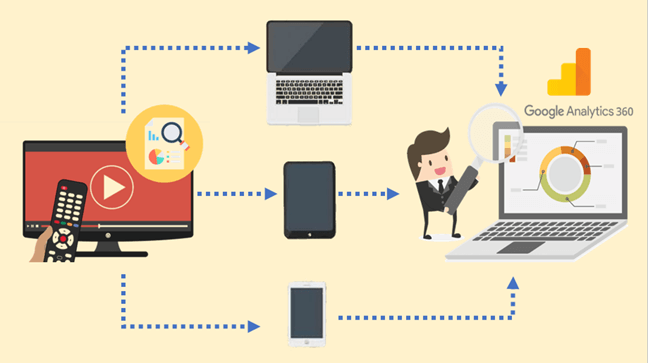
In today’s fast-evolving digital era, where you have the power to measure everything, this gap should be treated as an opportunity to understand the interplay and relationship between your online and offline marketing activities. In this blog post, I am going to talk about how you can measure the impact of your “Second Screen Impact Analysis” or to simply put up- analysing the impact of TV advertisements on your online traffic. You can plot this data against your other online campaigns to drive greater results.

Let’s dive into why’ we need TV ad analysis and how do we measure the impact of the online traffic driven due to these TV ads?

Advertising in India :

Based on a recent market research, more than 85% users are on their mobile phones while watching TV. One of the leading media agencies, GroupM, elaborates that though the digital advertising will increase at its highest rate ever in 2017, TV ads are here to dominate as a highly preferable medium for marketing.


GroupM Estimates TV ads to hold their dominance in marketing


When planning your annual or semi-annual marketing budget, especially for TV ads, wouldn’t it be just the ideal scenario, if you could take data-backed decisions on the level of investments you commit across the big buckets of TV channels? The TV Ad Analysis tool helps you determine your market spendings for a certain set of channels, how much ROI can you expect and also follow-up with the impact your TV ad campaigns have been able to create.

Objective of TV Ad Analysis

To assess the impact of ad spots on target demographics & provide recommendations for ad spots yielding maximum impact.

Prerequisite:

  1. Google Analytics 360 and BigQuery account set up with at least 3 months of data
  2. TV Ad Report with ad slot timing, channel, channel spend, channel gross reach, ad duration, channel geography

Benefits:

   1. Measure Effectiveness of Your TV Ad Cost

TV Ad Analysis identifies the sweet-spots and weak performers down to the level of the channels, name of the program as well as the program category

   2. TV Ad Cost Optimization

You can derive focused recommendations for increasing effectiveness of TV Ad Spends and ration the non-performing spots.

   3. Estimate the Impact

With the help of this analysis, you shall be able to quantify the effectiveness of each TV ad-spot spend based on the impact on acquisition metrics.

TV Ad Analysis Report


a. This report provides us with insights on those channels that are more effective in terms of spends and acquiring the traffic.

b. It also helps to decide the channels where we need to increase or  decrease the spends.


  • %Visit Channel wise
Channel-wise analysis


a. The above report shows which are the most effective timings along with best preferred channel to show our ads.

  • %Visit Region wise - Program Category wise
Region-wise report


Concluding:

Since there is huge money involved in TV advertisement it is important to understand the impact of such offline marketing on our websites online traffic. This will augment in decision making for the marketing strategies like which channel, what time slot and what cost should we put in to get the valuable traffic and increase our ROI.

Tatvic has developed a similar solution. Click here to read more about the TV Ad analysis.

Bot Icon
Bot Icon

Tatvic Bot

Explore About Tatvic and Services