Hello There!

Lorem ipsum dolor sit amet, consectetur adipiscing elit,

The Missing Link in GA4 Data Integrity: AI-Powered GTM Health Checker

AI-Powered GTM Health Checker

You validated every tag. Your GA4 dashboard looks clean. Yet, something feels off. The data doesn’t quite add up - and you can’t figure out why.

Most businesses think validating GA4 is enough. They run periodic checks, review their reports, and assume their measurement foundation is solid. But here’s what they’re missing: GA4 data integrity actually starts before data is even collected - inside your Google Tag Manager.

Your GTM container is the foundation of everything. When it’s compromised, every downstream validation effort becomes meaningless. Even perfect GA4 setups can’t compensate for a broken GTM foundation. This is where automated data quality checks become essential - and where understanding container health monitoring transforms how organizations maintain measurement integrity.

If you missed Part 1 of this series on fixing GA4 data corruption at the source, you can read it here: From Broken Signals to Trusted Insights: How Agentic AI Secures Data Collection

Why GTM Health Is Critical for Accurate Data

Google Tag Manager is the control center of your data collection. It determines when tags fire, what information gets passed along, and how your tracking codes interact across your digital properties. When GTM is healthy, it’s incredibly powerful. When it’s not, it silently sabotages your data quality.

Think of your GTM container like a car. When it’s new, everything runs smoothly. But without regular maintenance, small issues compound. The engine gets less efficient, parts wear down, and one day you’re stranded, wondering why you didn’t catch the warning signs earlier.

The cascading failures caused by poor GTM container health:

  • Marketing teams allocate millions based on incomplete tracking
  • Analytics teams waste hours troubleshooting mysterious data gaps
  • Websites load slowly because of bloated tag setups
  • Compliance teams face regulatory risks from misconfigured tracking

What starts as a simple container with a dozen tags evolves into a complex ecosystem with hundreds of elements. Without continuous data monitoring, problems multiply silently while you’re completely unaware. By the time issues surface in your reports, weeks of corrupted data have already influenced business decisions.

Common GTM Health Issues That Undermine Data Quality

Let’s explore the most common problems that silently destroy your data quality automation efforts.

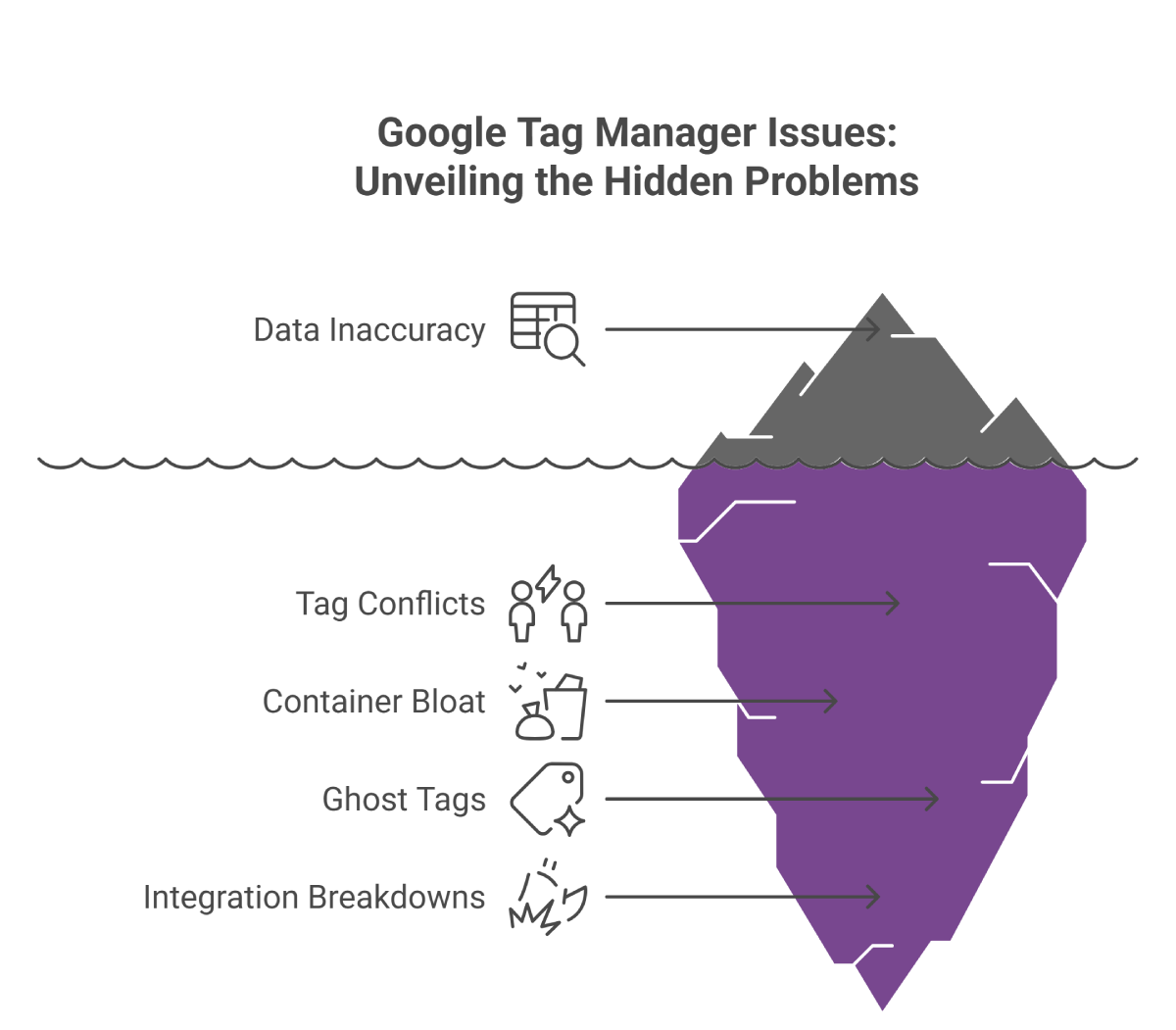
Tag Conflicts

Imagine two people trying to squeeze through the same doorway simultaneously. That’s what happens with tag conflicts in GTM. Multiple tags fire at the same time or in the wrong order, interfering with each other.

Consider this scenario: Your e-commerce conversion tag fires before product data loads. Transactions get recorded, but you have no idea which products drove revenue. Your merchandising analytics become useless.

These conflicts emerge gradually as containers grow. Regular Google Tag Manager audit processes become critical for catching these issues before they snowball.

Ghost Tags

“Ghost tags” are perhaps the most common issue discovered when auditing Google Tag Manager containers. These are tags created for specific campaigns or tests that should have been removed - but weren’t.

The issue: These abandoned tags keep firing indefinitely. They collect data nobody uses, sometimes break newer implementations, and always add unnecessary weight to your container. Teams often have zero visibility into which tags serve a purpose and which are digital deadweight.

Container Bloat

Over time, GTM containers accumulate digital clutter. Old campaign tags, unused tracking codes, forgotten configurations - they all pile up.

The impact: Every unnecessary tag slows your website. Users don’t wait for slow pages - they bounce. Higher bounce rates mean less data collected, undermining the very analytics you’re trying to improve. Without automated data quality management, this bloat keeps growing unchecked.

Integration Breakdowns

Your GTM container must connect properly with GA4, advertising platforms, and other tools. When these connections break or get misconfigured, you develop measurement blind spots.

Without continuous GTM container health monitoring, these failures go undetected for weeks or months. By the time someone notices something looks off, corrupted data has already influenced major decisions.

If GTM clutter, tag conflicts, or ghost tags sound familiar, this guide on automated audits will help. Read: AI-Powered Tag Auditor
Why Manual GTM Audits Fall Short

Most organizations handle GTM maintenance through periodic manual audits - maybe quarterly if they’re disciplined, maybe just when something breaks. A specialist reviews the container, tests some tags, documents issues.

The fundamental limitations:

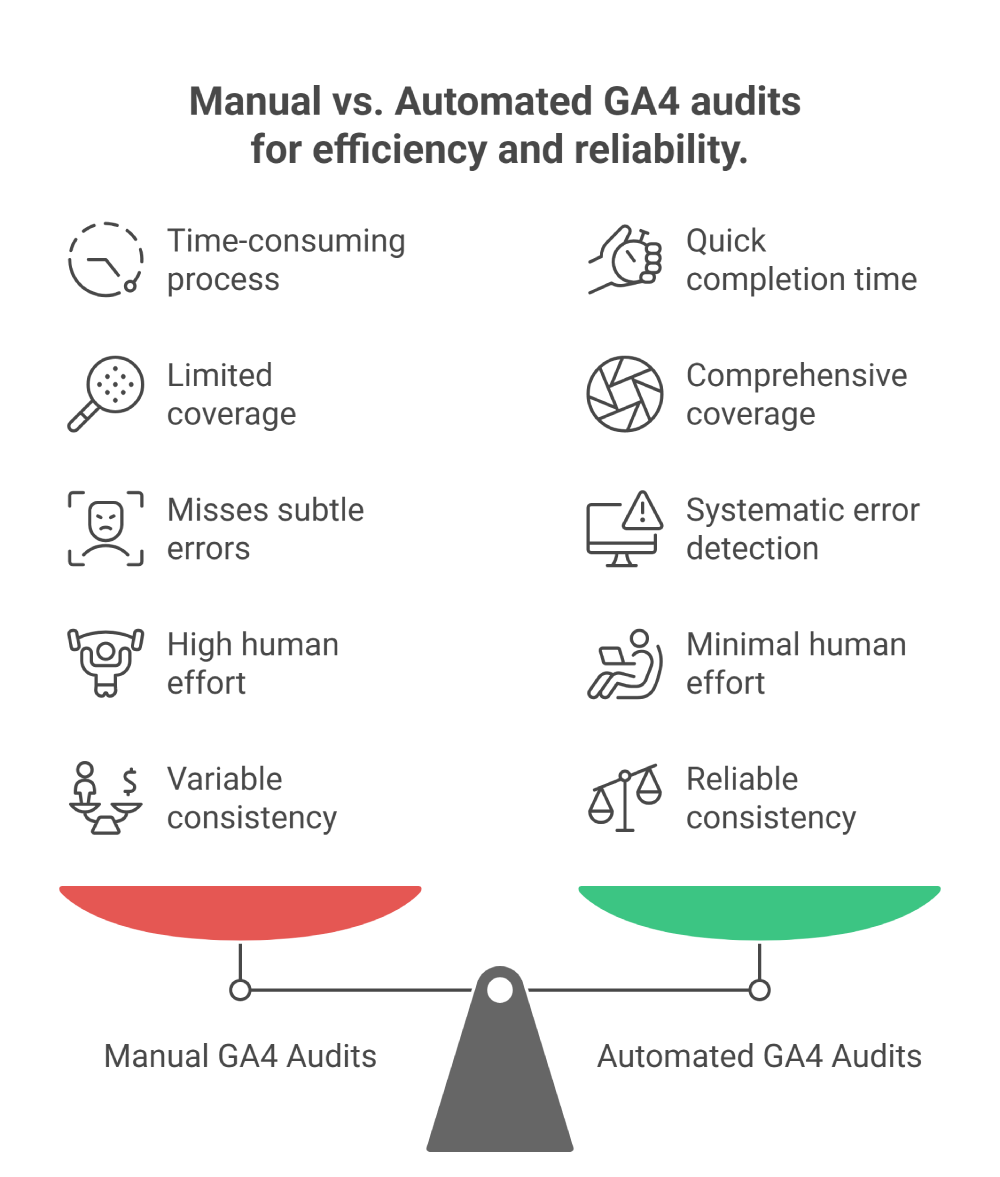
  • You Can’t Check Everything: Even thorough manual reviews barely scratch the surface. Manual processes typically examine less than 5% of potential issues. You’re operating blind on 95% of your container.
  • You’re Always Playing Catch-Up: Manual audits show what was wrong last week. By the time you finish documenting and fixing issues, new problems have emerged. You’re perpetually behind.
  • It Depends on Who’s Checking: Audit quality varies significantly. Different specialists can reach completely different conclusions about identical containers. This inconsistency undermines your data quality automation strategy.
  • It Consumes Valuable Time: Manual Google Tag Manager audit processes consume days of specialist time-time that could be spent on strategic improvements instead of hunting for problems.

Moreover, manual approaches provide no continuous data monitoring. You get a snapshot of a moment in time, not ongoing visibility. Modern businesses can’t operate on quarterly check-ups when campaigns launch daily and tracking requirements change constantly.

Manual audits weren’t built for the pace of modern marketing. Here’s a smarter way to maintain accuracy 24/7. Read: Beyond Manual Checks: How Data Sanity Automation Protects GA4 Integrity

Understanding AI-Powered GTM Health Monitoring

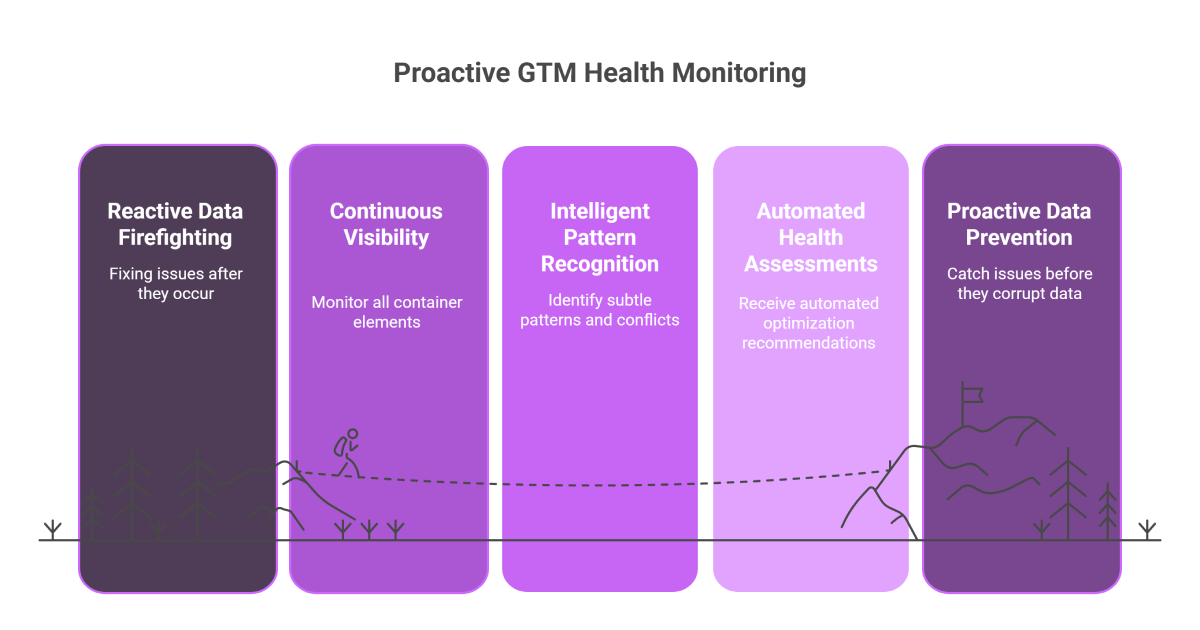
What if you could examine every element of your GTM container continuously - identifying issues before they corrupt your data? That’s the fundamental question driving modern approaches to container health management.

AI-powered health monitoring represents a shift from periodic audits to continuous intelligence. Rather than checking a fraction of your container occasionally, these systems examine everything constantly - learning patterns, identifying anomalies, and flagging potential issues before they impact data collection.

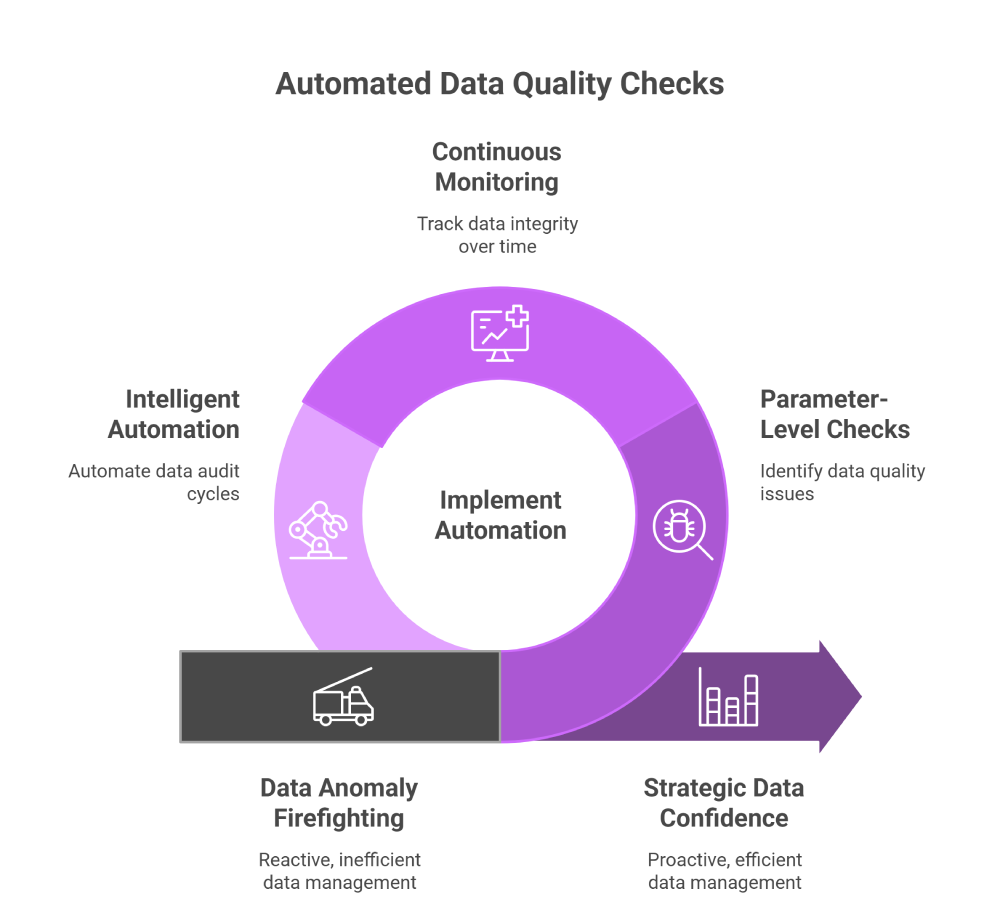
The underlying principle: Prevention beats remediation. Understanding container health in real-time enables proactive maintenance rather than reactive firefighting.

Assess your current GTM health and uncover hidden issues, we can walk you through it → Book a free consultation

1. Complete Container Visibility

Modern monitoring systems examine every element continuously - every tag, trigger, variable, and connection. Unlike manual processes that sample configurations, automated data quality checks achieve 100% coverage.

What continuous monitoring reveals:

  • All tags and their firing status in real-time
  • Potential conflicts between tags before they cause problems
  • Container size and its performance impact
  • Unused elements cluttering your setup
  • Connections to downstream platforms
  • Overall GTM container health metrics

Nothing slips through the cracks. You gain complete visibility that manual Google Tag Manager audit processes simply cannot match.

2. Intelligent Pattern Recognition

Advanced systems don’t just flag obvious errors - they identify subtle patterns that indicate emerging problems. By analyzing how tags interact, when they fire, and what data they pass, these systems detect conflicts before they cause measurement failures.

For instance, the system might notice that a new tag’s firing pattern overlaps with existing tags in ways that could create race conditions. Rather than waiting for data corruption to surface in reports, you receive early warnings about potential issues.

This proactive approach prevents measurement failures rather than documenting them after damage occurs. That’s data quality automation at its most effective - catching problems before they become problems.

3. Automated Health Assessments

Instead of manual spreadsheet reviews, modern systems provide automated health assessments. They identify ghost tags and unused elements, calculate container efficiency metrics, and recommend specific optimizations.

It’s analogous to having continuous code review for your measurement infrastructure - systematic evaluation that catches issues human reviewers might miss. Your container stays lean and performant without constant manual effort.

4. Real-Time Integration Monitoring

The system continuously validates connections between GTM and all downstream platforms. If a connection breaks or degrades, you know immediately - not weeks later when numbers look unusual.

This continuous monitoring ensures your tag management optimization efforts actually deliver results rather than creating new blind spots.
The Business Impact

Organizations implementing AI-powered solutions to automate data quality experience measurable improvements across operations.

1. Shift From Reactive to Proactive

GTM audit processes that previously consumed 6-8 hours now complete automatically in minutes. More importantly, the shift from periodic audits to continuous monitoring fundamentally changes how teams approach container health. Specialists work on what actually moves the needle - strategy, optimization, growth initiatives.

2. Earlier Issue Detection

Automated data quality checks catch issues before they impact collection. Problems get resolved during scheduled maintenance rather than emergency sessions. You shift from reactive firefighting to proactive prevention - maintaining GA4 data integrity without constant crisis management.

3. Measurable Performance Improvements

Optimized containers mean faster page loads and better user experiences. Organizations see measurable Core Web Vitals improvements after implementing systematic cleanup. Users stay longer, convert more often, and provide more behavioral data.

4. Continuous Compliance Monitoring

Automated monitoring helps ensure tracking complies with evolving privacy regulations. You can quickly identify and address potential compliance issues before they become legal problems. This automated data quality management provides ongoing compliance visibility without constant manual oversight.

The 5-Pillar Measurement Excellence Framework

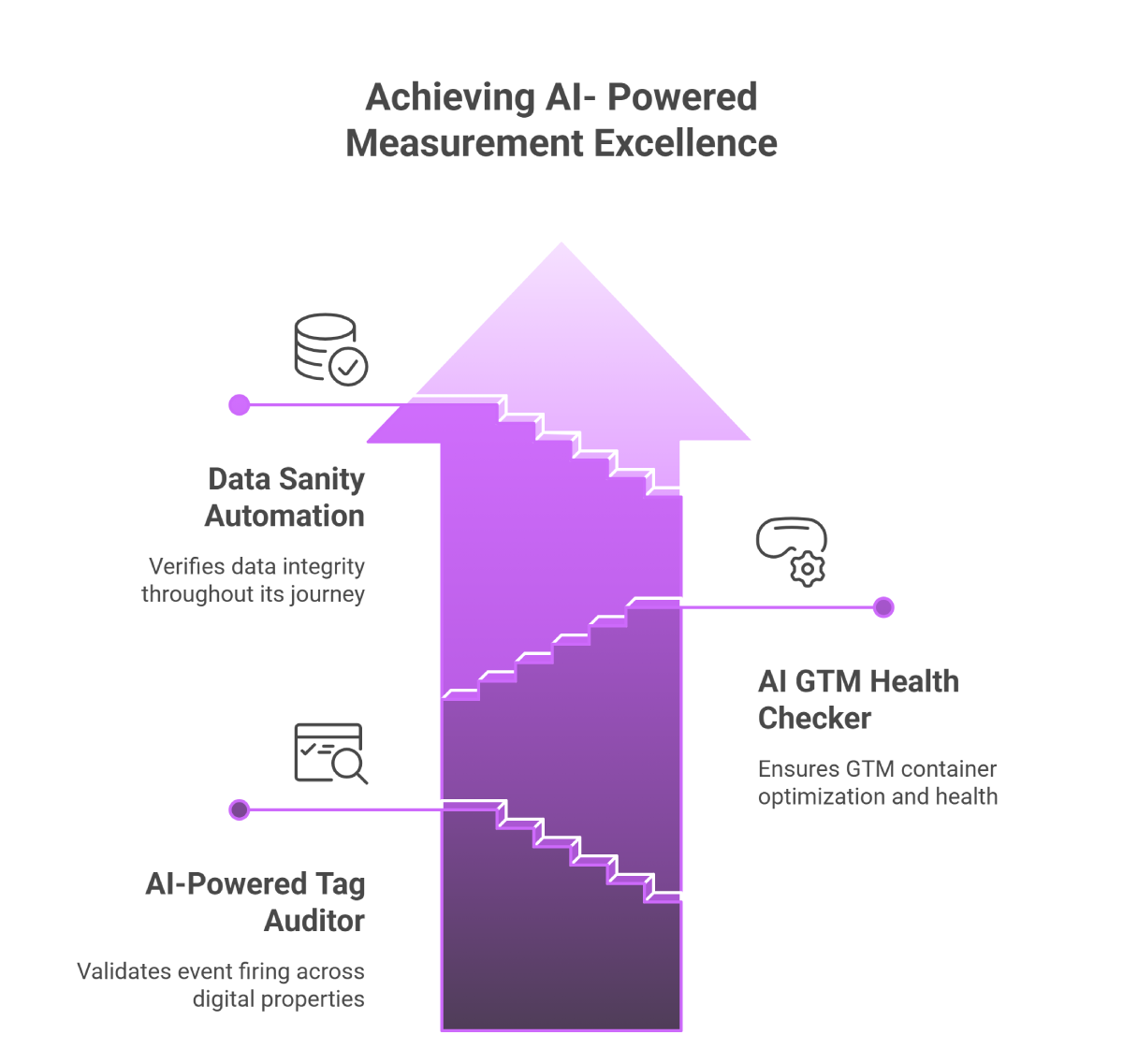
The complete picture of tag management optimization becomes clear through a comprehensive five-pillar approach:

Pillar 1: AI-Powered Tag Auditor validates events fire correctly across your properties, confirming implementation quality in real-world conditions.

Pillar 2: AI-Powered GTM Health Checker ensures your container is optimized at the source, maintaining GTM container health continuously.

Pillar 3: Data Sanity Automation verifies data maintains integrity throughout its journey into GA4, ensuring what lands in reports is trustworthy.

Pillars 4 & 5: Two additional elements complete the framework, addressing advanced aspects of analytics infrastructure and continuous optimization.

Together, these create comprehensive protection for data integrity - from configuration through collection to validation. This integrated approach represents a fundamental shift. Instead of waiting for problems, you continuously monitor health at every stage and catch issues before they cause damage.
Your Path Forward

The evolution of Google Tag Manager audit processes points toward automation, intelligence, and continuity. Organizations adopting these approaches gain measurable advantages - faster websites that convert better, more reliable tracking that supports evidence-based decisions, and greater confidence in measurement foundations.

Manual audits will always have coverage gaps. Reactive troubleshooting will always cost more than proactive prevention. The question isn’t whether GTM health issues exist in your container - they likely do.

The real question: Will you discover and address them before they compromise your data quality and impact business decisions?

Take the first step toward measurement excellence. Schedule a Free Consultation and Explore AI-Powered GTM Health Checker

Understanding your container’s actual health state, rather than assuming it’s fine - represents the first step toward building truly reliable measurement infrastructure.

Beyond Manual Checks: How Data Sanity Automation Protects GA4 Integrity

From Tag Accuracy to Data Accuracy

In our comprehensive exploration of the AI-Powered Tag Auditor, we uncovered a foundational truth: making sure events fire correctly at the source is absolutely crucial for reliable measurement. When tags are properly validated and firing as intended across your websites and applications, many organizations breathe a sigh of relief, thinking their data integrity challenge is finally solved.

Why Perfect Tagging Isn’t Enough?

But here’s the thing - the story doesn’t end with successful tag firing. Even with perfect tagging implementation, your data can lose its integrity during that complex journey into GA4. Parameters can get corrupted during transmission. Critical fields may default to ‘not set’ values. Compliance violations can slip through unnoticed. Gradual data drift erodes accuracy over time..

This is precisely where data sanity automation becomes not just useful, but absolutely essential - fundamentally transforming how organizations approach data integrity in GA4. 

  • Tag Auditor protects data quality at the point of collection,
  • Data sanity automation ensures that what ultimately lands in GA4 remains trustworthy, complete, and ready to support those business-critical decisions you’re making every day.

Why Manual Data Checks Fall Short

The traditional approach to ensuring data accuracy in analytics has long relied on manual validation processes. You know the drill - data analysts regularly extract samples from GA4 reports, manually review parameters across different events, scan for obvious anomalies, and document their findings in spreadsheets for stakeholder review.

This approach worked well when ecosystems were simpler. However, in today’s complex measurement landscape, manual GA4 data audit processes create fundamental limitations that compromise data reliability.

The core bottlenecks are systemic and costly:

  • Limited Scope and Coverage: Manual checks only scratch the surface. Even the most experienced analysts can review a handful of parameters, leaving the rest unchecked. When your organization tracks hundreds of events with dozens of parameters each, manual sampling becomes woefully inadequate for comprehensive automated data quality checks.
  • Human Error and Inconsistency: Different analysts may interpret the same data differently, leading to inconsistent assessments of data health. What one person flags as problematic through parameter-level checks, another might overlook entirely, creating gaps in event schema validation.
  • Resource Drain Without Guarantees: Hours spent on repetitive manual processes still provide no guarantee of catching critical issues across complex data structures, making it impossible to ensure consistent data accuracy in analytics.
  • Detection Delays: By the time issues are manually discovered and documented, weeks of potentially corrupted data have already influenced your dashboards, reports, and business decisions, undermining data integrity in GA4.
The outcome? Wasted time, missed insights, and declining confidence in the data foundation that’s supposed to drive growth.


The Hidden Errors That Distort Your Decisions

Real-world GA4 data audit findings reveal common patterns that directly undermine business intelligence and decision-making accuracy. These issues represent systemic challenges across industries that effective data sanity automation can prevent:

  • Currency and Revenue Distortions: E-commerce implementations frequently suffer from currency mismatches where revenue reports display “not set” values or incorrect currency codes. This breaks ROAS calculations, distorts international performance comparisons, and leads to misallocated advertising budgets across markets. Without proper automated data quality checks, these errors compound over time.
  • Product Data Inconsistencies: Truncated or inconsistent item names in product tracking create false signals in merchandising analytics. When event schema validation processes fail to catch these naming issues, inventory decisions, promotional strategies, and product development priorities become based on flawed intelligence rather than accurate customer behavior data.
  • Event-Level Accuracy Gaps: Funnel analysis becomes unreliable when different events show dramatically different accuracy rates. For instance, when add-to-cart events register only 60% accuracy while checkout events show 100% completion, conversion optimization efforts target the wrong bottlenecks entirely, wasting resources and missing real opportunities.
  • Attribution Model Failures: Missing or corrupted client IDs and user identifiers fundamentally compromise attribution modeling capabilities. Without systematic parameter-level checks, customer journey analysis becomes guesswork rather than science, undermining personalization and retargeting efforts.
  • Compliance and Privacy Violations: PII data accidentally captured in event parameters creates significant regulatory risk that manual reviews often miss due to their limited scope and inconsistent application.

These aren’t minor technical glitches - they represent systematic failures in data integrity in GA4 that directly distort business-critical reporting and strategic decision-making processes.

Learn how Agentic AI secures data collection and builds a reliable measurement foundation in our detailed guide - From Broken Signals to Trusted Insights

Poor data quality costs organizations an average of 15-25% of their operating budget, with some reporting losses as high as $15 million annually due to data quality issues.

Enter Data Sanity Automation: Always-On Accuracy

Tatvic’s data sanity automation solution transforms this entire paradigm through comprehensive, intelligent validation that operates continuously rather than periodically, ensuring consistent data accuracy in analytics.

The system fundamentally differs from manual approaches through several key innovations:

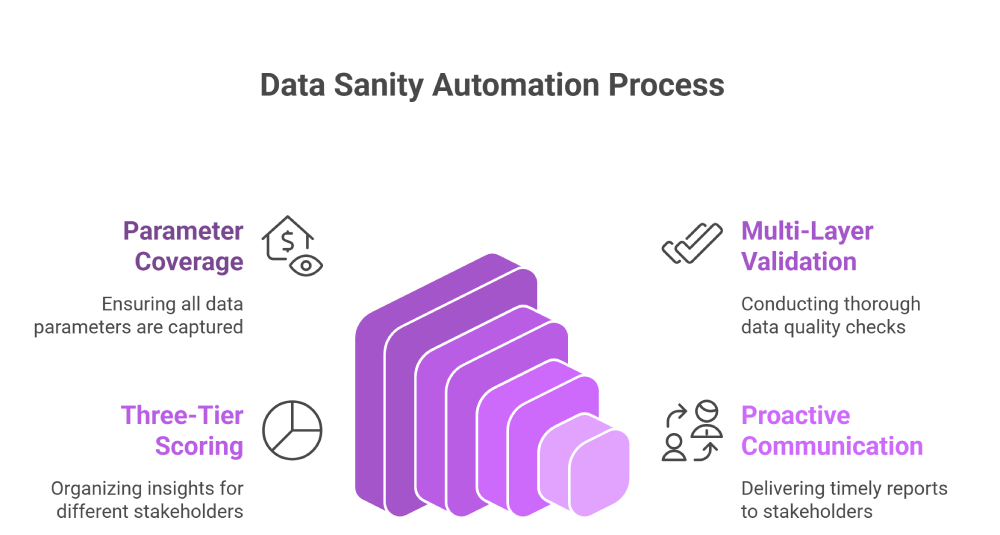
  1. Complete Parameter Coverage: Unlike manual sampling that can only check a fraction of available data, the system leverages GA4 APIs to capture and examine every parameter across all events simultaneously. This comprehensive approach eliminates the blind spots that plague traditional GA4 data audit methods.
  2. Sophisticated Multi-Layer Validation: The system runs intelligent automated data quality checks including currency code verification, product naming consistency analysis, parameter completeness assessment, invalid character detection, PII identification, and data drift monitoring across time periods.
  3. Intelligent Three-Tier Scoring Framework: Results are organized into actionable intelligence layers:
  • Overall data integrity scores providing executive-level visibility into complete data health
  • Event-level reliability metrics enabling tactical prioritization of fixes through systematic event schema validation
  • Parameter-level checks delivering technical teams specific resolution guidance for immediate action

4. Proactive Stakeholder Communication: Rather than relying on manual documentation and delayed                 reporting, the system generates detailed automated reporting for GA4 that reaches relevant stakeholders                   immediately, enabling rapid response to data quality issues before they impact business decisions.

This AI-powered data audit approach transforms continuous data monitoring from an aspiration into an operational reality, ensuring data integrity in GA4 becomes a competitive advantage rather than a constant concern.

Data Sanity Automation Impact Across Teams

For Data Analysts: From Firefighting to Strategic Analysis

Data sanity automation fundamentally transforms the analyst experience by eliminating the tedious, repetitive work that currently consumes a large portion of their time.

  • Dramatically Reduced Manual Work: Hours of sampling, checking, and documenting now happen automatically in minutes.
  • Faster Issue Resolution: Real-time alerts with parameter-level guidance cut investigation time from days to hours.
  • Enhanced Analytical Confidence: Analysts can trust their insights because data validation runs continuously in the background.
  • Strategic Value Creation: Freed from repetitive validation tasks, analysts can now prioritize advanced analysis and predictive modeling

For Marketing Managers: Accurate Insights Drive Better Decisions

Marketing teams gain immediate operational advantages that directly impact campaign performance and budget allocation.

  • Accurate Campaign Reporting: Real-time checks ensure conversions, attribution, and ROAS reflect actual performance, not guesswork.
  • Smarter Budget Allocation Decisions: Continuous validation directs spend to channels that truly perform, not just those that look good on paper.
  • Faster Campaign Optimization: Detect issues instantly and pivot strategies quickly to keep campaigns on track.
  • Compliance Peace of Mind: Automated privacy and PII checks help marketing stay compliant compliant with GDPR, CCPA, and other regulations without requiring constant manual oversight.

For Executives and CDOs: Strategic Confidence at Scale

Leadership gains the strategic advantages necessary for bold decision-making and competitive positioning:

  • Strategic Decision Confidence: Make high-stakes decisions quickly, knowing your data is continuously validated and reliable. Eliminating hesitation in major strategic decisions.
  • Faster Go-to-Market Execution: Launch products and enter new markets with confidence, without waiting for manual checks. 
  • Competitive Advantage Through Speed: Automated data integrity lets your organization act faster on opportunities, leaving competitors tied down by slow, error-prone validation.
  • Risk Mitigation and Governance: Continuous monitoring provides peace of mind with regulatory compliance, accurate reporting, and governance - all without the extra effort.

Critical Business Risks of Manual Gaps

When automated data quality checks fail or remain incomplete, the business consequences extend far beyond technical inconvenience:

Campaign Performance Distortion: Inaccurate conversion tracking leads to misallocated advertising spend, with budgets flowing toward underperforming channels while high-value opportunities remain underfunded. Without reliable data sanity automation, marketing teams operate on false signals.

Revenue Forecasting Errors: When GA4 data audit processes miss revenue reporting inconsistencies, financial planning, investor communications, and strategic resource allocation decisions become based on fundamentally flawed assumptions that can impact company valuation and growth projections.

Attribution Model Breakdown: Poor data accuracy in analytics makes it impossible to understand true customer journeys, leading to suboptimal experience design, missed retention opportunities, and ineffective personalization strategies that reduce customer lifetime value.

Compliance and Risk Exposure: Manual event schema validation processes often miss PII violations or other regulatory issues that could result in significant legal and financial consequences, particularly under GDPR, CCPA, and other privacy regulations.

With comprehensive data sanity automation, these risks transform into opportunities. Decisions become backed by data you can trust, operations scale confidently, and teams can act on insights in real time rather than questioning their validity.

The Measurable Business Impact: From Firefighting to Strategic Advantage

Organizations implementing systematic automated data quality checks typically experience transformational improvements across multiple operational and strategic dimensions:

  1. Dramatic Accuracy Improvements: Data accuracy in analytics commonly improves from approximately 70% baseline levels to 95%+ following systematic issue identification and resolution guided by comprehensive parameter-level checks and continuous data monitoring.
  2. Operational Efficiency Revolution: GA4 data audit cycles that previously consumed 4-6 hours of skilled analyst time now complete in minutes through intelligent automation, freeing valuable human resources for strategic analysis, optimization work, and growth initiatives.
  3. Cultural and Operational Transformation: Teams fundamentally shift from reactive firefighting of data anomalies to proactive scaling of campaigns and initiatives with complete confidence in their measurement foundation and data integrity in GA4.
  4. Strategic Decision Velocity: Leadership gains the confidence to make bold, rapid decisions because continuous data monitoring through AI-powered data audit systems ensures that insights reflect reality rather than measurement artifacts or data corruption.
  5. Competitive Market Positioning: Organizations with reliable automated reporting for GA4 can respond to market opportunities faster than competitors still struggling with manual validation processes and unreliable data foundations.

The transformation extends beyond operational efficiency - data sanity automation converts analytics from an organizational liability into a genuine growth lever and sustainable competitive differentiator.

The Future of GA4 Measurement & Intelligent Automation

As we look toward the next evolution of measurement infrastructure, data sanity automation represents just the beginning of what’s possible when AI meets analytics:

AI-Driven Anomaly Detection

The next generation of data sanity automation will leverage machine learning to identify subtle patterns and anomalies that even comprehensive rule-based systems might miss. These intelligent systems will:

  • Learn Normal Patterns: AI algorithms will establish baseline patterns for each organization’s unique data ecosystem, making anomaly detection more precise and reducing false positives
  • Predict Data Quality Issues: By analyzing historical patterns, AI systems will predict potential data integrity problems before they occur, enabling proactive rather than reactive data management
  • Contextual Intelligence: Advanced AI will understand business context, seasonal patterns, and campaign cycles to distinguish between legitimate data changes and genuine quality issues

Predictive Insights for Campaign Optimization

Future measurement systems will extend beyond validation to provide predictive intelligence that directly drives performance improvements:

  • Performance Forecasting: AI-powered systems will analyze data quality trends alongside performance metrics to predict campaign outcomes and recommend optimization strategies
  • Attribution Optimization: Machine learning algorithms will continuously refine attribution models based on validated data patterns, improving the accuracy of customer journey analysis and budget allocation decisions
  • Real-Time Campaign Adjustments: Intelligent automation will automatically adjust campaign parameters when data quality issues are detected, maintaining performance while corrections are implemented

Integration with Personalization Engines and Multi-Touch Attribution

The convergence of data sanity automation with other intelligent systems will create unprecedented opportunities for sophisticated customer experience optimization:

  • Verified Personalization Data: Clean, validated customer behavior data will power more accurate personalization engines, improving customer experiences and conversion rates
  • Enhanced Attribution Modeling: Multi-touch attribution systems will operate on verified interaction data, providing more accurate insights into customer journey effectiveness and channel performance
  • Cross-Platform Intelligence: Integrated systems will validate and synchronize data across multiple platforms and touchpoints, creating unified customer profiles that support advanced marketing automation and experience optimization

Building the Future of Intelligent Data Measurement

This technological progression tells a complete story of measurement evolution: With the AI-Powered Tag Auditor, we ensured data fires correctly and consistently at the source. With data sanity automation, we validate that data maintains complete integrity throughout its complex journey into GA4 and beyond.

Together, these solutions represent how Agentic AI is fundamentally transforming data management from reactive, manual patchwork into a trusted, intelligent, and automated system that scales seamlessly with organizational growth and complexity.

The larger strategic picture becomes clear: intelligent automation doesn’t merely solve individual technical problems - it creates a comprehensive, adaptive shield around data integrity in GA4. This ensures that every downstream application, from attribution modeling to AI-driven personalization systems, operates on a foundation of verified accuracy rather than assumed reliability.

Your Path to Continuous Data Confidence

The future of measurement is automated, intelligent, and operates 24/7 without human intervention. Data sanity automation represents more than a technical upgrade. It is a fundamental shift toward measurement systems that scale with ambition rather than constraining it.

Organizations that embrace this evolution gain sustainable competitive advantages: faster decision-making, accurate attribution, better campaign performance, and the confidence to invest in growth initiatives backed by trustworthy data.

Discover how Data Sanity Automation uncovers hidden data leaks in GA4.

Build continuous confidence for your growth initiatives. The next-generation measurement infrastructure is here, transforming how leaders ensure data integrity in GA4.

Common Myths About GA4 Data Integrity

Myth 1: “If Tags Fire Successfully, Data Integrity is Guaranteed”

Reality: Tag firing is just the beginning of the data journey. Even perfectly implemented tags can result in corrupted data due to transmission issues, processing errors, or parameter mismatches.

Solution: Comprehensive data sanity automation validates data integrity throughout the entire pipeline, from collection to reporting.

Myth 2: “Manual Sampling Provides Sufficient Data Quality Assurance”

Reality: Manual sampling typically covers less than 5% of available data parameters, creating massive blind spots. Critical issues often exist in the 95% of data that manual processes never examine.

Solution: Automated systems examine 100% of parameters across all events, eliminating blind spots that manual processes create.

Myth 3: “GA4’s Built-in Validation is Enough for Enterprise Needs”

Reality: GA4’s native validation focuses on basic data formatting and doesn’t catch business-specific issues like currency mismatches, PII violations, or custom parameter consistency problems that directly impact decision-making.

Solution: Advanced data sanity automation provides business-context validation that goes far beyond GA4’s basic technical checks.

Myth 4: “Data Quality Issues Don’t Significantly Impact Business Decisions”

Reality: Organizations regularly misallocate 15-25% of their marketing budgets due to data quality issues. Revenue forecasting errors from poor data integrity can impact investor relations and strategic planning at the highest levels.

Solution: Continuous validation ensures that business-critical decisions are based on accurate, reliable data rather than corrupted measurements.

Myth 5: “Automated Systems Create More False Positives Than Value”

Reality: Modern AI-powered data audit systems achieve higher accuracy in issue detection while dramatically reducing the time required for validation. The false positive rate is actually lower than human error rates in manual processes.

Solution: Intelligent three-tier scoring frameworks distinguish between critical issues requiring immediate attention and minor discrepancies that can be addressed during regular maintenance cycles.

Myth 6: “Data Sanity Automation is Too Complex for Most Organizations”

Reality: Leading data sanity automation solutions are designed for easy implementation and require minimal technical expertise to operate effectively. Most organizations see immediate value within days of implementation.

Solution: Modern automation platforms provide intuitive dashboards, automated reporting, and clear action items that make data integrity management accessible to all skill levels.

Bot Icon
Bot Icon

Tatvic Bot

Explore About Tatvic and Services